

With stories as varied as their accents, survivors ready for Holocaust memorial ceremony
Emotional dress rehearsal at Yad Vashem introduces the six torch-lighters and the woman who will share her story with the country at Sunday’s event
 Add ToI as a Preferred Source on Google
Yaakov Schwartz is The Times of Israel's deputy Jewish World editor
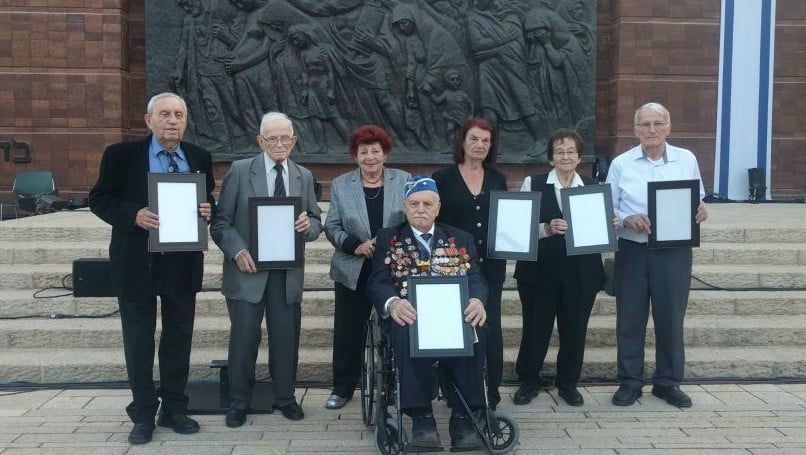
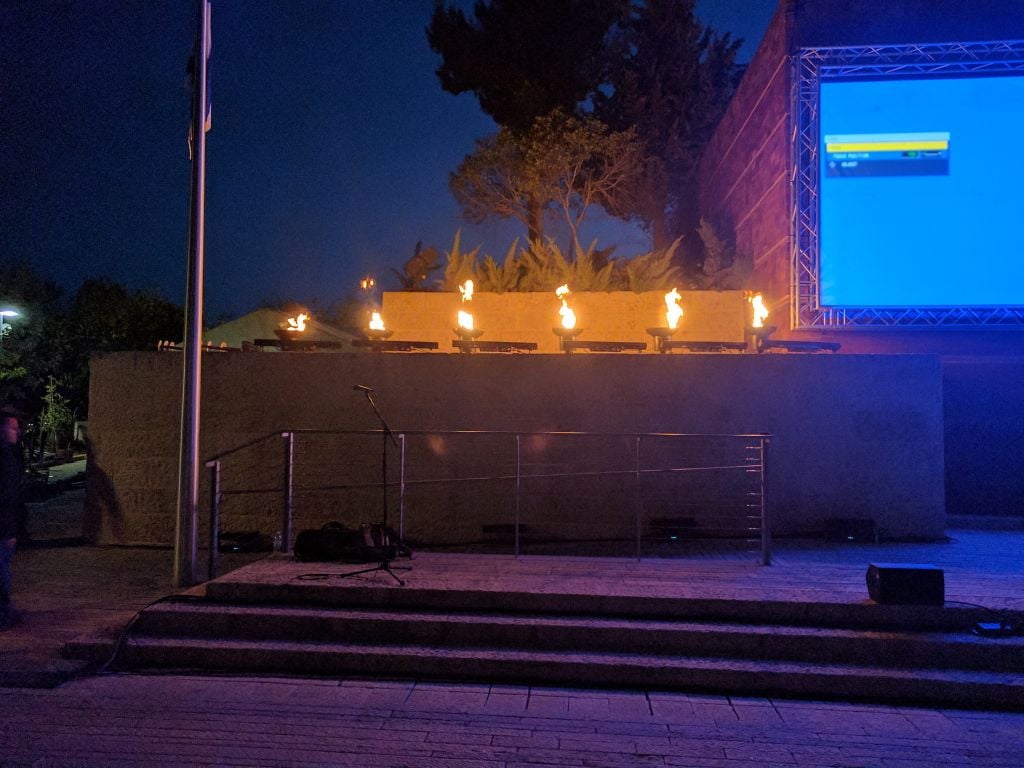
Seventy-two years after the end of the Holocaust, seven individuals walk proudly across the stage, free and safe in the Jewish state as they practice for the upcoming Yad Vashem torch-lighting ceremony marking the beginning of Holocaust Remembrance Day, which this year begins on Sunday evening.
Each is a survivor; some are heroes who saved lives during their nightmarish trials. Six were selected to light torches at the national ceremony; one will share her story.
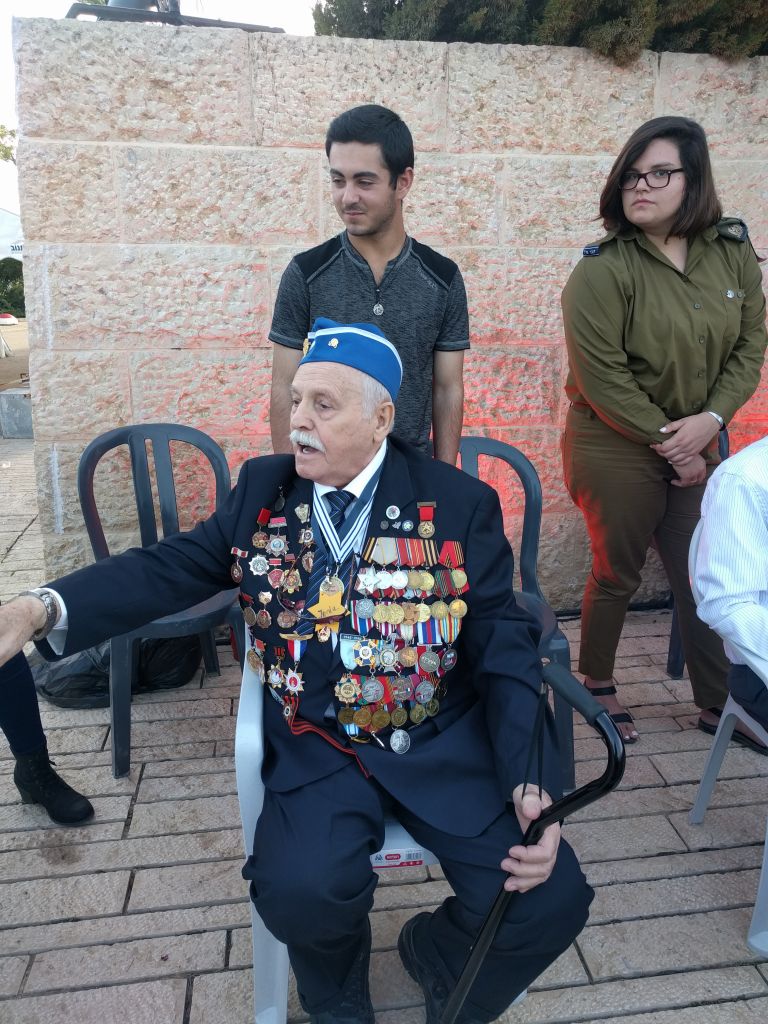
Max Privler sits gravely in a wheelchair in a veteran’s uniform, his chest covered in medals, the expression on his face mercilessly intimidating. Front and center among the decorations is a yellow star emblazoned with the word “Jude.” During a lull, he leans to sweet-faced Elka Abromovitz, slated to light the torch after him, and gruffly tells her a story in Yiddish for what seems an eternity. Over and over, he repeats the words “meshuga” and “meshuganeh” until Elka bursts into laughter.
In mode of dress, accent, demeanor, the seven stand out from one another — a stark contrast from the dehumanization that the Nazis sought to impose on them by stamping numbers on their arms. The smile lines around their eyes, their walks, tell unique stories about the different worlds they come from — cities and villages around distant corners of Europe; upbringings ranging from traditional Hasidism to secular.
What unites them is an enemy’s attempt to rob them, along with everyone they knew, of their individuality during the course of the world’s worst genocide.
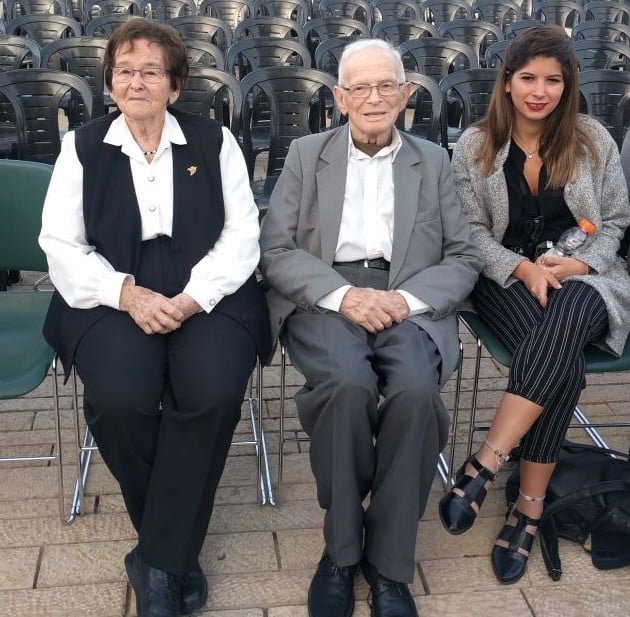
“My grandfather’s story is very special,” says Amit Jakubowitz, 20, of Moshe Jakubowitz. “He has been through a lot in his time, in Poland and in the ghettos.”
A sea of plastic chairs is spread out across Yad Vashem’s Warsaw Ghetto Square, row upon row meticulously aligned. Around them workers rush back and forth, busily shouting instructions, occasionally letting fly an errant curse. Scaffolding stands in varying states of assembly, camera cranes angle for the best shot, and sound technicians test unreliable microphones.
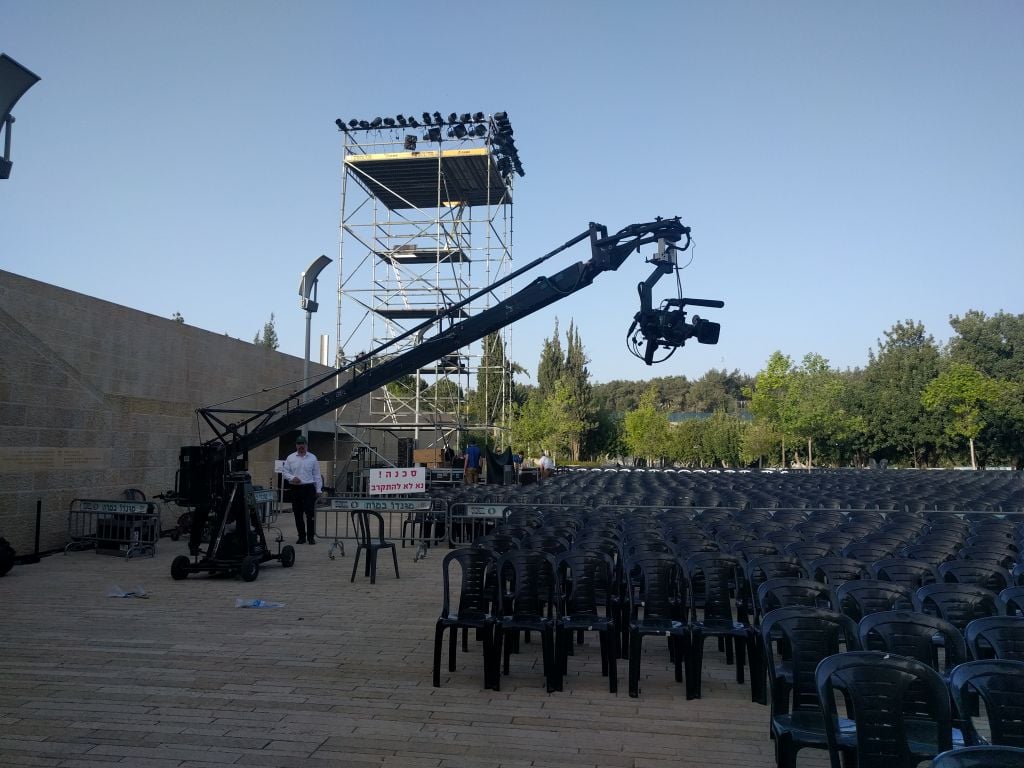
Come Sunday, all of this will be ready for the parade of illustrious figures set to mark the opening of the commemoration at 8 p.m. Prime Minister Benjamin Netanyahu will deliver remarks, as will President Reuven Rivlin. Yad Vashem Chairman Avner Shalev will light the memorial torch. And one of the survivors, Esther Miron, will address the crowd.
On the corner of the stage, the seven survivors receive their last-minute instructions for the dress rehearsal and obligingly sit, stand, sit down again. Next to each is a younger family member looking honored to be accompanying their forebear.
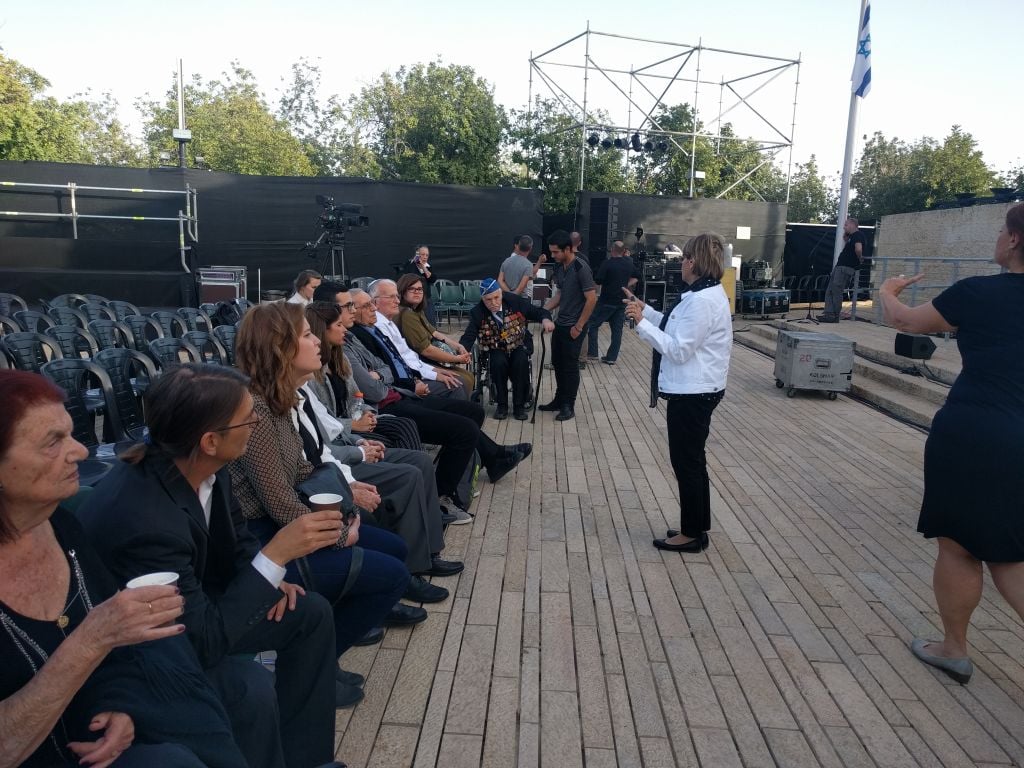
A piercing song cuts through the air, mournful and beautiful and unaided by a microphone — and a few heads turn to look as Roni Dalumi, a young Israeli pop star, pours her heart out onstage.
One by one, the survivors are reluctantly pried away to speak with the press. Some speak weakly and others with vigor, but still the stories begin to run together as a gruesome pattern emerges. It is easy to lose track of which family members were lost… which months, years, were spent in camp after camp… and which diseases endured. And the looks on their younger companions’ faces all reflect a series of similar emotions: an obligatory solemnity — it’s obvious they’ve heard this many times before — but also a spark of curiosity, as if there is something new being revealed in this retelling.
Moshe Ha-Elion’s haunting face, Abromovitz’s playful eyes, and Moshe Porat’s mischievous smile leave their stamp during their interviews and bring back lively descriptions of Salonika, Romania, and rural Hungary in their prewar years.
Midway through her story, Miron can’t go on. As she describes Allied forces picking her indifferent body up off the floor during the liberation of Mauthausen, she stops, apologizes, asks for a business card and offers to continue another day.
As paradoxically uniform and diverse as each recounting is, so too are the messages these survivors seek to transmit to the next generations.
“After the war, those of us who returned to seek survivors in our village decided to move to Israel,” says Porat. “And we went around Europe and went around some more, and said, ‘Tomorrow we’ll move to Israel, tomorrow.’ It took me three years from when I was freed from Mauthausen to get here. Ask me why.”
He waits to be asked.
“There was no Israel,” he says. “There was no Right of Return.”
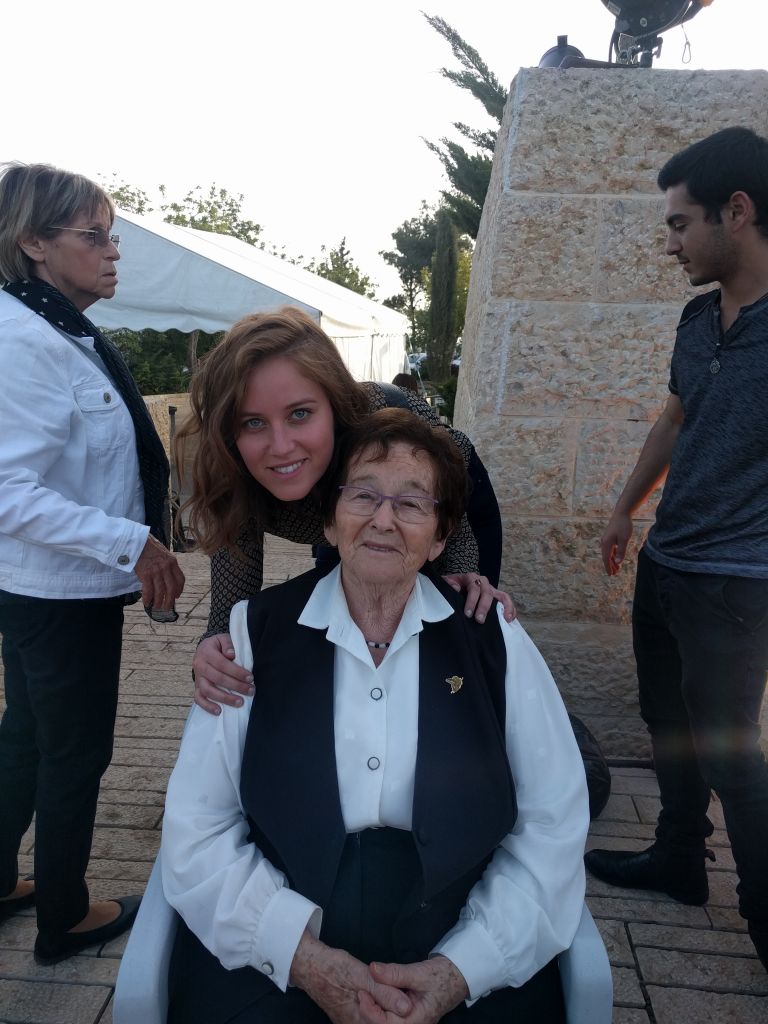
Abromovitz is equally emphatic. She was held by the British in Cyprus for months before being allowed access to the British Mandate of Palestine shortly before Israel declared independence.
“We need this place,” she says stridently. “We need a place where any Jew can go if something like this happens again. Where John Doe from New Zealand can pick up if he needs to and buy a ticket without having to ask permission. And we need people like you to build this place and make it strong, and not to get distracted by fancy things they might have abroad.”
The comments are transparent and raw, devoid of ulterior motive or political rhetoric. They contain an animal desire to live, borne of the once-realistic possibility that life might not be an option.
Despite having lost her husband last year, Abromovitz continues to volunteer in a Holocaust remembrance organization and helps families of fallen Israel Defense Forces soldiers. She spends much of her time listening to the experiences of others.
“I just keep doing it, even though it does hurt sometimes, the loss of my husband,” she says. “I want to…. And where are you from? When did you get here? And now I’m interviewing you.”


The Times of Israel Community.