

Witkoff’s son solicited billions from Qatar as his dad negotiated ceasefires — report
New York Times says Alex Witkoff approached gulf countries to invest in a US real estate fund earlier this year, Qatar declined to invest; White House, Witkoff Group deny report
 Add ToI as a Preferred Source on Google
While US special envoy to the Middle East Steve Witkoff was busy negotiating a ceasefire between Israel and Hamas earlier this year, his son, Alex Witkoff, was privately courting billions of dollars from countries involved in those negotiations, The New York Times reported Friday.
Steve Witkoff, who has led negotiations for US President Donald Trump’s diplomatic efforts across the globe since his inauguration in January, previously led the Witkoff Group, a real estate development company headquartered in New York. His son, Alex, has since taken over as the group’s CEO.
According to the report, Alex Witkoff pitched a multibillion-dollar real estate development fund to the sovereign wealth funds of Qatar, the United Arab Emirates, and Kuwait.
Qatar — a US ally and key mediator in the Gaza negotiations — confirmed that the younger Witkoff had approached them, but a spokesperson for the Qatar Investment Authority (QIA) said that after internal discussions, it chose not to invest.
The proposed fund, the Special Situations Real Estate Credit Fund, was designed to focus on US commercial real estate, according to a fundraising document detailed in the report.
The Witkoff Group aimed to raise $4 billion, the report said, with the potential to generate hundreds of millions of dollars in fees and profit shares.
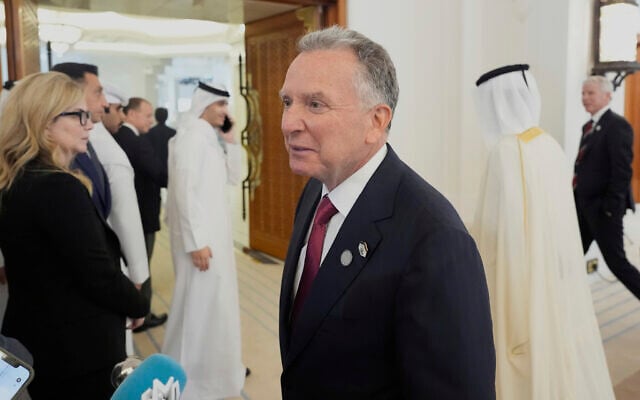
This fundraising effort came at a time when his father and the Witkoff Group’s founder, Steve Witkoff, were representing the United States in sensitive negotiations with Gulf nations—including Qatar, which has raised questions about potential conflict of interest.
Responding to a request for comment on the report, Witkoff Group spokesperson Anna LaPorte told the Times that the fund was “preliminary” and that the company “is not moving forward with that fund.”
She also claimed that Steve Witkoff has had “no involvement in our company since 2024,” and dismissed any suggestion of a conflict of interest as “categorically false.”
The Witkoffs’ relationship with Qatar dates back to Trump’s first term. In 2017, amid a Gulf blockade of Qatar, the country sought to cultivate US relationships, particularly with Jewish figures close to Trump.
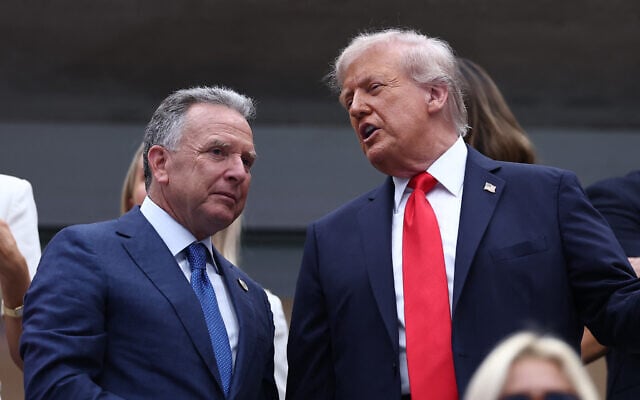
A lobbying memo from 2017 included in the report described Steve Witkoff as a “confidant” and “unofficial adviser” to Trump and suggested that investing in his real estate ventures could help Qatar build political goodwill with the administration.
In the years since, the report continued, Qatar-linked funds have quietly backed at least two major Witkoff projects, including The Brook, a luxury Brooklyn apartment tower developed with funding from the Apollo Trust, a fund partly owned by Qatar.
In 2023, Qatar bought the troubled Park Lane Hotel — a property previously co-owned by Steve Witkoff — for $623 million, allowing him to exit a heavily indebted investment.
Since Steve Witkoff entered the second Trump administration, the report said, the Witkoff Group received another $100 million from the Apollo trust, this time for a Palm Beach project.
Responding to the report, a White House spokesperson dismissed it as “another bogus smear,” without identifying factual inaccuracies. White House counsel David Warrington told the Times that Steve Witkoff “takes seriously his compliance with the government ethics rules.”
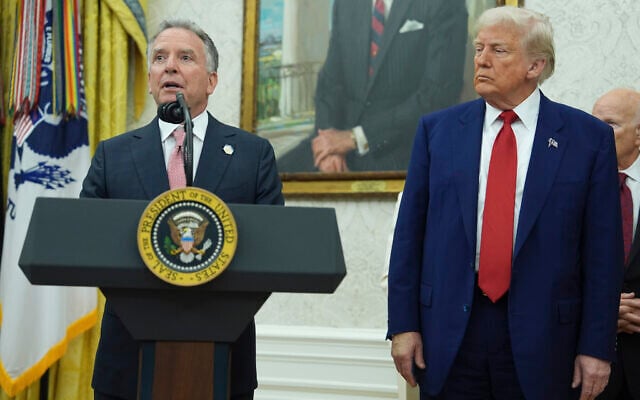
Also responding to the NYT report, a Witkoff Group spokesperson said, “Many of the reported statements in this article are patently false and the New York Times intentionally chose not to include our full statement, which is not a surprise given the ‘journalist’ Debra Kamin who wrote it failed to disclose her clear conflicts of interest including her radical left-wing history of anti-Trump posts and donating to democrats like Elizabeth Warren For President.”
“We never went beyond preliminary discussions regarding forming this fund, never said to possible investors that funds were ‘locked down’ from these companies, and never even spoke to some of the purported possible investors mentioned,” the Witkoff Group spokesperson added.
“While Witkoff Group routinely explores real estate opportunities, we chose not to proceed here, strictly as a matter of economics. We concluded that falling rates from the Fed in an increasingly overcrowded private credit market rendered profitability challenging. The idea that we scrapped this plan because of a media inquiry is genuinely laughable.”
“Our founder Steve Witkoff has had no involvement in our company since 2024, and so despite the dishonest innuendo, the suggestion that any sort of ‘conflict of interest’ exists is categorically false. The Witkoff Group has been active in both real estate equity and credit (including funds) since the 1990s and we will not be bullied by a leftwing smear campaign from the media to try to force us to stop doing the work that we’ve done for 30 years – because our founder – who no longer has anything to do with our company – happens to now work for the current administration,” the statement concluded.
Statement from the International Media Office of the State of Qatar in response to false accusations in The New York Times pic.twitter.com/Z7TPAJ2QCt
— Qatar's International Media Office (@IMO_Qatar) September 27, 2025
Qatar also issued its own statement denying the claims detailed in the report, which it described as “entirely false and so lacking in credibility that they can only be described as absurd.”







The Times of Israel Community.