

Despite flurry of fresh promises, Palestinians skeptical elections will happen
A national vote has not been held for 14 years, and public pledges by senior Hamas and Fatah officials won’t bring them any closer without concrete steps

 Add ToI as a Preferred Source on Google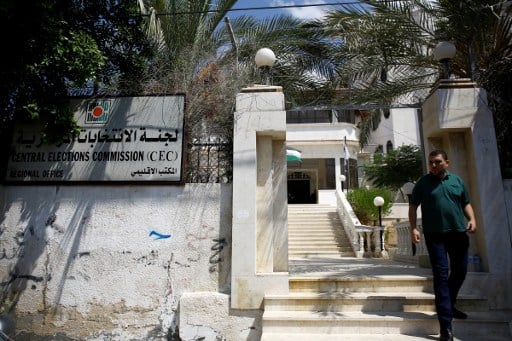
After numerous public pledges to bring about the first Palestinian national elections in 14 years, the possibility that residents of the West Bank and the Gaza Strip will head to the ballot boxes appears to have petered out, again.
A meeting of Palestinian faction heads last Saturday at which Palestinian Authority President Mahmoud Abbas was scheduled to issue a decree calling for elections never took place. As of Wednesday afternoon, a new date for the meeting has yet to be set.
Palestinian legislative elections have not been held since 2006, when a Hamas victory over Abbas’s Fatah movement led to a bloody struggle for control of the Gaza Strip. The terror group expelled Fatah from the territory in 2007, after which the Palestinian legislature essentially ceased to function.
Several attempts to resolve the gaps between the two sides in the intervening years — to hold national elections and establish a new unity government — have failed.
Many Palestinians feel that a unified, elected national leadership would have more legitimacy than the current stalemate: two Palestinian governments bitterly at odds with one another, whose mandates expired in 2010.
Both parties have maintained, as usual, that they are truly committed this time to go to elections within six months, followed by a unity government, with senior officials remarking that the dire Palestinian political situation has changed the game.
Both sides have been dealt numerous blows over the past few months: the decision by the United Arab Emirates and Bahrain to normalize ties with Israel despite Palestinian demands, an economy in tatters, and a raging pandemic in both the West Bank and Gaza.
“Everyone feels the danger of the phase the Palestinian cause is going through,” Hamas deputy political chief Hussam Badran said last week. “That is what brought about the current rapprochement [between Fatah and Hamas].”
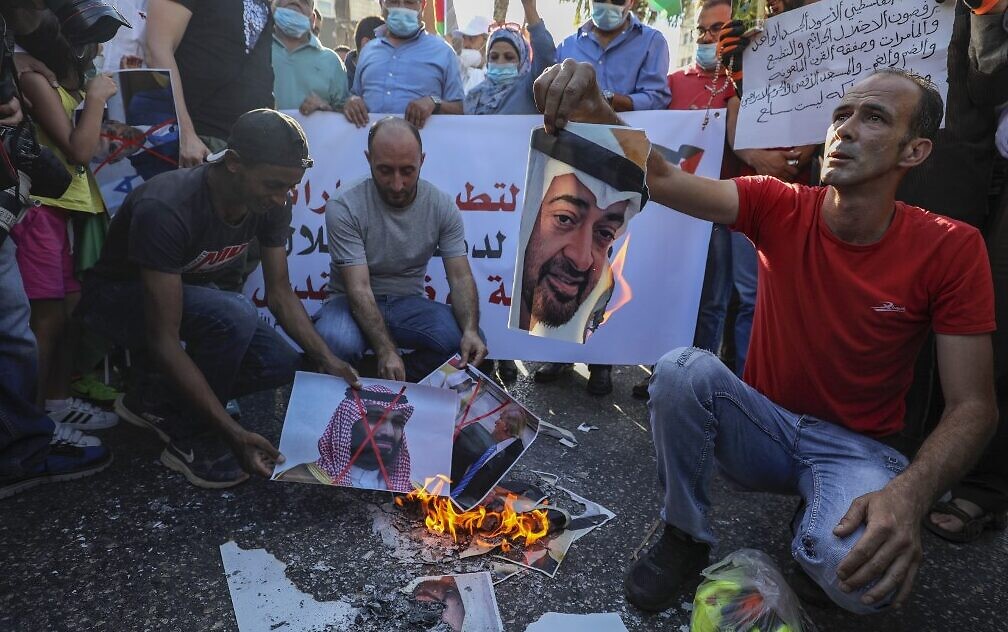
But the Palestinian public, frustrated by endless promises of unity between the two factions, remain incredulous. Only 11 percent of Palestinians surveyed in mid-September said they believe a unity government will happen soon; another 58% said that the current PA government is incapable of successfully organizing elections.
“This is merely a maneuver by Abbas to buy time before November 3, the American elections,” said Mukhaymar Abu Saada, a professor at Al-Azhar University in Gaza.
“Hamas knows that Abbas’s political project is failing, that the whole project of the Palestinian Authority seems to have reached a dead end. Hamas believes elections at the very least won’t hurt them, especially in the [Fatah-controlled] West Bank,” Abu Saada said. “But they also know this is all posturing, and they’ll go along with it so as not to get blamed for the failure to have elections.”
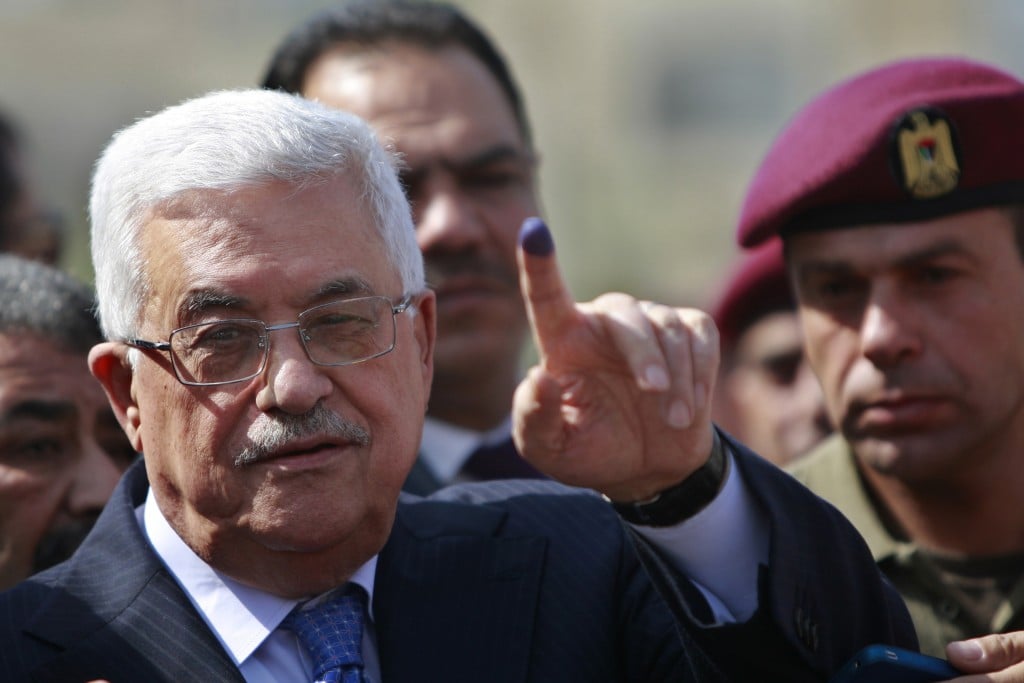
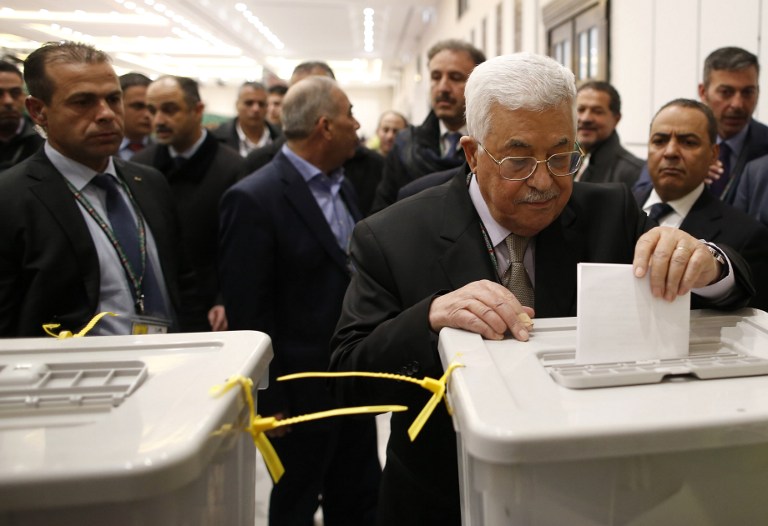
While Abbas promised an election in his speech to the United Nations General Assembly, according to Palestinian law the president has to sign on the dotted line before the process can commence. He can endorse elections, he can make public pledges, but without a presidential decree, there’s no reason to believe elections will actually happen.
The gaps between the two factions are enormous, and an independent election court needs to be established to adjudicate between all the parties. There’s also the thorny question of whose security forces will monitor the elections, especially in the Hamas-run Gaza Strip. No solutions to these tough questions have been broached in public.
Thus, despite the headlines, no on-the-ground work for the promised round of elections has begun. Palestinian Central Elections Committee spokesperson Farid Ta’amullah confirmed to The Times of Israel that officials were still waiting for a presidential order before beginning to organize elections.
When election talk filled the Palestinian airwaves in late 2019, Abbas refused to issue a decree before Israel guaranteed East Jerusalem Palestinians the right to cast ballots. The Palestinian Authority has long viewed East Jerusalem as the capital of its future state.
Israel reportedly ignored the request, as it has banned the PA from operating within East Jerusalem. As a result, political chatter circulated for months without any kind of formal process being initiated.
Last Thursday, Fatah Central Committee member Azzam Al-Ahmad told the Turkish Anadolu News Agency that no elections would be held without East Jerusalem.
The insistence on East Jerusalem could be seen either as a principled stand by Palestinian officials or as a creative stalling tactic. After all, the real issues that divide Fatah and Hamas are far deeper, more intractable, and carry less popular appeal than a rhetorical defense of what many Palestinians hope will one day be their capital.
According to Palestinian political analyst Jihad Harb, there are ways to ensure East Jerusalemites can vote without requiring full Israeli approval. They can vote by mail, or cast their ballots in Palestinian towns such as Abu Dis and A-Ram, which — while the PA considers them parts of greater Jerusalem — are not part of the Jerusalem municipality.
“These are technical problems, for which Palestinian civil society has proposed solutions,” Harb said.
There has been some movement on one major issue, though: Fatah and Hamas have reportedly agreed to follow a proportional voting system far more favorable to Fatah, rather than the current system, which favors Hamas.
Instead of the current system, which allocates half the seats based on voting for district candidates, the Fatah system would treat all Palestinian areas as a single district, and voters would cast their ballots for one party slate, much like in Israel.
The current voting system helped Hamas deal Fatah a colossal defeat in 2006. At the time, Fatah was popular but deeply divided: Fatah candidates competed with one another in district after district. Its primary rival Hamas was well-organized and exercised tight internal discipline.
While Hamas beat Fatah by only 3% in the overall popular vote, the Islamist movement took 74 out of 132 seats in the Palestinian legislative parliament to Fatah’s 45.
“This is even more clear when we look at the popular vote and the districts. In the seats given by the popular vote, the difference between Fatah and Hamas was only one mandate,” Harb said.
According to Harb, if Hamas has really agreed to follow proportional representation, Fatah would feel far more secure in allowing elections to take place.
“There is concern about internal divides [within Fatah]. But proportional voting diminishes this concern,” Harb said, who said that the adoption of the new voting system made him more optimistic that elections could happen.
There is still time for decisions and revisions, but without a presidential decree, there is no reason to believe that elections will actually happen.






The Times of Israel Community.