

Election broadcast relaxes a harried news cycle for the cognitively impaired
Latest election day creates another opportunity to offer simultaneous translations of broadcasts for those who struggle to understand fast-paced reports
 Add ToI as a Preferred Source on Google
Jessica Steinberg, The Times of Israel's culture and lifestyles editor, covers the Sabra scene from south to north and back to the center
When results for Israel’s third set of elections this year begin rolling in Monday night, so will simultaneous audio simplification for those with intellectual disabilities on a specially created Kan YouTube channel.
Put simply, it’s a translation into plain language for those who struggle to understand the fast-paced running commentary of newscasters keeping tabs on election returns.
“TV speakers sometimes use complicated words, or they speak quickly,” said Shira Yalon-Chamovitz, an occupational therapist and service accessibility expert specializing in cognitive accessibility. “Our translation offers simple wording, but it’s done while it’s happening on TV, so you’re watching it along with everyone else.”
Audio simplification is a translation that can simplify professional language, such as that spoken by presenters at a conference, news broadcast, or awards show.
It’s different from closed captions or sign language for the hearing impaired, but according to Yalon-Chamovitz, is just as necessary.
“It’s finding the essence of what people are trying to say in real time, because then it’s enabling people to participate,” she said. “Usually we expect people to understand it later on, when it’s distilled for them, but then they’re not taking part. We’re enabling people to really participate.”
Yalon-Chamovitz began doing the translations for those with cognitive and learning disabilities but soon realized that a wider swath of people could benefit from the distilled wording, including those suffering from trauma or sensory disabilities, those on the autistic spectrum, those with anxiety, as well as the elderly.
It can also help new immigrants whose first language isn’t Hebrew.
According to Yalon-Chamovitz, about 5% of the Israeli population could use this kind of simultaneous audio simplification.
Yalon-Chamovitz, a professor and dean of students at Ono College, heads the Israel Institute on Cognitive Accessibility, a joint non-profit organization of Ono College and Agudat Ami, a non-governmental initiative based out of Beersheba that provides services for people with intellectual disabilities.
Her new form of translation received its first big break during last year’s Eurovision Song Contest in Israel, when Kan Digital declared accessibility the theme of the song contest.
“They knew what to do about sign language and audio descriptions, things that are really out there,” she said. “They didn’t know what to do about cognitive disabilities and we told them we know what to do.”
This is the third time Yalon-Chamovitz’s organization has worked with Kan for a live event. The last time was in September 2019, for the second set of elections.
Yalon-Chamovitz has been doing simultaneous audio simplification for some four years, ever since she first piloted the program at a conference.
“The more I do it, the more I realize how critical it is for it to become just like sign language,” she said. “People don’t realize that it can be done.”
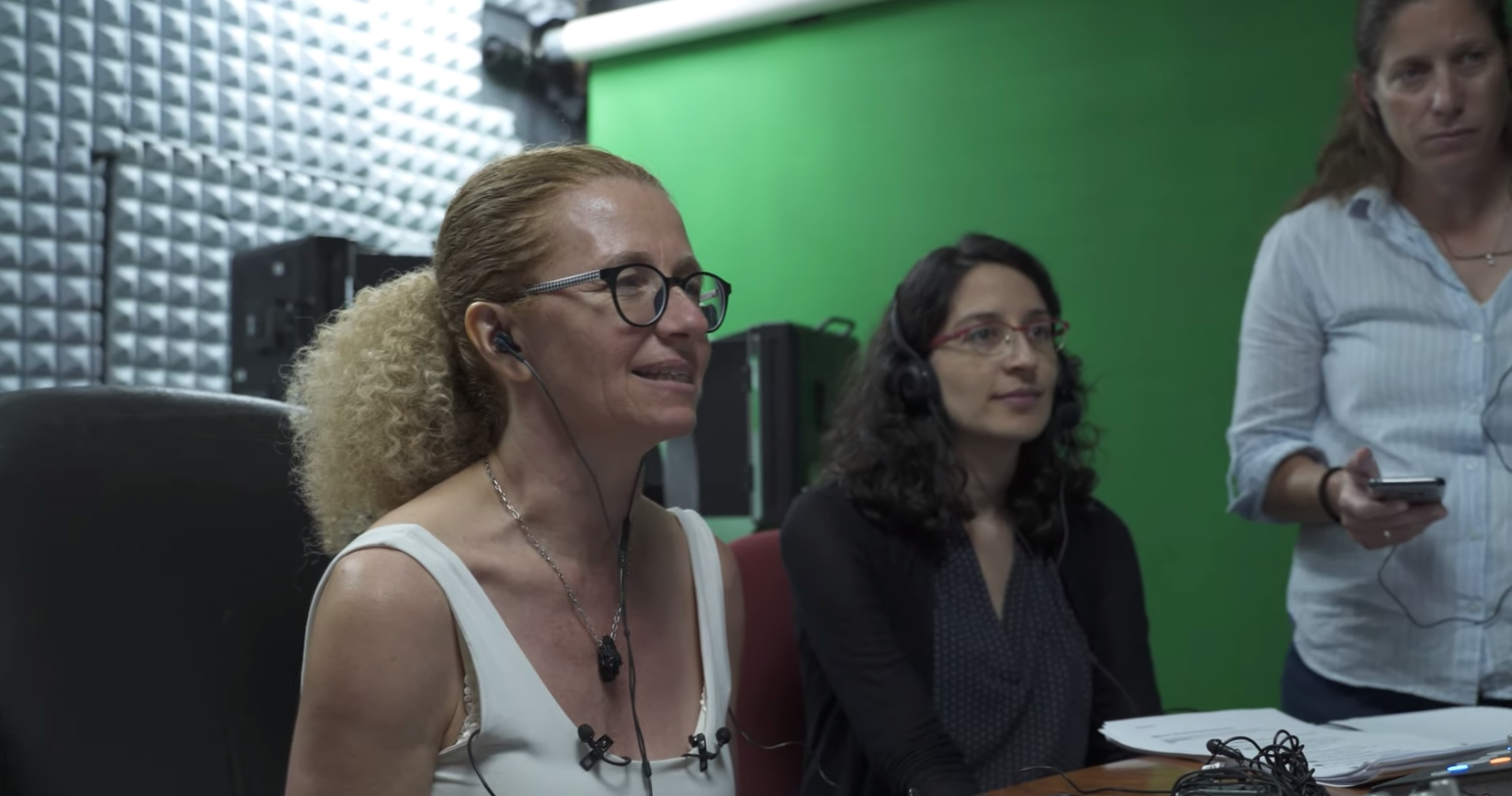
In practice, Yalon-Chamovitz is one of a crew of four people, three of whom do the actual audio simplification, simultaneously translating what’s happening on screen, and one who keeps tabs on the sound and checks the online responses from listeners to see if additional clarification is needed.
They’re now considering what other broadcasts could use simplification, including fast-paced TV shows, movies and daily news broadcasts.
“It could be a daily broadcast for people to follow what’s going on,” she said. “People want to know what’s happening and participate.”









The Times of Israel Community.