

Finance Minister Katz has a budget. Netanyahu should be worried
Even as he declares his loyalty to his party leader, the Likud treasury chief has his own interests to consider

 Add ToI as a Preferred Source on Google
On Saturday night, Finance Minister Israel Katz called a surprise press conference to announce he intends to present the long-delayed 2020 budget, including a comprehensive Arrangements Bill containing dozens of long-awaited reforms to the public service, at the cabinet meeting on Sunday, October 25.
He has also instructed Finance Ministry officials to begin drafting the 2021 state budget, which he said would be ready to present to the cabinet by early December and then to the Knesset for a final vote in February.
Readers might be forgiven for taking such news without much enthusiasm. Budget bills don’t make for above-the-fold news, especially in the midst of a pandemic, social strife and a burgeoning regional peace effort.
But over the past 11 months, since the last state budget law expired at the end of 2019, the budget has served as the most important bellwether for the state of play in Israel’s fractious politics. The reason is simple: Under the rules of the coalition agreement that established the Netanyahu-Gantz government, the only way for Prime Minister Benjamin Netanyahu to deny Defense Minister Benny Gantz his promised turn in the prime minister’s chair is to force early elections before he gets the chance.
And the only way to do that, according to the laws that regulate the Knesset’s work, is to fail to pass a state budget, a failure that forces the Knesset to dissolve automatically and call new elections.
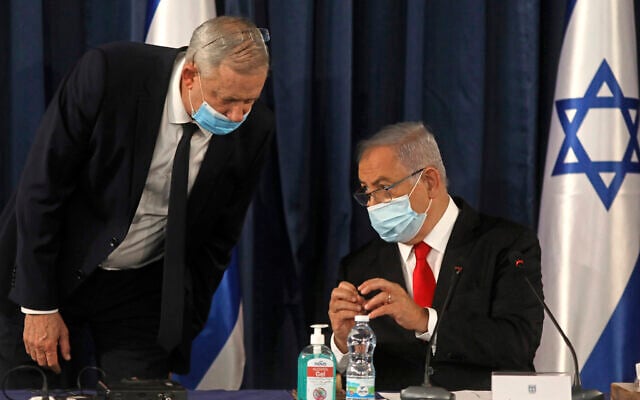
When Netanyahu rode high in the polls, the budget law was delayed indefinitely. As Netanyahu’s polling numbers dipped, the budget law’s prospects improved accordingly. Any observer trying to discern whether early elections are in the offing needed look no further than to the latest rhetoric from Likud and Blue and White surrounding the budget.
By law, a state budget must be passed by March of that fiscal year to avoid the Knesset’s dissolution into early elections. This year, of course, March was an election month, and so the Knesset passed a temporary measure delaying the 2020 budget deadline to August. But in August, just before the Knesset was set to dissolve because no budget had been forthcoming — at least not one both Likud and Blue and White could agree to — the Knesset instead decided to delay the deadline once more, this time to December 23.
And so nearly an entire year has gone by without the government fulfilling its most basic legal obligation: deliberating on and setting in law the state budget.
Indeed, since August an eerie silence had descended over the issue. The Jewish new year holidays came and went, a monthlong lockdown was imposed and relaxed, key treasury officials resigned in disgust and frustration — and no word about a budget law. (No word, that is, from Likud, which controls the budget process; Blue and White has of course been angrily demanding a budget law for weeks.) Instead, the Knesset has been forced to meet every few weeks to approve stopgap spending bills in order to keep the economy afloat and fund the coronavirus fight.
Then came Katz’s surprise Saturday announcement, which set the political system into a flurry of speculation. Why now?
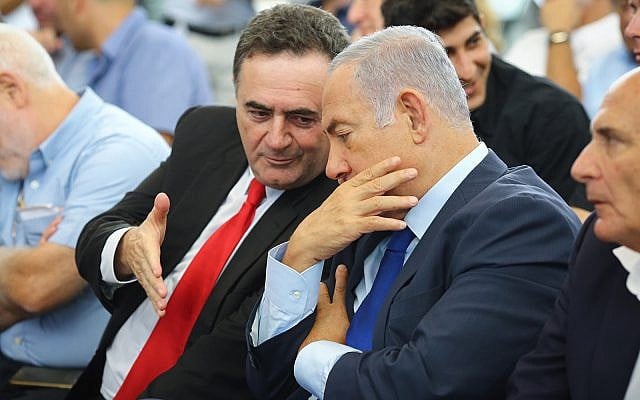
Is it, as most observers assumed, a response to Likud’s declining poll numbers and the growing fear in the party that its politicking would backfire at the ballot box?
In other words, was Katz coordinated with Netanyahu? The schedule he announced seems to cleave closely to Netanyahu’s political calculations and early-elections hopes. According to Katz, the 2020 budget will pass in December, pushing off the threat of early elections until March and giving Netanyahu a few extra months to try to rehabilitate his polling numbers. The 2021 budget, meanwhile, will only arrive in the Knesset in February — late enough to ensure any meaningful disagreement on the budget, even a fake one engineered specifically for the purpose, can prevent the budget’s passage long enough to force an election.
Israel Katz is not a loyal foot soldier in anyone’s army
Most political commentators insist the finance minister is doing his boss’s bidding by advancing, albeit painfully slowly, the new budget laws. But as Netanyahu weakens because of growing disaffection with his handling of the pandemic, a new dynamic is coming to the fore.
Israel Katz is not a loyal foot soldier in anyone’s army. He is a self-made, influential politician with aspirations of his own. Katz isn’t working for Netanyahu; he’s working for Katz.
International credit rating agencies have begun to ask hard questions about the current government’s fiscal shenanigans and the many treasury officials who have resigned of late, while the Israeli public has become increasingly aware of the costs to the country of Netanyahu’s politicking. As the political costs rise, does Katz want to go down in Israeli history as the finance minister who, in the service of his boss, shouldered the blame for more failures, or even oversaw the downgrading of the country’s credit rating?

There is a second theory to explain Katz’s earnest new commitment to his fiscal duties: While doing his utmost to appear to support Netanyahu’s political machinations, he’s actually pushing the prime minister out of his costly intransigence.
The new schedule Katz proposed appears to serve Netanyahu’s interests — but it doesn’t necessarily hurt Gantz’s. By passing a 2020 budget before December 23, the election-instigating deadline is pushed back to March. Then Katz will present his 2021 budget in the Knesset in February. If Netanyahu wants new elections, the budget will have line items designed to cause friction with Blue and White.
But at that point, Gantz’s strategy become comically simple: concede, and publicly declare his support for any budget Likud brings to the table. Gantz’s economic views are not believed to be markedly different from Netanyahu’s. It’s hard to see how Netanyahu can blame Gantz for early elections if Blue and White announces it will acquiesce to any budget he brings forward.
On Monday, Katz responded to the latest round of Blue and White complaints about the budget delays with blunt threats, warning that if Blue and White didn’t back his new bills, it would bring about early elections, in which “we’ll beat them hand over foot, like we did last time.”

It was the sort of bluster Katz has specialized in over the past two weeks as he growled at reporters and posted a flurry of statements to social media. His defensiveness had led some to wonder if he doth protest too much, if he feels there might be good reason to doubt the party loyalty he so vehemently asserts at every turn.
Katz is worried about his legacy. He wants a budget passed and an economy appearing to be put back on track thanks to him. He cannot publicly blame Netanyahu for the budget delays, but he won’t shed a tear if a budget advances and ends up pushing Netanyahu out of the prime minister’s chair. Katz does not aspire to serve Netanyahu, but to replace him.
Netanyahu’s weakness in polls has quietly opened up new political spaces around him. For the first time in nearly a decade, decisive policy influence is devolving to Likud front-benchers who have long been forced to live in his extensive shadow. How great is the distance that divides a Likud finance minister who, while proclaiming his loyalty, robs Netanyahu of his much-desired early elections, from a Likud finance minister who challenges Netanyahu openly for party leadership?







The Times of Israel Community.