

Report: Blue and White seeks to postpone swearing-in of government to next week
Move means centrist party will need to endorse Netanyahu as PM, even as High Court debates whether he can form coalition and considers legality of unity deal
 Add ToI as a Preferred Source on Google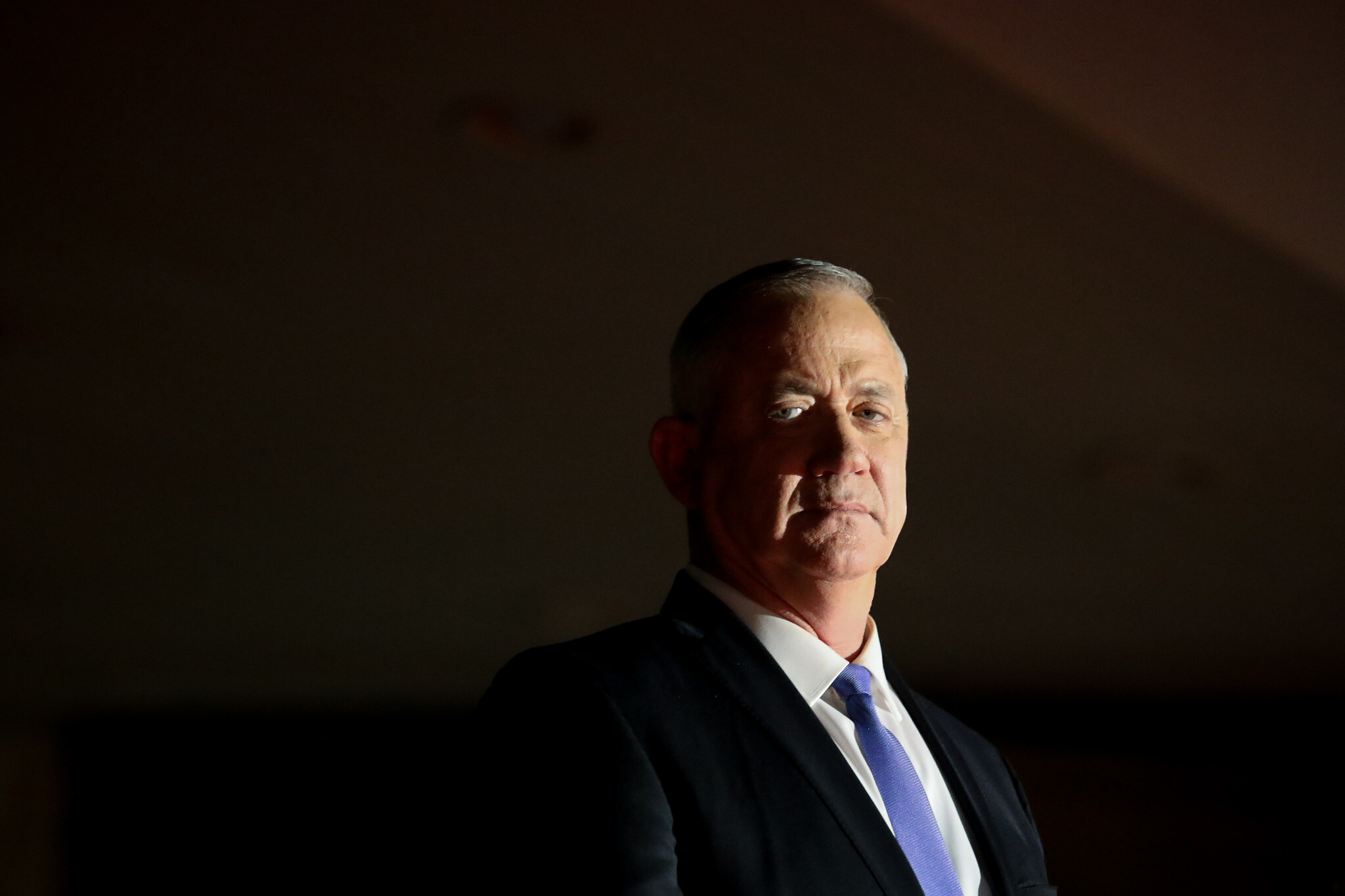
The Blue and White party may seek to postpone the swearing-in of the new unity government until next week, amid a race to anchor its agreement with Likud in Knesset legislation while under High Court of Justice scrutiny, according to a report Tuesday.
The shift, reported by the Ynet news site, comes ahead of a deadline looming Thursday night for a majority of MKs to recommend one of their number to form a government. The alternative is for the Knesset to automatically dissolve, triggering fresh elections, the fourth in a year and a half of political gridlock.
Blue and White had been shooting for Thursday to clinch the government with Likud, but was reported to view the timetable as unrealistic.
To avert an election, it will now need to sign on to a document to President Reuven Rivlin endorsing Prime Minister Benjamin Netanyahu as the candidate to form a government.
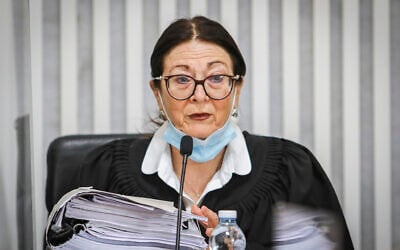
Meanwhile the High Court of Justice is reviewing petitions calling for disqualifying Netanyahu from forming a coalition due to the criminal charges against him, with justices expected to rule by the end of the week — though they have indicated they are unlikely to accept the petitioners’ arguments.
The Knesset on Tuesday launched what it warned would be a “marathon debate” on a proposed coalition government deal, the legality of which has also been challenged in the High Court.
A statement on the Knesset’s website said the bills for legislation needed to anchor in law the contentious accord between incumbent Netanyahu and his rival-turned-partner Benny Gantz faced about 1,000 requests for amendments from its opponents.
Lawmakers are scheduled to debate until around midnight Tuesday, resuming early Wednesday.
Voting is currently scheduled to begin at 4 p.m. on Wednesday and to last several hours, but a parliament spokesman said that timetable could change.
Former Gantz ally Yair Lapid, head of the opposition’s Yesh Atid-Telem, is among the eight petitioners to the High Court seeking to block the deal, while Gantz’s Blue and White party defended it in the two-day hearing that ended Monday.
If the agreement is torpedoed by the court or Knesset, Israel is expected to go to a fourth general election, after three inconclusive polls within a year.
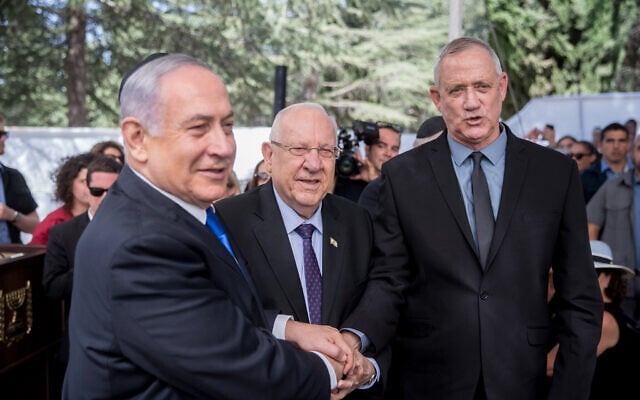
The agreement would see Netanyahu and Gantz share the premiership, with the incumbent ruling for the first 18 months before handing over the reins to the Blue and White leader, who will in the interim serve as defense minister and as alternate prime minister. This rotation agreement is part of the legislation being pushed through the Knesset.
Though Netanyahu’s Likud received the highest number of seats in the March 2 election, Gantz was tasked by the president with forming a government after receiving the backing of a majority of lawmakers. But Gantz then began negotiating with Netanyahu, leading to the dissolution of his alliance with Yesh Atid-Telem.
The Likud and Blue and White parties earlier on Tuesday agreed to revise a number of clauses in their agreement to form a new government, after the High Court signaled they could be struck down.

In their response to the court, the parties said they would shorten a proposed six-month freeze on senior appointments to 100 days, and that their coalition deal would not prevent passage of legislation unrelated to the coronavirus pandemic during this period. They will instead add a sentence to their agreement clarifying that virus-related laws would be given preference.
The High Court justices had criticized the clauses, arguing the virus was unconnected to the appointment of top officials and questioning why other legislation could not be passed for six months.
The parties also said they would limit the emergency period that would start the term of the government to six months rather than allowing for it to be further extended.
The justices had said the inclusion of the emergency period itself was problematic, since there was no definition of its duration or of what exactly would cause it to end.
Concerning the proposed “skipping Norwegian law,” the parties said they were still formulating the bill and that the swearing-in of the new government was not dependent on it first becoming law.
The proposed law would allow some of the eventually envisaged 52 ministers and deputy ministers of the new government to temporarily resign their Knesset posts to let new MKs into the parliament in their stead — but not according to their slate’s original order as current law dictates. This aims to allow Gantz to bring new members of his faction into parliament while skipping members of the Yesh Atid and Telem factions, which splintered from Blue and White over Gantz’s decision to ally himself with Netanyahu.
Judges panned that law, saying it violated the will of the voters who cast their ballots for the slate in the order it was seen on the day of elections.
Additionally, Likud and Blue and White said “the government will announce the basic principles of its policies for the entirety of its term in accordance with Basic Law: The Government.”
The panel of 11 judges is expected to rule by Thursday on Netanyahu’s ability to form a government and the validity of the unity deal.
At Monday’s hearing, justices expressed concern about several aspects of the coalition deal, but were reluctant to rule on the legality of individual provisions before they had become law.
In a written opinion to the court, Attorney General Avichai Mandelblit had advised that problematic provisions be reviewed “at the implementation stage.”
During three elections in a year Gantz had based his campaign on ousting Netanyahu and what he called his corrupt regime.
Netanyahu is indicted with accepting improper gifts and illegally trading favors in exchange for positive media coverage.
He denies wrongdoing and his trial is set to start on May 24.





The Times of Israel Community.