

New grape variety named ‘Rivlin’ for Israel’s late first lady
The grapes symbolize Nechama Rivlin’s ‘love of nature and its conservation’
 Add ToI as a Preferred Source on Google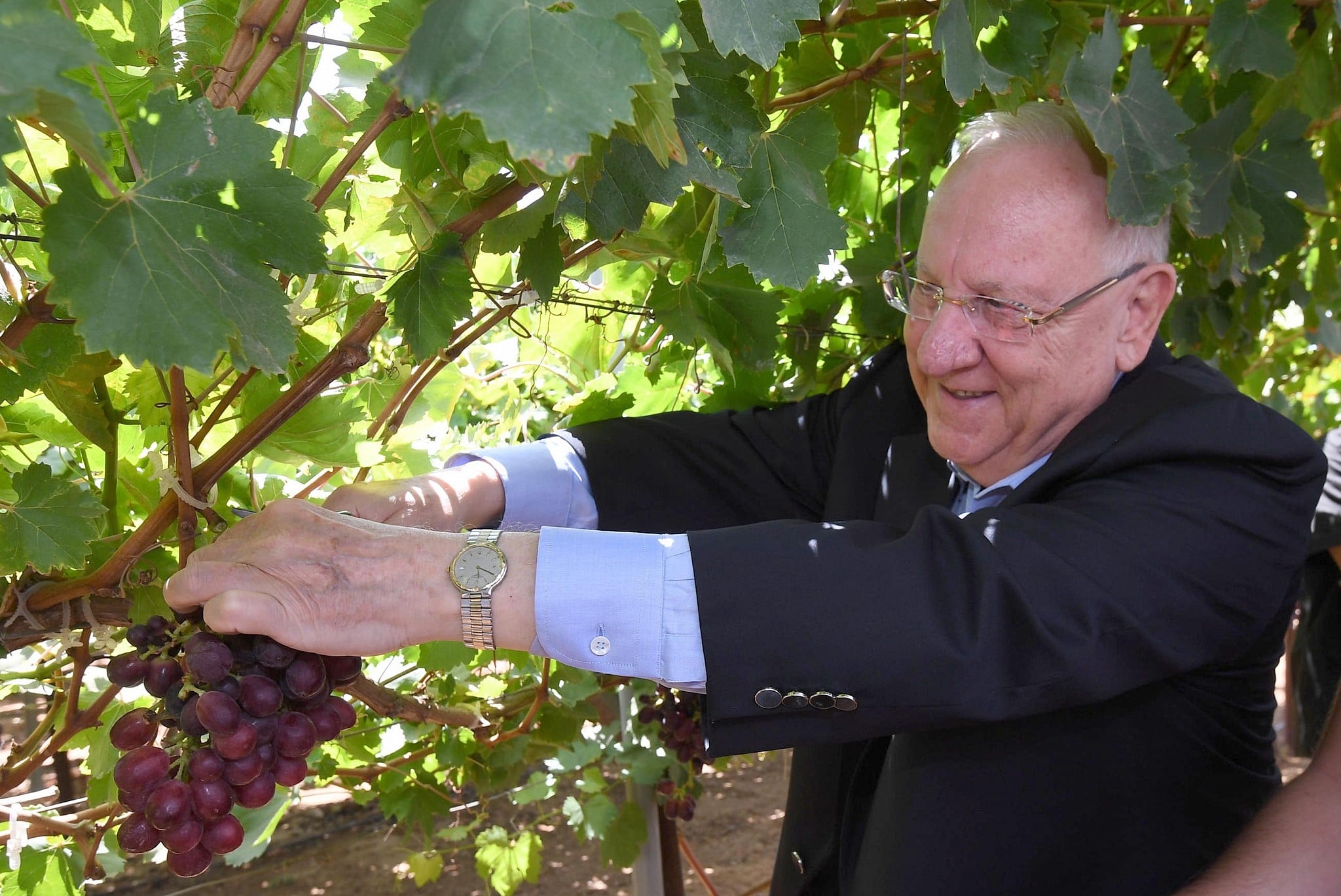
Scientists at Israel’s Agricultural Research Organization presented President Reuven Rivlin on Thursday with a bunch of grapes drawn from a new variety, which they named “Rivlin” after the president’s late wife Nechama.
“They taste like consolation,” Rivlin said after sampling the grapes during a visit to the agency’s research facilities in Beit Dagan. The Hebrew word nechama means consolation.
The grapes, presented to the president by the Agriculture Ministry’s chief scientist, Dr. Avi Pearl, were described in a press statement as “exceptionally sweet, seedless and [with] a very thin skin.”
“There is something in a person’s name and in a variety’s name that expresses their unique, inner, and singular essence,” Pearl told the president. The grapes named for Nechama symbolize her “love of nature and its conservation.”

Nechama Rivlin, who held a degree in life sciences and zoology and spent much of her professional life at Hebrew University’s Institute of Life Sciences, passed away in June after a lengthy battle with lung disease.
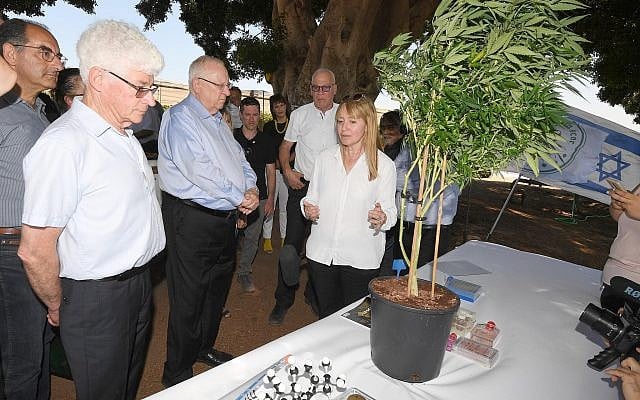
Accompanied by Agriculture Minister Uri Ariel, Rivlin was also shown the latest developments in research into greenhouse crops, cannabis and natural sweeteners.
He praised the researchers, saying Israel was “blessed with smart people who know how to take challenges and turn them into solutions.” Israeli breakthroughs were “being used all over the world. I meet Israelis who want to use our capabilities for the good of all of humanity,” he said.
The president thanked the scientists for dedicating the new variety to his wife’s memory, saying her rural upbringing never left her and kept him connected to the natural world and its conservation.
“As a Jerusalemite, I am a town person at heart. The person who helped me get to know and to connect to the earth was Nechama…. Nechama brought with her the secrets of those who know to grow their own food and to live off the land — picking oranges, growing vegetables, herding, fertilizing, watering, milking cows, gathering eggs. Even living in the city, she made sure we were connected to Israeli nature, its land and its seasons. All of us, down to the grandchildren, know what fruits, vegetables and herbs are connected to which season and, of course, we follow Nechama’s instructions that they can only be eaten when in season.”
Rivlin also toured the nearby veterinary hospital, part of Hebrew University’s Faculty of Agriculture in the central Israeli city of Rehovot.









The Times of Israel Community.