

Rivlin hails ‘flourishing relations’ with European Union after years of tensions
At Tel Aviv event, president thanks EU envoy for ‘tremendous’ efforts to improve ties, which have faced strain over disagreements on settlements, Iran nuclear deal
 Add ToI as a Preferred Source on Google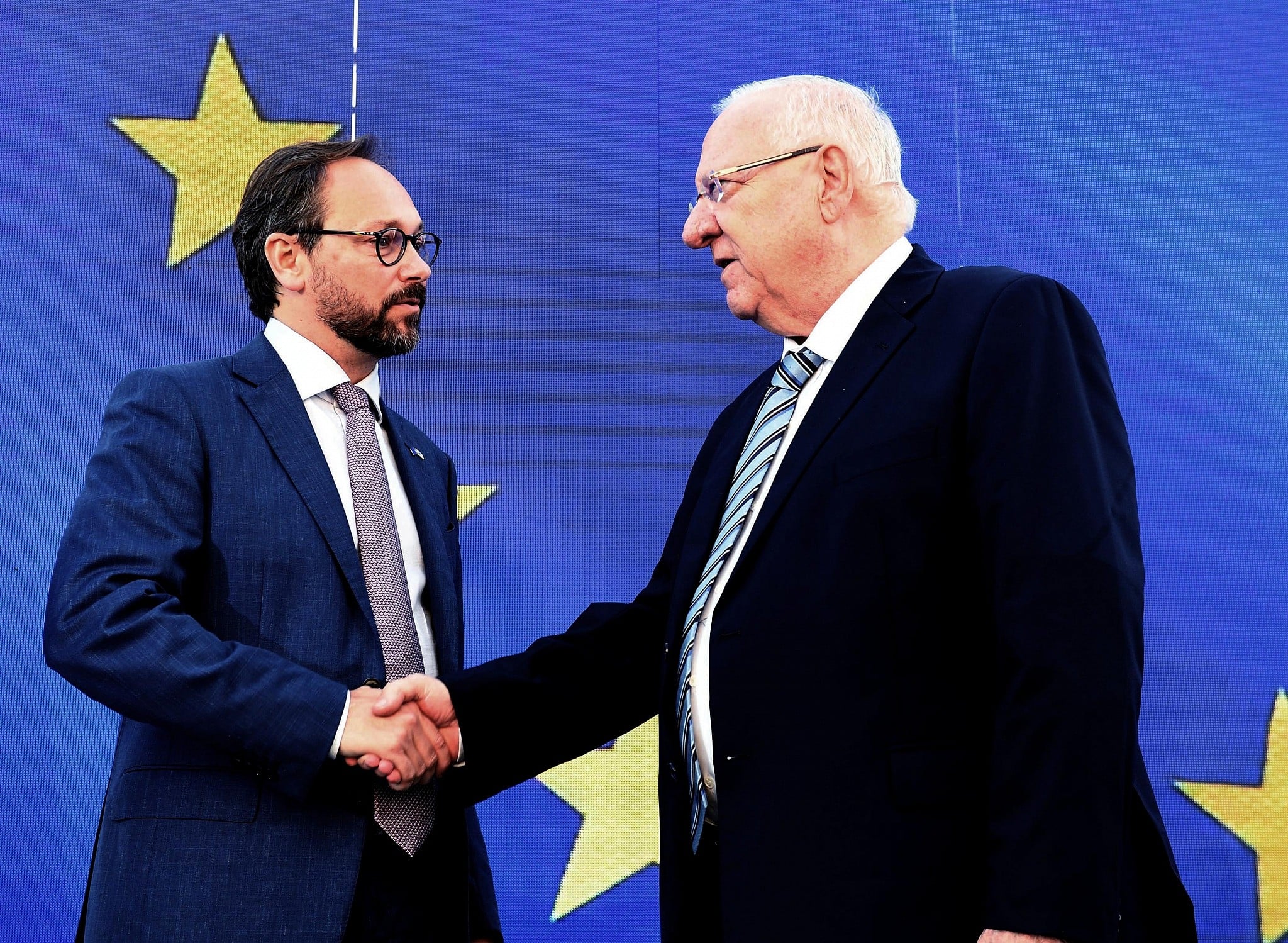
President Reuven Rivlin on Wednesday hailed Israel’s “flourishing relations” with the European Union and thanked it for supporting Israel through this month’s two-day military flareup in and around the Gaza Strip.
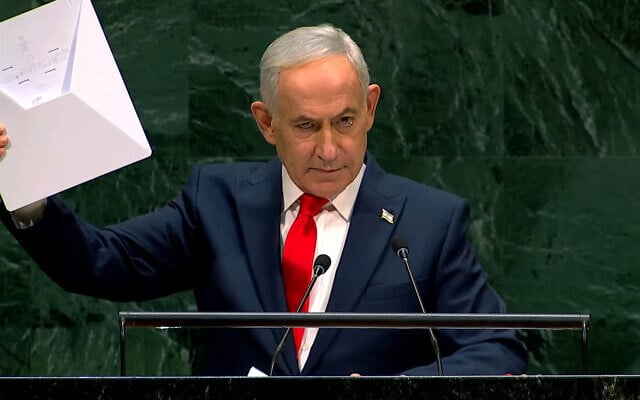
Israel-EU ties have been rocky over the past few years, with Jerusalem at loggerheads with the bloc over the Israeli-Palestinian peace process and the Iran nuclear deal. Prime Minister Benjamin Netanyahu last November urged the union of 28 European countries to end its “hypocritical and hostile stance” toward the Jewish state.
At an event marking Europe Day held in Tel Aviv, Rivlin thanked EU Ambassador to Israel Emanuele Giaufret for his “tremendous contributions to strengthening our relations.”
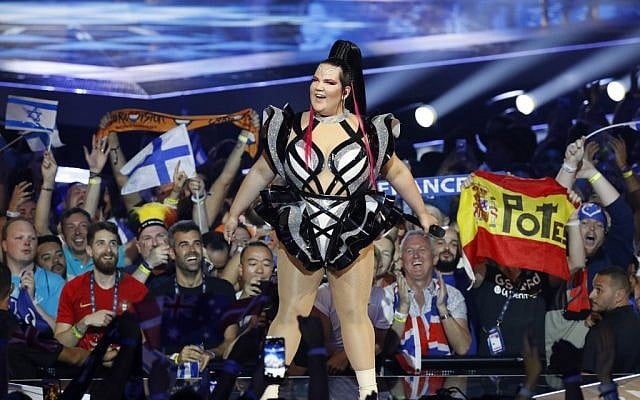
Referring to the Eurovision Song Contest, currently being hosted in Tel Aviv, Rivlin said: “We are currently hosting here in Israel one of the best examples of European integration and friendship – the Eurovision Song Contest. This year’s theme, ‘Dare to Dream,’ could equally easily be the motto on the EU’s flag.
“It is only natural that the EU and Israel are partners and allies. Both of us are the result of dreams that became reality, thanks to the determination and courage of their founders. We also share the values of democracy, diversity and human rights,” the president continued.
“I believe that we in the Middle East need to learn from the experience of the European Union which succeeded because it was established on the basis of economic cooperation and mutual obligation,” he added, “By creating a shared economy and bringing people together through trade, the EU created a solid basis for durable peace. If we want to realize this dream, we should take a similar approach,” he said.
Rivlin went as far as to say that, “the EU and European states can and should play a major role in a broad international effort to invest in Israeli-Palestinian economic cooperation and joint ventures,” stopping short at suggesting the bloc take a more active diplomatic role in peace negotiations.
“In the Middle East, like in Europe, there are no short cuts,” he added. “We were reminded of that recently, when Hamas fired 700 rockets on Israeli men, women and children and killed four of our citizens. We appreciate the declarations of support many of you sent. But as the ongoing terrorist attacks show, true peace is not made with a piece of paper. Ending decades of conflict requires first bringing people together, creating partnerships and strengthening shared interests.”
EU Ambassador Giaufret said at the event that “the EU will remain an important partner for Israel as we celebrate 60 years of diplomatic relations and friendship. We remain committed to peace in the region, and believe it is possible through meaningful negotiations towards a two state solution. The EU reiterates its fundamental commitment to the security of Israel.”
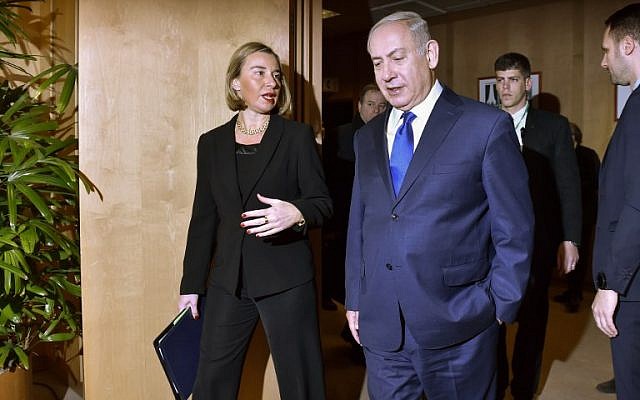
Recent years have seen growing tensions between the EU and Israel, with ties significantly worsening after the bloc’s November 2015 decision to label settlement products. In its initial anger, Israel suspended contacts with the EU, but soon reinstated them.
There were other signs of a detente, for example when a senior official in Brussels said in late 2016 that the union was willing to reconvene the EU-Israel Association Council, a bilateral forum on ministerial level, after a five-year hiatus.
But relations quickly went south again. In July 2017, Netanyahu was overheard, during a visit to Budapest, calling the EU “crazy” for insisting on linking the advancement of bilateral ties to progress in the peace process.
Tensions were also exacerbated after US President Donald Trump’s December 6, 2017, recognition of Jerusalem as Israel’s capital, a move the union vehemently opposed.
Members of the coalition and some in the opposition often claim that the union treats the Jewish state unfairly and often stands on the wrong side of history. Ministers have openly accused the EU of funding anti-Israel boycotts and even organizations with terrorist links.
Raphael Ahren contributed to this report.



The Times of Israel Community.