

Smotrich aims to cut Israel’s record gas prices, but his plan may be deemed illegal
Israelis set to pay NIS 8.25 per liter at the pump, tying all-time high amid Iran tensions; AG reportedly could say intended tax cut is prohibited so close to election
 Add ToI as a Preferred Source on Google
With gas prices in Israel set to tie an all-time record in the coming days, Finance Minister Bezalel Smotrich is aiming to slash what drivers will pay at the pump by cutting the excise tax on fuel.
His plan, however, may be deemed illegal, according to Hebrew media reports. Channel 12 reported that with less than two months to go until the election, Attorney General Gali Baharav-Miara may classify Smotrich’s tax cut as a prohibited instance of electioneering.
Gas prices have soared worldwide since the beginning of the Iran war six months ago, as Tehran’s obstruction of the Strait of Hormuz has choked off a key pathway for the global supply of oil and gas. Ongoing tensions between the US and Iran over control of the strait have also fueled uncertainty in the oil market.
In Israel, where a government authority sets gas prices, the price of the standard 95 octane benzine has risen from NIS 6.88 per liter in February 2026 (equivalent to $8.75 per gallon) to the just-announced rate of NIS 8.25 per liter in September (equivalent to $10.49 per gallon).
Bat Sheva Abuhatzira, the managing director of Israel’s fuel authority, told the Ynet outlet that the new rate is due to a combination of a rise in global oil prices and changes in the US dollar-to-shekel exchange rate.
The new rate of NIS 8.25 matches a record previously set exactly 14 years ago in September 2012, when, similarly, tensions between Iran and an Israeli government led by Prime Minister Benjamin Netanyahu helped prompt a jump in oil prices.
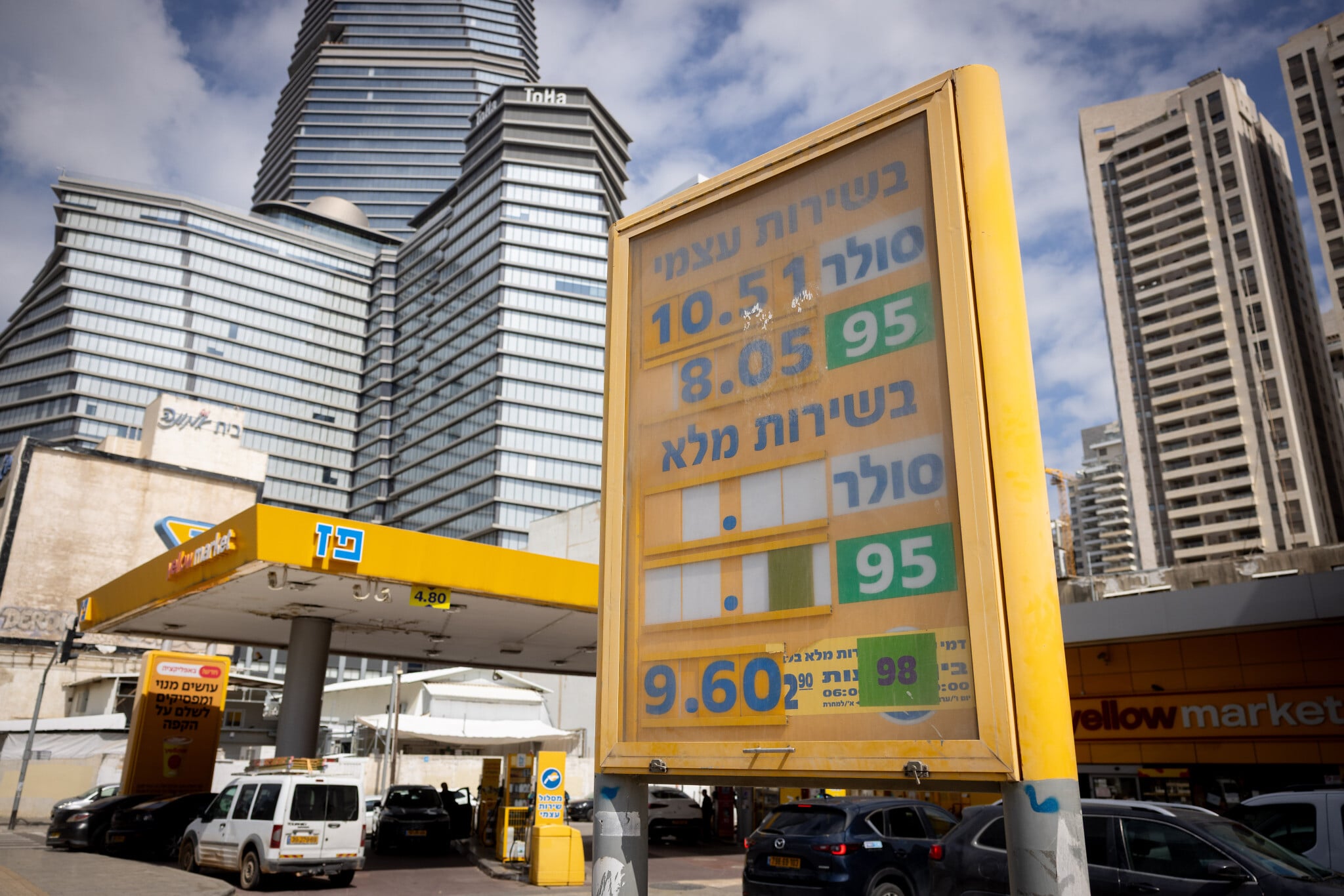
Against that backdrop, Smotrich is planning to reduce the excise tax on gasoline that is paid by businesses and then passed on to consumers at the pump.
According to Channel 12, the goal is to reduce the price of gas by half a shekel, down to around NIS 7.75 per liter. That would cost the government NIS 300 million (some $100 million) per month, according to the report.
Smotrich reportedly wants to institute the tax cut in the coming days.
Smotrich said in a statement to Channel 12 that he had “ordered to advance a reduction in the excise tax on gas, in order to prevent the expected rise in prices that has resulted from the global energy crisis and ongoing tensions in Iran.”
Is it legal?
But the finance minister, according to reports, is running into opposition from experts in his ministry, who warn that the government doesn’t have the money to pay for the tax cut. They are said to be wondering why Smotrich didn’t anticipate this rise in prices earlier, which could have given the ministry time to plan ahead.
Possibly more concerning for Smotrich is that the tax cut may be deemed illegal so close to the election.

Ynet cited legal experts who said that providing such a benefit to voters is illegal within 90 days of the election, which will take place in 58 days, on October 27.
If Attorney General Gali Baharav-Miara decides that the tax cut counts as illegal electioneering, she could strike it down, as she did in 2022 when then-finance minister Avigdor Liberman tried to lower gas prices ahead of that year’s election.
Such a tax cut would be especially notable if it comes from Smotrich, who is currently fighting for his political life, with polls showing his party on the verge of losing its seats in the Knesset. If Baharav-Miara strikes down the tax cut, it would mark the latest in a long list of times when the attorney general has butted heads with the current right-wing coalition, declaring its policies illegal.
The government has attempted to oust her from her position and to sap the attorney general’s office of its power. Several ministers have called on the government to openly defy her rulings.









The Times of Israel Community.