

Stunning views, steeped in history: A guide to Sea of Galilee vantage points
Day trippers can maintain social distancing while touring Israel’s northern hills, once home to Inquisition refugees and hostile Syrian troops
 Add ToI as a Preferred Source on Google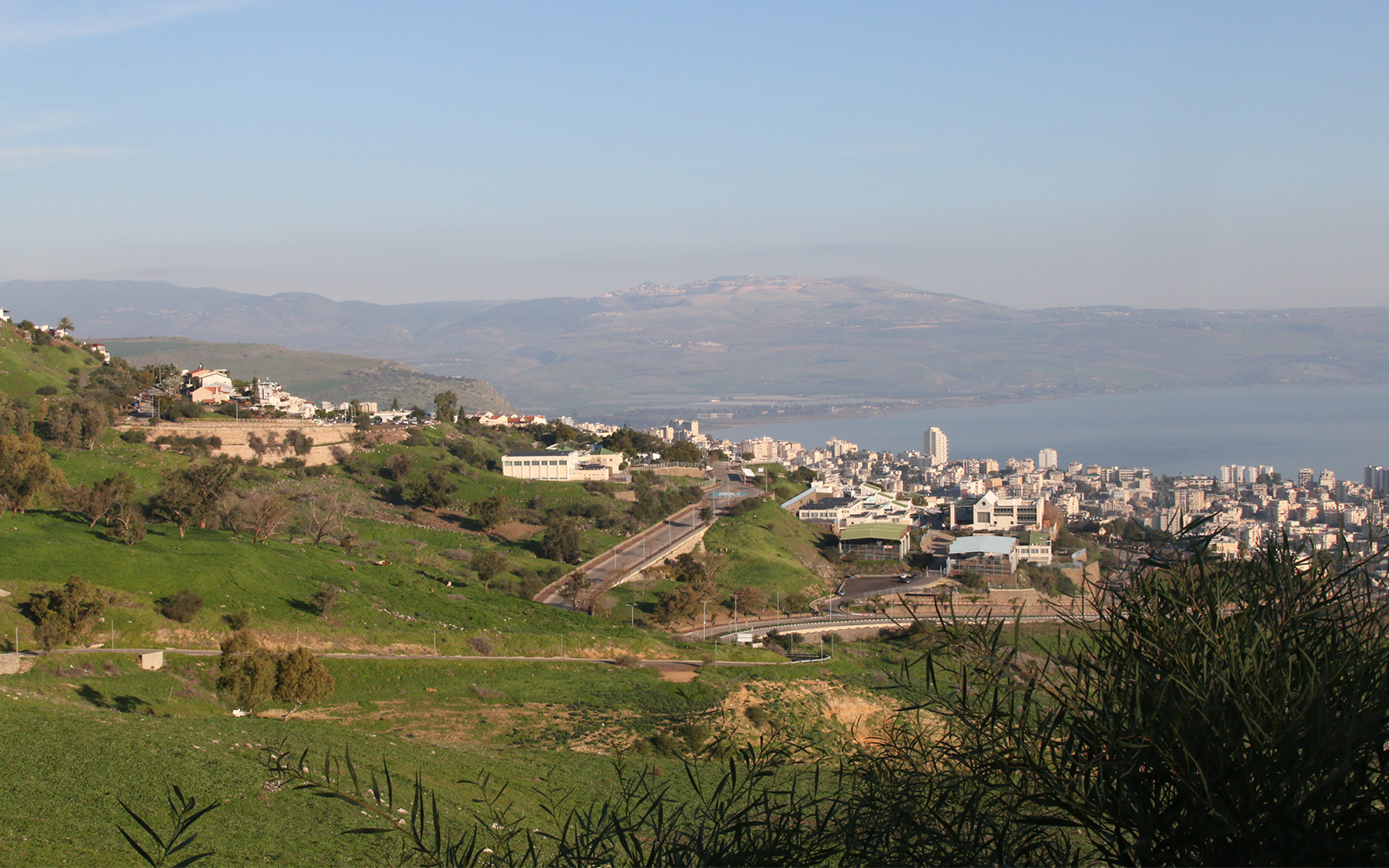
Gracia Mendes Nasi, also known as Dona Gracia, was one of the wealthiest women in 16th-century Europe. Born in 1510 into a family of Portuguese Marranos — Jews forcibly baptized as Christians — she married a very rich uncle at the age of 18. When he died less than a decade later, she found that he had left her his fortune. Eventually, because of a family inheritance dispute, she was ratted out by her sister and incarcerated for continuing to practice Judaism.
This was the age of the Inquisition, a time of great peril for Jews in Europe. So after Dona Gracia was released from prison, she persuaded the Turkish Sultan to rebuild the once grandiose city of Tiberias. There, she established a Jewish settlement to house refugees fleeing Spain and Portugal in addition to her other good works: building schools and synagogues, and patronizing Jewish art.
So it is not surprising that, along with a hotel named for the great lady, and a unique museum that tells her story, Tiberias boasts a Dona Gracia Forest with a viewpoint for enjoying the shimmering waters of the Sea of Galilee. It was established in 2010, to celebrate the 500th anniversary of her birth.
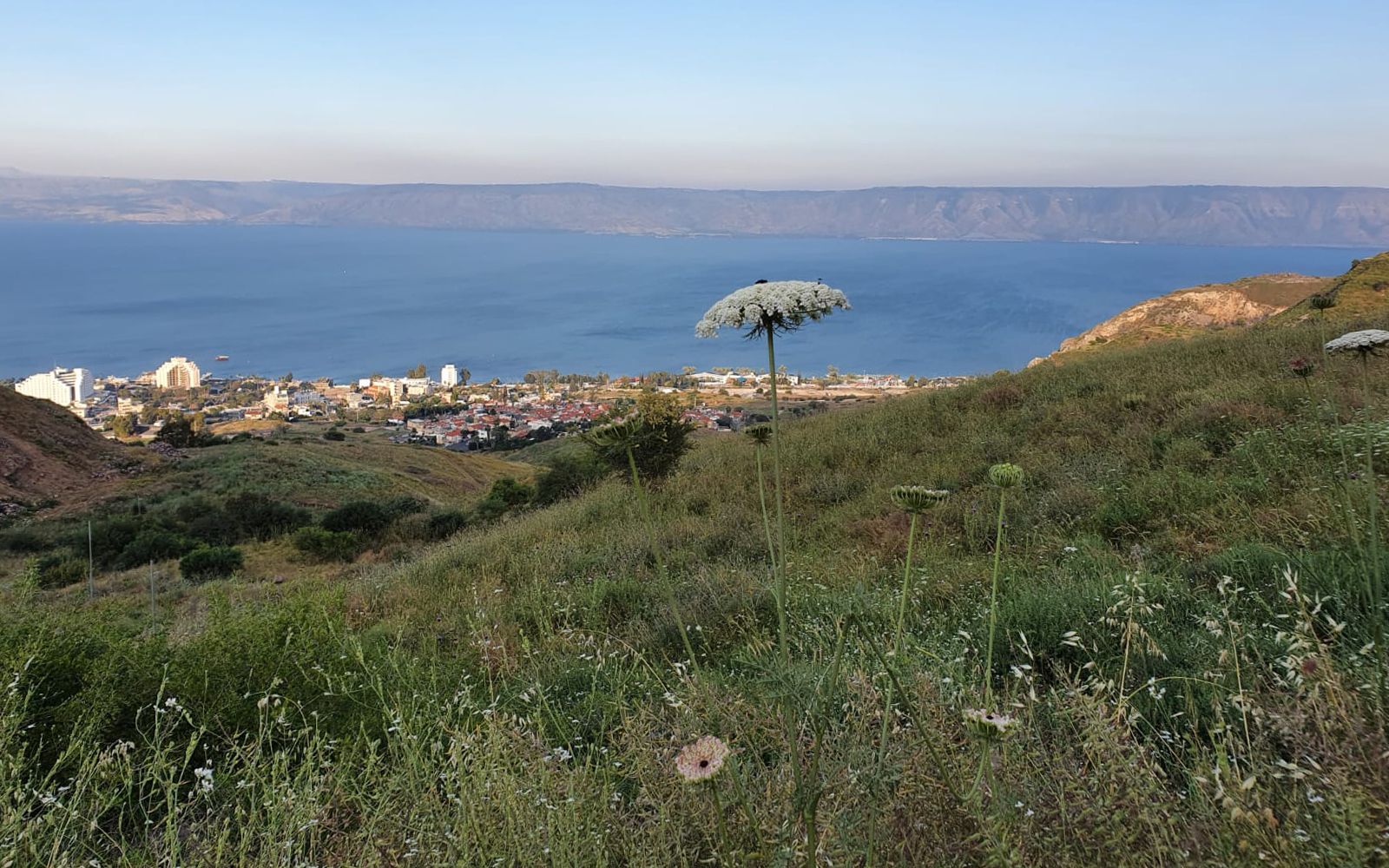
There are dozens of vantage points in and around Tiberias for viewing the lake — and there could hardly be a better time do so (assuming there are no new restrictions due to the coronavirus). As of this writing, the the Sea of Galilee was only 12 centimeters (4.7 inches) short of its peak surface level, and was over four meters (13 feet) above its danger zone.
We hope that those of you not in Israel at the moment will be here sometime in the future. And if not, that you will enjoy reading about the sites and their stories.
Here are just a few of the loveliest viewpoints around the lake and the stories that go with them.
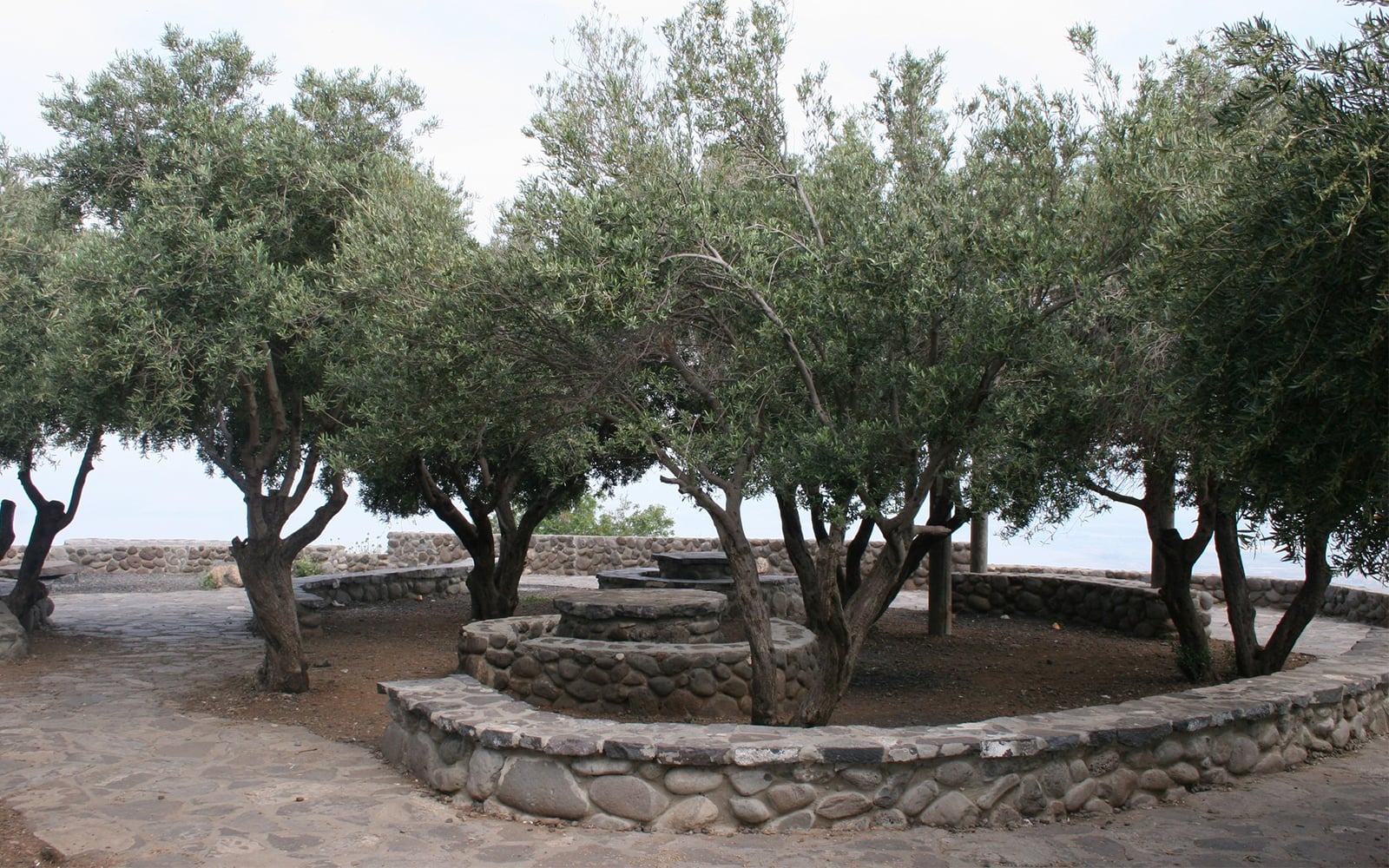
Ophir Overlook — Mitzpor Ophir
Road 789, northeast of Kibbutz Ein Gev. Wheelchair accessible.
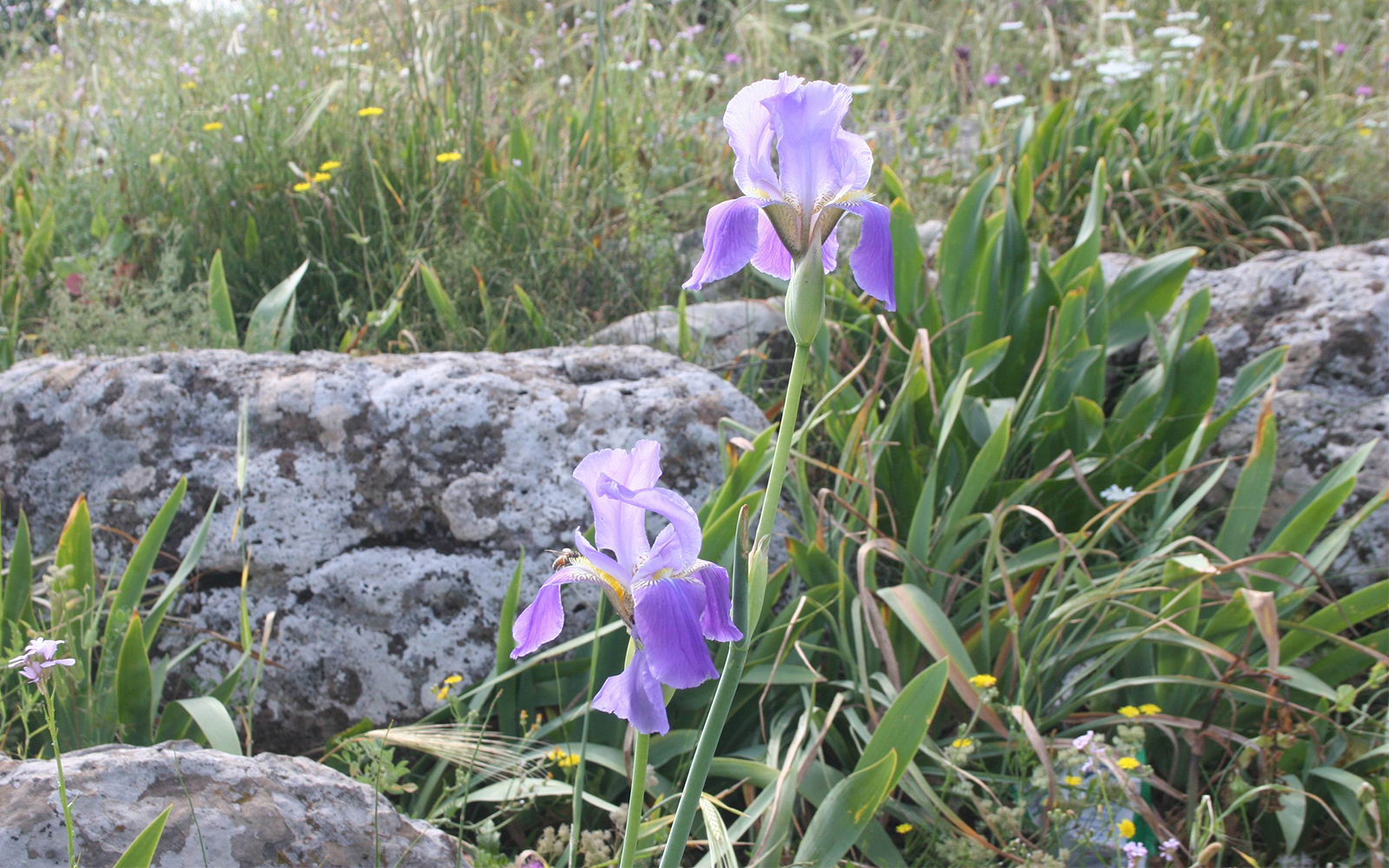
Towering nearly 480 meters (1,575 feet) above the lake’s glistening waters, this spot served as the perfect outpost for Syrian sharpshooters from 1948 until the Golan Heights came under Israeli control during 1967’s Six Day War. The troops must have had a field day – not only did they have an excellent view of the settlements below, making it easy to take potshots whenever they wished – but in April they could feast their eyes on the wild, pink-and-purple Mesopotamian iris.
The overlook was developed by Jimmy Sha’al of nearby Moshav Givat Yoav as a memorial to son Ophir, who died of a long, lingering illness at the age of 16. A grove of 16 olive trees, planted here, symbolizes each year of his short life. Below stands Kibbutz Ein Gev and the Kursi National Park with Tiberias and the mountains of the Lower Galilee on the other side of the water. Best of all is a view of the entire Sea of Galilee all at once.
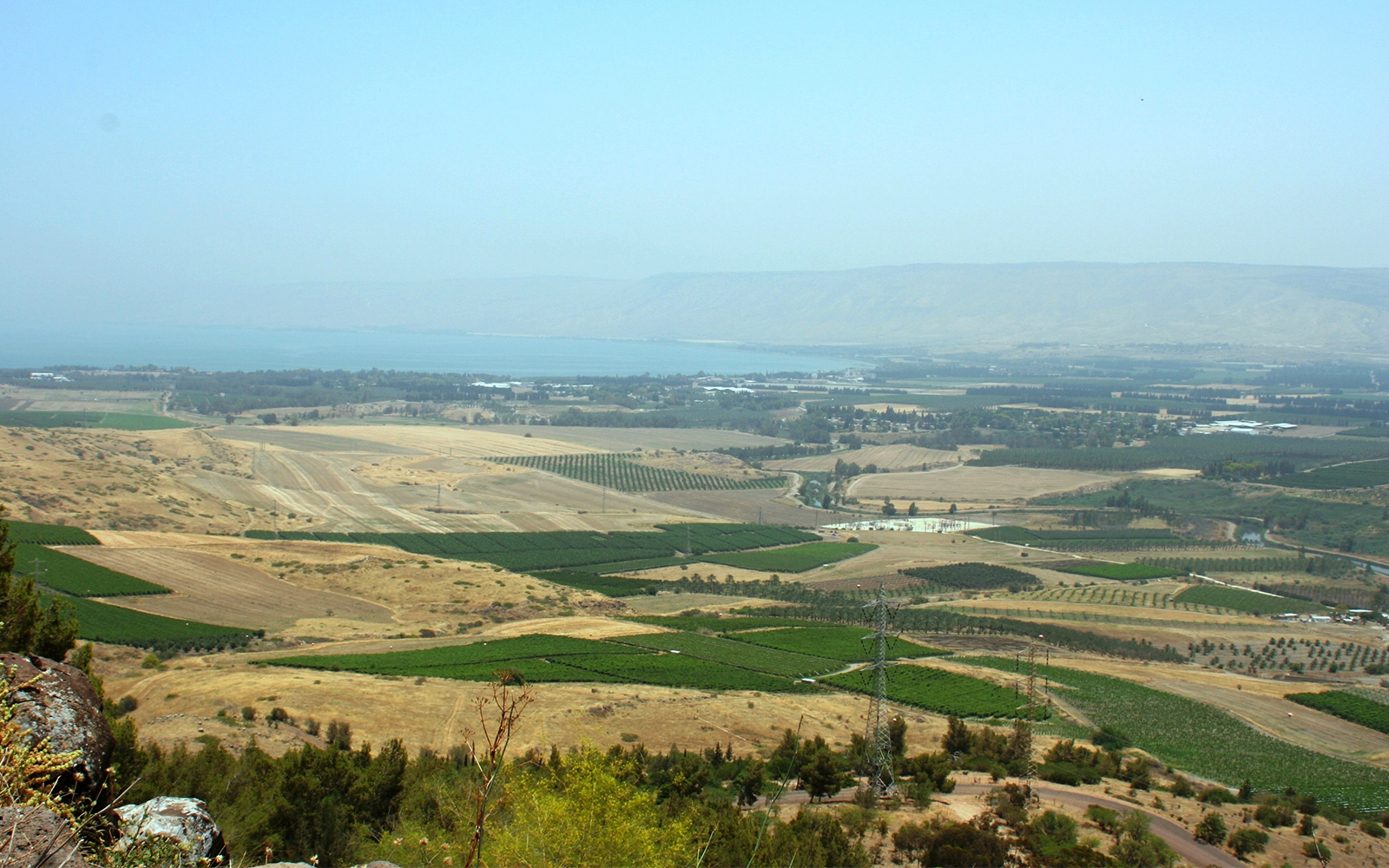
Eshkol Overlook: Mitzpor Levi Eshkol
Inside Levi Eshkol Forest at Moshav Menahemia.
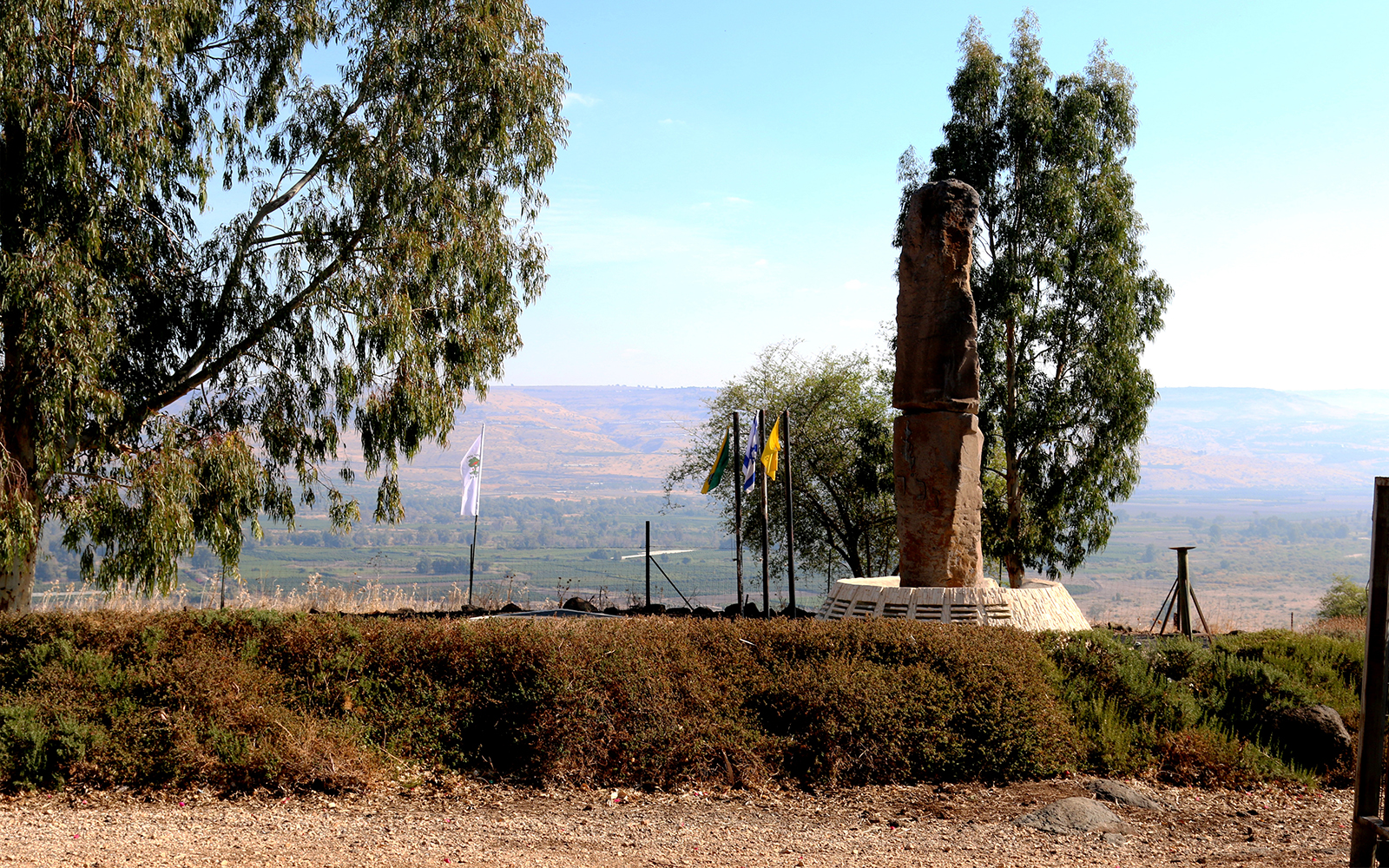
A rather stark monument to Levi Eshkol, who was Prime Minister during the Six Day War, tops a hill with an absolutely breathtaking view of the Jordan Valley, the Golan Heights, the hills of Gilead, fertile fields, and the edge of a sparkling Sea of Galilee.
An added bonus: if you sit on the platform you can observe some of the hundreds of thousands of birds that fly through this country each year — at eye level.
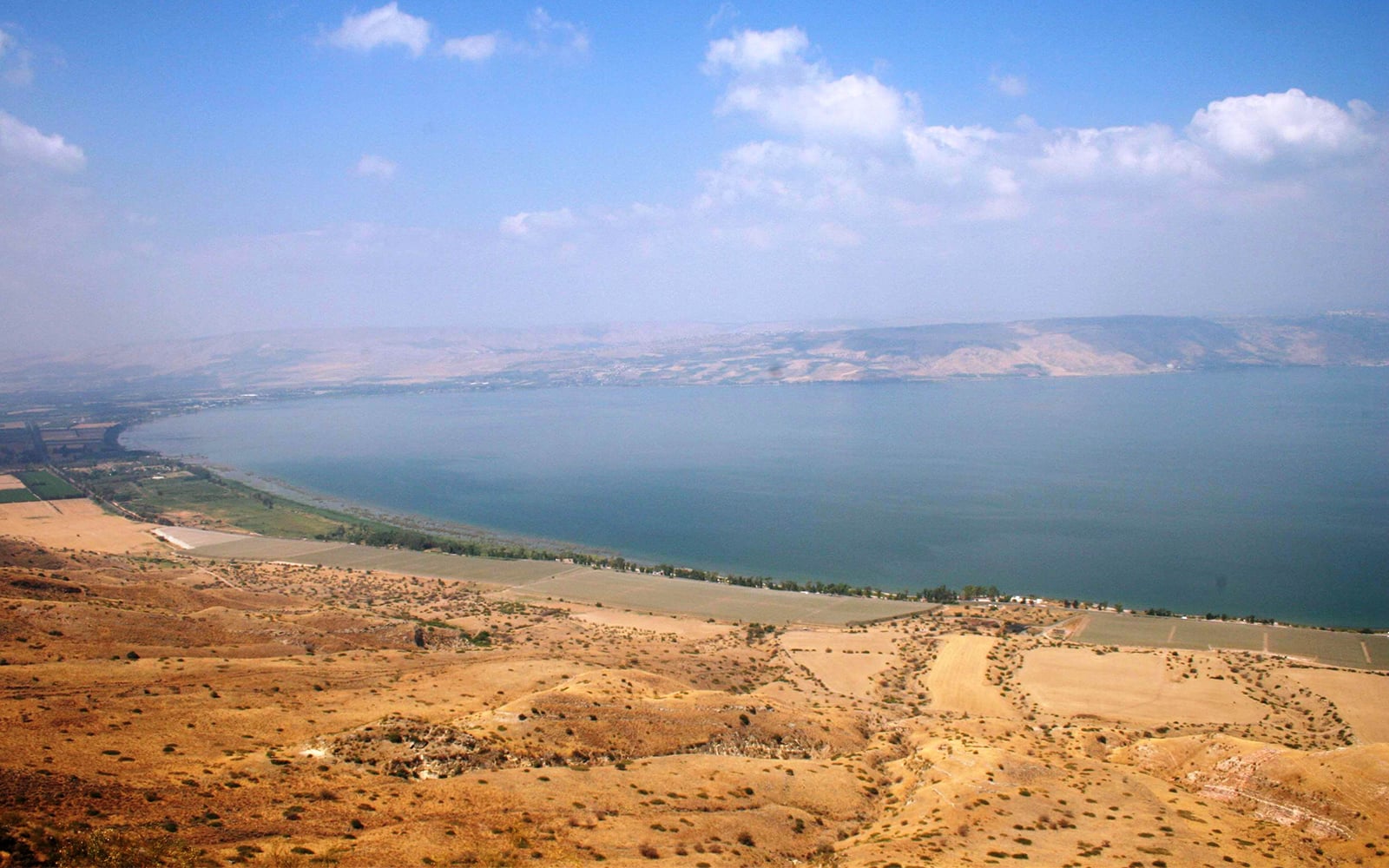
Peace Vista — Mitzpe Hashalom
Off Highway 98 south of Kibbutz Kfar Haruv. Wheelchair accessible.
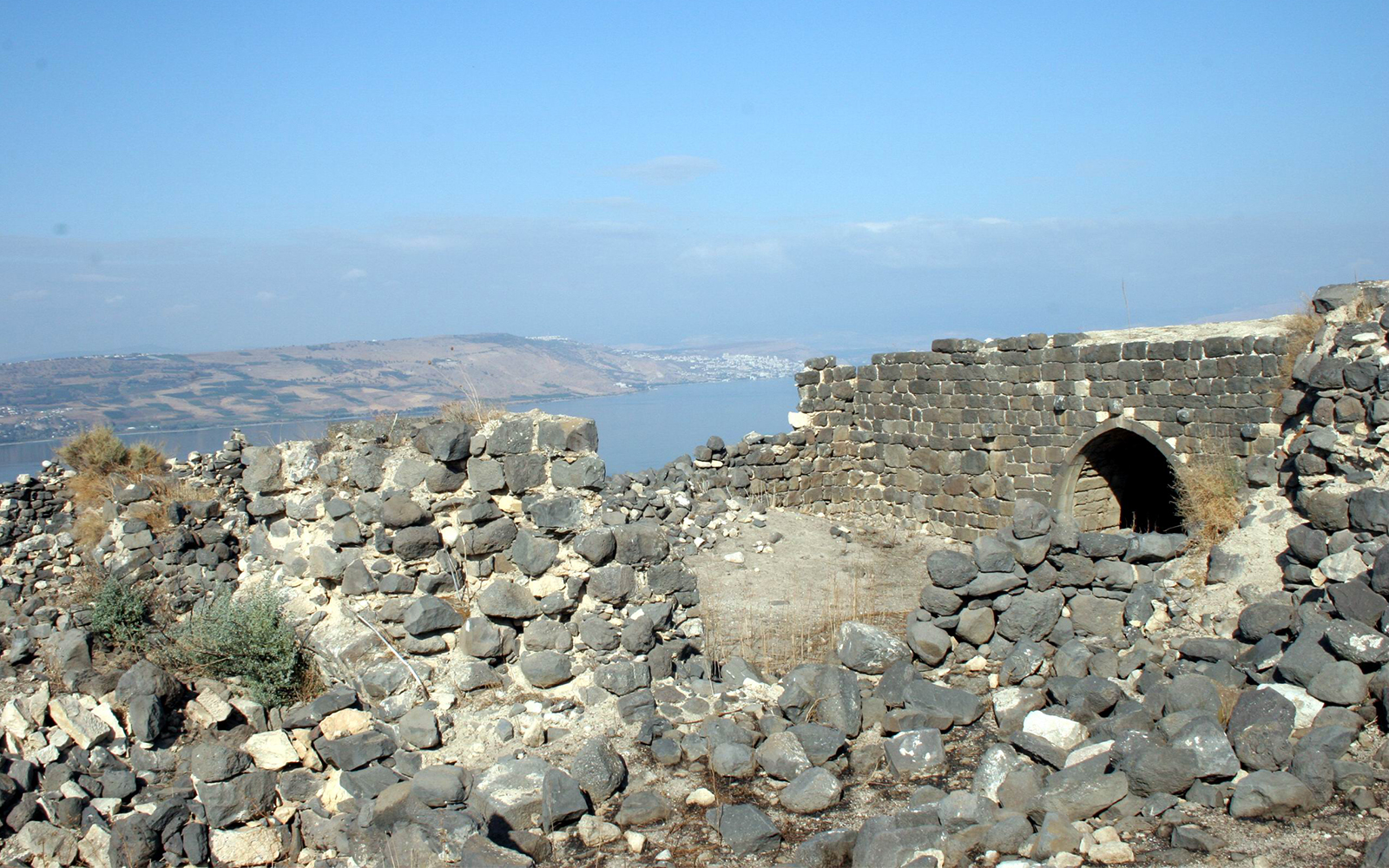
From 1948 to 1967 Syrian soldiers periodically shelled settlements around the Sea of Galilee from well-fortified positions in the Golan Heights directly above the lake. On one day alone they lobbed over 300 shells at Kibbutz Ein Gev, below.
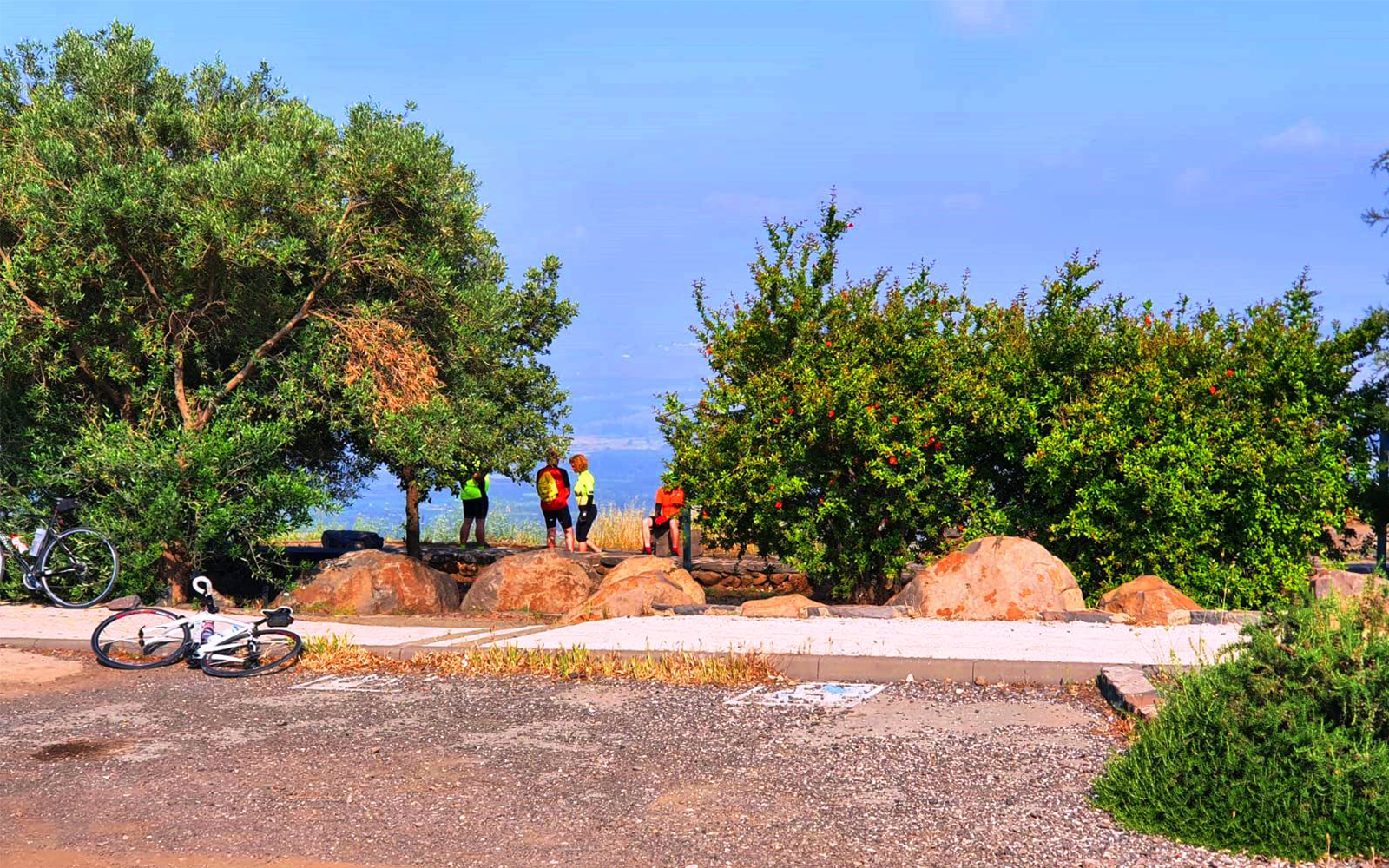
While several former Syrian outposts in the Golan Heights have been turned into memorial sites, one of them — Peace Vista — has become a delightful overlook, instead. From the lovely landscaped path you can view the entire Sea of Galilee in all of its shimmering magnificence.
As you gaze out over the water, note how lush and green the lake’s southern edge. Incredibly, the banks were desolate and barren before Degania, the first kibbutz, was established there a century ago.
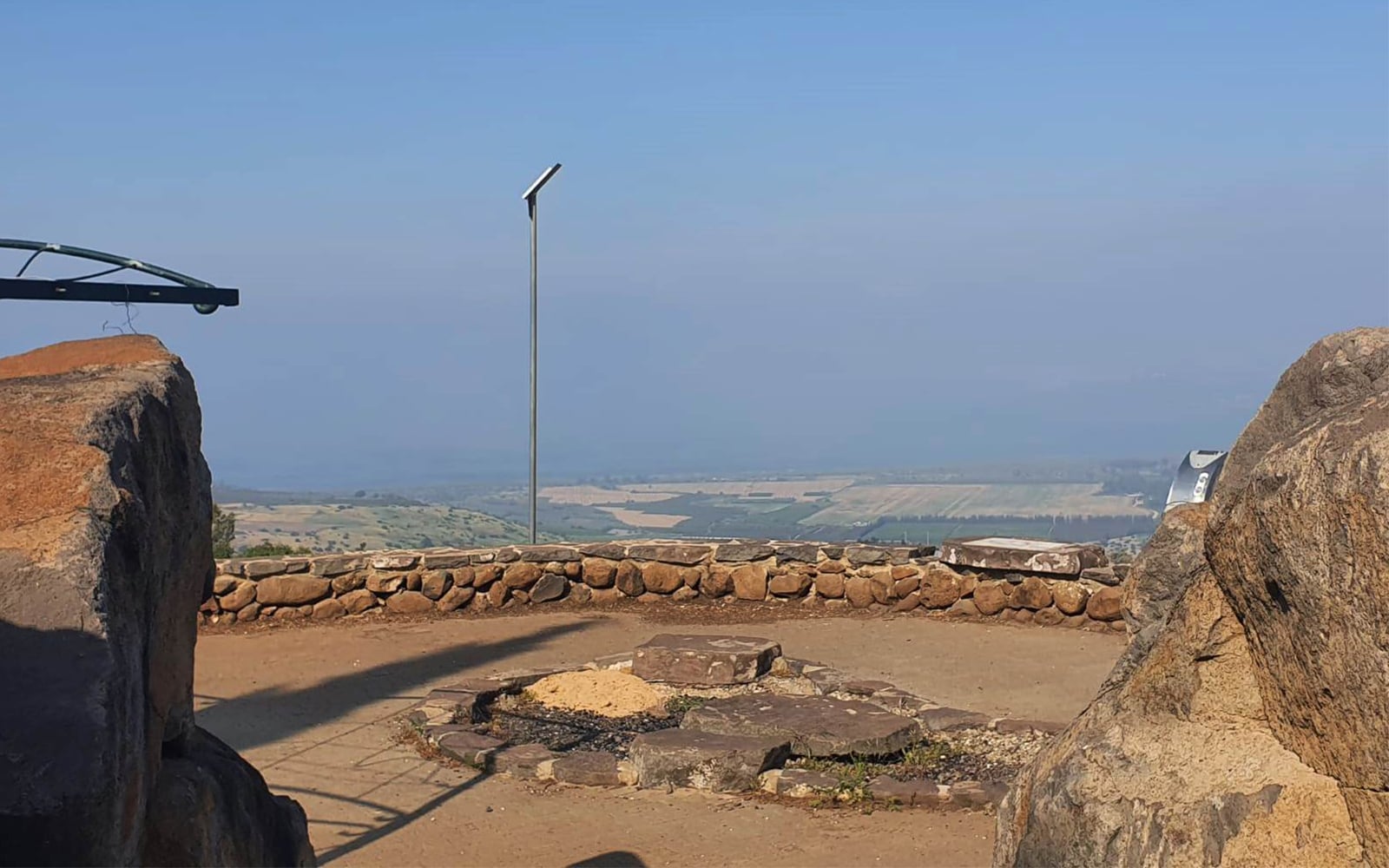
Beitsaida Vista Point – Mitzpor Beitsaida
East of Maale Gamla, on Route 869. Wheelchair accessible.
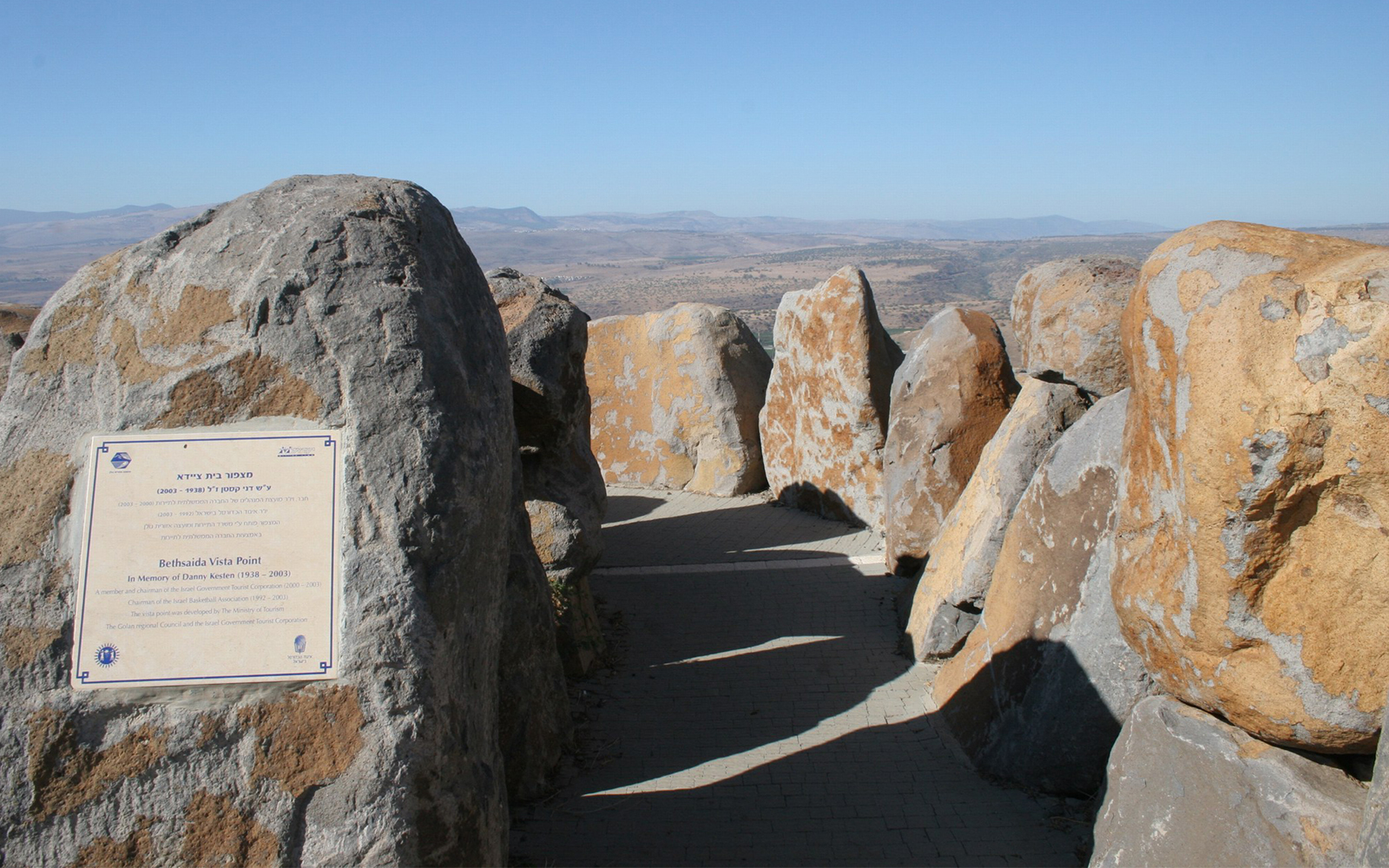
Dedicated to the memory of Danny Kesten, former chairman of the Israel Basketball Association and Israel’s Government Tourist Corporation, the striking Beitsaida Vista Point is located at 110 meters (360 feet) above sea level. It looks out over the glimmering northern portion of the Sea of Galilee, and the lush, marshy Beitsaida Valley — bursting with the streams and tributaries that contribute to its waters.
The abundance of soil and water carried by the Jordan River and other streams has made this region extraordinarily fertile. It is easy to make out Mount Tabor and the hills of the Lower Galilee across the take; to the north Mount Hermon is often visible.
In 1976 the United Nations equated Zionism with racism. In response, Prime Minister Yitzhak Rabin resolved to build four new communities on the Golan Heights. One of the four was Ma’ale Gamla, just below the lookout. Most of the residents are successful farmers, whose success is due to the region’s sub-tropical climate, fertile ground and plenty of water.
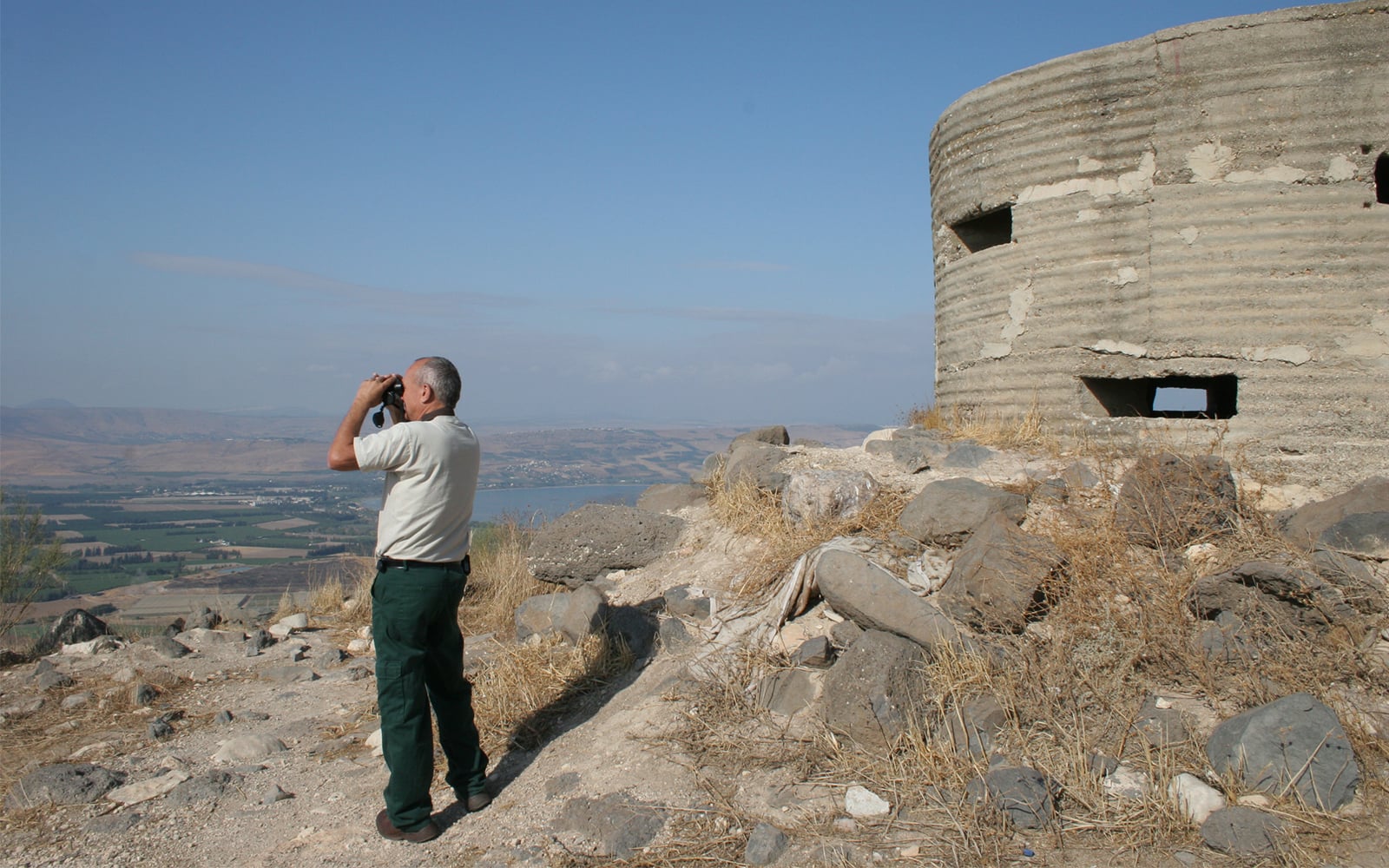
Mevo Hama
Inside Mevo Hama Forest, near Kibbutz Mevo Hama. Wheelchair accessible.
Until 1967, Syrian soldiers based at the village of Taufik in the Golan Heights repeatedly shot at settlers living in Kibbutz Tel Katzir below. Today, a superb little park stands less than 500 meters (1,640 feet) from the deserted village. Developed by the Jewish National Fund with the aid of donations from JNF Friends in Germany, it was built around Ein Aduk, a spring with gently flowing waters.
The tranquil park, located in the JNF’s Mevo Hama Forest, features a footbridge, masses of river foliage, and a stunning variety of trees. Among them: weeping willow, palm, tamarisk, olive, canary pine and several species of eucalyptus. Best of all, there are some wonderful views of the Jordan Valley, the Golan slopes, and the Sea of Galilee. Dozens of picnic tables are scattered throughout the park, and a wheelchair accessible path leads to a table of special accessible design.
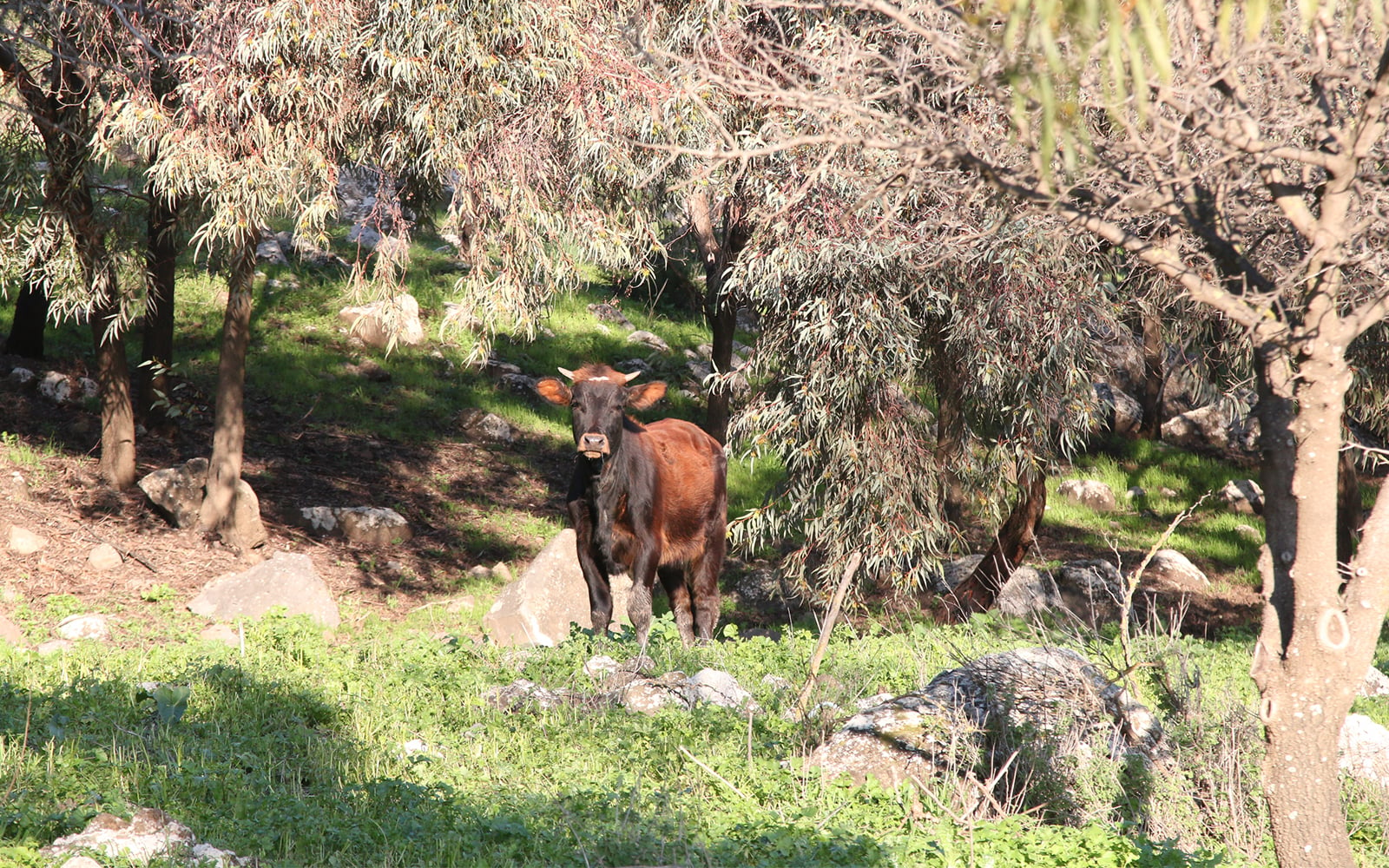
Swiss Forest
Scenic drive off highway 90, north of Kinneret Junction.
For thousands of years, whenever it rained on the hills above Tiberias, soil and foliage slid down the steep incline toward the city. Finally, in 1982, workers from the Jewish National Fund began planting the first of 200,000 trees above Tiberias, using vegetation with a double-root system that was well suited to the soil and blocked the slopes with low stone walls.
Today the hills above Tiberias are known as JNF’s Swiss Forest, and are covered with a vast variety of foliage and recreational equipment that provides visitors with the perfect site for a few hours of recreation. Among the plants and trees are cassia, rosemary, carob, lentisk, Mediterranean rosebud, and Cyprus. The result is glorious, and offers as well a gorgeous view of the Sea of Galilee.
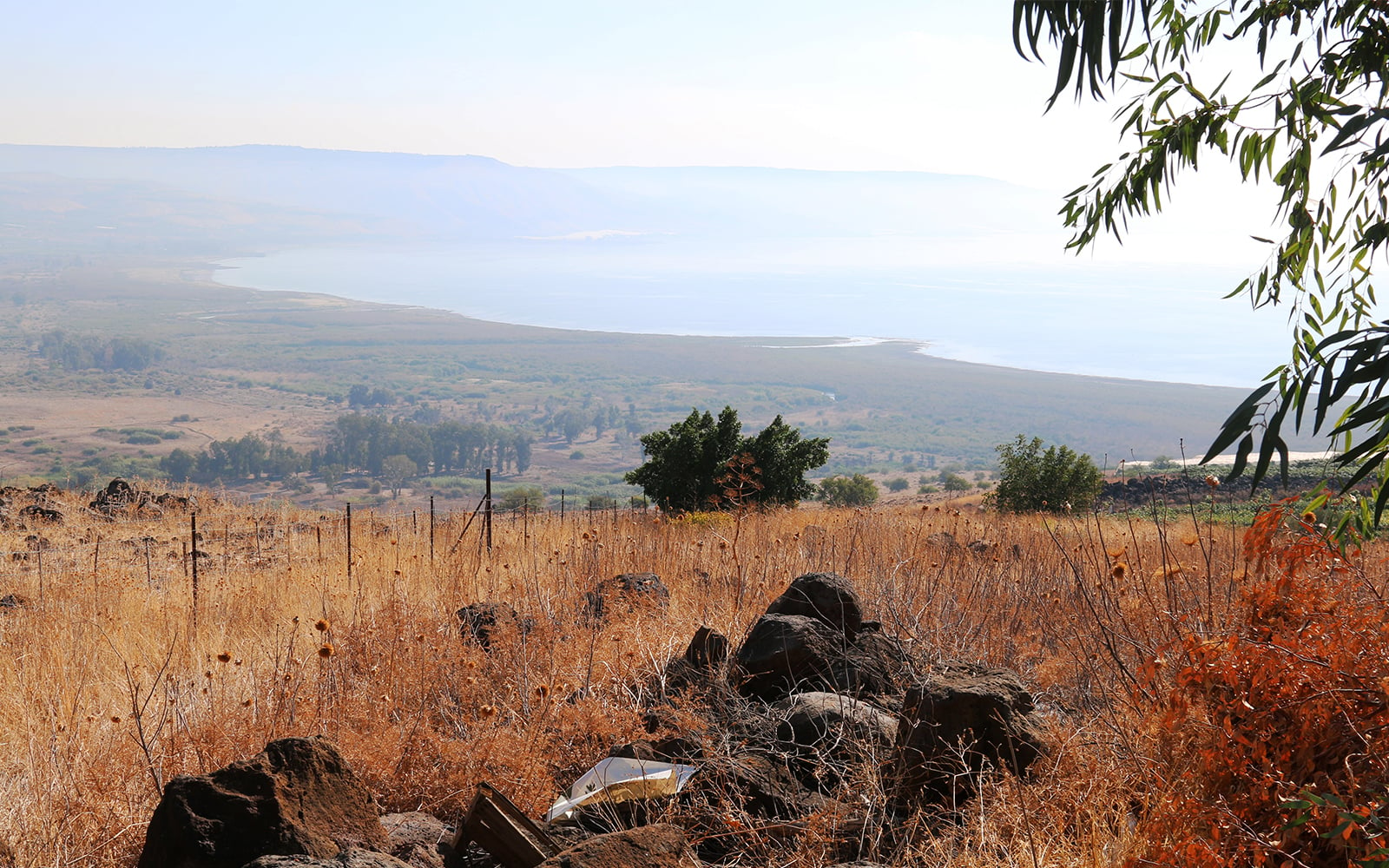
Tel Motilla
A vantage point inside Moshav Almagor. Wheelchair accessible.
After Israel’s War of Independence, areas east of the Jordan River and the Sea of Galilee were declared demilitarized zones. At the beginning of May 1951, Syrian soldiers dressed in civilian clothes moved into these areas, all of them specifically part of Israel, and took control of three heights above the road leading north from Tiberias. One of the hills was Tel Motilla.
From May 2 to May 6 that same year, terrible battles took place between Syrian and Israeli soldiers. In the end, and with the help of the Air Force, Israel troops captured the hills. From the beautiful memorial to 41 soldiers killed here in battle, there is an incredibly stirring view of the Sea of Galilee.
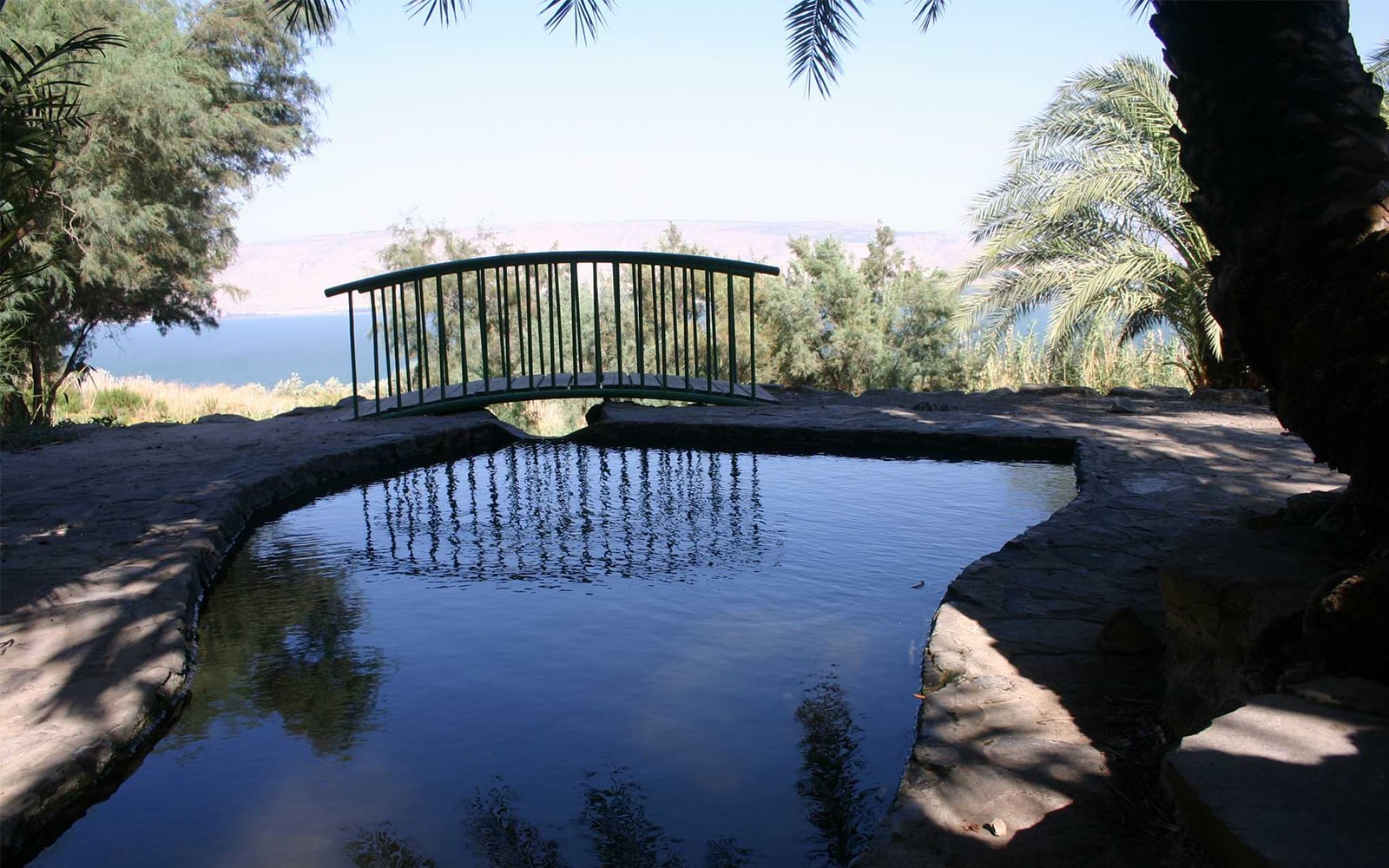
Poriya Springs — Ein Poriya
Off Highway 90, route 7677 in the direction of Swiss Forest and Poriya.
Until 1992 Ein Poriya was just another overgrown tangle of weeds with a clogged-up spring. That year the Jewish National Fund, beefed up by a substantial donation from JNF Switzerland, hired unemployed workers from Tiberias and nearby settlements to clear out the brush and clean up the spring. The result is a charming recreation site where slightly brackish water flows all year round.
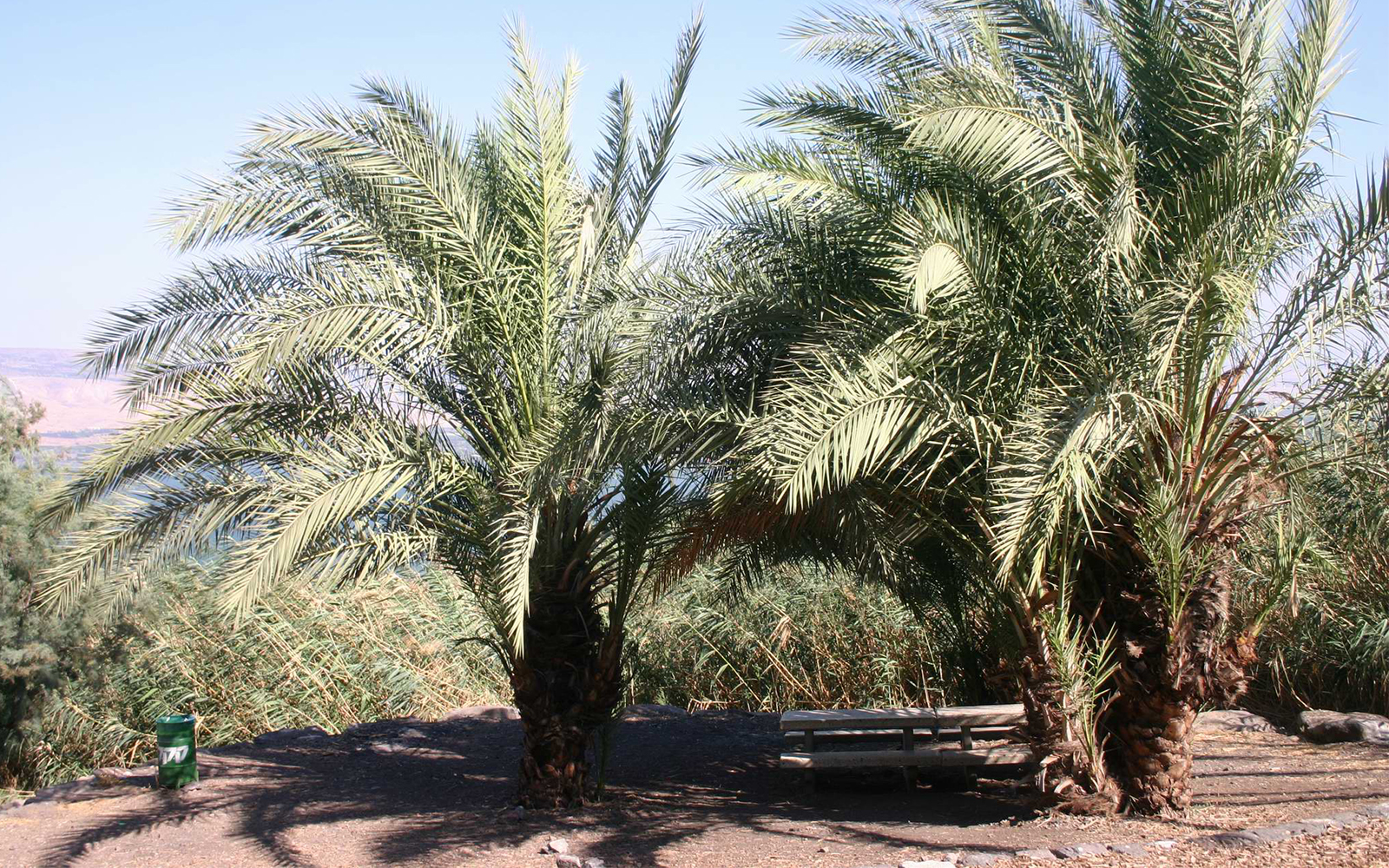
Not only is this a great picnic site, with enchanting footbridges, canals, attractive stone tables, date trees and canary palms from Ein Gedi, but from here there is a perfect artist’s view of the Sea of Galilee, so bring your paints and your easel.
—
Thank you to our friend Asaf Ben-Zvi from Tiberias who took some of the beautiful photos we needed for this article.
Much of this article is adapted from chapters in our book Israel’s Northern Landscapes: Guide to the Golan Heights, Eastern Galilee and Lake Kinneret
Aviva Bar-Am is the author of seven English-language guides to Israel. Shmuel Bar-Am is a licensed tour guide who provides private, customized tours in Israel for individuals, families and small groups.







The Times of Israel Community.