

A cacophony of conflicting viewpoints, as Israel’s leadership speaks its mind
This week, as Obama unveiled his plan for tackling Islamic State, and amid numerous other challenges, seven of Israel’s eight key decision-makers set out their visions. Unified, they are not
 Add ToI as a Preferred Source on Google
Mitch Ginsburg is the former Times of Israel military correspondent.
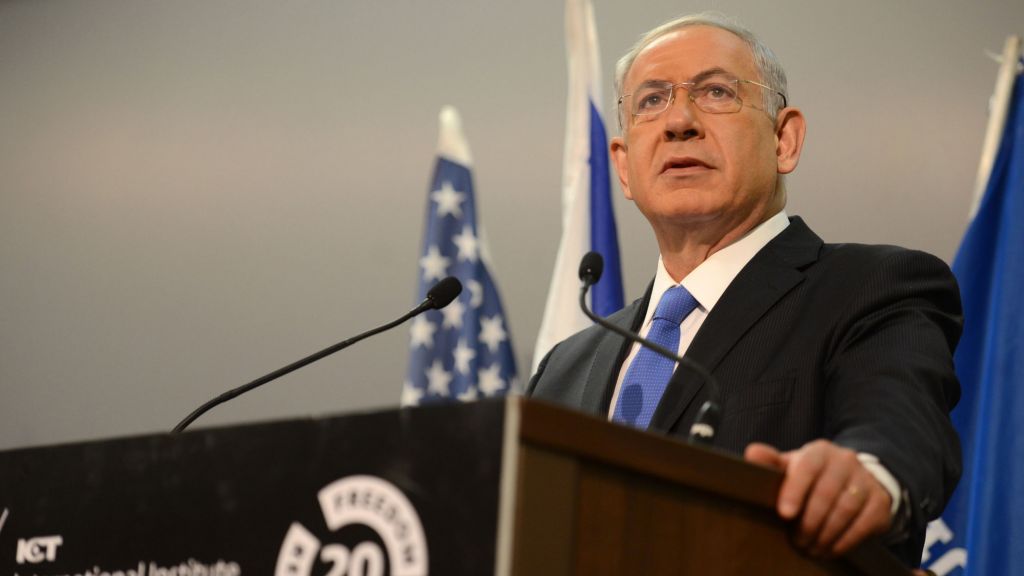
Israel is a small country, with politicians who speak often. During the past week, in quick succession, seven of Israel’s eight inner cabinet ministers — members of the country’s most important political decision-making body — addressed the International Institute for Counter Terrorism (ICT) 14th annual conference at IDC Herzliya.
What emerged, after 50 days of warfare in Gaza and amid sea changes in the Middle East, was a ship of state staffed by eight oarsmen paddling to their own rhythm, in the direction of their choosing. And they are being guided by a prime minister who has proven expert at avoiding the shoals and reading the weather patterns – pointing out the hazards ahead – but without a stated course or destination in mind.
This was a week in which the US announced an air war against the Islamic State organization, perhaps tilting the balance of blood in the regional war in Syria. It is a period that sees al-Qaeda affiliates controlling most of the border region along the Golan Heights, Iran perched close to a nuclear weapon, and Hezbollah honing its trade in Syria. It finds moderate Sunni leaders more aligned than ever before with Israel — in principle, but not in practice — yet also more vulnerable. And it features an Israel laboring to meet the region’s threats amid a cacophony of opinions among its most senior leaders. Here is where those leaders stand.
Prime Minister Benjamin Netanyahu delivered a strong speech at the close of the counter-terror conference on Thursday. As always, he was historically minded. Militant Islam, he said, rooted in the mores of the early Middle Ages, will eventually “disappear from the stage of history,” because it offers its followers and, more precisely, their progeny, very little in the way of hope and progress.
In the meanwhile, though, he said, just as there was “once a master race, today there is a master faith,” and the latter, he asserted, must be combatted like the former.
But his main point was Iran, and the way it shares the jihadist ideology of the Islamic State. After applauding President Barack Obama’s decision to strike IS – a threat to Israel primarily through the spread of instability, potentially unseating the king in Jordan, assailing Abdel-Fattah el-Sissi’s rule in Egypt, creating a Muslim Brotherhood ring around Israel – he said that Sunni and Shiite extremism “are branches of the same poisonous tree” and that “we don’t have to strengthen one to weaken the other. My policy is: weaken both.”
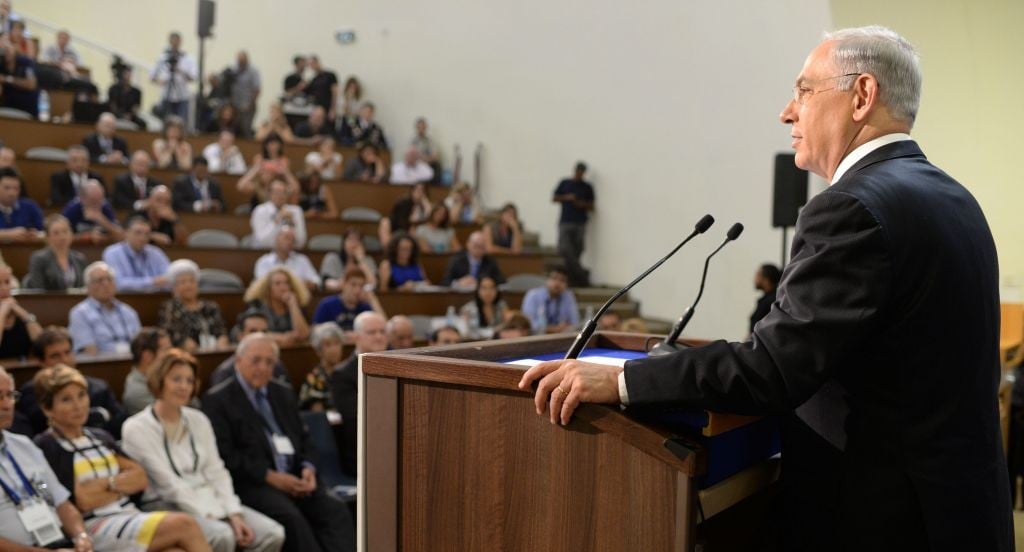
A nuclear-armed Iran, he said, would create a “tremendous pivot in the world,” where “horrors you could not even contemplate come to fruition.”
He mentioned opportunities to partner with moderate Sunni states in countering these threats, but his primary message was this: We are on the front lines of a global war, it will be long, dangerous, but the boat will not capsize under my leadership and, dear Israelis, it will cost a lot of money.
Defense Minister Moshe Ya’alon (Likud) was of a similar mind. He was, as he often is, more combative, more openly derisive. He began his address Tuesday with a joke: A Jew rides his horse into town and asks a man where he can tie it up. The man isn’t sure. He asks another man and then another. Finally, another Jew says, let’s ask the rabbi. Why, the horseman asks, what does the rabbi know about tying horses? Nothing, the man says, but he knows how to tie everything to the weekly Torah portion. “And we tie everything to the Israeli-Palestinian conflict,” Ya’alon said, dismissively.
Rather than address the topic of the conference – how terror affects the world – he said he wanted to discuss the flipside: how the world affects terror. This is a favorite topic of Ya’alon’s. And he often makes salient points. But it is unclear to what extent Netanyahu finds helpful the probing light Ya’alon habitually shines on alleged international hypocrisy. In the past Ya’alon has called US Secretary of State John Kerry “messianic” in his drive for Israeli-Palestinian peace; this time he focused on Turkey and Qatar, condemning them for their support of Hamas and castigating the Western world for its acceptance of, say, Turkey as a NATO member.
“This is how the free world signs up for the fight against terror?!” Ya’alon asked of the UN commission poised to investigate Israeli actions in Gaza. The West, he said, appears to lack moral and strategic clarity in its fight against terror.
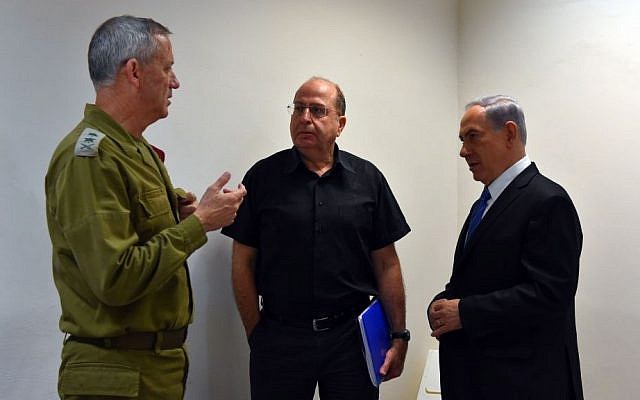
Slightly earlier that same day, Justice Minister Tzipi Livni (Hatnua) said that there are leaders “stricken with confusion” about the way to navigate at this time. “Amid the terror that chops off heads and sends suicide bombers,” she said, “Israel has an opportunity.”
She called on Israel to initiate moves that will link it to the moderate Sunni states, to “see the reality and act within it.”
The coin, she said, is Palestine and she suggested paying it as soon as possible. “Strong speech against terror without creating any long-term diplomatic solution is good, perhaps, for domestic politics, for the moment. But it is bad for the future of Israel, because whoever does not want to solve the conflict diplomatically brings upon us the next round of fighting.”
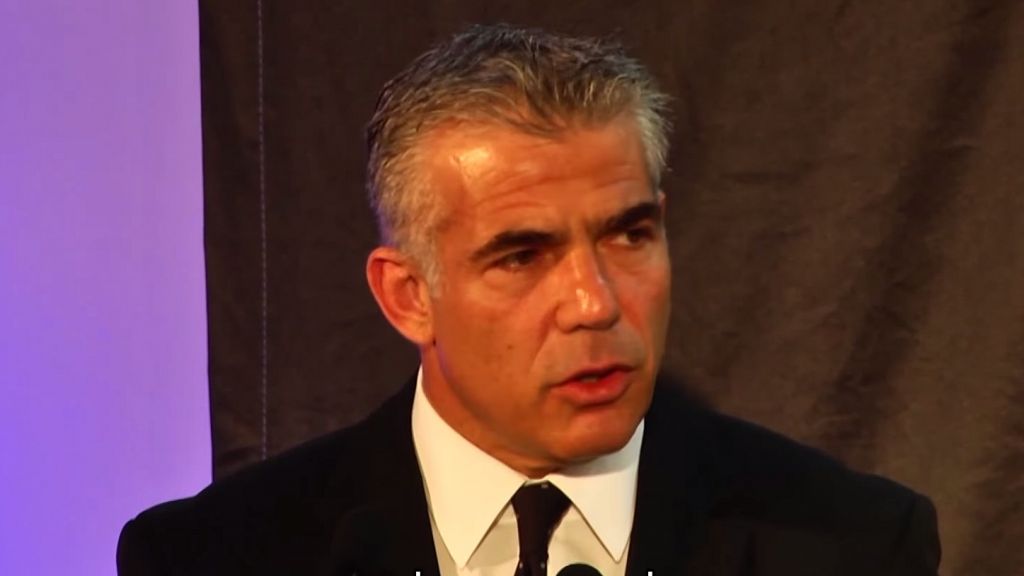
Finance Minister Yair Lapid (Yesh Atid) largely concurred. He said that a regional peace plan was the only initiative “on the table” and that “the role of political leadership is not to push off the end.” If Netanyahu turns toward a regional peace summit, Lapid said in his address Monday, his party would offer the broad back of its support, providing the prime minister some wiggle room within “the handcuffs that the extreme right is trying to put on him.”
In case things weren’t complicated enough, Lapid devoted several minutes to his Zero-VAT plan, which just happens to clash with Ya’alon and Netanyahu’s “very expensive” high-tech wars.
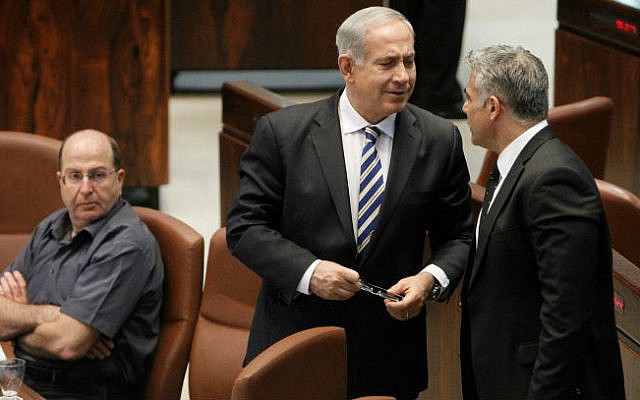
Communications Minister Gilad Erdan (Likud) spoke Monday of the perils of territorial withdrawal and said “I do not believe that there is a sustainable solution to the Palestinian problem that is based on Judea and Samaria and the Gaza Strip.”
Foreign Minister Avigdor Liberman (Yisrael Beytenu) came to the conference unprepared, with a folded piece of paper tucked into his suit jacket alongside his reading glasses. His speech Tuesday was erratic and unpolished but his main points were delivered with the usual aplomb: Hamas was not hit hard enough during the last operation, not “choked”; and Israel, which has no problem with the Palestinians, needs a three-tiered solution to the Arab-Israeli conflict – an accord that addresses the needs of the Arab world, the needs of the Palestinians and, though “it’s not politically correct,” the Arab Israelis. In other words, apparently, revoking the citizenship of some percentage of Israel’s one million Arab citizens.
And finally there was Economy Minister Naftali Bennett (Jewish Home). He spent the first half of his fluid address Monday talking about David Ben-Gurion and the re-think the state’s first prime minister did during the months leading up to November 1947 and the outbreak of war. The state of Israel needs to conduct “a new seminar,” reassessing all of its basic assumptions about future campaigns, Bennett said, “because the world has changed entirely.”
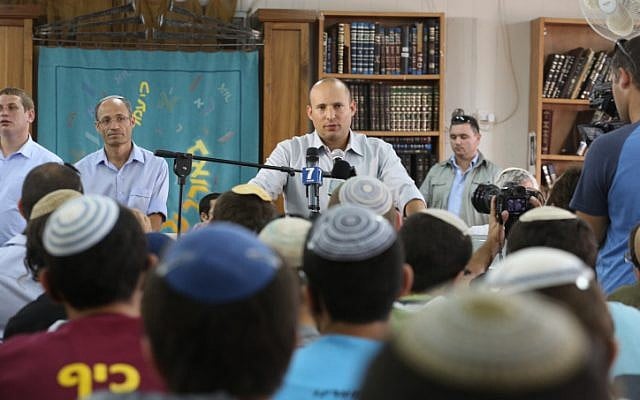
He suggested shutting an armored brigade and founding an elite unit of lawyers and perhaps sacrificing tank protection for a better media operation. But his main point was that the notion of a Palestinian state is no longer applicable. After accusing the Israeli left of “living in the nineties,” he said that a Palestinian state, “the mother of all conceptions,” is the “Yom Kippur conception of our time” – a phrase that in Hebrew has but one connotation, across-the-board failure of leadership.
Perhaps the collage of opinion is related to Netanyahu’s inherent caution and perceived stasis. Perhaps it is an apt expression of the diversity of opinion in Israel and the cost of an inclusive parliamentary system. But either way the prime minister, in dealing with a cabinet whose key members are so openly at odds as to the course ahead, shoulders a complex, difficult load indeed.



The Times of Israel Community.