The Times of Israel liveblogged Wednesday’s events as they unfolded.

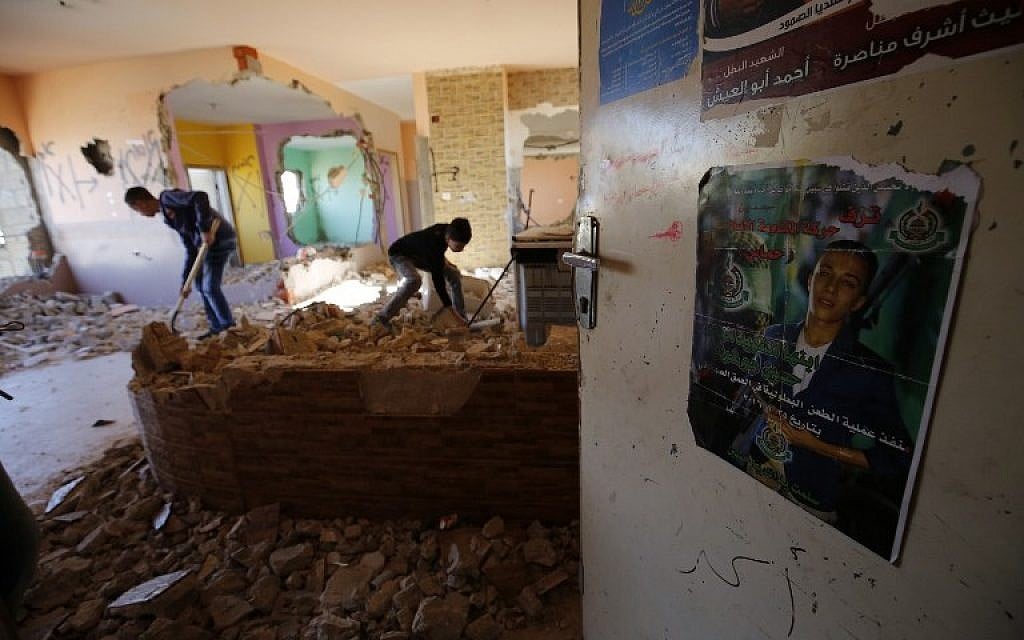
Court blocks razing of homes of suspects linked to Henkin killing

The High Court accepts petitions to block the razing of the homes of two suspects charged with aiding a West Bank terror attack in October that left Naama and Eitam Henkin dead.

The court rejects a petition by a third suspected accomplice and gives the state the go-ahead to knock down his home, according to a report in Walla news.

The car in which Israeli couple Naama and Eitam Henkin were shot dead in a terror attack near the West Bank settlement of Itamar on Thursday, October 1, 2015. (Courtesy United Hatzalah)

The car in which Israeli couple Naama and Eitam Henkin were shot dead in a terror attack near the West Bank settlement of Itamar on Thursday, October 1, 2015. (Courtesy United Hatzalah)

Judge Noam Silber rules that the two suspects whose houses cannot be demolished were not directly involved in the attack and only in raising funds and planning the attack, according to the report.

Earlier in the day, Israeli forces razed the family home of a suspect in another West Bank attack that left a woman dead.

Jerusalem says the controversial measure, decried by human rights groups and others, is key as a deterrent to terror.

Rebel group declares Syria ceasefire ‘buried’

The head of a Turkey-based Syrian opposition group says that the government of Syrian President Bashar Assad has effectively “buried” the cessation of hostilities with its continuous attacks across the country.

Anas al-Abda, the leader of the Syrian National Coalition, says at a press conference Wednesday there will be no quick return to peace talks in Geneva if the current situation continues.

He also warns that the peace negotiations may “collapse completely.”

The ceasefire agreement in place since September 27 has all but collapsed amid fierce fighting in Syria’s north.

The opposition delegation to the talks in Geneva suspended its participation in protest although it kept a small technical team there.

— AP

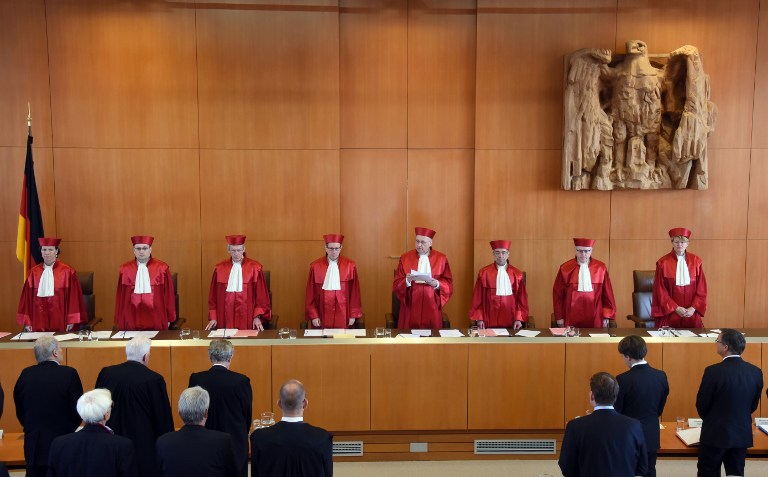
German court says anti-terror snooping verboten

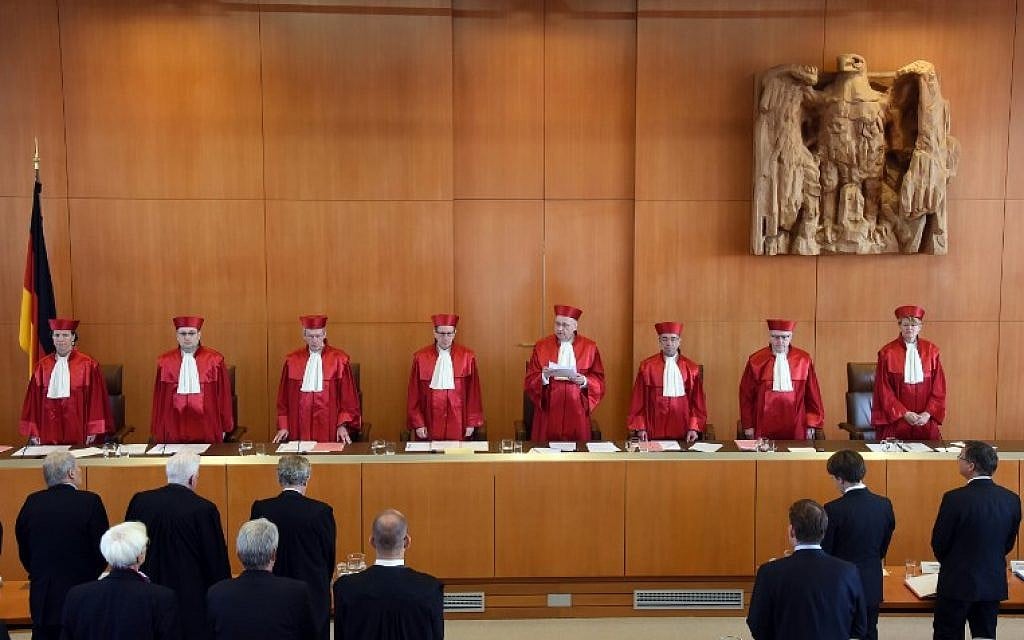
Germany’s highest court on Wednesday struck down key planks of an anti-terror law, saying they violated privacy protections enshrined in the constitution.

The 2008 legislation covering the activities of the federal police in surveillance of terror suspects must be reworked by June 2018, the Federal Constitutional Court in the southwestern city of Karlsruhe ruled.

The legislation gave investigators sweeping powers to use secret cameras and bugging devices in private homes and government-developed surveillance software on personal computers to prevent imminent attacks.

The German Federal Constitutional Court announces the judgment on an anti-terror law saying it violated privacy protections enshrined in the constitution, on April 20, 2016 in Karlsruhe. (AFP / dpa / Uli Deck)

The German Federal Constitutional Court announces the judgment on an anti-terror law saying it violated privacy protections enshrined in the constitution, on April 20, 2016 in Karlsruhe. (AFP / dpa / Uli Deck)

Controversially, it specifically allowed snooping in the bedroom and bathroom, and for people not targeted in an investigation to be observed if they are with a suspect.

The judges say that while the thrust of the measures is covered by Germany’s Basic Law, they found “several individual provisions disproportionate encroachment on privacy.”

— AFP

Uncle of slain Hebron stabber: Soldier should say sorry, not be jailed

The uncle of the Hebron assailant killed by an Israeli soldier as he lay wounded last month tells The Times of Israel that he does not wish to see the soldier who shot his nephew dead sent to prison.

“What happened, happened. It won’t help me or the family if he is in jail,” Fathi al-Sharif says over the phone from his Hebron home.

On Monday, Elor Azaria was charged with manslaughter for the slaying of Abdel Fattah al-Sharif, 21, following a stabbing attack in a Jewish enclave of the West Bank city on March 24.

Azaria has been in jail and under supervised detention since shortly after the incident, angering his family and some right-wing activists and politicians, who believe the army abandoned him.

Israeli soldiers remove the body of a Palestinian man shot after he stabbed and wounded a soldier in the West Bank city of Hebron on March 24, 2016. (Wissam Hashlamon/Flash90)

Israeli soldiers remove the body of a Palestinian man shot after he stabbed and wounded a soldier in the West Bank city of Hebron on March 24, 2016. (Wissam Hashlamon/Flash90)

Al-Sharif says he is not aware of the comments made Tuesday by Israeli Prime Minister Benjamin Netanyahu calling for “balance” during Azaria’s trial, but casts doubt on whether Azaria will be fully prosecuted.

Al-Sharif stresses, however, that the outcome of the court case matters little to him and his family.

Sgt. Elor Azaria, the Israeli soldier who shot dead a disarmed Palestinian terrorist in Hebron last month, arrives for a court hearing at Jaffa Military Court on April 18, 2016. (Photo by Flash90)

Sgt. Elor Azaria, the Israeli soldier who shot dead a disarmed Palestinian terrorist in Hebron last month, arrives for a court hearing at Jaffa Military Court on April 18, 2016. (Photo by Flash90)

“What is important to me is that the soldier should admit what he did was wrong, apologize to the family, and please please they should return my nephew’s body,” he says. “The most important thing is that the peace process should continue. We need to increase the love between the two peoples who are living side by side next to each other.”

“We have had enough of the killing and the hatred,” he adds.

“I don’t hate any Jews,” says al-Sharif. “But there is one thing I do hate and that must end and that is the occupation.”

— Dov Lieber

Herzog lightly injured in car smash-up

Isaac Herzog’s terrible, horrible, no-good, very-bad week just got a little worse as the opposition chief was involved in a car crash on Israel’s coastal highway.

Herzog was treated for light injuries on the scene of the crash near Rishpon, north of Tel Aviv, and was not hospitalized, a spokesperson says.

Two others are also lightly hurt in what Herzog on Twitter calls a “pile-up.”

Isaac Herzog at a pre-Passover event on April 12, 2016. (Tomer Neuberg/FLASH90)

Isaac Herzog at a pre-Passover event on April 12, 2016. (Tomer Neuberg/FLASH90)

The Zionist Union leader’s week began with him getting grilled by police over a graft probe, and on Tuesday night his problems were compounded when it emerged he had said his Labor Party should stop giving the impression that “we are always Arab-lovers,” drawing criticism from inside and outside the party.

Some in Labor have called for him to resign his leadership post or call new primaries, and on Tuesday, Zionist Union MK Erel Margalit released a scathing video calling on the dovish party to start standing up for itself, which was interpreted by some as the opening volley of a bid to supplant Herzog.

— with Marissa Newman

France looks to keep emergency measures for summer sporting events

France plans to extend a state of emergency declared after the Paris terror attacks to cover the period of the Euro 2016 football tournament and the Tour de France cycle race, Prime Minister Manuel Valls says.

The measure giving the state heightened security powers was imposed following the November 13 jihadist attacks that left 130 dead and hundreds wounded in the French capital, and was already extended by three months in February until May 26.

“The state of emergency cannot be a permanent state, but for these major events… we need to have these powers, these possibilities, under the control of a judge, under the control of parliament, to allow for the best response in the face of terrorism,” Valls says on French radio.

The two events overlap, with the Euro 2016 tournament to be held in France from June 10 to July 10, while the Tour de France is set for July 2-24.

The measure must still be approved by the French parliament.

— AFP

Army holds surprise drill on Syria border

The IDF has completed a surprise exercise on the Syrian border that was held today, the army says.

The exercise tested the Northern Command’s preparedness and included infantry troops, special forces and aircraft, the IDF says.

The military stresses that the exercise was planned far in advance and was not connected to any real-world events, including recent political tensions over Israel’s hold on the Golan Heights.

“With this exercise, the IDF perfected its operational readiness in all areas in order to ensure fitness and full preparedness,” the army says in a statement.

IDF soldiers hold a drill near the Syrian border on April 20, 2016. (IDF Spokesperson's Unit)

IDF soldiers hold a drill near the Syrian border on April 20, 2016. (IDF Spokesperson’s Unit)

Prime Minister Benjamin Netanyahu recently held a cabinet meeting for the first time ever on the strategic Golan plateau, captured by Israel in 1967 and effectively annexed 14 years later, declaring the land would remain Israeli forever and not go back to Syria.

The move drew international condemnation and a rejection of Jerusalem’s stance, including from allies such as the US and Germany.

— Judah Ari Gross

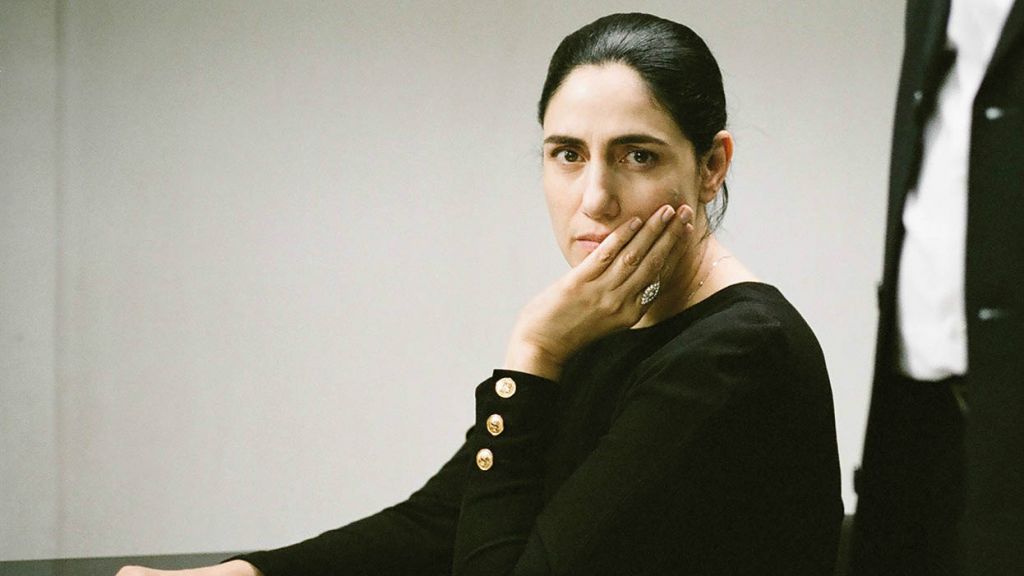
Actress Ronit Elkabetz buried outside Tel Aviv

Israel’s leading cultural icons, family members, friends and others are gathering at the Kiryat Shaul cemetery outside Tel Aviv to say their final goodbye to actress Ronit Elkabetz, who died Tuesday at the age of 51 after a battle with cancer.

Before the funeral, Elkabetz’s body lay in state at the Tel Aviv Cinemateque.

“My beautiful love, thank you for the dear time you shared with us,” her husband Avner Yashar eulogizes, according to news site Ynet. “You left us three gifts, and true unending love we had for each other.”

Ronit Elkabetz in her role as Viviane Amsalem, the distressed, estranged wife seeking a religious divorce in 'Gett' (Courtesy 'Gett')

Ronit Elkabetz in her role as Viviane Amsalem, the distressed, estranged wife seeking a religious divorce in ‘Gett’ (Courtesy ‘Gett’)

Elkabetz was known as one of the leading actresses in Israeli cinema.

Her death followed two years of a career high, as her film, “Gett: The Trial of Viviane Amsalem,” co-directed with her brother Shlomi Amsalem, won Israel’s 2014 Ophir award for best film and was selected as the Israeli entry for Best Foreign Language Film at the 87th Academy Awards (although it was not nominated). “Gett” was also nominated for the Best Foreign Language Film at the 72nd Golden Globe Awards in 2015.

Around 500 feared dead in migrant shipwreck

Migrants rescued from a small boat in the Mediterranean told the UN refugee agency they had witnessed a shipwreck that claimed 500 lives, a UNHCR spokeswoman says.

The 41 survivors from Somalia, Sudan, Ethiopia and Egypt described seeing “a large shipwreck that took place in the Mediterranean Sea claiming the lives of approximately 500 people,” Carlotta Sami says in a statement sent to AFP.

Reports of the drownings have circulated among families and on social media but remained unconfirmed by coast guard authorities in Italy, Greece, Libya and Egypt.

Somalia’s state radio quoted the Somali Embassy in Egypt in reporting the incident.

A joint Somali statement from the president, prime minister and speaker of parliament on Tuesday said 400 migrants, mostly Somalis, drowned in the capsizing in the Mediterranean.

But the Somali information minister later said 200 drowned and still other reports after that said even fewer had drowned.

“It’s a painful tragedy which reminds us all how important it is for us to discourage our youth from embarking on such high risk journeys,” the statement said.

— Agencies

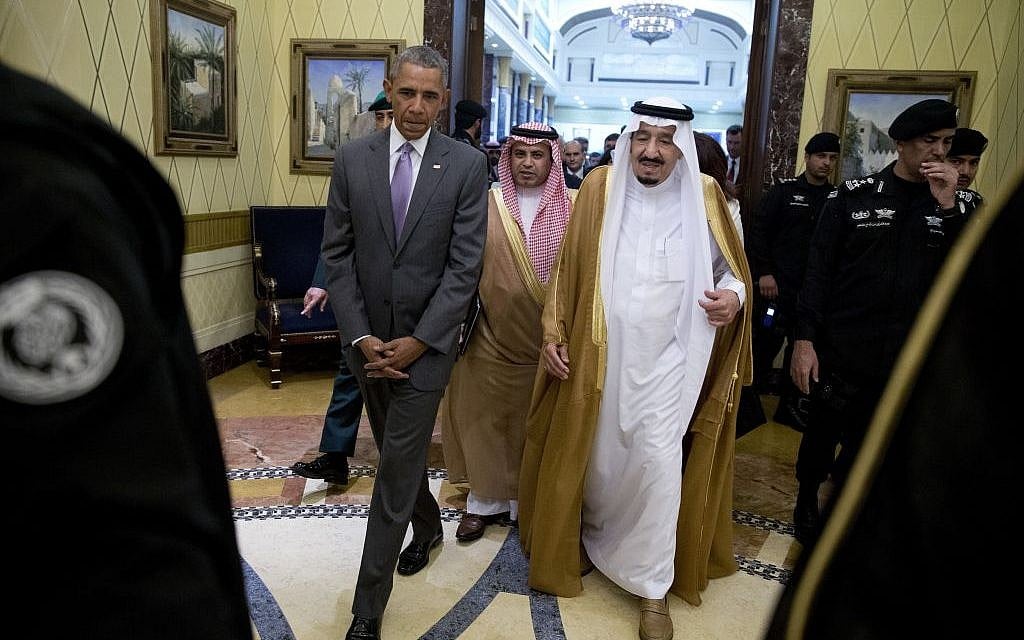
Obama holds warm sit down with Saudi king

US President Barack Obama has opened a brief trip to Saudi Arabia with a one-on-one meeting with King Salman in Riyadh.

The two offer polite smiles as they sit down side by side for pictures at the start of their private meeting.

“The American people send their greetings and we are very grateful for your hospitality, not just for this meeting but for hosting the GCC-US summit that’s taking place tomorrow,” Obama says, referring to the six-nation Gulf Cooperation Council summit that starts Thursday.

King Salman, speaking through a translator, offers similarly gracious words for the president.

“The feeling is mutual between us and the American people,” the king says.

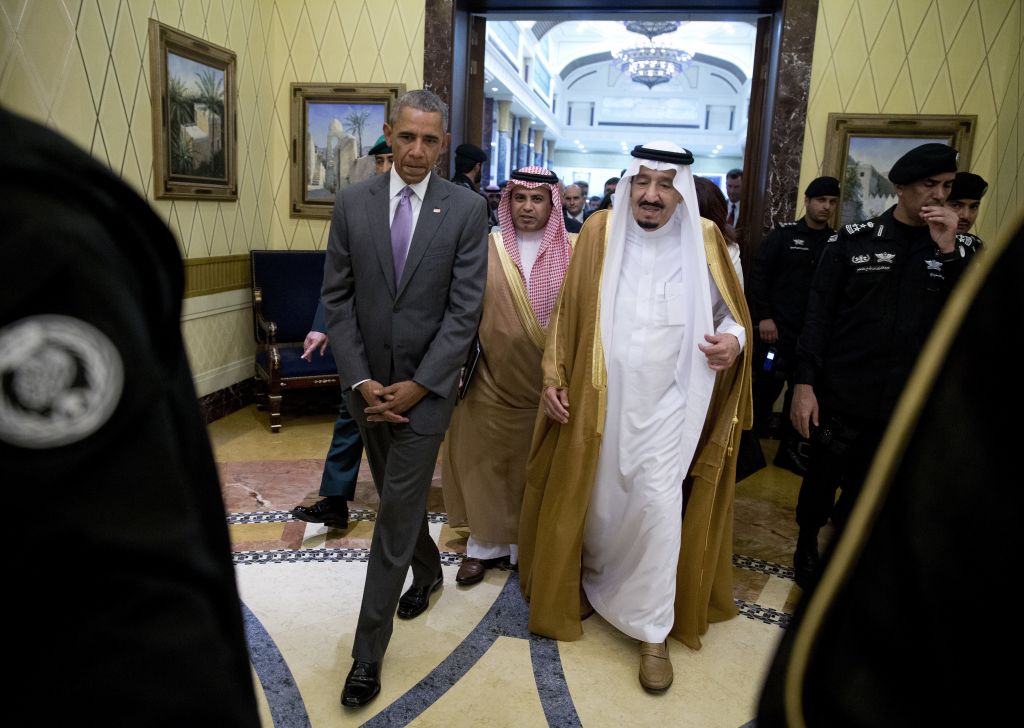
President Barack Obama and Saudi Arabia's King Salman walk together to a meeting at Erga Palace in Riyadh, Saudi Arabia, Wednesday, April 20, 2016. (AP/Carolyn Kaster)

President Barack Obama and Saudi Arabia’s King Salman walk together to a meeting at Erga Palace in Riyadh, Saudi Arabia, Wednesday, April 20, 2016. (AP/Carolyn Kaster)

The president is slated to spend little more than 24 hours in the Saudi capital before heading on to visits to London and Hannover, Germany.

In addition to Saudi Arabia, the United Arab Emirates, Qatar, Kuwait, Oman and Bahrain are participating in the regional summit, which the White House said would focus on regional stability, counterterrorism including the fight against the Islamic State and al-Qaeda, and Iran.

Talks are also expected to address the Saudi-led military campaign against Shiite rebels and their allies in neighboring Yemen.

— AP

Iran’s Zarif invokes Holocaust to defend arms development

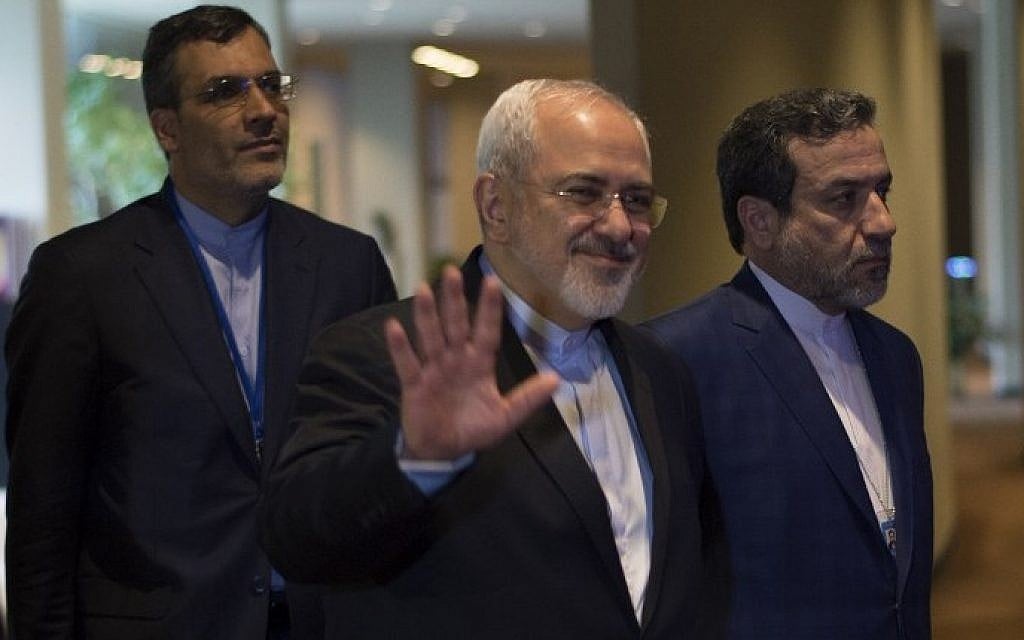
In an op-ed in the Washington Post, Iranian Foreign Minister Mohammed Javad Zarif defends his country’s missile development program by employing the “never again” slogan used to commemorate the Holocaust.

Zarif points to Iran’s eight-year war with Iraq and threats to take military action against the country’s nuclear program as proof to why Tehran is developing missiles despite wide Western condemnation.

“Having listened to the outdated US mantra of ‘all options are on the table’ for 37 years, our people understand that we need to be prepared to prevent that illegal and absurd threat from ever becoming a reality,” he writes. “The words ‘never again’ resonate with Iranians, too.”

“It is against this backdrop that we develop and test our indigenous defensive capabilities. We have no other choice, as we continue to face major hurdles in fulfilling our military hardware needs from abroad, even as our neighbors procure such hardware in mind-boggling quantities,” he says, apparently referring to Israel and Gulf states.

The US and other countries have sought to punish Iran in recent weeks over ballistic missile tests last month which they say breached a UN convention linked to the nuclear deal. Iran says the tests are allowed under the UN ban, which only covers development of missiles that can carry nuclear weapons,.

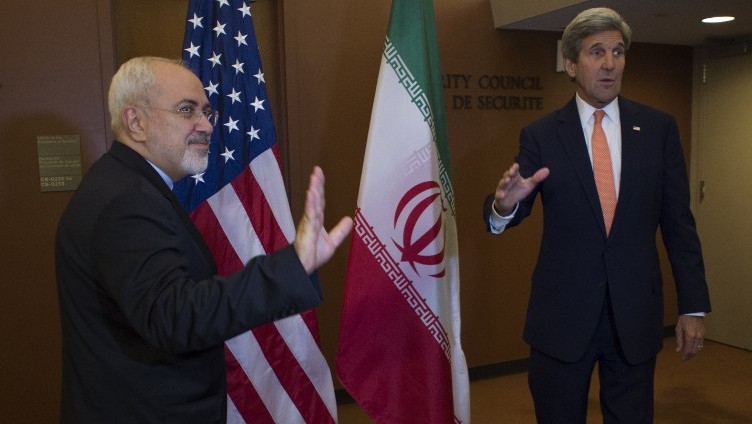
US Secretary of State John Kerry with Iran's Foreign Minister Mohammad Javad Zarif April 19, 2016 at the United Nations in New York. (AFP / DON EMMERT)

US Secretary of State John Kerry with Iran’s Foreign Minister Mohammad Javad Zarif April 19, 2016 at the United Nations in New York. (AFP / DON EMMERT)

The column, which also apparently criticizes Saudi Arabia, comes as Barack Obama is in Saudi Arabia to discuss regional threats as well as Iran, amid an increasingly hot rivalry between Riyadh and Tehran.

“Having spent a staggering amount of their peoples’ petrodollars on weapons-hoarding, these actors are now seeing their literal, and political, fortunes plummet in step with oil prices. Meanwhile, the extremist lost souls they have empowered are no longer terrorizing only others in the region and the wider world but are also biting the very hands that feed them,” he rights, apaprently referring to the Islamic State terror group. “Perplexingly, amid these disturbing developments — including the recent tragedies in Paris and Brussels — the West does not appear to be focused on joining hands to eradicate militant extremism.”

Norway killer Breivik wins case against ‘inhuman’ prison conditions

A Norwegian court rules in favor of mass murderer Anders Behring Breivik in his lawsuit against the Norwegian state over his “inhuman” prison conditions.

“The court… has concluded that the prison conditions constitute inhuman treatment,” the Oslo district court says, noting that the right-wing extremist has been held in isolation for almost five years. The judge rules however that his right to correspondence had not been violated.

“The prohibition of inhuman and degrading treatment represents a fundamental value in a democratic society,” the court says. “This applies no matter what — also in the treatment of terrorists and killers.”

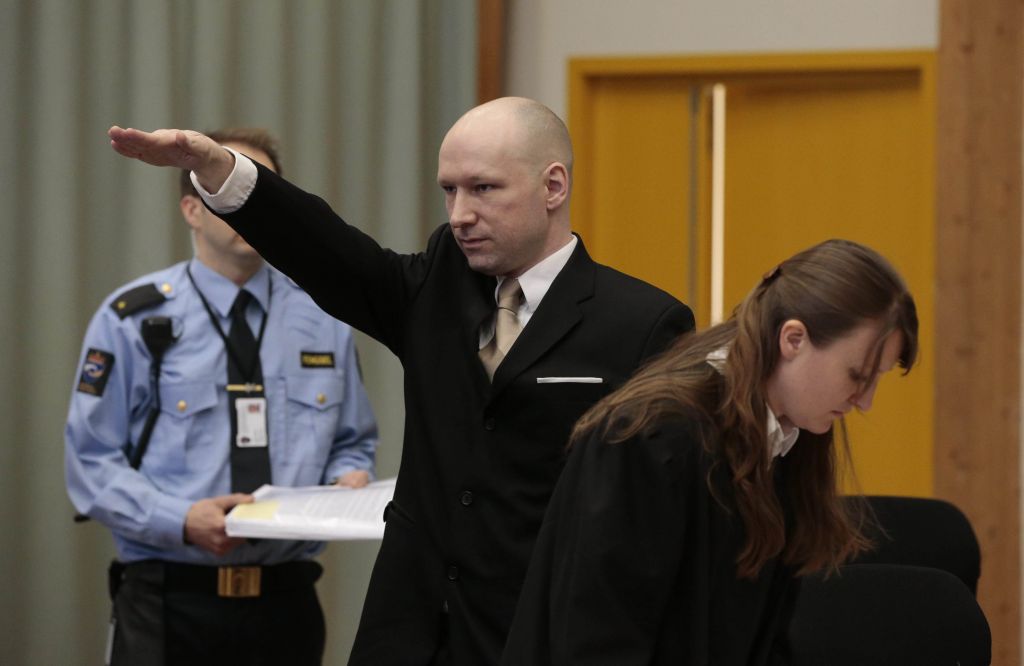
Anders Behring Breivik makes a Nazi gesture as he enters a courtroom in Skien, Norway, on Tuesday, March 15, 2016. (Lise Aserud, NTB scanpix via AP)

Anders Behring Breivik makes a Nazi gesture as he enters a courtroom in Skien, Norway, on Tuesday, March 15, 2016. (Lise Aserud, NTB scanpix via AP)

Breivik is serving a maximum 21-year sentence — which can be extended if he is still considered dangerous — for killing eight people in a bombing outside a government building in Oslo and then shooting dead another 69, mostly teenagers, at a Labour Youth camp on the island of Utoya on July 22, 2011.

The ruling specifically cites Breivik’s isolation in two different prisons since his arrest. It also said authorities hadn’t given enough attention to his mental health when determining his conditions in prison.

The court dismissed Breivik’s claim that the government had also violated his right to respect for private and family life. It ordered the government to pay Breivik’s legal costs of 331,000 kroner — about $41,000.

The 37-year-old claimed at the March hearing into his lawsuit that his solitary confinement violated the European Convention on Human Rights.

But the state’s lawyers argued that his isolation was necessary because Breivik is “extremely dangerous,” and said his conditions — which include games consoles, workout machines and three cells at his disposal for his various activities — fall “well within the limits of what is permitted” under the European convention.

— Agencies

NYC Jews go for Cruz, Clinton, voting breakdown shows

A breakdown of precinct by precinct voting in New York City published by The New York Times shows that heavily Jewish neighborhoods favored Ted Cruz and Hillary Clinton in the Republican and Democratic primary contests Tuesday.

Cruz, an evangelist who came in third across the state, garnered some of his best numbers in the city in the Borough Park, Flatbush, Crown Heights, Kew Gardens Hills and Far Rockaway neighborhoods of Brooklyn and Queens, all known as bastions of the city’s million-strong Jewish community.

Those same neighborhoods also went for Clinton, who beat out Jewish challenger Bernie Sanders statewide.

Donald Trump, who won the state, found much of his support in Staten Island and Queens, as well as parts of Brooklyn, and John Kasich, who came in second, got the go-ahead in Manhattan and much of downtown Brooklyn.

Sanders garnered most of his votes in Staten Island and parts of Queens.

Supreme Court says terror victims can collect from Iran

The Supreme Court has upheld a judgment allowing families of victims of Iranian-sponsored terrorism to collect nearly $2 billion.

The court on Wednesday ruled 6-2 in favor of relatives of the 241 Marines who died in a 1983 terrorist attack in Beirut and other attacks that courts have linked to Iran.

Justice Ruth Bader Ginsburg wrote the opinion for the court rejecting efforts by Iran’s central bank to try to stave off court orders that would allow the relatives to be paid for their losses.

Iran’s Bank Markazi complained that Congress was intruding into the business of federal courts when it passed a 2012 law that specifically directs that the banks’ assets in the United States be turned over to the families.

— AP

Kerry pledges support for Egypt in lightning visit

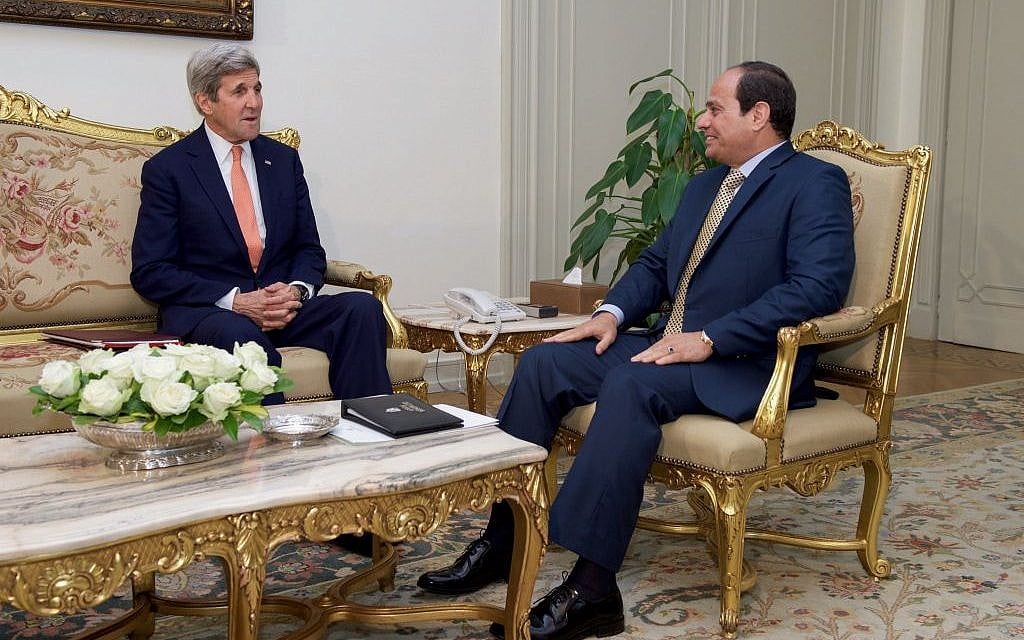
US Secretary of State John Kerry expresses support for Egypt during a brief stop in Cairo.

“The United States understands the importance of Egypt to this region,” Kerry says after meeting President Abdel Fattah al-Sisi, according a transcript from the State Department.

“And we are deeply committed — contrary to some things that occasionally get written or some suggestions that people make — we are deeply committed to the stability of Egypt,” he says.

US Secretary of State John Kerry, left, meets with Egyptian president Abdel-Fattah el-Sissi in Cairo on April, 20, 2016. (US State Department)

US Secretary of State John Kerry, left, meets with Egyptian president Abdel-Fattah el-Sissi in Cairo on April 20, 2016. (US State Department)

Egypt is facing a deadly insurgency by Islamic State group militants based in the Sinai Peninsula, which has killed hundreds of soldiers and policemen since Morsi’s overthrow.

Kerry says he will return to Egypt to discuss “ways that we can work together in order to deal with Daesh (IS) particularly and to help Egypt in terms of the security concerns that it has today.”

— AFP

Sotloff family sues Syria for supporting Islamic State

The family of US-Israeli journalist Steven Sotloff, who was beheaded by the Islamic State group, has sued Syria on grounds it provided material support to the jihadist organization.

In a suit filed Monday in US District Court in Washington, Sotloff’s parents and sister seek $90 million in damages from the government of President Bashar Assad.

It is not clear how the plaintiffs would collect the money if they win the case.

Sotloff, who was born in the US but lived and studied in Israel, entered Syria in August 2013 from Turkey and was abducted while traveling to the northern city of Aleppo. About a year later, he was beheaded and a video of the atrocity was released by the Islamic State group.

In this handout image made available by the photographer, American journalist Steven Sotloff, center with black helmet, talks to Libyan rebels on the Al Dafniya front line, about 15 miles from Misrata, Libya, June 2, 2011. Sotloff was beheaded in September 2014 nearly a year after being kidnapped in Syria. (Etienne de Malglaive via Getty Images/JTA)

In this handout image made available by the photographer, American journalist Steven Sotloff, center with black helmet, talks to Libyan rebels on the Al Dafniya front line, about 15 miles from Misrata, Libya, June 2, 2011. Sotloff was beheaded in September 2014 nearly a year after being kidnapped in Syria. (Etienne de Malglaive via Getty Images/JTA)

The Sotloff lawsuit argues that Syria helped create and later assisted the Islamic State group as a “sham opponent” in the Syrian civil war, so as to bolster Assad’s negotiating power with Western powers that wanted him to resign.

The murder of journalists such as Sotloff helped Assad because it shifted Western attention away from getting rid of Assad to defeating the Islamic State group, with Assad as “a necessary ally,” the lawsuit states.

“Syria’s material support for Daesh caused the abduction and murder of Steven Sotloff,” the lawsuit says, using an acronym for the group that comes from its name in Arabic.

— AFP

Netanyahu to discuss Syria, S-300 sale in Moscow Thursday

Benjamin Netanyahu will leave Thursday morning on a quick trip to Moscow, where he will meet with Russian president Vladimir Putin, his office says.

Much like Netanyahu’s last visit to Moscow several months ago, the talks are expected to revolve around fighting in Syria.

Despite Russia’s recent withdrawal of military forces from Syria, Netanyahu’s office says he will discuss continuing coordination between Israeli and Russian forces over Syria’s skies as well as peace talks to end over five years of civil war there.

Netanyahu was recently angered over reports that a peace talks partially brokered by Russia included discussion of the Golan Heights, which Israel captured in 1967 and effectively annexed 14 years later.

Netanyahu also plans to lobby once again for Russia to cancel the sale of advanced weapons to Iran, the statement says, likely a reference to the S-300 air defense system.

Israel has expressed worries over Iran getting hold of the powerful weapon, and Netanyahu has made several pleas for Russia to nix the sale, but nonetheless Moscow began sending parts to Iran recently.

On Sunday, Tehran showed off parts of the system at a parade, though they did not include actual missiles.

A senior Russian defense official said Tuesday that Russia would complete delivery of the system by the end of the year.

The prime minister is expected to return to Israel Thursday evening.

Israel upbraids capitals over UNESCO vote on Jerusalem

Jerusalem has sent a “sharply worded letter” to several capitals that supported a recent UNESCO vote to recognize the Western Wall as a Muslim site and accuse Israel of judaizing the capital, Foreign Ministry spokesperson Emmanuel Nahshon says.

The letter was sent by Foreign Ministry director Dore Gold at the behest of Prime Minister Benjamin Netanyahu, who also doubles as foreign minister.

“Gold complained about the attempt to erase the Jewish connection to the capital of the Jewish people Jerusalem, and to Jewish holy places,” a foreign ministry statement reads.

The full text of the letter is not released by the ministry.

Gold says in a statement to the press that even though the UNESCO decision was non-binding, “we will not allow international actors to blur the Jewish connection to its eternal capital.”

The UNESCO executive board on Thursday adopted a resolution on “Occupied Palestine” presented by several Arab countries referring to the Temple Mount by only its Arab name.

The UNESCO resolution, authorized by the executive board’s Programme and External Relations Commission, was submitted by Algeria, Egypt, Lebanon, Morocco, Oman, Qatar and Sudan.

The resolution was approved by 33 states, including France, Russia, Spain and Sweden. Seventeen countries abstained while six voted against, including the United States, Estonia, Germany, Lithuania, the Netherlands and the United Kingdom.

The text does refer to the Western Wall Plaza but places it in quotation marks, after using the Arabic Al-Buraq Plaza.

 In this Monday, Feb. 1, 2016 file photo, an ultra-Orthodox Jewish man looks at the Western Wall and Dome of the Rock in the back, in Jerusalem's Old City. (AP Photo/Sebastian Scheiner, File)

In this Monday, Feb. 1, 2016 file photo, an ultra-Orthodox Jewish man looks at the Western Wall and Dome of the Rock in the back, in Jerusalem’s Old City. (AP/Sebastian Scheiner)

The resolution also accuses Israel of “planting fake Jewish graves in Muslim cemeteries” and of “the continued conversion of many Islamic and Byzantine remains into the so-called Jewish ritual baths or into Jewish prayer places.”

The resolution enraged Israeli officials, including Netanyahu, who called it “absurd.”

On Monday, UNESCO chief Irina Bokova called for “respect and dialogue” in an effort to calm tensions.

Netanyahu threatened to boot Bennett from cabinet — report

Benjamin Netanyahu reportedly threatened to fire Jewish Home party leader Naftali Bennett from his cabinet during an angry exchange recently, news site Ynet reports, citing unnamed sources informed on the matter.

The move would have almost certainly led to the dismantling of Netanyahu’s razor-thin coalition and early elections after just over a year.

There was no immediate independent confirmation of the report.

According to the account, Bennett, who serves as Education Minister, demanded that Netanyahu keep to a promise to discuss negotiations with the Palestinian Authority over ending IDF deployments in Area A of the West Bank during the cabinet meeting on Sunday.

“You’re not the one managing things here,” Netanyahu shot back, Ynet reports. “You don’t set anything here.”

Little substance to cabinet spat, source says

Channel 2 news reporter Udi Segal says on Twitter the cabinet kerfuffle between Netanyahu and Bennett was “one of style more than substance,” citing a source familiar with the incident.

“Bennett spoke roughly and Netanyahu said if he doesn’t calm down he’ll fire him,” he writes.

Ambulance stoned near Tel Aviv

An ambulance rushing to help a sick woman is damaged by stone-throwing outside Tel Aviv.

The incident occurred on Route 431 near the city of Ness Tziona, as the ambulance traveled with its lights and sirens on, the Magen David Adom rescue service says.

According to the service, the stone damaged the ambulance’s windshield and the vehicle was forced to pull over, with another ambulance being called until another ambulance could come to transport the woman.

While stone-throwings against Israeli vehicles are not uncommon in the West Bank, they are rare in Israel proper.


Man injured in bus bombing dies of wounds

A severely injured person hurt in Monday’s bus bombing in Jerusalem has died of his wounds, a spokesperson for the Shaare Zedek Medical Center says.

Officials have refused to release the identity of the man, who was one of 21 people injured in the attack.

Police said Tuesday they were investigating the possibility that one of the wounded was behind the bombing, but details of the probe remain under gag order.

The man suffered severe burns and extensive injuries to the limbs, Shaare Zedek spokesperson Shoham Rubio said Tuesday.

He underwent surgery on Monday night, and was unconscious and intubated in the Jerusalem hospital’s intensive care unit on Tuesday morning, Rubio said.

“He is in unstable and life-threatening condition,” she said.

He was apparently closest to the blast, which accounted for both the severity of his injuries and the police suspicion that the attack was an attempted suicide bombing.

“He has combined injuries: severe burns, unfortunately, from the fire and severe injuries to his limbs from the explosion. [The injuries] are to both his upper and lower extremities,” Ofer Merrin, the head of Shaare Zedek’s Trauma Center, said of the man Tuesday afternoon.

“There’s no ID yet. They are working on that a lot, and there are a number of thoughts about his identity. But we’re just dealing with his medical condition,” he added.

— with Judah Ari Gross

Paul Ryan lauds court decision on Iran terror payouts

House Speaker Paul Ryan praises the Supreme Court decision to allow American victims of Iran-linked terror to seek $2 billion in restitution from assets held by an Iranian bank in the US.

“The Court made the right decision today. Families of Iranian terror victims have had to wait far too long to recoup these payments. While we can only provide so much comfort to those who grieve, I hope this ruling will help bring justice,” he says.

— with Rebecca Shimoni Stoil

Suspicions abound bus blast fatality was bomber

A number of Israeli media sites are reporting that the man who succumbed to his wounds from the Jerusalem bus explosion was, or may have been, the bomber.

Police, however, remain mum on any developments in the investigation, as the case remains under gag order.

Meanwhile, some reports indicate Hamas sent out a condolence message identifying the fatality as a Palestinian man.

If a suicide bombing, it would be the first in Israel since 2008.

Israeli security forces and forensics technicians investigate the scene of a bus explosion in southern Jerusalem on April 18, 2016. (Thomas Coex/AFP)

Israeli security forces and forensics technicians investigate the scene of a bus explosion in southern Jerusalem on April 18, 2016. (Thomas Coex/AFP)

Saudi snub of Obama at airfield intentional — analyst

Mustafa Alani, a security analyst at the Gulf Research Center, says Saudi King Salman’s decision to send a lower level official to greet Obama at an airfield in Riyadh was unusual and intended to send a clear message that they have little faith in him.

“The Saudis had disagreements with previous presidents,” Alani said. “Here you have deep distrust that the president won’t deliver anything.”

Ahead of Obama’s arrival, Saudi state television showed the king personally greeting senior officials from other Gulf nations arriving at the King Salman Air Base.

Obama huddled privately with Salman at Erga Palace as Defense Secretary Ash Carter appealed to other Gulf nations for more economic and political support for Iraq, echoing themes Obama planned to emphasize personally in talks with Gulf leaders at a regional summit. In addition to Saudi Arabia, Kuwait, Bahrain, United Arab Emirates, Oman and Qatar are participating.

Carter asked the Gulf countries to help with the reconstruction of the cities of Ramadi and Hit as well as Anbar province, areas that have been won back from IS militants but were left in near-shambles. He said helping the Iraqi people go home and rebuild their lives would lead to a more lasting victory and promote a more inclusive government.

“What we would like, and what we discussed today, is to do more,” Carter said at Diriyah Palace.

A senior defense official says the defense chiefs had a robust discussion, but came to no solid agreements on the increased aid.

Still, the Gulf nations appear to be willing to consider doing more, says official, who briefed reporters but was not authorized to be quoted by name.

— AP

read more:
Join The Times of Israel Community
Commenting is available for paying members of The Times of Israel Community only. Please join our Community to comment and enjoy other Community benefits.
Please use the following structure: example@domain.com
Confirm Mail
Thank you! Now check your email
You are now a member of The Times of Israel Community! We sent you an email with a login link to . Once you're set up, you can start enjoying Community benefits and commenting.