

On eve of Kerry visit, peace talks limping along
Israel, Palestinians met last week for another round of negotiations despite reports of an impasse

 Add ToI as a Preferred Source on Google
Avi Issacharoff, The Times of Israel's Middle East analyst, fills the same role for Walla, the leading portal in Israel. He is also a guest commentator on many different radio shows and current affairs programs on television. Until 2012, he was a reporter and commentator on Arab affairs for the Haaretz newspaper. He also lectures on modern Palestinian history at Tel Aviv University, and is currently writing a script for an action-drama series for the Israeli satellite Television "YES." Born in Jerusalem, he graduated cum laude from Ben Gurion University with a B.A. in Middle Eastern studies and then earned his M.A. from Tel Aviv University on the same subject, also cum laude. A fluent Arabic speaker, Avi was the Middle East Affairs correspondent for Israeli Public Radio covering the Israeli-Palestinian conflict, the war in Iraq and the Arab countries between the years 2003-2006. Avi directed and edited short documentary films on Israeli television programs dealing with the Middle East. In 2002 he won the "best reporter" award for the "Israel Radio” for his coverage of the second intifada. In 2004, together with Amos Harel, he wrote "The Seventh War - How we won and why we lost the war with the Palestinians." A year later the book won an award from the Institute for Strategic Studies for containing the best research on security affairs in Israel. In 2008, Issacharoff and Harel published their second book, entitled "34 Days - The Story of the Second Lebanon War," which won the same prize.
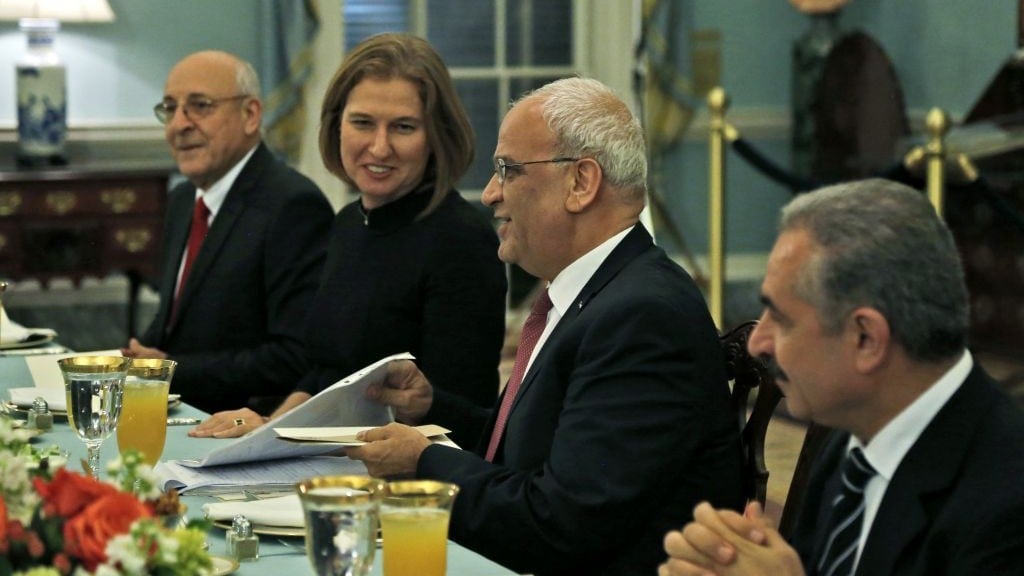
Israeli and Palestinian negotiators held a meeting last week amid reports that the talks were headed for a breakdown, the Times of Israel has learned, despite increased tensions recently on the eve of US Secretary of State John Kerry’s return visit to the region this week.
The most current tensions revolve around the tenders published last month — and promptly cancelled by Prime Minister Benjamin Netanyahu — for the planning of some 20,000 units in the West Bank, an unprecedented number, including 1,200 units in the controversial E1 corridor linking Jerusalem with Ma’aleh Adumim. On Sunday, Palestinian Authority sources said that the Palestinians were considering ending peace talks with Israel over the announcement.
The Palestinians claim that although the plans were cancelled by Netanyahu, the tenders still appeared on the website of the Housing and Construction Ministry headed by Uri Ariel (Jewish Home), proving, according to the Palestinians, that Israel intends to implement the plans. Officials in Jerusalem rejected the charges, accusing the Palestinian Authority of “looking for excuses to stop the negotiations.”
A senior Israeli political source stressed that Netanyahu’s cancellation of the building plan was in effect.
Before Kerry’s last trip to the region in early November, the talks had also suffered a crisis. Israel charged then that the Palestinians were created an artificial crisis for the secretary of state’s sake, in hopes of getting him to up the pressure on the Israeli side.
The Palestinians shot back that Israel was avoiding presenting detailed stances on issues, and was thwarting progress in talks by opting to remain vague and non-committal .
Despite these setbacks, Palestinian Authority President Mahmoud Abbas made clear on several occasions that the Palestinians were going to honor their commitments to the US government, vowing that the peace talks with Israel would run their full, nine-month course.
Abbas refused to accept the resignation letters tendered to him by members of his negotiating team, Saeb Erekat and Mohammed Shtayyeh. Since those letters were submitted a month ago, several rounds of talks have been held, including the one last week. The two were present at most of the meetings except the last one, to which Erekat arrived without Shtayyeh.
Before and after the meeting, Erekat slammed Israel in the media, while denying that talks were taking place.
On Monday, Erekat told the Times of Israel that he was not present at the meeting last week with the Israeli negotiating team.
Under heavy US pressure, peace talks between Israel and the Palestinians resumed in July after a three-year hiatus. Although they have continued out of the media spotlight, reports have mounted that the two sides have reached an impasse.


The Times of Israel Community.