

Facing drought, Israel to direct desalinated water to Sea of Galilee, in world first
With northern lake level below minimum for pumping, authorities will release just 10% of normal quantity into national water carrier, among other moves
 Add ToI as a Preferred Source on Google
Sue Surkes is The Times of Israel's environment reporter
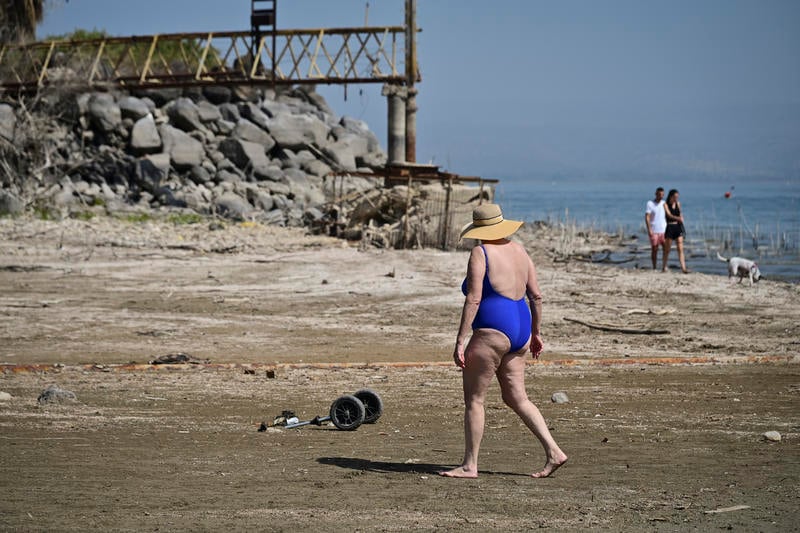
With severe drought continuing to grip much of the Middle East and North Africa, Israel is also planning for another dry winter and a world first: channeling desalinated water into the northern Sea of Galilee, whose surface has dropped below the minimum level at which pumping is recommended.
The so-called lower red line is at -213 meters (-699 feet) below sea level. Pumping beyond this risks damaging the ecosystem. On Wednesday, the lake’s level was measured at -213.125 meters.
Firas Talhami, who is in charge of the rehabilitation of water sources in northern Israel for the Water Authority, told The Times of Israel that pumping of small amounts (several million cubic meters) of desalinated water into the lake is planned to start in November, in the first such operation of its kind in the world.
Furthermore, in contrast to regular years, when some 200 million cubic meters of water would be pumped out of the Sea of Galilee into the national water carrier, just 10 percent of this would be drawn in the coming year.
Last winter, only half of the yearly average rainfall of 515 million cubic meters fell, with just 40% of the average in and around the Sea of Galilee.
The lake’s surface, which after regular winter rains rises by around 1.60 meters (5.25 feet), increased by just 15 centimeters (six inches) last winter, Talhami said. With such little water, some 20,000 dunams (just under 5,000 acres) of northern agricultural fields had to be left dry.
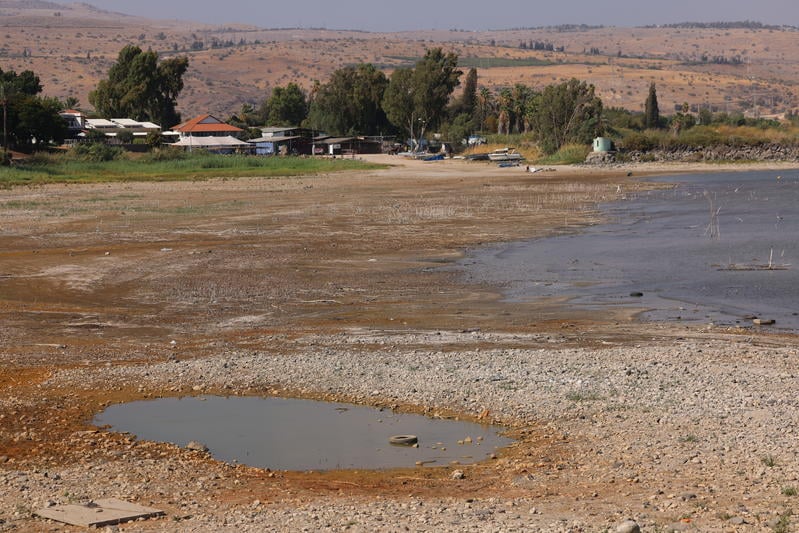
Israel suffered severe drought between 2013 and 2018, with the north of the country hit particularly hard.
“We are going back to those drought years,” Talhami said. “People haven’t realized that we are in an emergency.”
The Israel Meteorological Service predicted that last winter would see 90% of the average annual rainfall. However, most regions received just 50% to 65%.
For the coming winter, the IMS is forecasting 80% of the annual average rainfall. However, as Amos Porat, the organization’s director of Climate Services, told The Times of Israel, it’s much harder to be precise with long-term predictions than with short-term ones.
The hydrological year begins this month
Israel will require approximately 2.3 billion cubic meters of water during the hydrological year, which begins in October, when rainfall typically starts.
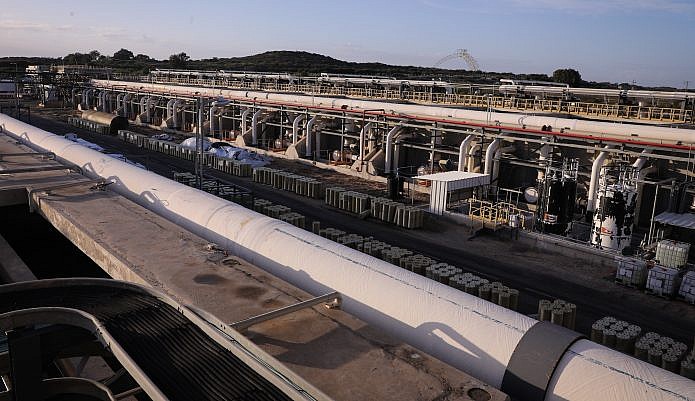
In addition to the 20 million cubic meters from the Sea of Galilee, six desalination stations will supply around 800 million cubic meters of water (meeting 70 to 80% of the country’s drinking water needs). A seventh station, located in the Western Galilee, is planned to come online in 2027 and provide an additional 100 million cubic meters.
A further 700 million cubic meters will come from recycled sewage water and brackish water, used mainly for agriculture, according to the Water Authority, bringing the total of ‘manufactured’ water up to 1.5 billion cubic meters.
To make up the shortfall, additional amounts of water will be pumped from subterranean aquifers or taken from reservoirs in the country’s north and south, built to trap floodwaters.
Asked about plans to strengthen Israel’s water resilience amidst predictions for declining rainfall and spiraling demand brought on by population growth, a Mekorot water company spokesman provided a list of projects, including upgrading sewage water recycling, sinking new wells and improving existing ones (many of which are too polluted to use), and expanding water infrastructure to guarantee a stable supply in the Negev in southern Israel, the Golan Heights in the far north, and the Jordan Valley in the east.
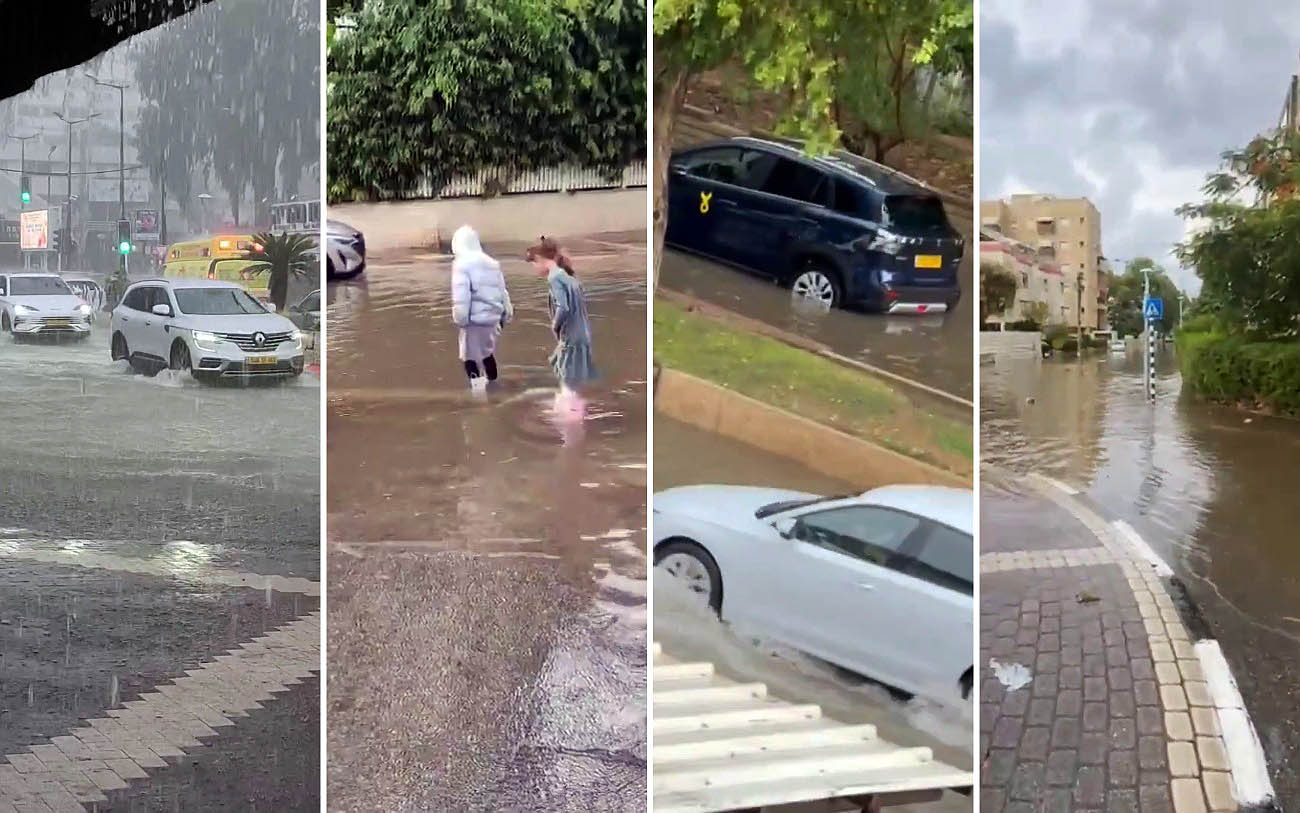
Israel’s rainy seasons are increasingly marked by long dry periods, punctuated by intense downpours that cause flooding, characteristics of climate change.







The Times of Israel Community.