

Fire-blackened 2,000-year-old mikveh is a portal into 70 CE Roman conquest of Jerusalem
The newly unsealed Jewish ritual bath, uncovered beneath the Western Wall Plaza, marks the first stratigraphic identification of the burnt layer from the fall of the Second Temple
 Add ToI as a Preferred Source on Google
Rossella Tercatin is The Times of Israel's archaeology and religions reporter.
Some 2,000 years ago, as the Romans destroyed Jerusalem in 70 CE, their army set the great Jewish Temple on fire. The blaze destroyed the building and its surroundings, as the conquest put an end to Jewish life in the city for centuries to come.
Two millennia later, the fire’s marks and ashes are still clearly visible on a Jewish ritual bath, known as a mikveh in Hebrew, that has been unearthed just steps away from the Temple Mount, in a discovery announced by the Israel Antiquities Authority (IAA) and the Western Wall Heritage Foundation on Monday.
“Jerusalem was not a city with a temple, but a temple with a city,” IAA excavation director Ari Levy told The Times of Israel in the archaeological excavation beneath the Western Wall Plaza.
The discovery marks the first time archaeologists at the excavation, conducted by the IAA in cooperation with the Western Wall Foundation, have identified the burned layer from the 70 CE destruction. Burned layers from the Temple’s destruction have previously been found in other digs.
Accessible through four steep steps, the structure — measuring 3.05 meters in length, 1.35 meters in width, and 1.85 meters in height — bears a striking resemblance to modern Jewish ritual baths.
“There were many ritual baths around this area, because before one was allowed to enter the Temple, one had to purify oneself in the mikveh,” Levy said. “This was true for Jews who lived permanently within the city, and also for Jewish pilgrims who came three times a year for [the Jewish festivals of] Passover, Shavuot, and Sukkot.”
While Jewish ritual purity laws essentially lost their relevance after the Temple was destroyed, traditionally, married women are required to immerse themselves once a month after their menstrual cycle, and some men and communities maintain the custom of visiting a mikveh before Shabbat and Jewish holidays.
Carved in the bedrock, the mikveh stood in an area that, according to Levy, featured several public buildings.
“Just north of where we are stands a great bridge, and south of us, what we call Robinson’s Arch, were two of the main entrances to the Temple,” the archaeologist said.
According to Levy, the ritual bath was built in a room to ensure the bather’s privacy, indicated by the stones from the room’s collapse that researchers found inside the pool. On its left, a water conduit used to fill the mikveh remains clearly visible.
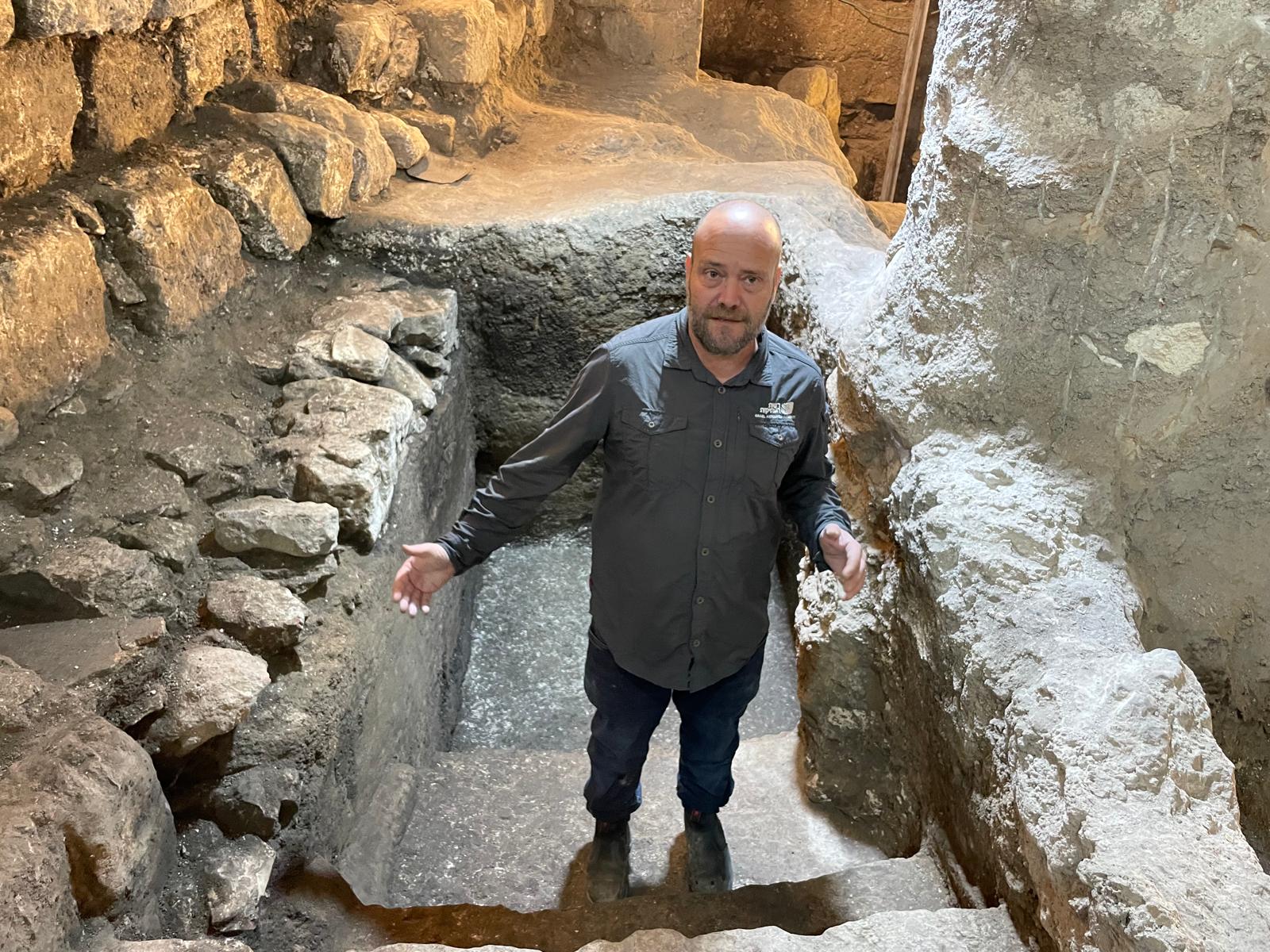
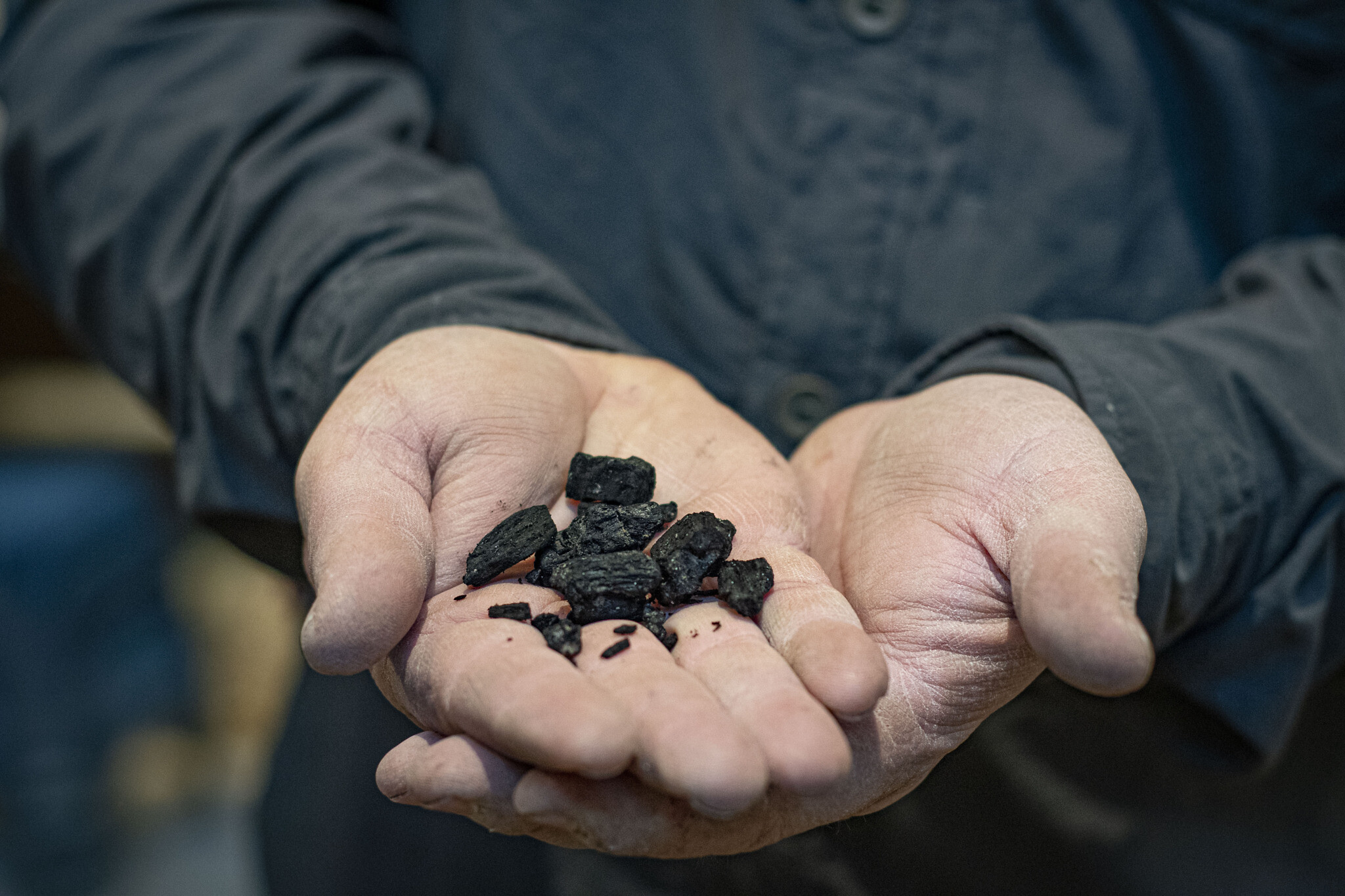
The walls of the mikveh and some of the surrounding soil are blackened by fire, bearing witness to the final, tragic days of ancient Jerusalem.
The burned layer enabled archaeologists to determine that the ritual bath was built in the late Second Temple Period, before the Temple’s destruction. Two coins from the 1st century CE have also been uncovered in the mikveh and sent to the laboratory for cleaning and further analysis.
“The mikveh was sealed under the burnt layer,” said Levy. “Beneath the layer, inside the mikveh, we found a significant amount of material, pottery sherds, glass sherds, and pieces of stone vessels.”
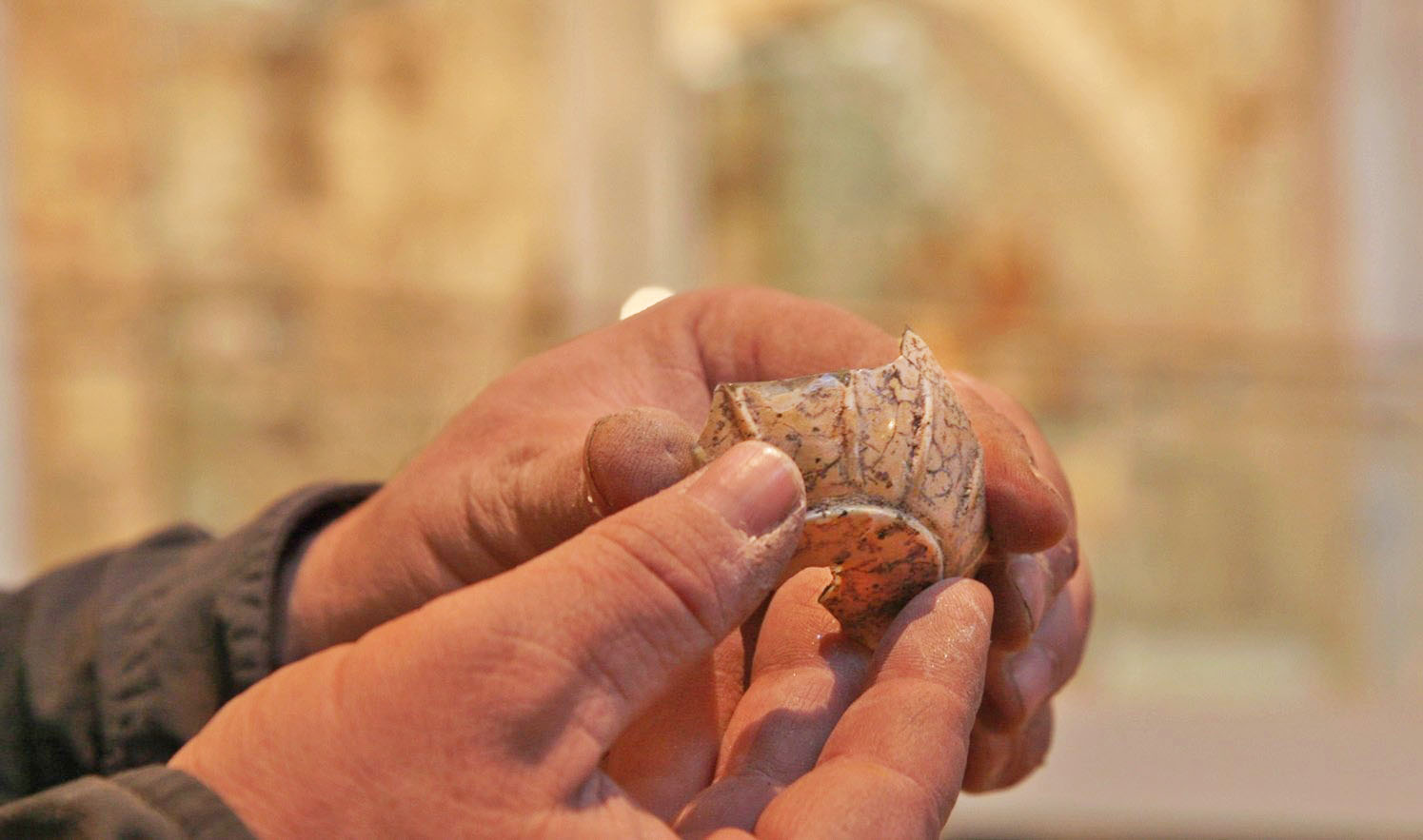
Unlike pottery, stone vessels were not susceptible to ritual impurity.
“Stone is always pure, so Jews really loved using stone vessels,” Levy said. “In every Jewish site from this period you excavate, you will find two things, lots of mikvehs and lots of stone vessels.”
Levy said the team also plans to conduct radiocarbon dating on samples from the mikveh.
“We only uncovered it last week, so it will take time,” he noted.
As Levy shows this reporter the mikveh, several workers continue digging in other areas of the vast chamber that has been opened beneath the Western Wall Foundation building. The excavation extends for about half of the Western Wall Plaza.
The project was started in the years of the pandemic (2020-2021), when, taking advantage of the lack of visitors, the archaeologists could close part of the plaza to carry out the necessary work to open up the massive excavation area, including building dozens of pillars and a reinforced ceiling to support the floor above.
According to Levy, archaeologists have uncovered several impressive finds, including buildings and artifacts from the Mughrabi neighborhood dating to the Ottoman, Byzantine, and Roman periods.
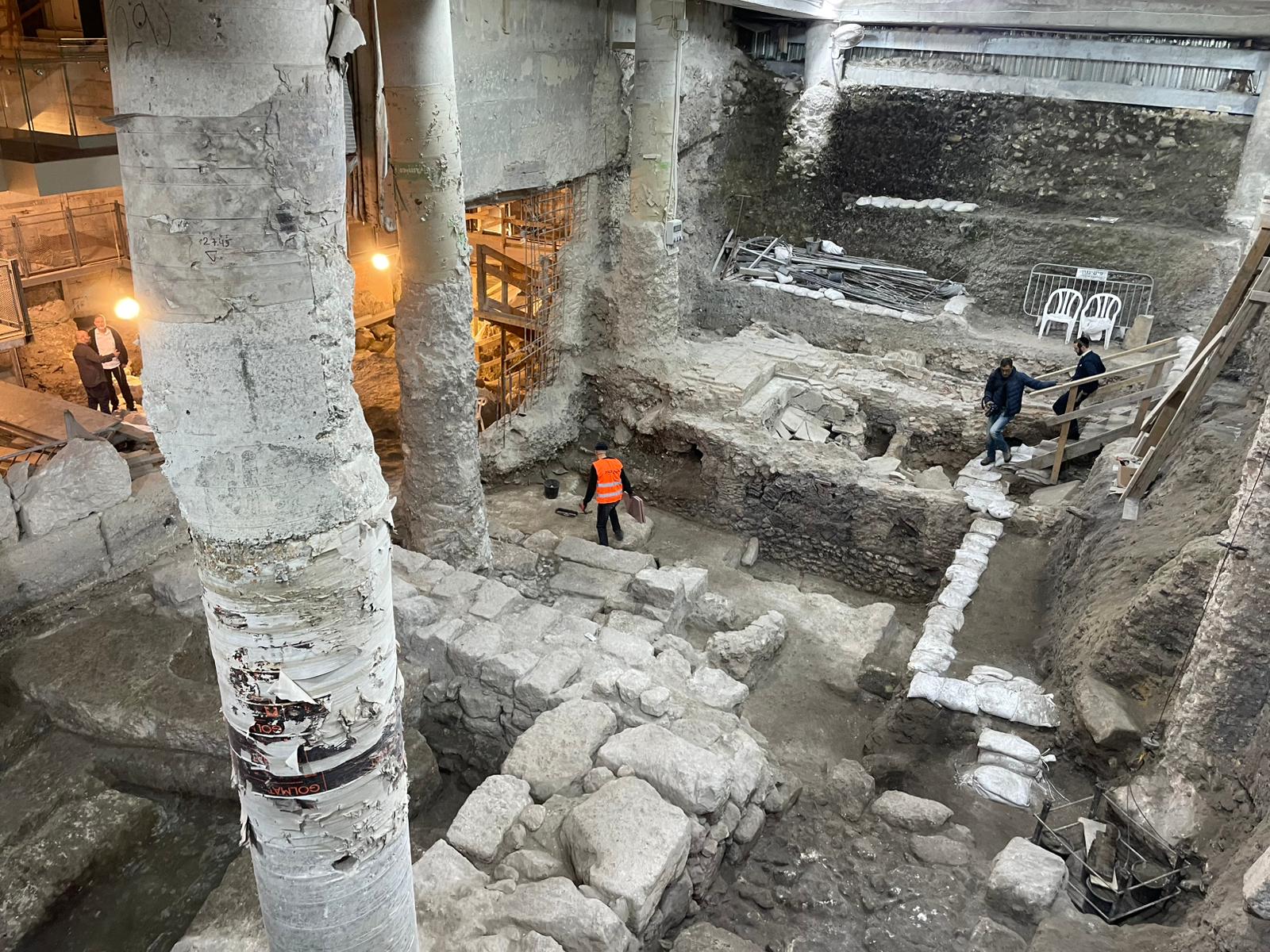
The remains of a Roman bathhouse from the 3rd or 4th century CE, when Jerusalem was renamed Aelia Capitolina and Jews were banned from the city, stood just a few meters from the mikveh.
Levy believes that, having reached the destruction layer, they will be able to learn more about life in Jerusalem before 70 CE.
“I am sure we will uncover more structures from the late Second Temple Period, and hopefully also from the Hasmonean period [2nd-1st centuries BCE],” he said.






The Times of Israel Community.