

High Court rejects petition on chief justice’s boycott of pro-settlement event
Petitioners say ruling, though expected, further blurs boundary between legislative and executive branches
 Add ToI as a Preferred Source on Google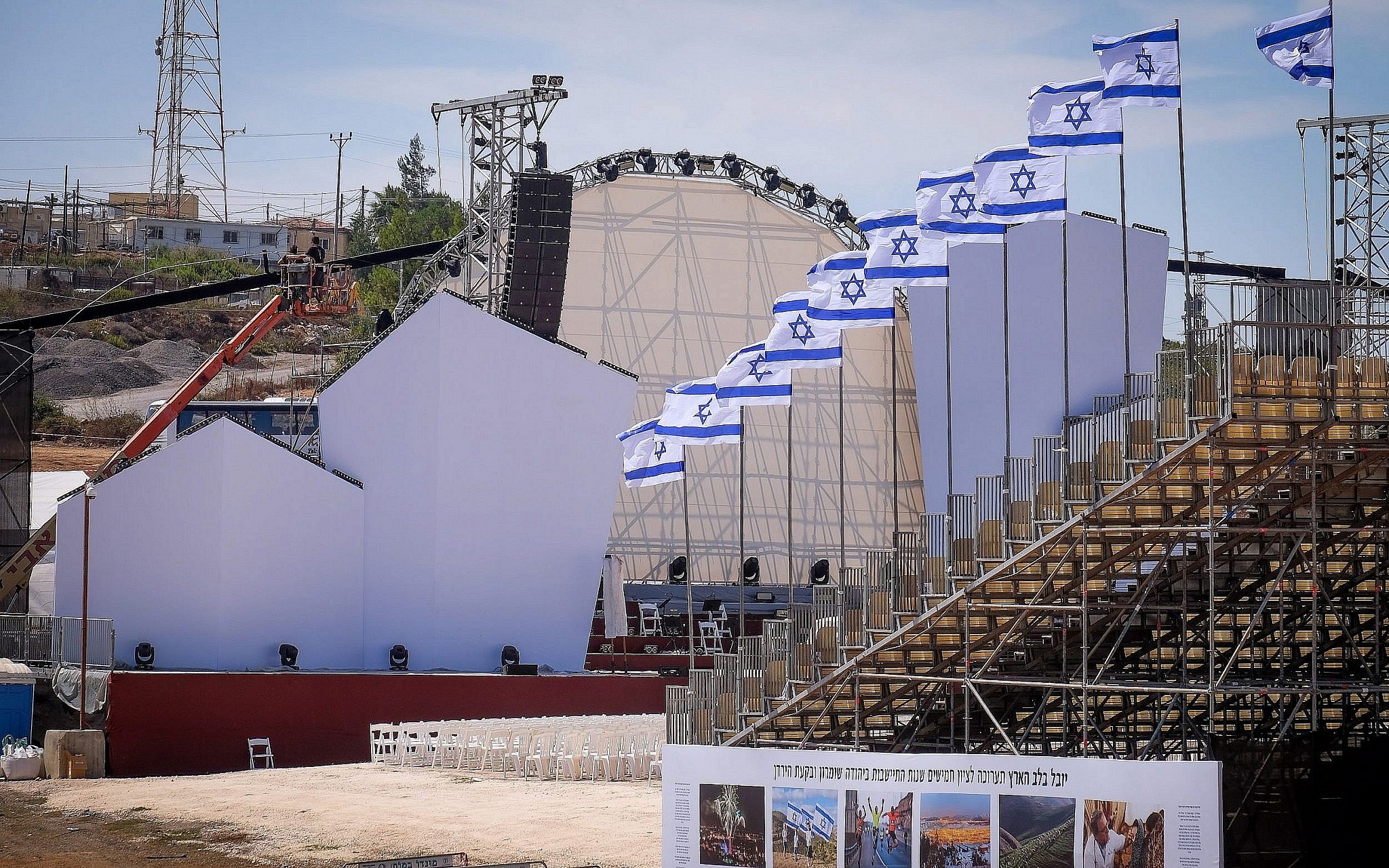
The High Court of Justice on Wednesday rejected a petition by a pro-settlement group demanding that a representative of the Supreme Court attend an official state event to celebrate 50 years since the beginning of the settlement enterprise.
Prime Minister Benjamin Netanyahu, President Reuven Rivlin, government ministers and other top officials took part in the event that began later in the evening.
The Regavim group filed the petition after President of the Supreme Court Miriam Naor said Tuesday that she would not send a representative, explaining that the judiciary should not be involved in “controversial” political events.
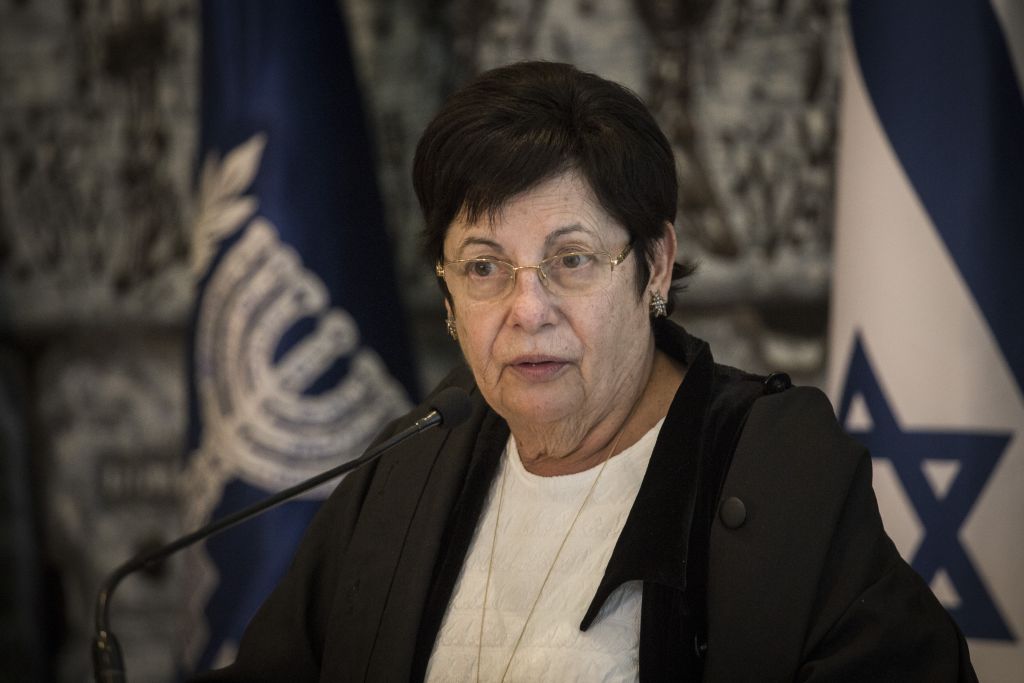
In its ruling, the High Court wrote that “the president’s instruction was given within the framework of her inherent authority as the head of the court system.”
“It is regrettable that the court found itself in an impossible situation, and the sincere desire to refrain from participating in a controversial ceremony became controversial in and of itself,” the panel of three judges ruled.
The settlements, set up on land Israel captured following the 1967 Six Day War, remain controversial. The Palestinians say they are a major stumbling block to peace and claim the land for a future state. Much of the international community holds them to be illegal under international law. Israel disputes both of these claims.
The motion had requested that the High Court decide whether the event is an official state ceremony; if it is not, the motion argued, the event should be canceled outright, and the government should be required to explain how an unofficial ceremony came to be classified as an official state ceremony, and by what right it was budgeted as such. If, however, the event is in fact an official state ceremony, the High Court must set aside the decision of the chief justice, and reinstate the protocol directive for a senior member of the Supreme Court to attend the ceremony as the official representative of Israel’s Judiciary, the motion said.
In response to the ruling, Regavim said in a statement that the outcome was “unsurprising” but that it had achieved its goal of raising in the public discourse “the conduct of the Supreme Court, that is blurring in this ruling the boundaries between the three branches [of democracy] and is violating the authority of the executive branch.”
“The harming and eroding of the authority of the executive branch seriously damages the trust that the public gives to the court and critically injures the principle of separation of branches,” Regavim said.

Earlier Justice Minister Shaked wrote a letter to Naor in which she criticized the court chief for her decision to cancel Justice Neal Hendel’s attendance at the ceremony that was held in the Etzion settlement bloc.
“In effect, your announcement undoes the state aspect of an official ceremony and creates the false impression of an event that has a political nature. Although you wanted to avoid political controversy, behold, the goal has been missed,” she wrote.
Responding earlier to the Regavim petition, Naor said it would be inappropriate for the court to attend a political event “devoted to one side.”
“The judicial system refrains from participating in any controversial political event, in particular when the entire stage is devoted to one side,” she said.
Naor’s decision was criticized by right-wing lawmakers lead by Shaked, Defense Minister Avigdor Liberman, and Culture Minister Miri Regev. It was backed by opposition figures including Yesh Atid head Yair Lapid.
Times of Israel staff contributed to this report.



The Times of Israel Community.