

Majority of religious Jewish Israelis averse to their kids mixing with Arabs — survey
Many Jewish parents don’t want their children to learn Arabic, take part in mixed summer camps, or be taught by Arab teachers, while most Arab Israelis do not share their qualms
 Add ToI as a Preferred Source on Google
Sue Surkes is The Times of Israel's environment reporter
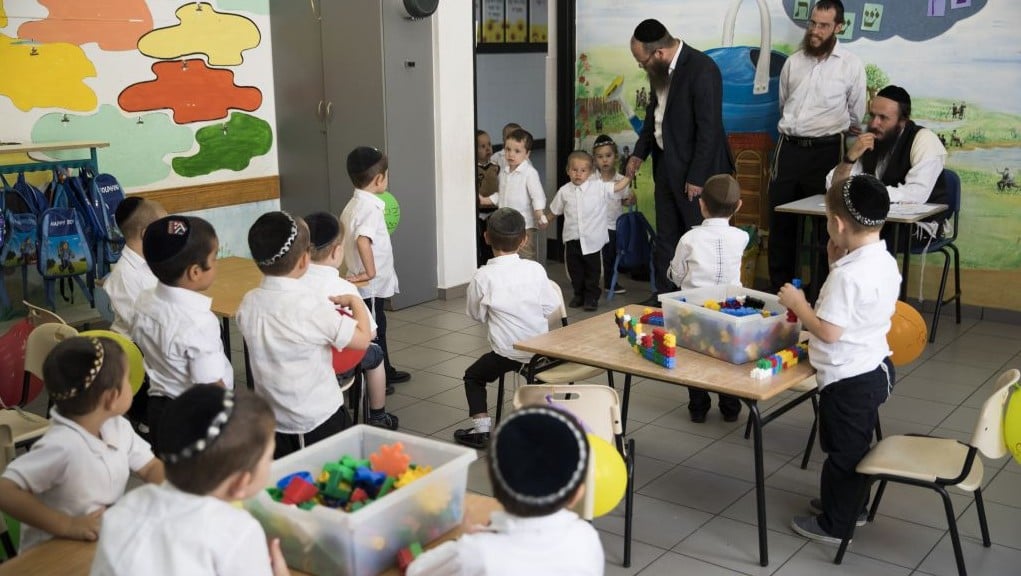
As Israeli kids return to school, a survey of Jewish and Arab parents of schoolchildren reveals sharp differences in their attitudes towards one another, signaling a potential worsening in already-strained Jewish-Arab relations in Israel.
Published on Monday, the results showed many Jewish parents, especially religious and Haredi ones, not wanting their children to learn Arabic, take part in Jewish-Arab summer camps, or be taught by Arab teachers in schools.
The study was undertaken for Givat Haviva – The Center for a Shared Society, which advocates for democracy and an equal society for all Israeli citizens, and probes how Jewish and Arab parents view “the other.”
Michal Sella, Givat Haviva’s executive director, said, “The most worrying findings are in religious and ultra-Orthodox state education, where we see real resistance to education for democracy and any kind of acquaintance with Israelis who are different from them.”
While the survey did not probe attitudes between different Jewish (or Arab) groups, Sella said that Haredi and religious attitudes toward secular teachers in their schools would probably be similar to those held toward Arab teachers.
The research, via internet questionnaire and telephone interviews, was conducted in July by Midgam with a representative sample of 303 parents of Jewish pupils in the education system and 200 from the Arab sector. Sampling error among the Jews was a maximum of 5.7% and for the Arabs, 7.0%.
Separate, but equal, education?
Mohammad Darawshe, director of strategy at Givat Haviva, said he was surprised by the depth of the alienation.
“I don’t think we’ve been in this situation before,” he said, adding that the nearly two years of war in Gaza following the October 7, 2023, Hamas-led invasion of Israel and the resulting societal polarization have negatively affected Israeli attitudes.
The findings echoed those of other recent surveys the organization has carried out, said Darawshe.
“We’ve carried out surveys in the past — not on education, but on mutual trust,” he said. “The last one, in January, showed that lack of mutual trust [between Israeli Jews and Arabs] almost tripled over the past two years, compared with an earlier survey carried out in May 2023, with 72 percent of Jews expressing fear and lack of trust in Arabs, and 51% of Arabs feeling the same toward Jews.”
Sella had a very different take and said the survey contributed “to the understanding that although we would expect much more serious consequences [from the war], the majority of the secular and traditional Arab and Jewish public still both support and want democracy and language studies, and are also ready for education related to getting to know and understand the other.”
However, not all sections of society have the opportunity to get to know people with different lifestyles, she added.
“The problem in Israel is that religious and even Haredi teachers can work in state secular schools, but secular ones can’t work in the state religious and ultra-Orthodox sectors,” she explained. “It’s not only discriminatory and contemptuous towards liberal democratic values, but in a varied society, it’s fitting that children should be exposed to different teachers, know that they exist, are equal, and are human beings.”

Israel has two main state school systems — one for secular children (in Hebrew or Arabic), the other for national religious Jews. There are also “experimental” tracks that receive state funding, such as schools that mix religious and secular pupils, and a few integrated schools where Jewish and Arab pupils study together.
The overwhelming majority of Haredi schoolchildren attend private schools that receive at least partial funding from the state. They eschew the teaching of math, science, and English, with the state turning a blind eye given the Haredi parties’ pivotal role in successive coalition governments.
Sella added, “Education for democracy and equality should be taught in all the educational streams. It’s not contrary to religion or even conservative views. It should be part of the basics, according to which the state funds the educational system.”
Minority Arab population ready to mix with Jews
The Givat Haviva survey was carried out by the Midgam company among Jewish parents — who defined themselves as secular, traditional (somewhere between secular and religious), religious, or ultra-Orthodox (Haredi) — and among Arab parents, who described themselves as Muslim, Christian, or Druze.
Nearly seven in 10 Jewish religious respondents (68%) and over half of those calling themselves traditional (52%) opposed having Arab teachers in their children’s schools, compared with 20% of secular parents. The figure for Haredim was 98%.
Among Arab respondents, 95.3% had no problem with Jewish teachers teaching in their schools.
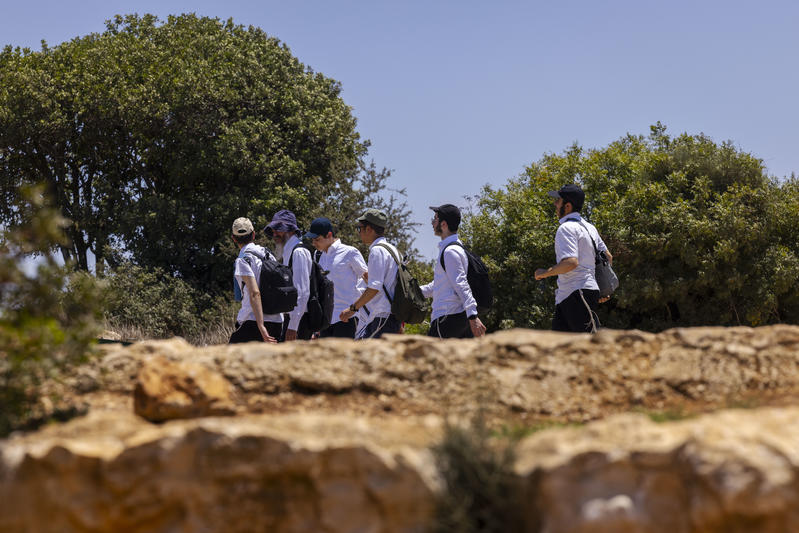
Asked if they would be prepared to send their children to summer camps with Arabs, 69% of religious Jews said no, along with 54% of traditional respondents and 35% of secular ones. Among Haredi Israelis, 98% again responded “no.”
When a similar question was asked of Arab respondents, 82.5% of Druze said they were willing to do so, along with 79.3% of Christians and 57% of Muslims.
Druze Israelis serve in the Israeli army and therefore have more day-to-day interaction with Jews.
Among all non-Haredi Jewish Israeli groups, more than half reported discussing politics frequently with their children (religious 59%, traditional 60%, and secular 53%). Among Haredim, the figure was 27%.
However, large majorities in all Jewish categories opposed allowing teachers to raise political issues for the sake of open discussion (Haredim 80%, religious 70%, traditional 72% and secular 60%).
In the Arab sector, fewer parents took issue with teachers talking politics, with only a quarter of all respondents opposed.
Questioned about what subjects they thought were lacking in educational curricula today, 58% of Jewish religious respondents chose opportunities to meet with different (undefined) groups in society, compared with 52% of traditional Jews, 50% of secular Israelis, and 17% of Haredim.
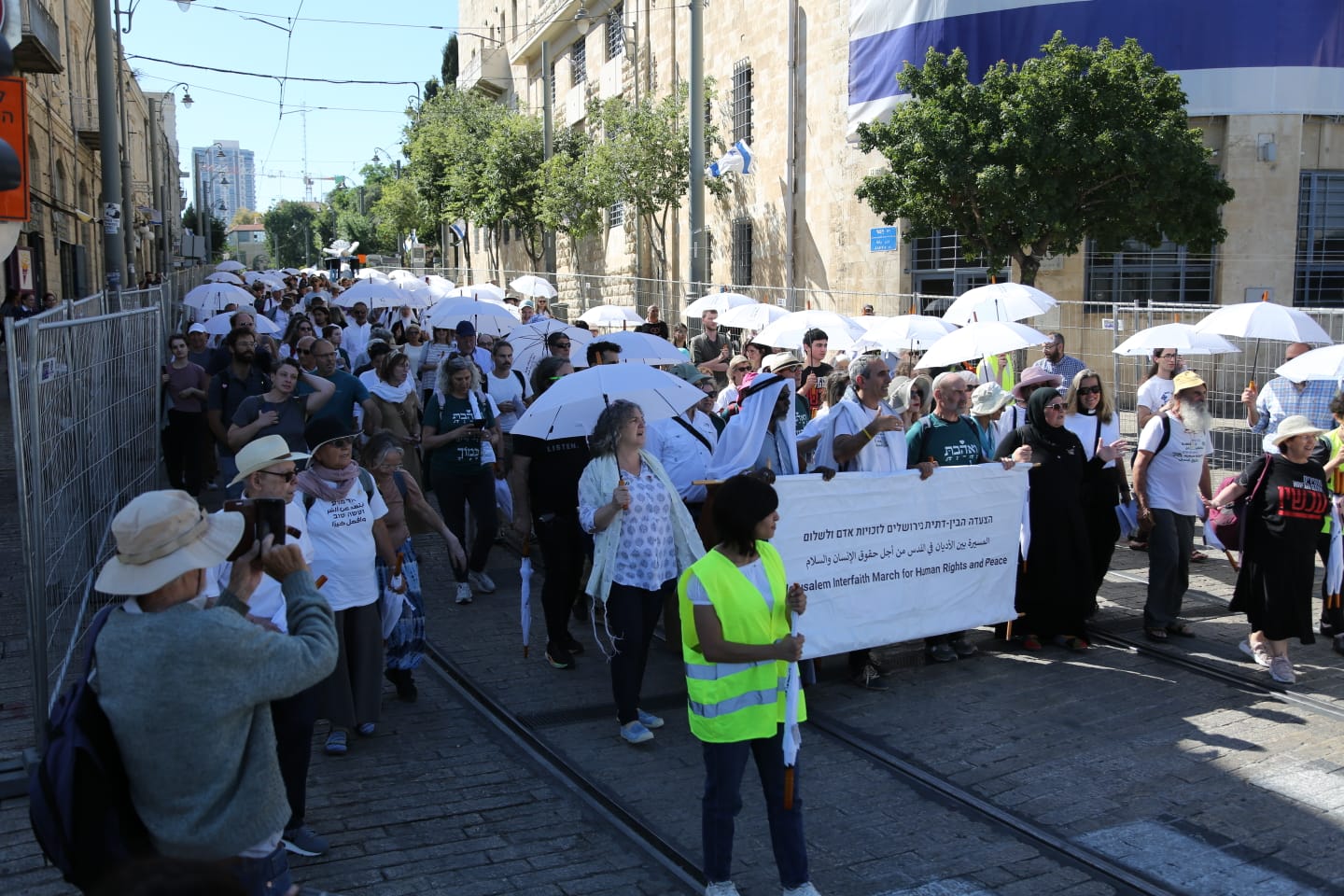
The rate of those wanting more meetings with other groups in society was highest among Arab Christians (83.8%), followed by Druze (71.2%) and Muslims (66%).
Asked whether they thought there should be more content about democracy in schools, only 12% of religious Jewish respondents (among Haredim that number dropped to 5%) answered positively, along with 43% of traditional Jews and 53% of secular parents. In the Arab sector, support for more content on democracy was expressed by 52.7% of Arab Christians, 52.2% of Druze, and 40.1% of Muslims.
Asked in a separate question whether they agreed “a lot” that education about democracy and citizenship should be strengthened, 86% of secular Jewish parents said yes, along with 70% of traditional Jews, 54% of religious ones, and 11% of Haredim.
On the difference in response to two similar-sounding questions, Darawshe said he thought respondents associated content about democracy with left-wing organizations, and a strengthening of democracy and civic education with changes that could be made by the Education Ministry, in which they had more trust.
Also asked if it was important to strengthen education about democracy and citizenship, 96% of Druze said yes, followed by 93.4% of Christians and 89.6% of Muslims.
Questioned whether it was important for their children to learn Arabic at school, seven in 10 secular respondents said yes, compared with 58% of traditional Israelis, 45% of religious, and 5% of Haredim.
Given that Hebrew is the dominant language in Israel, it is not surprising that an average of 98% of the Arab respondents thought learning it in school was important.
Givat Haviva has a campus in central Israel where it focuses on education, language acquisition, development of shared leadership, culture, and art.






The Times of Israel Community.