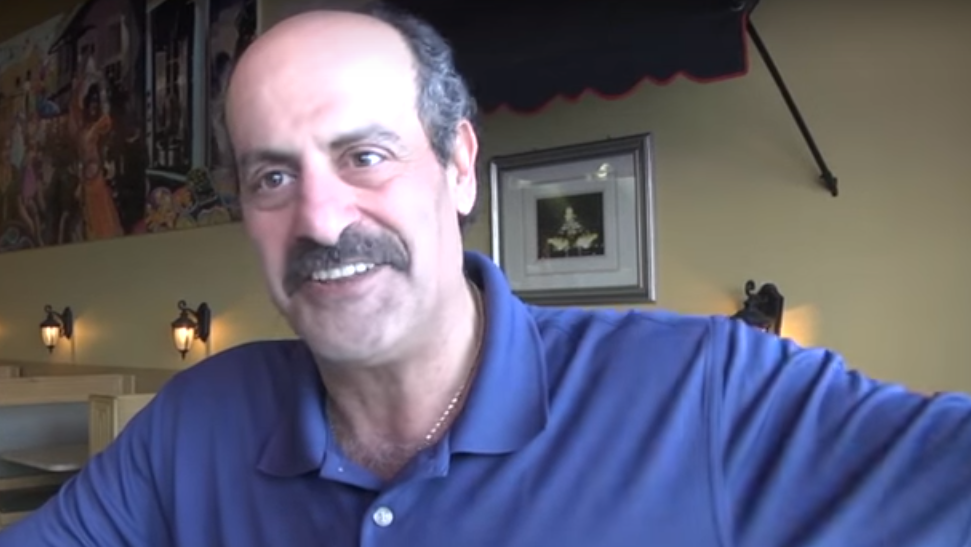
Owner Hany Baransi discusses the machete attack on his Nazareth Restaurant & Deli in Columbus, Ohio. (YouTube)
An Ohio restaurant owned by an Arab-Israeli reopened days after four patrons were injured in a machete attack.
The Nazareth Restaurant and Deli in Columbus reopened Monday, with its display of an Arabic greeting and Israeli flag still prominently positioned at the entrance to the restaurant.
Owner Hany Baransi, an Israeli Christian Arab who moved to the United States from Haifa in 1983, says he has always been outspoken about his Israeli identity and believes that the attack by a machete-wielding,’Allahu Akbar’-yelling man was no coincidence.
Police identified the assailant as Mohamed Bary and said he had come to the restaurant earlier and asked a worker where the owner was from originally. Bary was shot and killed by police about two miles from the restaurant after lunging at officers with the machete and a knife.
The Tower reported that when asked whether he would consider removing the Israeli flag as a precaution, Barsani swiftly rejected the idea. “Actually I have another flag, and I am going to get a bigger flag, and I am going to get a Star of David necklace and put it on my chest, and I am going to get a tattoo,” he declared.
Get The Times of Israel's Daily Editionby email and never miss our top stories
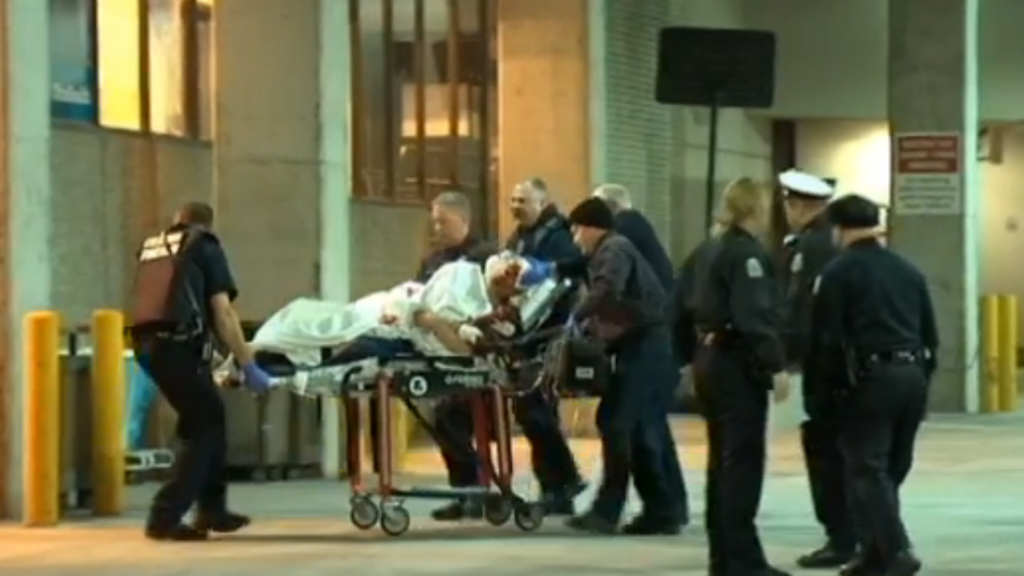
A victim of the Columbus machete attacks is wheeled to a local emergency room on February 11, 2016. (YouTube)
“I come from the Middle East,” Baransi said. “I come from Israel, and this has been a big thing here. You know, we are Israelis, used to this in our lives, people attacking us and wanting to kill us.”
The FBI is reportedly involved in the investigation to help determine a motive for the attack and whether it was terror-related.
The injured patrons are expected to recover.
Advertisement
We can't do this work alone.
The war with Iran has been draining for all of us in Israel. But when I heard about a high casualty incident – ballistic missile impacts in Arad and Dimona that left nearly 200 people wounded – I drank a cup of coffee, packed a bag, and headed south.
There, I spoke with Shilgit, the head of an after-school program for underprivileged youth. Standing outside her destroyed center, Shilgit said it was a miracle that no children were hurt and spoke about the community coming together in the hours since.
As a Times of Israel reporter, I’m committed to telling stories of resilience like Shilgit’s. But my colleagues and I can't do this alone. If you value work like this,please consider joining our reader support group, The Times of Israel Community. Your financial support is essential to keep real human reporting like this going.
We’re really pleased that you’ve read X Times of Israel articles in the past month.
That’s why we started the Times of Israel - to provide discerning readers like you with must-read coverage of Israel and the Jewish world.
So now we have a request. Unlike other news outlets, we haven’t put up a paywall. But as the journalism we do is costly, we invite readers for whom The Times of Israel has become important to help support our work by joining The Times of Israel Community.
For as little as $6 a month you can help support our quality journalism while enjoying The Times of Israel AD-FREE, as well as accessing exclusive content available only to Times of Israel Community members.
Thank you, David Horovitz, Founding Editor of The Times of Israel