

Palestinian refugees in Lebanon rally for asylum outside Canadian embassy
Periodic protests continue after crackdown on undocumented foreign labor by authorities; protesters also decry what they say is widespread corruption at UNRWA
 Add ToI as a Preferred Source on Google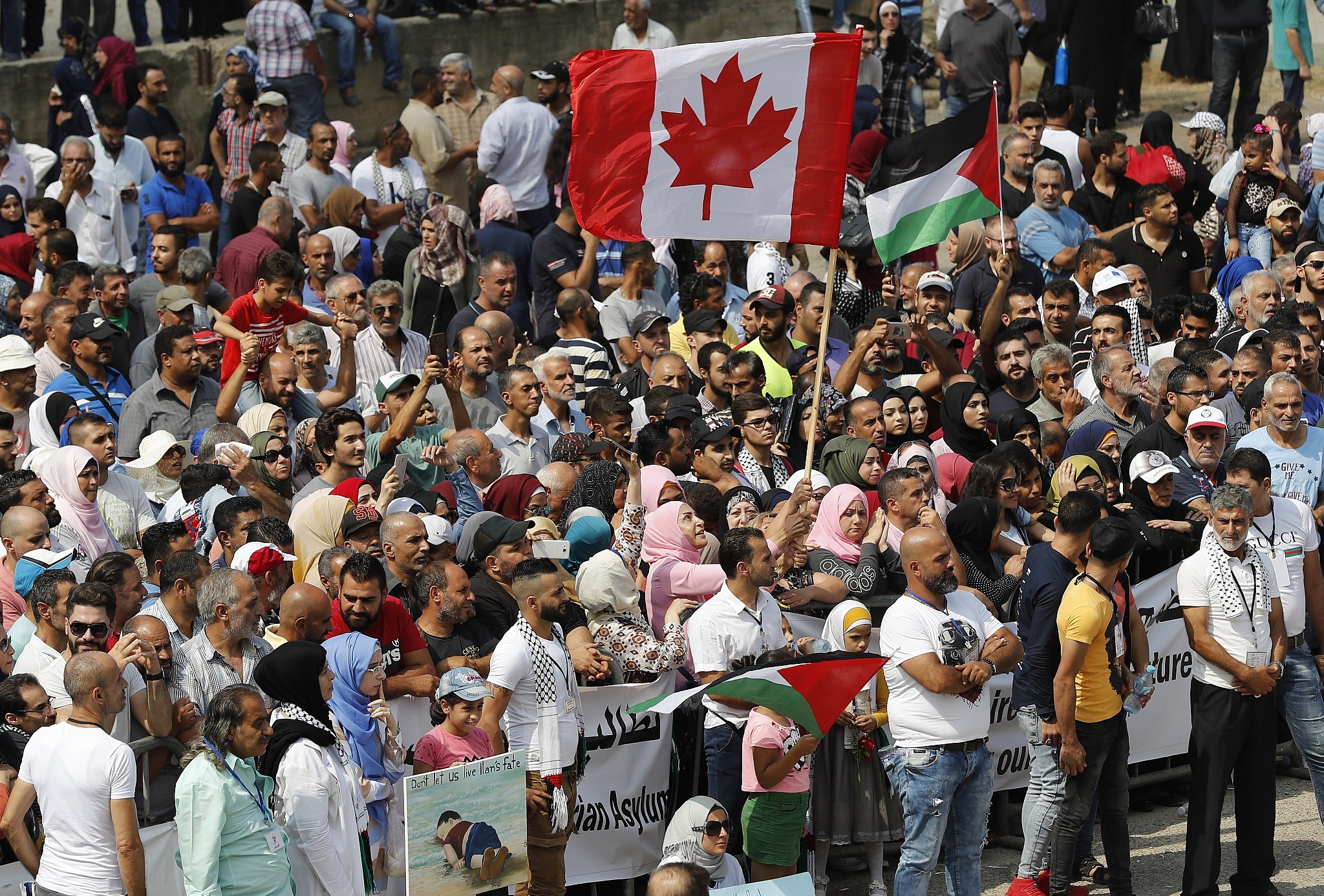
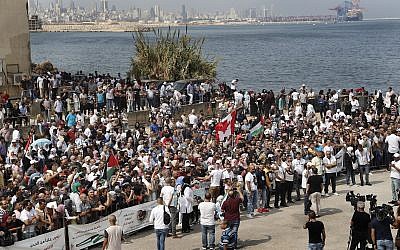
Hundreds of Palestinian refugees, waving Palestinian and Canadian flags, gathered outside the Canadian Embassy in Beirut on Thursday, requesting asylum in the North American country.
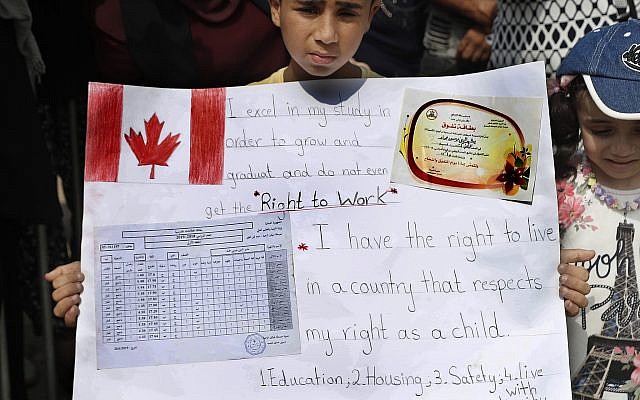
Many among the group lamented the deteriorating economic and living conditions in Lebanon and said they wanted a more dignified life.
The periodic protests outside the embassy on the coastal highway north of Beirut began a few weeks ago, after a crackdown on undocumented foreign labor by Lebanese authorities.
There are tens of thousands of Palestinian refugees and their descendants in Lebanon. Most of them live in squalid camps with no access to public services, limited employment opportunities and no rights to ownership.
The protesters gathered on Thursday also decried what they say is widespread corruption at the United Nations agency for Palestinian refugees, or UNRWA.
A confidential UN internal ethics report leaked in July alleged mismanagement and abuses of authority at the highest levels of UNRWA, even as the organization faced an unprecedented crisis after US funding cuts. The allegations are now being scrutinized by UN investigators. The UN agency said it is cooperating fully with the investigation and that it cannot comment in detail because the probe is ongoing.
The agency provides schooling and medical services to millions of impoverished Palestinian refugees and their descendants in Lebanon, Jordan, Syria and the Palestinian territories.
It employs around 30,000 people, mostly Palestinians.
US President Donald Trump’s administration, along with Israel, accuse UNRWA of perpetuating the Israeli-Palestinian conflict by extending refugee status to millions of descendants of Palestinians who fled or were forced out of homes in today’s Israel at the time of the establishment of the Jewish state in 1948, rather than limiting refugee status only to the original refugees, as is the norm with most refugee populations worldwide.
The agency disputes that and says the vital services it provides would otherwise not be available to Palestinians who benefit from them.





The Times of Israel Community.