

As 4th Jew seeks US Supreme Court, a look at how the first was nearly borked
An exhibit at his namesake university shows how Louis D. Brandeis, remembered for his contributions to human rights and civic affairs, was an unlikely Zionist
 Add ToI as a Preferred Source on Google
BOSTON – On a late spring day nearly 100 years ago, Louis D. Brandeis arrived home from his law office and was greeted by his wife Alice with the words, “Good evening Mr. Justice Brandeis.”
The announcement of the confirmation of the first Jewish associate justice to the US Supreme Court came earlier that afternoon, on June 1, 1916, following a vote of 47 to 22 by the full US Senate. It capped an unprecedented bitter four-month long political battle sparked by US President Woodrow Wilson’s pick of Brandeis to fill the vacant seat after the death of Justice Joseph Lamar of Georgia.
It was the first time in the country’s history that a Supreme Court nominee faced such a vehement, headline-grabbing challenge, led largely by Boston’s Brahmin elite and tainted by anti-Semitism. At 125 days, with nineteen Senate subcommittee hearings, the Brandeis appointment still holds the record as the longest confirmation process in Supreme Court history. Brandeis went on to serve on the court for 23 years, stepping down on February 13, 1939, at the age of 82.
The centennial of Brandeis’ appointment coincides with the nomination one month ago of Merrick Garland, who is facing a contentious political confirmation process that is making headlines in this presidential election year. Senate Republican leaders immediately declared they would not hold hearings on President Barack Obama’s nominee to fill the vacant seat left by the death of Justice Antonin Scalia.
Despite the political wrangling, there’s barely mention of the fact that if confirmed, Garland would become the fourth Jewish justice serving on the current court, according to Jonathan Sarna, the noted professor of American Jewish history at Brandeis University who recently received the prestigious title of University Professor.
“It’s a sign of how Jews have moved from the periphery to mainstream American life,” Sarna observed. “One can only appreciate that transformation by looking back.”
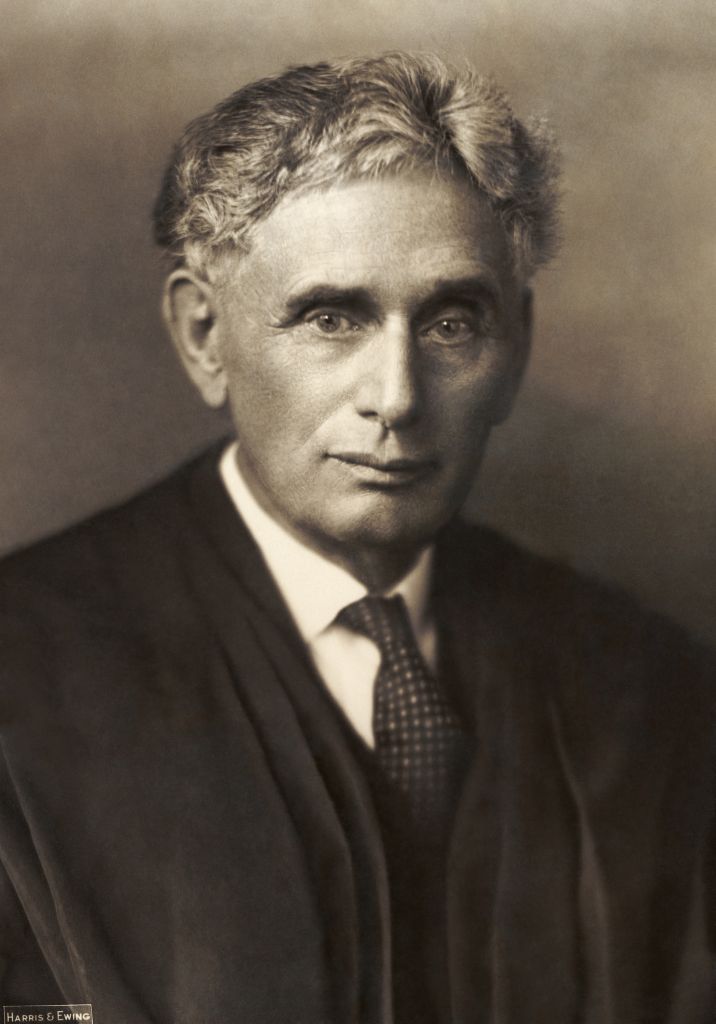
One hundred years after Brandeis’s rise to the Supreme Court, the now iconic figure known as the “people’s lawyer” is being recalled for his tremendous influence in American life, from the right to privacy and free speech, to his less familiar role as the key figure in advancing Zionism in America.
His namesake institution, Brandeis University, located outside of Boston, is hosting a series of programs, “Brandeis: Then and Now” that kicked off in January with an address by Associate Justice Ruth Bader Ginsburg.
Bader Ginsburg, known popularly as the Notorious R.B.G., told a crowd of some 2,200 that she admired Brandeis for his “craftsmanship, his sense of collegiality and his ability to combine a judicial restraint with the readiness to defend civil rights and liberties.”
She noted his open mindedness and willingness to change his views.
“By the 1910s, he had shifted his opposition to women’s suffrage and became an ardent supporter of votes for women,” Bader Ginsburg pointed out.
The Brandeis University archives and special collections department has mounted an exhibit from its extensive holdings donated largely by the Brandeis family that showcases personal correspondence, family photographs and memorabilia. There’s an interactive online version that even offers the public an opportunity to decipher still unrecognized sections of handwriting in some of the letters.
Harvard University Law School is also marking the school’s deeply rooted relationship with Brandeis, a distinguished student and key leader in the creation of the Harvard Law Review. In June, a public exhibit highlighting his connection with the school will be on display.
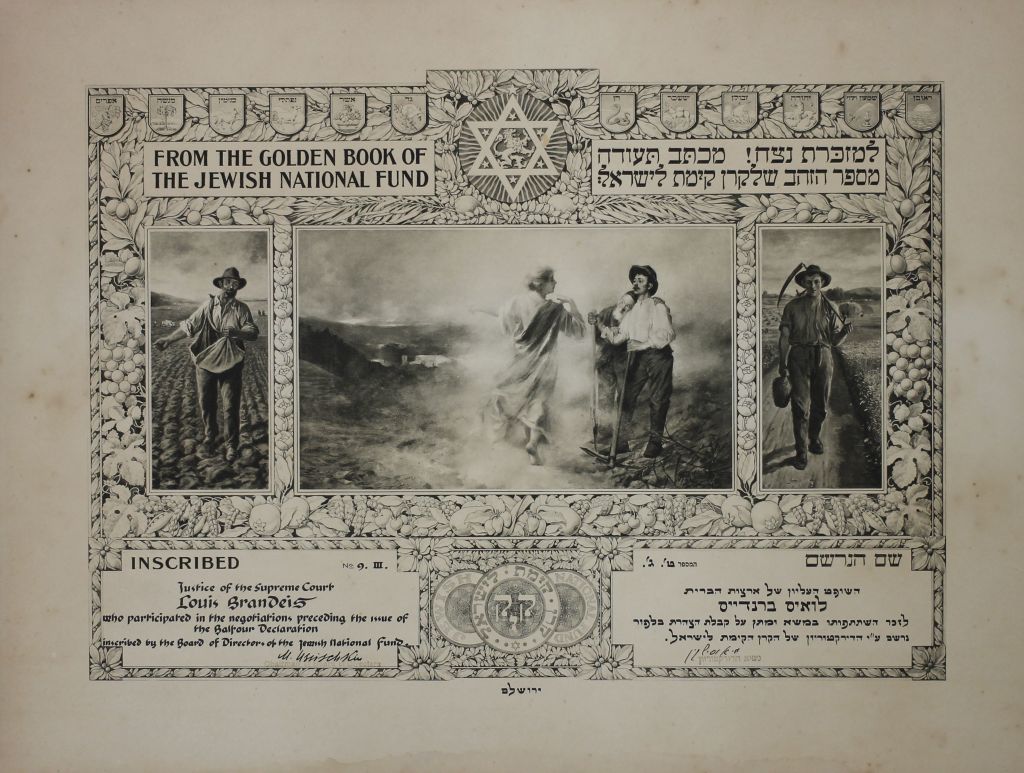
At the time of Brandeis’s nomination, he had become a successful Boston-based lawyer and champion of progressive social and labor causes. Deeply engaged in civic affairs, he lobbied for the creation of the first savings bank life insurance laws and became an influential adviser to President Wilson.
Among his vocal detractors, who labeled him a radical, was Harvard University President Abbott Lawrence Lowell, known for his anti-Semitic views. Nonetheless, Brandeis had the backing of the faculty at Harvard Law School, including the younger Felix Frankfurter, a close associate of Brandeis who also later served as a Supreme Court justice.
‘To be a Zionist is to be a better American’
There’s no question that Brandeis’ confirmation was a victory for President Wilson and a significant moment for the Jewish community, Sarna told The Times of Israel.
“Whatever some Jews may have thought privately, the Jewish community came together publicly in praising the appointment,” he said.
What many may find surprising is the role Brandeis played in catapulting Zionism into mainstream American life – in and out of the Jewish community. But Brandeis was an unlikely figure to champion the cause – any Jewish cause — said Sarna and David Ellenson, acting director of the Schusterman Center for Israel Studies at Brandeis.
For the first 50 years of his life, Brandeis had little involvement in Jewish life. The son of Jewish immigrants from Prague who were highly cultured, secular Jews, the Brandeis family emphasized a strong sense of ethics but did not participate in any religious life. Brandeis was close with his uncle, Lewis Dembitz, a lawyer and respected scholar of Judaism, who remained a lifelong influence. Brandeis even took his uncle’s surname as a middle name in a sign of admiration.
Brandeis’ embrace of Zionism and the establishment of a Jewish homeland in Palestine emerged in the context of World War I and its aftermath, when hundreds of thousands of Jewish refugees were fleeing Russia and Eastern Europe, according to Sarna. Brandeis recognized Zionism as a solution to the humanitarian crisis — and anti-Semitism.
He was also intrigued by the possibility of spreading progressive American democratic ideals. It was a notion that also aligned with the views of President Wilson, Sarna said.
In Boston, Brandeis also developed a close relationship with Jacob DeHaas, owner of the Boston Advocate, the city’s Jewish newspaper, and a strong supporter of Zionism, according to Allon Gal, professor emeritus at Ben-Gurion University. In his book, “Brandeis of Boston,” Gal detailed the support the paper gave to many of Brandeis’ social causes.
In 1914, Brandeis took on the role of chairman of the Provisional Committee for General Zionist Affairs and barnstormed the country, espousing a brand of American Zionism that countered the then prevailing fear that it raised questions of patriotism.
“‘To be a Zionist is to be a better American,’ is how Brandeis framed it,” Sarna said.
Brandeis’s views made it “difficult for those who were opposed, to claim those who supported Zionism were guilty of dual loyalty,” according to Ellenson, of the Schusterman Center.

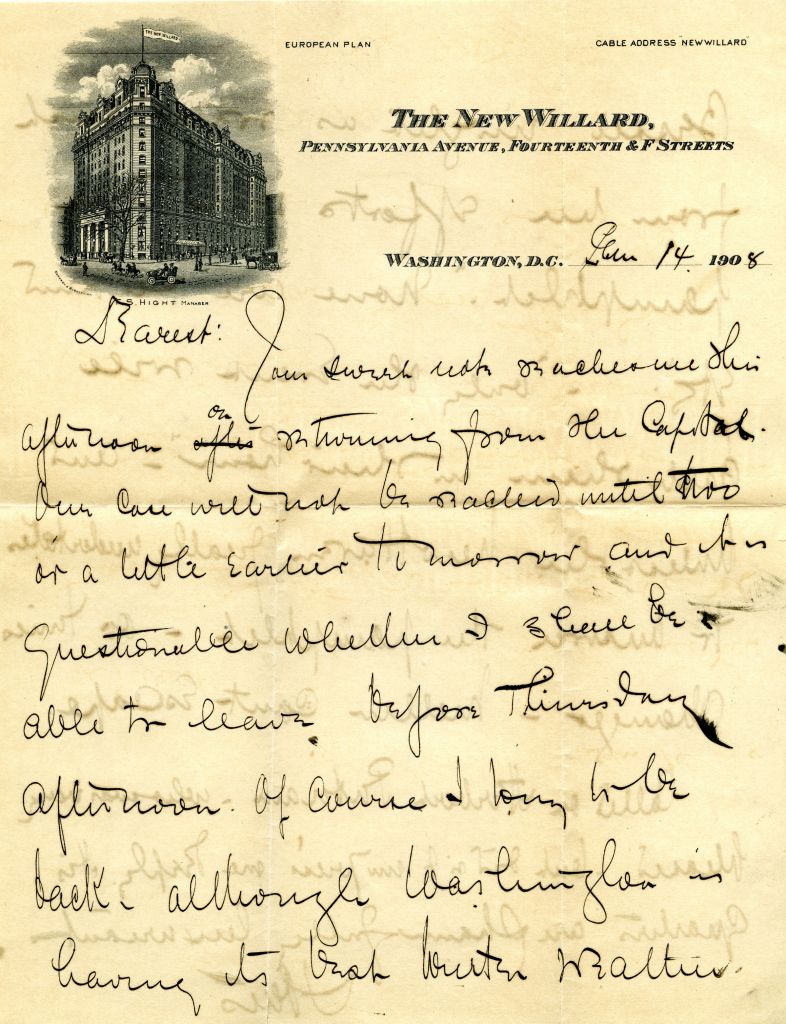
On view in the Brandeis special collections exhibit is an elaborately designed miniature scroll inscribed to Brandeis from the Golden Book of the Jewish National Fund. It is one example of the gratitude many felt for Brandeis’s leadership in supporting Zionism. Other signs of the affection for the man are the condolence letters that poured in to the family following Brandeis’s death on October 5, 1941. One radio gram dated October 15, 1941, which is also on the interactive website, is from the Brandeis School in Herzliya.
Surella Seelig, outreach librarian in the Brandeis archives and special collections department, is especially fond of Brandeis’s physics notebook from the year he spent studying in Germany. It is opened to a page filled with notes written in German, in Brandeis’s impeccable handwriting, embellished with drawings as well as doodles.
Another favorite is a warm and touching letter penned to daughter Elizabeth while she and her sister were visiting their grandmother in New York.
“How does your doll like to be with Grandma… I hope she hasn’t cried much,” he wrote.
“The exhibit brings the man to life as a person,” said Seelig.
For the online exhibit, videos of some of the ‘Brandeis Then and Now’ talks, and many other resources, visit www.brandeis.edu/ldb-100/








The Times of Israel Community.