

Health Ministry to oppose reopening stores next week as virus cases climb
Next phase of easing coronavirus restrictions set for Sunday, but health officials are reportedly balking, setting up a fresh conflict with Treasury
 Add ToI as a Preferred Source on Google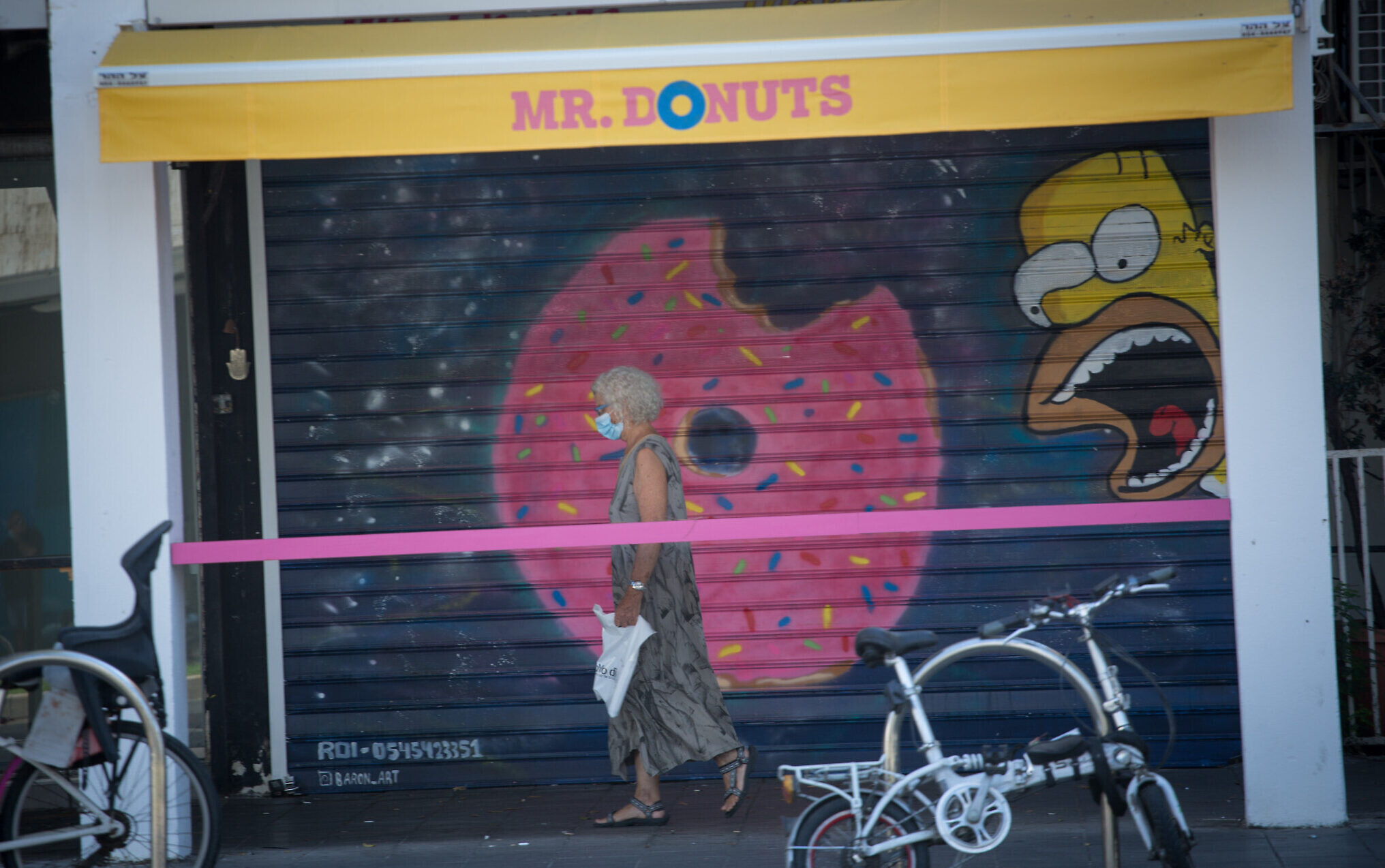
The Health Ministry will oppose reopening street stores this coming Sunday, citing the renewed increase in coronavirus infection rates, Hebrew-language media reported Tuesday evening. The high-level coronavirus cabinet will convene Wednesday to discuss the issue.
Finance Minister Israel Katz — who on Tuesday night was sent into quarantine after his security guard contracted COVID-19 — is expected to press the government to go ahead with the move, which has been previously approved as part of a multi-phase plan to gradually ease lockdown restrictions that were imposed in September.
But Health Minister Yuli Edelstein, the ministry’s director-general Chezy Levy and coronavirus czar Ronni Gamzu reportedly made a decision to oppose any further steps lifting the restrictions until infections go down again.
A key factor that led to the decision is the basic reproduction number, or the rate of new cases stemming from each coronavirus infection. That figure reached the level at which health officials have previously said they would recommend scaling back some of the steps taken to ease the lockdown.
Health Ministry data published Wednesday evening indicated the basic reproduction number had dropped slightly and was now below the 0.8 mark.
Israel sharply brought down its daily coronavirus infection rates from some 8,000 in mid-September to several hundred by late October with a nationwide lockdown, which it began to gradually ease two weeks ago. On October 18, daycares, kindergartens and preschools were reopened, followed by grades 1-4 on Sunday, but non-essential businesses remain shuttered, nearly seven weeks on.
The ministry said 776 new cases of the coronavirus had been diagnosed Monday and 513 were diagnosed by 6 p.m. Tuesday, indicating the drop in daily new cases had leveled out since the government began rolling back the lockdown restrictions.
The ministry said there were 9,890 active cases, of which 393 were in serious condition, including 171 on ventilators. The death toll was 2,592, 12 more than the number given in the morning’s roundup.
Testing levels continued to be relatively low, with 34,208 tests conducted Monday and 24,252 so far Tuesday, despite a ministry campaign to encourage widespread testing. The positivity rate appeared to be steady at just over two percent — 2.3% Monday and 2.1% so far Tuesday.
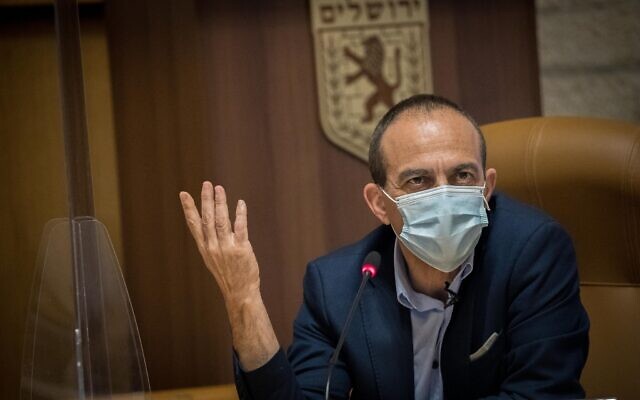
Gamzu said earlier Tuesday that he was aiming to change his “traffic light” plan — in which cities, towns and neighborhoods are color-coded according to their infection rate, with localized restrictions depending on the designation — to make it stricter.
Speaking with mayors and regional council heads, Gamzu said he would work to get more cities designated as “red” — meaning flagged as having high infection rates — since “that would include several cities where we know there’s an outbreak.”
In the morning, Gamzu estimated that for every confirmed virus patient there are another 10 people who suspect they may be infected but are not going to get tested.
“If there were 600 verified [cases] this morning, I estimate there are 10 times as many who do not come to be tested even when they have an inner suspicion,” Gamzu said. “They not only endanger themselves and their families, but the whole disease-reducing operation, and prevent us from lowering the infection coefficient.”
Those who avoid being tested are also preventing the government from further easing a national lockdown to open up businesses and reopen schools for grades 5-12, Gamzu said.
Gamzu also called on those who are diagnosed with COVID-19 to be honest about the people with whom they have been in contact.
“If a person doesn’t reveal all of their contacts, it is a significant problem,” he said.




The Times of Israel Community.