

Liberman expresses unease over massive Saudi arms deal
Defense minister says $110 billion agreement will add to ‘crazy arms race’ in region; Netanyahu says US maintaining Israel’s qualitative edge
 Add ToI as a Preferred Source on Google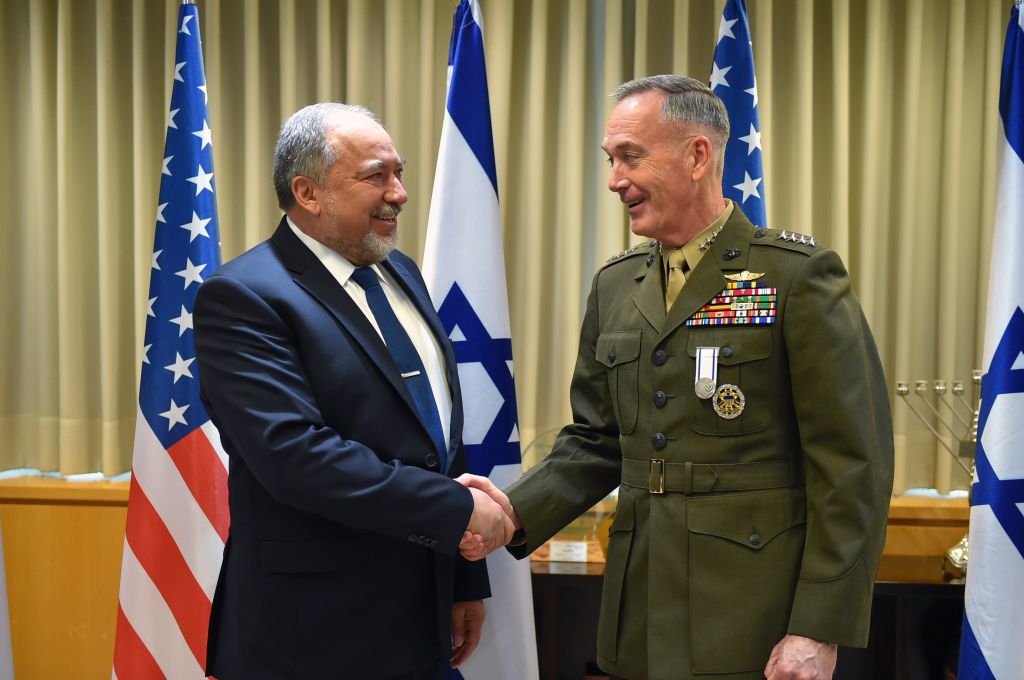
Defense Minister Avigdor Liberman said Wednesday he was uneasy over a massive US-Saudi arms deal announced over the weekend, saying it was part of a “crazy” regional arms race.
In the first public comment by a leading Israeli official on the $110-billion US sale of ships, tanks and the latest anti-missile systems to the kingdom, Lieberman said he had expressed his concerns in recent talks with US National Security Adviser HR McMaster.
“I’m not at peace with any arms race and the huge Saudi purchase for sure doesn’t add much to our peace of mind,” he said in an interview with Army Radio.
“I’m not at peace with the whole arms race in the Middle East,” he added. “It’s not just the Saudis, its also the Emirates, also the Qataris, also the Iranians; they are all acquiring weapons.”
“Weapons deals in the Middle East just in 2016 reached $215-216 billion and this is no small sum,” Liberman said.
“It needs to be understood that there is a crazy arms race going on, the amount of arms all the players in the region are acquiring and the desire to produce weapons in places like Yemen and Lebanon.”
The Saudi deal, to be phased over 10 years, was announced on Saturday as US President Donald Trump began a two-day visit to the Gulf state before travelling on to Israel.
US administration officials say it is the biggest single arms deal in American history.
Nevertheless, Liberman said, “We are following developments and are aware and have ways of dealing with this.”
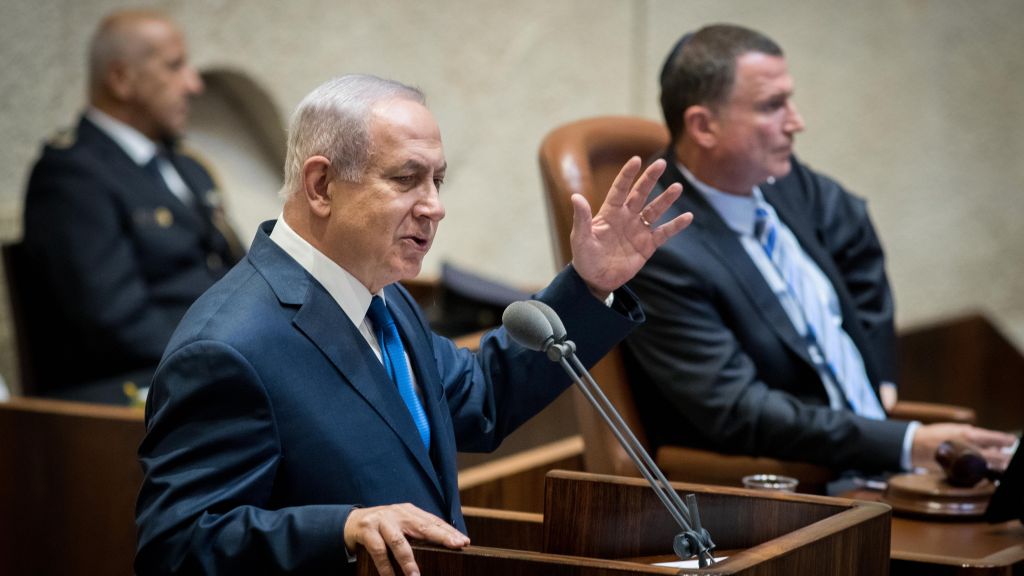
Hours later, Prime Minister Benjamin Netanyahu said the US had agreed to boost the defense aid it gives to Israel and would ensure that the country maintained its qualitative advantage.
“Three days ago, the US added $75 million to defense aid,” Netanyahu said, speaking at the Knesset at an event to mark 50 years since the reunification of Jerusalem during the 1967 Six Day War.
The White House said that in talks with Israeli Prime Minister Benjamin Netanyahu in Jerusalem on Monday, “President Trump underscored the United States’ ironclad commitment to Israel’s security, including to the maintenance of Israel’s qualitative military edge.”
The thrust of the deal with Riyadh aims to help the Saudi military bolster its defenses to deter bitter rival Iran and its missile program, which Netanyahu has said potentially poses an existential threat to the Jewish state.
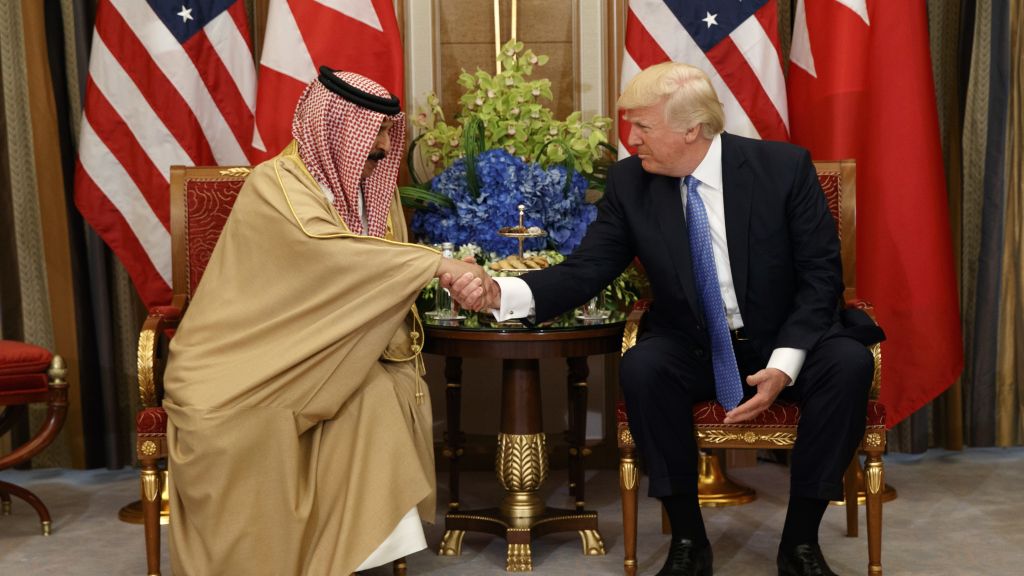
During his trip, Trump pitched the idea of a coalition of Sunni Arab states against Iran and “Islamic extremism” and said Israel could find a commonality of interest with such a grouping.
Israel and Saudi Arabia have no official relations but both have expressed serious concerns over Iran’s nuclear ambitions.
The US package reportedly includes the renewed sale of precision-guided munitions that had been blocked under president Barack Obama’s administration, for fear the Saudis would use them on civilian targets in Yemen, where Riyadh is fighting a war against Iranian-backed Houthi rebels.
The agreement clears the way for the sale of Patriot and Terminal High Altitude Area Defense (THAAD) anti-missile technologies, providing Riyadh with state-of-the-art capabilities that could thwart an Iranian rocket attack.
Raphael Ahren contributed to this report


The Times of Israel Community.