

Ministers accuse outgoing police chief of conspiring against PM in Bezeq case
Netanyahu confidants claim top cop Roni Alsheich, who finishes his term on Sunday, pressured investigators to recommend bribery charges
 Add ToI as a Preferred Source on Google
Raoul Wootliff is a former Times of Israel political correspondent and Daily Briefing podcast producer.
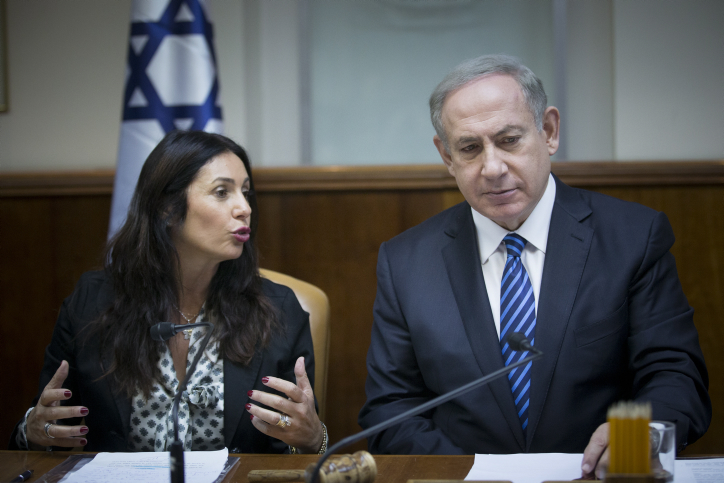
Responses to Israel Police’s bombshell recommendation for an indictment against Prime Minister Benjamin Netanyahu in the Bezeq corruption probe were split along party lines Sunday, with members of the opposition calling for him to resign while coalition lawmakers offered their support. Some in the coalition even accused cops of a conspiracy against the premier.
Investigators said Sunday they believed there was enough evidence to bring Netanyahu to trial on charges of accepting bribes, fraud and breach of trust and fraudulently accepting benefits. It is the third case in which police have recommended bribery charges against the prime minister. They also recommended that his wife, Sara, stand trial in the case.
The first official response from a cabinet minister came from Culture Minister Miri Regev, a Netanyahu ally, who accused outgoing Israel Police Commissioner Roni Alsheich of leading a smear campaign against the prime minister.
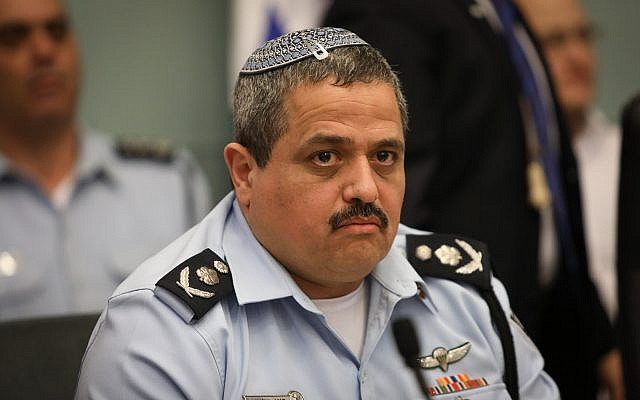
“Police Commissioner Alsheich is still doing everything he can to ensure that the door will slam as hard as possible when he leaves the job,” she said. “After trying to sabotage the appointments of those recommended for the post of police commissioner, he’s still looking for headlines.”
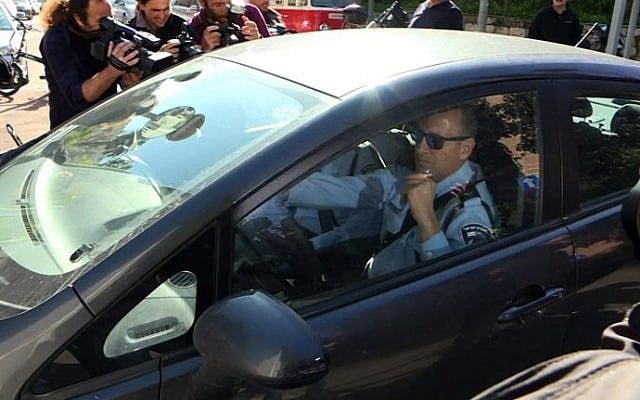
Alsheich ends his term on Sunday after four years in office. Both Netanyahu and Public Security Minister Gilad Erdan have clashed with the outgoing commissioner and declined to extend his tenure for the customary additional year.
Earlier this year, police recommended that Netanyahu be charged with bribery, fraud, and breach of trust in two other corruption cases, designated 1000 and 2000. The following month, Netanyahu said that law enforcement officials were being pressured to pursue criminal investigations against him. He has since railed against Alsheich, accusing him of leaking information to the press and of conducting a “witch hunt” against him and his family.
Alsheich’s departure comes amid a cloud over his successor vis a vis the Senior Appointments Advisory Committee, also known as the Goldberg Committee, which announced last week that it could not recommend Maj. Gen. Moshe “Chico” Edri as the next police chief, citing a meeting he held during the nomination process with the lawyer of a Tax Authority whistleblower who has accused Edri of harassing him.
Erdan, who nominated Edri, harshly criticized the committee over its decision and vowed to push ahead with the appointment despite the disqualification. Alsheich had also reportedly been against the appointment.
Netanyahu cast similar aspersions against Alsheich in his response to the police recommendations, saying, “The police recommendations regarding me and my wife don’t surprise anyone, nor does the transparent timing of their publication.”
Netanyahu’s coalition has been on shaky ground recently, with the departure of the Yisrael Beytenu party making early elections a distinct possibility.
“These recommendations were set and leaked before the investigations even started,” the prime minister continued. “Police recommendations have no legal standing. Just recently the relevant authorities rejected outright police recommendations against a series of public officials. I’m sure that in this case as well, the relevant authorities, after checking the matter, will reach the same conclusion — that there isn’t anything because nothing happened.”
According to Regev, the culture minister, “On the day he took office, Alsheich promised that the Israel Police would cease publishing recommendations regarding investigations, and on the day he left, he proves that his word is worthless — not only did he not keep his promise, he is doing exactly the opposite.”
In December 2017, at the height of the Case 1000 and Case 2000 probes, the coalition, led by Likud MK David Amsalem, successfully pushed through controversial legislation [Hebrew] to prohibit police from publishing their recommendations in investigations of public officials.
The legislation caused a political firestorm, with critics saying it was designed to protect politicians suspected of corruption, Netanyahu among them, from public backlash, to muzzle investigators, and to curb police authority. Proponents, citing similar sentiments voiced by Alsheich, argued that police recommendations, once leaked to the media, cause irreparable damage to suspects’ reputations, and only rarely, they claimed, result in an indictment by prosecutors.
During deliberations over the bill, Netanyahu himself conceded that in order to avoid the appearance that it was tailored to protect him from public fallout in his own corruption probes, the law would be amended so as not to apply to him, effectively allowing Sunday’s recommendations to be published.
Responding to the specific recommendations against the Netanyahus, Regev said, “I trust the prime minister and his wife. They are honest people who only care about the best interests of the State of Israel and its citizens. The time has come to stop hanging elected officials in the city square.”
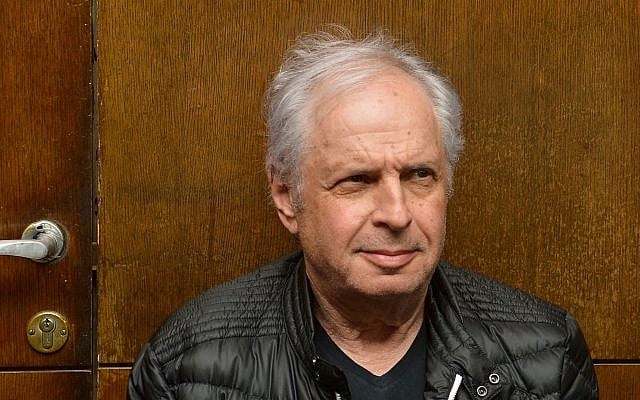
Investigators said that Netanyahu advanced regulatory decisions benefiting Shaul Elovitch, the controlling shareholder in Bezeq, the country’s largest telecommunications firm — despite opposition from the Communication Ministry’s career officials — in exchange for positive coverage from Elovitch’s Walla news site. At the time, the prime minister was also serving as acting communications minister.
The summary of the investigation also included a recommendation to charge Sara Netanyahu with bribery, fraud and breach of trust, and for “disruption of investigative and judicial proceedings,” as well as bribery charges for Shaul Elovitch and his wife, Iris.
Other Likud members followed a similar line to Regev and Netanyahu, focusing on the police and not the specific recommendations.
“Police are continuing to cross all the lines. Alsheich wanted to give Netanyahu a parting gift,” MK Miki Zohar told Army Radio, alleging that the outgoing police commissioner “severely pressured Lahav 433,” the police’s anti-fraud squad, to recommend an indictment.
Coalition whip David Amsalem said in a statement that “what’s most surprising is the perfect timing!”
Social Equality Minister Gila Gamliel offered a softer response: “I’ve known the prime minister for 20 years. He isn’t corrupt and the only thing guiding him is the benefit of the state. I’m sure the attorney general won’t accept [the recommendation].”
The leader of Netanyahu’s junior coalition partner, the Jewish Home party, Education Minister Naftali Bennett, issued a cryptic response to the news.
“I understand that I was [what he received] in return,” he said, seeming to imply that unflattering coverage of him by the Walla site was part of the skewed coverage in favor of Netanyahu in the alleged bribery deal.
Bennett said he had no further response. However, Agriculture Minister Uri Ariel, a member of his party, said: “I hope the recommendation will prove incorrect, and that the prime minister will be acquitted and will continue [serving] to the benefit of the State of Israel.”
The recommendations now go to the Attorney General’s Office, where they will first be reviewed by the state prosecutor before going to Attorney General Avichai Mandelblit.




The Times of Israel Community.