

Tens of thousands march in Beirut ‘You Stink’ protest against government
Organizers work to avoid violence at non-partisan rally over corruption, lack of services on line dividing Christian, Muslim areas
 Add ToI as a Preferred Source on Google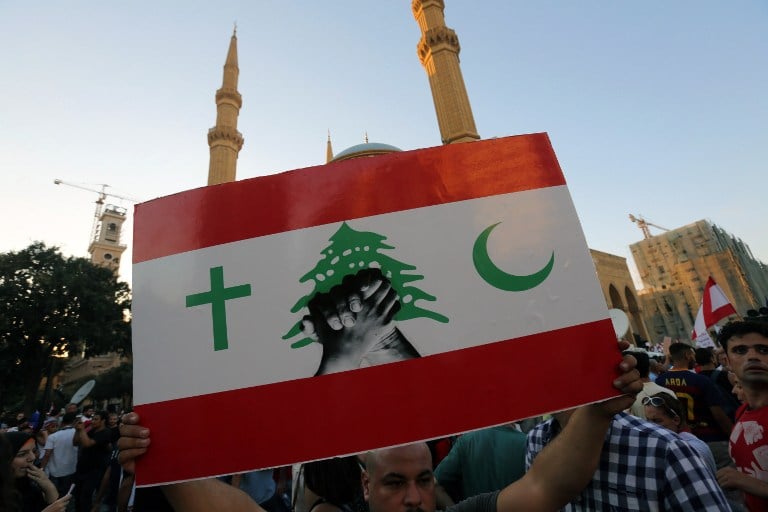
BEIRUT (AFP) — Tens of thousands of protesters from across Lebanon flocked to a mass rally Saturday in downtown Beirut against a political class accused of corruption and failing to provide basic services.
Waving Lebanese flags, men, women and children gathered at the iconic Martyrs Square which sat on a Christian-Muslim dividing line during Lebanon’s 1975-1990 civil war.
The protest, which began at 6:00 p.m., followed demonstrations last weekend that descended into violence as some protesters clashed with police.
“Today, we’re expecting more than 50,000 protesters,” said Assaad Thebian of the “You Stink” organizing campaign, which has stressed the non-partisan nature of the show of contempt for Lebanon’s leaders.
Correspondents gave an initial estimate of tens of thousands of people, including entire families, taking part.
“This is not a protest for political parties. It is for all the Lebanese people… We are against the parties that are exploiting citizens,” said fellow organizer Lucien Bourjeily.
The demonstrators were in an upbeat mood.
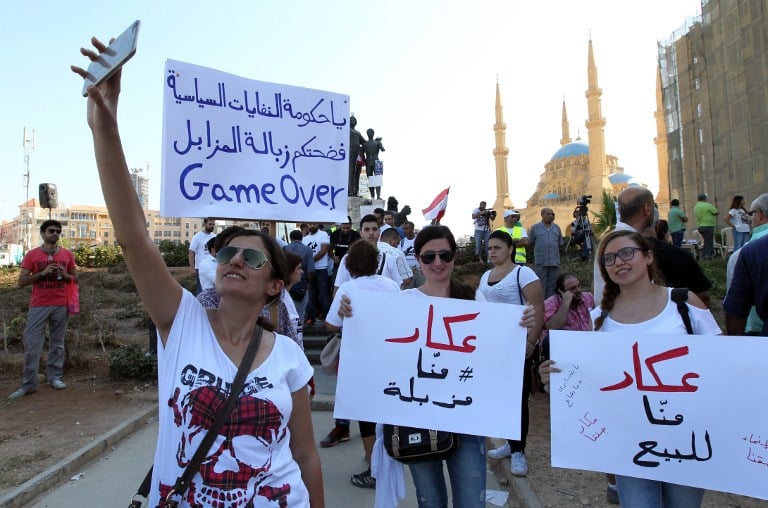
“These protests have given us hope. We were here last weekend, but today is much bigger,” said Patrick Manolli, a young man, alongside his beaming wife carrying a huge Lebanese flag.
“We are here to protest because the country has all become garbage,” said Tamer, a young boy aloft on a relative’s shoulders.
In the absence of political party flags which normally dominate such events in Lebanon, the crowd carried banners bearing blunt messages.
“Ali Baba and the 128 thieves,” read one, referring to parliament speaker Nabih Berri and the 128-member house.
“Sometimes doing nothing is the most violent thing to do,” read another.
“May the power of the corrupt fall, starting with the MPs,” and “You stink, bye bye to the corrupt,” the crowd chanted.
Lebanon’s multiple television channels, of all political persuasions, ran in-depth coverage of what was the country’s largest ever gathering organized by civil society.
The “You Stink” campaign began in response to a trash crisis that started with the closure of Lebanon’s largest landfill in mid-July, resulting in garbage piling up on the streets of Beirut and beyond.
Since then there have been small protests which have broadened to include demands for a political overhaul of government institutions seen as corrupt and ineffective by many Lebanese.
Organizers have said they would call at Saturday’s demonstration for new parliamentary elections and for the resignation of the environment minister.
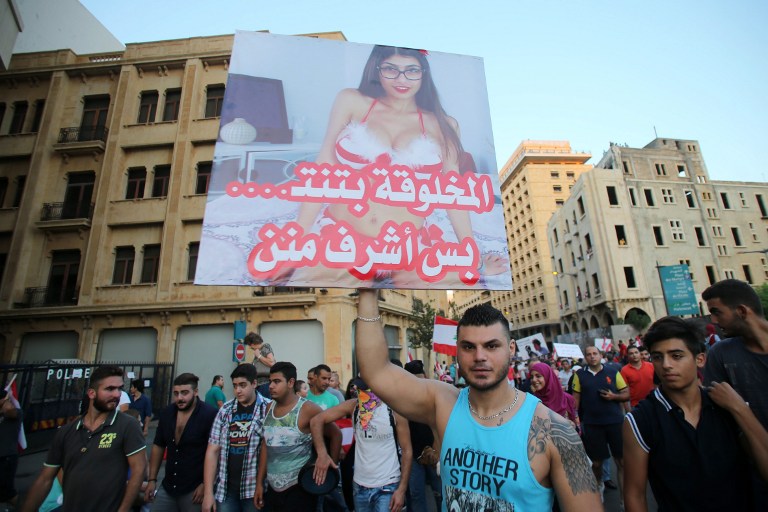
Lebanon’s parliament has twice extended its mandate since 2009, and has been unable to elect a president since May 2014. Political deadlock has also paralysed the cabinet.
The country suffers chronic electricity and water shortages, further strained by the influx of more than one million Syrian refugees.
Last weekend, thousands of people gathered in central Beirut to vent their anger, with protesters calling for “the fall of the regime”.
The campaign blamed “troublemakers” for violence which saw some protesters throw bottles and fireworks at security forces.
Police responded with tear gas, water cannons, and rubber bullets.
To try to avoid similar unrest, authorities and the campaigners have adopted several measures.
The army and police were running a “joint operations room” to “guarantee the well-being of protesters” during Saturday’s protest, said Beirut governor Ziad Chebib.
The army also deployed troops around Martyrs Square as policemen manned positions inside it.
“You Stink” also mobilized 500 volunteers to coordinate with security forces to try to prevent violence, Thebian told AFP.
The protest movement has won support from actors, singers and other artists, and has been given wide coverage both on television and on social networks.
Many see it as a clear change from rallies which are usually organized by political parties to push a cause in Lebanon, a country divided by deep-rooted political rivalries.
“In the past, political leaders would organize protests. But today, all communities are participating because everyone is being affected” by the trash crisis, said prominent Lebanese singer Ghassan Saliba.



The Times of Israel Community.