

To curb budget deficit, central bank urges more taxes and less spending
Bank of Israel Governor Amir Yaron says investment in infrastructure, education needed to improve productivity in economy
 Add ToI as a Preferred Source on Google
Shoshanna Solomon was The Times of Israel's Startups and Business reporter

Israel’s next government will have to either raise taxes or cut costs to rein in the budget deficit, Bank of Israel governor Amir Yaron said in a letter as he presented the central bank’s 2018 annual report on Sunday.
The budget deficit in 2018 rose to 2.9 percent of gross domestic product, or GDP, one percentage point higher than the deficit in 2017, as government spending increased and revenues from taxes decreased last year. This increase in the deficit halted the trend of a declining public debt-to-GDP ratio, which reached 61 percent this year.
“The government’s increasing expenditure in recent years, at the same time as it reduced statutory tax rates, works to increase the structural deficit to a level that is undesirable for it to remain at for an extended period,” Yaron wrote. “The risks inherent in such a situation will increase if the growth rate slows.”
The government should work to curb the budget deficit when the economy is strong, because postponing dealing with the issue might mean that the government would have to raise taxes or cut costs exactly when fiscal expansion is needed to support economic activity, he wrote.
“As the government’s plans for the coming years involve large expenditures, fiscal adjustments will apparently require that the government increase the efficiency of its activities, change its priorities,” Yaron wrote, in addition to raising tax revenues.
In 2018, GDP grew by 3.3 percent and employment levels continued to rise, with the unemployment rate reaching its lowest level in several decades. Wages rose.
GDP per capita in Israel, however, remains “lower than in other advanced economies,” Yaron wrote. “Not only is the economy failing to reduce the gap, but in recent years GDP per capita has been growing slower than in those countries even though the employment rate in Israel increased rapidly.”
In addition, slower forecast demographic growth forecast as well as other processes “are expected to act to slow the potential growth rate in the coming decades,” he wrote.
“All these highlight the need for an overall policy to increase productivity in the economy,” he said, by boosting the quality of human capital and infrastructure investment and cutting back on regulation to improve the business environment.
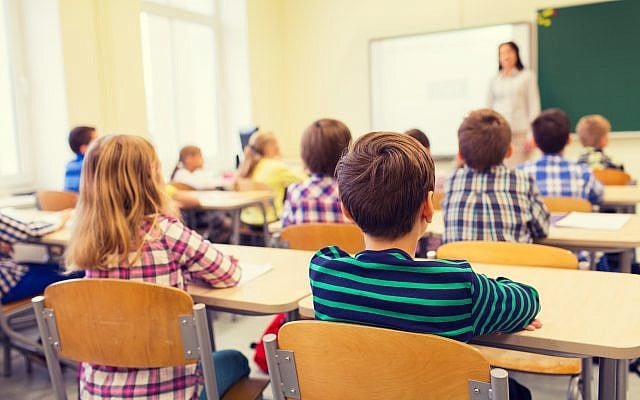
To improve human capital, the government must invest in better education, “at all levels,” beginning from ages 0–3, “in order to allow a prolonged improvement in the achievements of all students and to provide them with the basic skills required for the future job market.”
Special efforts, he said “should be focused on reducing achievement gaps among students from the various population groups and socioeconomic backgrounds, as those gaps are very high compared to other countries.”
Broad investment in infrastructure is required, mainly in public transportation and metropolitan mass transit systems.
The government must also continue to “improve and simplify regulation,” and to continue to boost competition and increase the imports of a variety of products.
Besides steps to increase productivity, the government should strive to increase employment rates in sectors that have low participation in the labor force, by teaching them the skills they need to do so.
“Comprehensive and persistent policy in these areas will contribute to increasing the standard of living for all population segments and to reducing inequality in the economy,” Yaron said.
Home prices declined in 2018 for the first time after approximately a decade in which they increased rapidly, he wrote. Contributing to the halt in the increase were steps taken by the government in previous years to markedly expand supply as well as to rein in demand.









The Times of Israel Community.