

Trump, Netanyahu celebrate ‘a pivot of history,’ laden with electoral overtones
The president announces a highly significant breakthrough, and the delighted Israeli prime minister dodges a bullet when asked if Biden could have done it

 Add ToI as a Preferred Source on Google
David Horovitz is the founding editor of The Times of Israel. He is the author of "Still Life with Bombers" (2004) and "A Little Too Close to God" (2000), and co-author of "Shalom Friend: The Life and Legacy of Yitzhak Rabin" (1996). He previously edited The Jerusalem Post (2004-2011) and The Jerusalem Report (1998-2004).
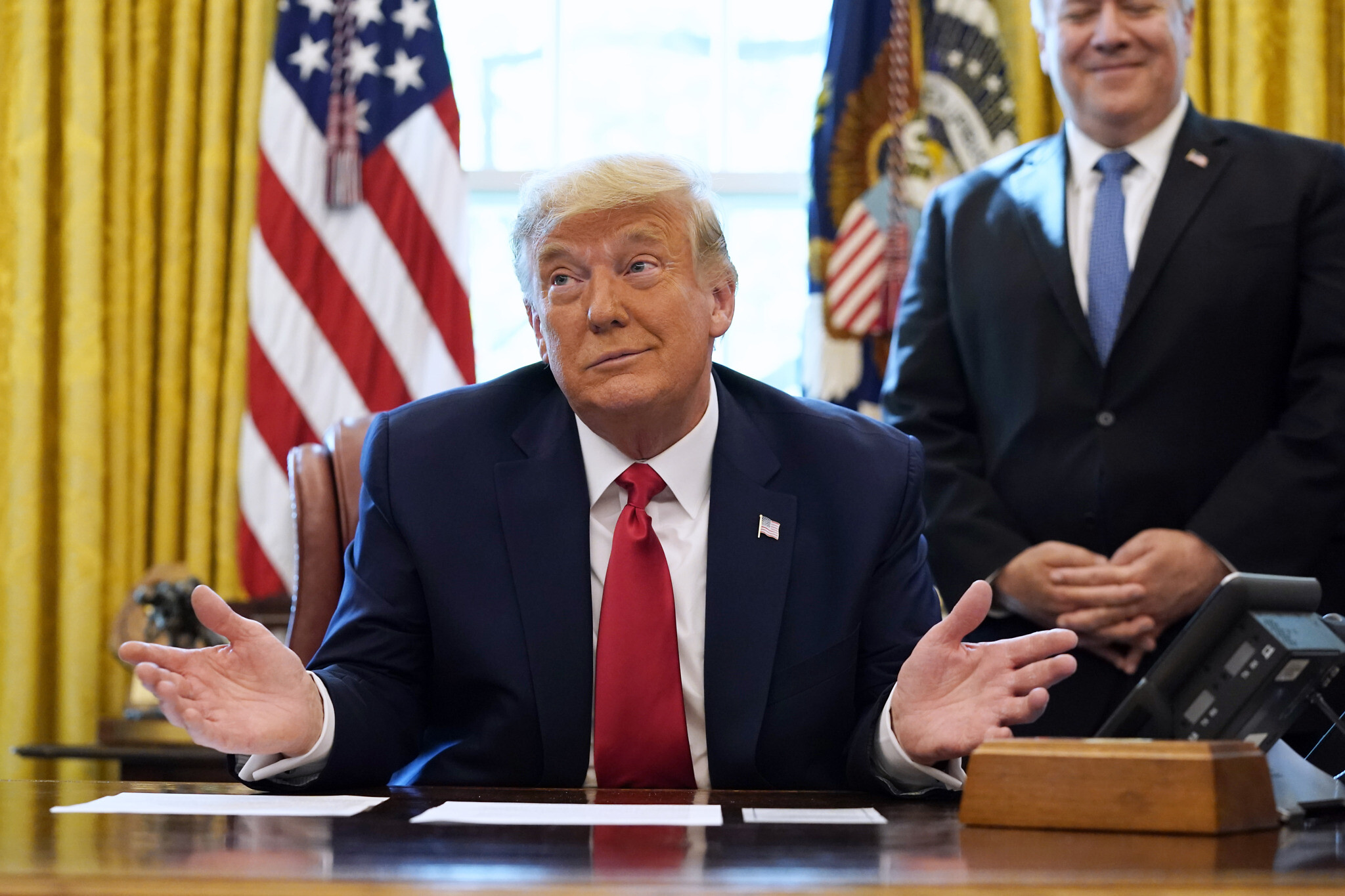
“We’ve never seen anything like this,” Benjamin Netanyahu said in the course of a call hosted by Donald Trump with the leaders of Sudan on Friday, during which the US president announced that Jerusalem and Khartoum were making peace.
The prime minister was talking specifically about the way in which “the fruits of peace” with the UAE and Bahrain in recent weeks are being realized right away, just “days” after the agreements were signed, in the fields of commerce, tech, tourism and more.
But he could as easily have been referring to the extraordinary Oval Office scene in which he was an off-camera participant, as a president battling for reelection invited reporters to listen in and ask questions on the call, and predicted still larger and grander regional reconciliation, assuming he is able to culminate the process.
The Palestinians continue to refuse any engagement with Trump’s “Deal of the Century,” dismissing Friday’s latest Israel-Arab normalization accord as another “stab in the back.” But the president is cutting highly significant deals elsewhere in the region — first bringing in the UAE with the incentive of F-35s and other arms purchases, and now Sudan with the juicy financial carrot of its removal from the US list of state sponsors of terror.
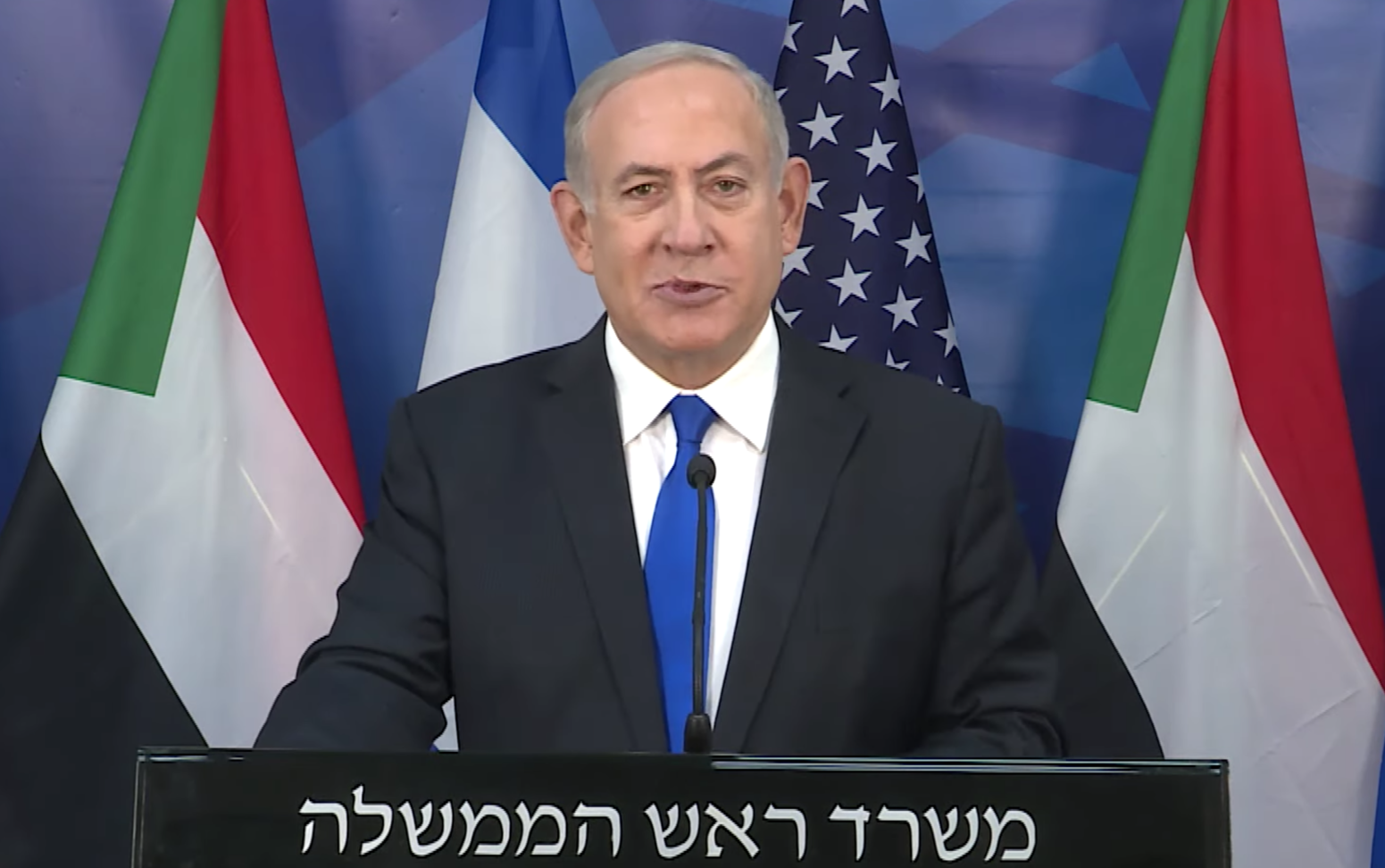
This latest deal is no minor achievement, either. This is Sudan, which sent troops to try to eliminate Israel at its birth in 1948, hosted the notorious 1967 Arab League summit in Khartoum at which Israel’s legitimacy was again resolutely rejected, and served as the staunchest of allies to Iran and Palestinian terror groups until very recently.
And he’s not done yet. “We have at least five [more countries ] that want to come in,” the president told the room. “And you know what it’s costing the United States?” he asked, as Netanyahu chuckled down the line. “Nothing. Why should we be paying? We’re settling, we’re settling peace.”
Savoring his fresh breakthrough to the full, Trump went on to predict a veritable Isaiah’s vision of regional harmony. “Ultimately,” he asserted, “they’ll all be one unified family. It’ll be an amazing thing. Probably has never happened in the Middle East.”
First, he said, there’ll be a signing ceremony in Washington — and not just for Israel and Sudan, but with “some other countries you’ll be hearing about soon, probably simultaneously.” If that sounded far-fetched, it might be worth recalling that the Israel-UAE event at the White House last month was expanded, at the eleventh hour, to include Bahrain.
There’ll be “a big reunion at the end,” he then enthused, “where everybody’s here, and everybody’s going to be signed,” including the Saudis. “They’ll all come together; we’re going to have a big, beautiful party.”
And, eventually, he asserted, even the Iranians would get on board, having been reduced from “a rich country to a poor country” over his years in office. “They’re tired of fighting too,” he claimed. But they’d need to abandon their nuclear weapons goals and stop shouting “Death to Israel.”

Netanyahu was only too happy to offer his support for an accommodation with this very different future Iran. He hadn’t opposed any Iran deal, the prime minister noted, accurately, when he went to lobby Congress in 2015 against the P5+1 accord backed by Trump’s predecessor Barack Obama. Just that deal, which, he noted, did not rein in Iran’s ballistic missile development, uranium enrichment and terrorist activities. A “better” deal, the kind of deal that Trump was thinking of, a deal that put an end to Iranian aggression, Netanyahu made clear, would be most welcome.
In that part of the call for which reporters were present, strikingly, there was barely a mention of the Palestinians. “The Palestinians, by the way, if you ask about the Palestinians, they’re wanting to do something. They have never seen anything like this. They’re wanting to do something. I’m sure that will get done too,” said Trump. “We’re very confident that the Israeli-Palestinian conflict will be resolved as well,” said Kushner. And that was that.
Asked directly about what was happening with the Palestinians, Trump had nothing to add, and went back to talking about Sudan. Middle East normalization is moving on without them, and with it Trump’s reelection campaign.
The fast-approaching moment of electoral truth was an overt component of Friday’s Oval Office event, after all. Trump was asked about the progress of his campaign. He talked about the challenges of trying to win an election at the same time as doing his “day job.” And he even put Netanyahu on the spot about it.
“Do you think Sleepy Joe would have made this deal?” the president asked Netanyahu. “Somehow, I don’t think so.”
For once, the prime minister seemed momentarily lost for words, as he formulated a response that would sit well with the incumbent without alienating the potential successor. “Well, Mr. President, one thing I can tell you,” he responded after a pause. “We appreciate the help for peace from anyone in America, and we appreciate what you’ve done enormously.”
The president appeared satisfied with that.
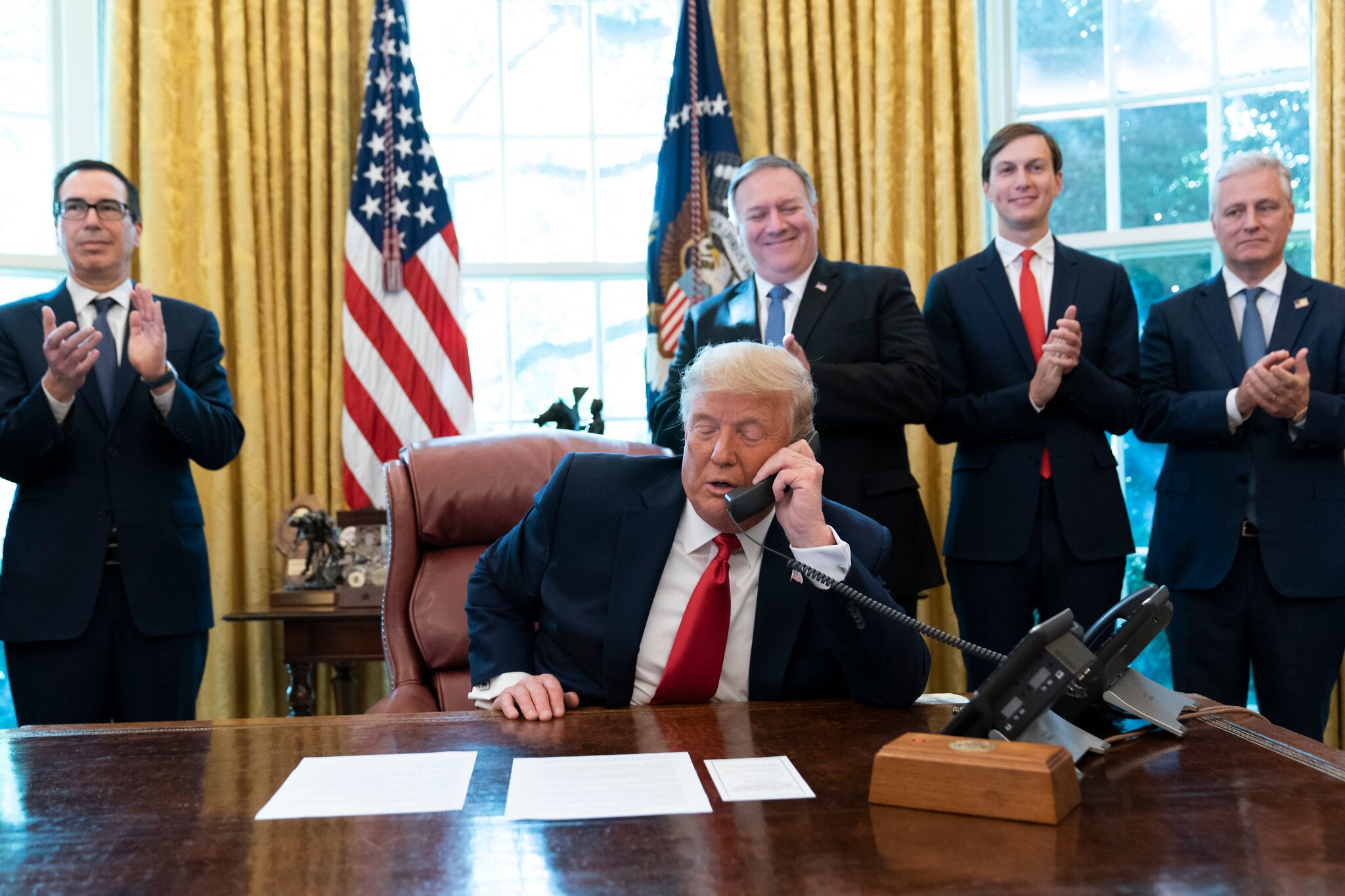
Unsurprisingly, though, Trump ended the session with an assertion of his victory prospects. “If we win the election, one of the first calls I’ll get will be from Iran: ‘Let’s make a deal,'” he said, noting that, like Russia, “they don’t want me to win… But I think we’re going to win.”
Netanyahu wasn’t called upon to respond to that future scenario. He was celebrating the diplomatic achievement of the present and presumably hoping that it will help boost his own political standing, so battered in recent months by his and his dysfunctional coalition government’s handling of the COVID-19 pandemic.

“A pivot of history,” Netanyahu called it — a pivot that was revealed to the watching world even as it was being executed, with the two Sudanese leaders, incidentally, barely speaking and partially inaudible when they did talk.
How might the subsequent predicted deals, signings and ceremonies play out if Trump’s assessment of his reelection chances proves wide of the mark? One way or another, we’ll find out soon enough.
“We’ve never seen anything like this,” indeed.








The Times of Israel Community.