

Herzog says settler violence ‘an assault on God himself’; Bennett blasts ‘Jewish terror’
Israeli leaders differ over how to curb extremist attacks on Palestinians; Katz insists police must take responsibility, as IDF official warns of regional fallout
 Add ToI as a Preferred Source on Google
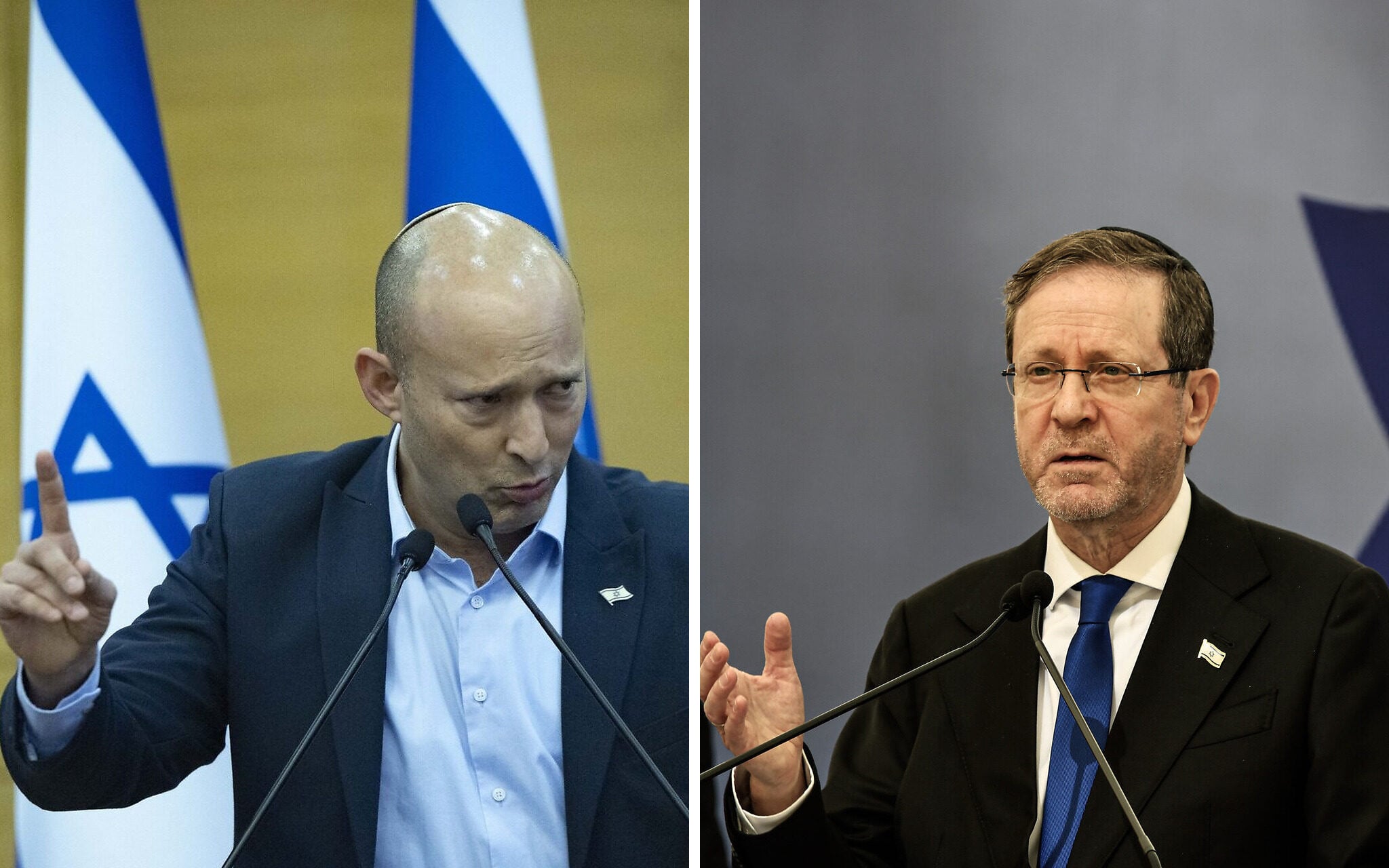
President Isaac Herzog on Monday condemned Jewish extremist attacks on Palestinians in the West Bank as “despicable” and an assault “on God himself,” while former prime minister Naftali Bennett accused the government of turning a blind eye to “Jewish terrorism” following a wave of settler violence over the weekend.
“There is no room for ambiguity here – violence by Jewish extremists against innocent people and communities in the West Bank — Judea and Samaria — or anywhere else, is despicable and deserves strong condemnation,” Herzog told the ELNET Jerusalem conference.
He called it “an assault not only on human beings, created in the divine image, but on the ethical way we carry [ourselves], on our history as a people, and on God himself. It most certainly does not represent Israel.”
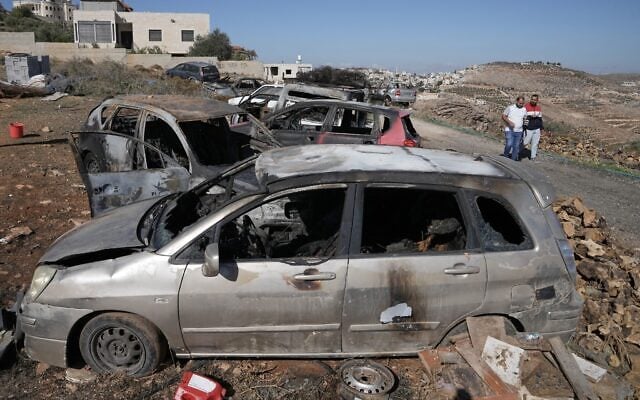
The remarks came after extremist settlers were accused of setting fire to a dozen vehicles and several homes in Palestinian villages near Ramallah on Saturday night.
Israel faces growing international pressure over settlement expansion and surging settler violence against Palestinians, with Britain and other European countries demanding accountability and Australia imposing sanctions targeting, among others, those supporting violent settlers.
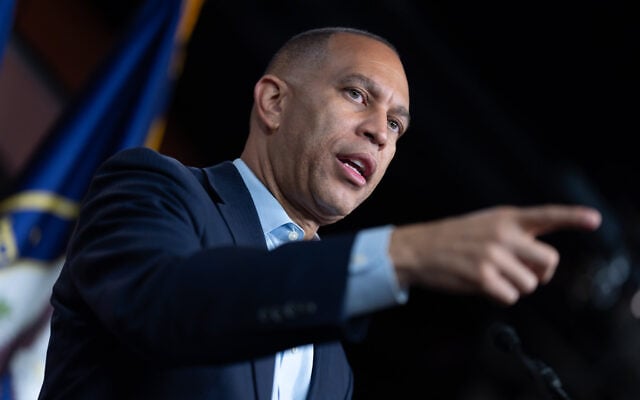
US House Democratic leader Hakeem Jeffries on Sunday called for sanctions against violent settlers in the West Bank.
At home, Bennett and other opposition leaders have accused Prime Minister Benjamin Netanyahu’s government of failing to act.
The president told the audience of foreign diplomats and lawmakers that “our law enforcement agencies are working diligently to scour this terrible moral stain and arrest, investigate, and prosecute any perpetrators of violence to the fullest extent of the law, in line with our values as Jews, as Israelis, and as human beings.”
Herzog had previously warned Netanyahu and senior officials about the consequences of unchecked settler violence. In a letter he wrote last month, Herzog cited shortages of manpower and enforcement tools and called for stronger measures, including widespread arrests and administrative detention, warning that “without visible enforcement and real deterrence, we will arrive at a disaster.”
Bennett and Eisenkot slam government response
Bennett, chair of the B’Yachad party, condemned what he called “despicable Jewish terrorism,” saying the attacks were contrary to Jewish moral values and posed a threat to the future of Israeli settlements in the West Bank.
He also called the violence “yet another resounding failure of the outgoing government,” accusing its leaders of turning a blind eye to the attacks and canceling administrative detention orders against Jews “for a few votes in party primaries.”
Suspects can be held in administrative detention for months on end with no trial, with the tool typically used against Palestinians when there is not enough evidence for a regular arrest warrant. Its use against Jewish suspects has been rare, and Defense Minister Israel Katz ended the practice entirely upon taking office in November 2024, amid a sharp rise in settler violence against Palestinians.
“We will put an end to this anarchy,” Bennett said, pledging to “restore Israel’s standing in the world, support IDF soldiers and ensure that a violent fringe does not endanger the many good citizens.”
On Saturday, he reaffirmed his support for a unity government led by Yashar chair Gadi Eisenkot that would include Likud, while insisting that Netanyahu must not remain prime minister. His declaration followed a meeting with Netanyahu on Wednesday that had fueled speculation he might break with Eisenkot’s bloc.
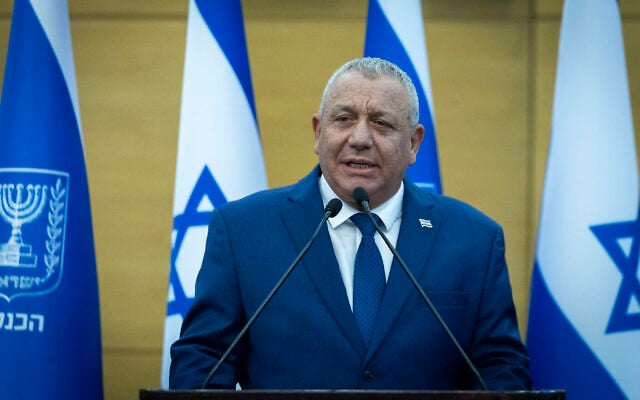
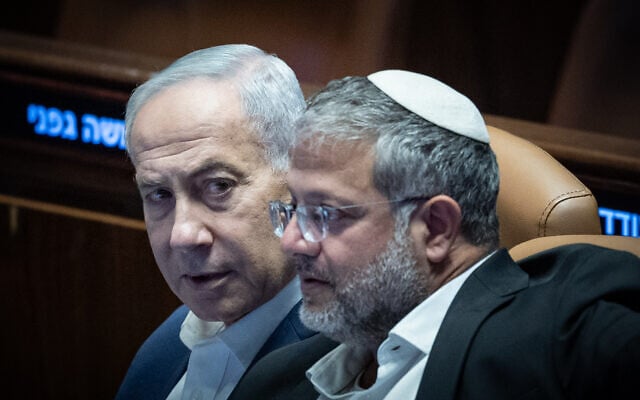
Eisenkot, who has been tasked with forming a government following last month’s elections, described the latest arson attacks as “Jewish terrorism in every sense of the word” and accused National Security Minister Itamar Ben Gvir, who oversees the police, and Finance Minister Bezalel Smotrich, who also oversees settlement affairs in the Defense Ministry, of bringing the West Bank to the brink of anarchy.
He called on authorities to use all available measures, including administrative detention and targeted Shin Bet operations, to stop the perpetrators.
Katz insists police must handle settler violence
Katz, meanwhile, continued to insist that all aspects of settler violence in the West Bank must be handled by the Israel Police rather than the army.
In his first comments more than a day after the latest attacks, Katz said the “ongoing violence by a handful of rioters” in the West Bank was “grave in every respect.”
However, he asserted that “The IDF does not need to, nor is it capable of, enforcing civil law on the Jewish population in Judea and Samaria (West Bank), which is growing every year.”

“Therefore, in accordance with my directive, the IDF has formulated a plan to transfer responsibility for criminal civil law enforcement in Judea and Samaria to the Israel Police, which will be reinforced and make the necessary preparations,” he said, referring to an order he issued in August that was widely seen as impractical, because Israel has never formally annexed the West Bank.
Katz claimed that “police have the appropriate tools to handle prevention, investigations, arrests, and criminal prosecution of those who break the law,” even though police forces are stretched thin in the West Bank.
The defense minister for the caretaker government added that the army “should be engaged in defending the borders, operations against Palestinian terrorism and protecting Israeli communities.”
Separately, an unnamed senior Israel Defense Forces officer sharply condemned the settler violence in remarks to Channel 13 on Monday.
“This is an army of terror that could have consequences for the entire Middle East,” the officer told the network.
Settler attacks during olive harvest up 74% in two years
According to an Army Radio report Monday, data held by security forces indicates this year’s olive harvest saw 181 reports of attacks by Israeli settlers on Palestinians, compared to 145 in 2025 and 104 in 2024.
Officials cited by the radio station said the incidents had also grown more severe.
Last week, the IDF said that “areas of friction” — meaning attacks by Israelis on Palestinians — accounted for only “a few percent of the olive-harvesting areas,” insisting that the vast majority of coordinated harvesting at sites under army protection proceeded without incident.
The Yesh Din NGO reported that more than 1,100 incidents of settler violence had taken place since the start of the harvest, including 483 directly related to the harvest.
Times of Israel staff contributed to this report.





The Times of Israel Community.