

Recovered stones from Munich’s main synagogue, demolished on Hitler’s orders in 1938, to go on display
Synagogue was destroyed months before Kristallnacht; more than 100 stones recently retrieved from Isar River have been returned to Jewish community; they will be exhibited from April
 Add ToI as a Preferred Source on Google
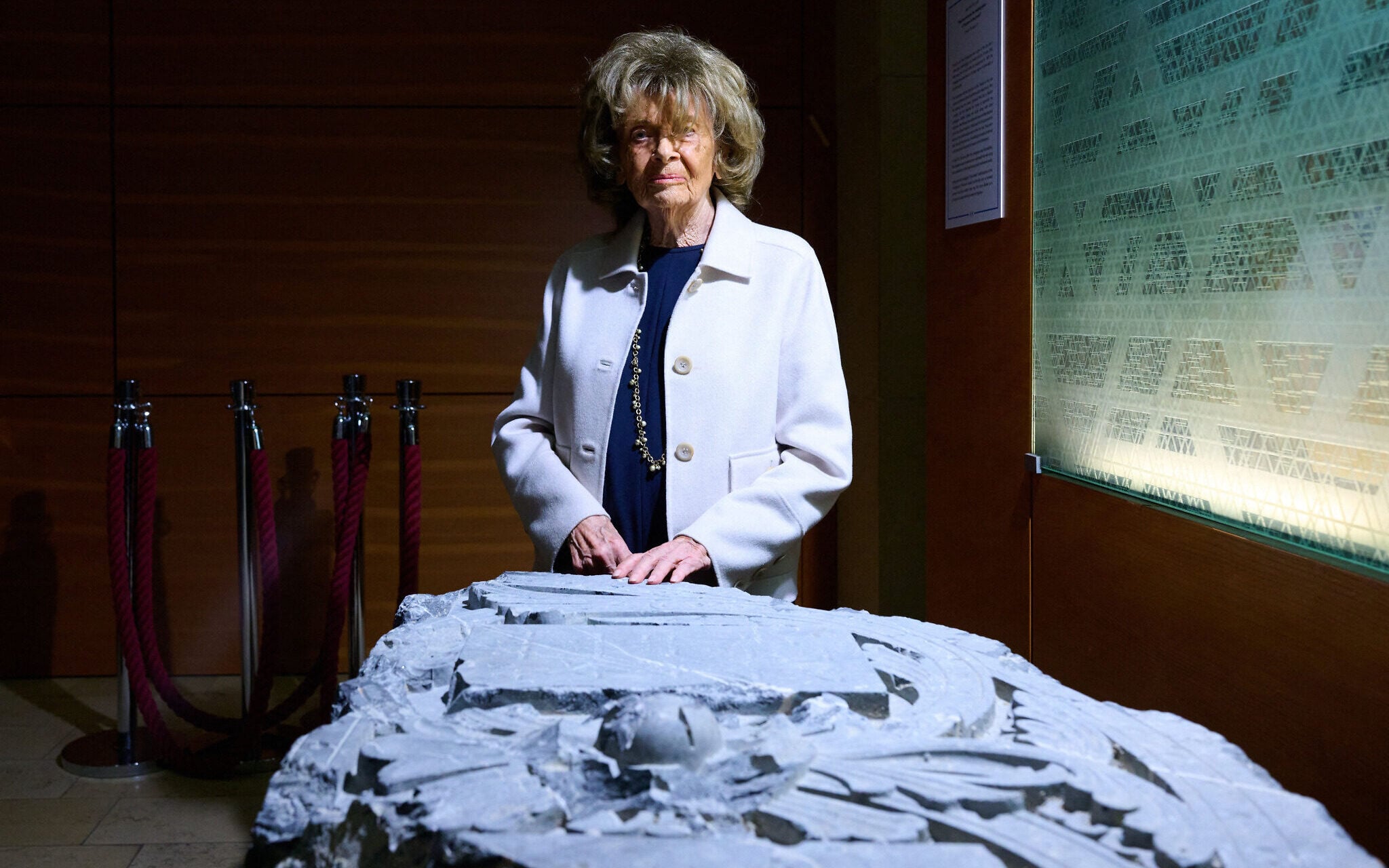
Stones from Munich’s old Main Synagogue, recovered from a river in Munich more than eight decades after the Nazis demolished it, will go on public display next year after being transferred to Munich’s Jewish community.
The recovered material includes a marble fragment bearing the Ten Commandments in Hebrew, which once hung above the ark that housed Torah scrolls and has since been placed in Munich’s Ohel Jakob Synagogue.
Researchers identified 109 stones from the demolished synagogue among more than 600 tons of material recovered from the Isar River in southern Germany during construction work in recent years, according to Bavarian public broadcaster BR24.
The synagogue was demolished in June 1938, as ordered by Nazi dictator Adolf Hitler, five months before the Kristallnacht pogroms throughout Germany. The site was later turned into a parking lot and then redeveloped.
The synagogue had been inaugurated in 1887 on Herzog-Max-Straße and served as the central gathering place and house of worship for Munich’s Jewish community.
The construction company Leonhard Moll, which demolished the synagogue in 1938, later reused its rubble for flood control measures in 1955 and 1956, according to the German Jewish newspaper Jüdische Allgemeine.
Munich’s Jewish community was forced to pay for the original demolition. The company has pledged to examine its history over the next three years.
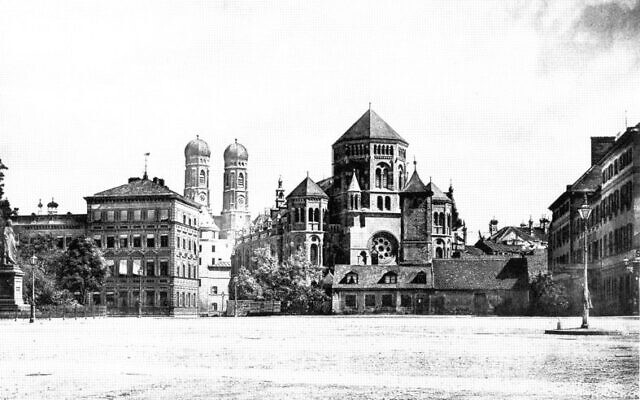
The discovery prompted an ongoing research project involving the Jewish Museum Munich to identify the stones, trace their history and determine their legal ownership.
Researchers presented preliminary findings Thursday at the museum, where an exhibition of the recovered stones is scheduled to open on April 13, 2027.
“The rediscovery of fragments from the former main synagogue, almost a century after its demolition, was a historic moment for us,” said Charlotte Knobloch, president of Munich’s Jewish community, according to Haaretz.
Knobloch, who was born in 1932, attended the synagogue as a young girl before it was demolished.
“To this day, there is a sense of sorrow and bitterness that these stones were simply thrown into the river as though they were construction waste,” Knobloch said.
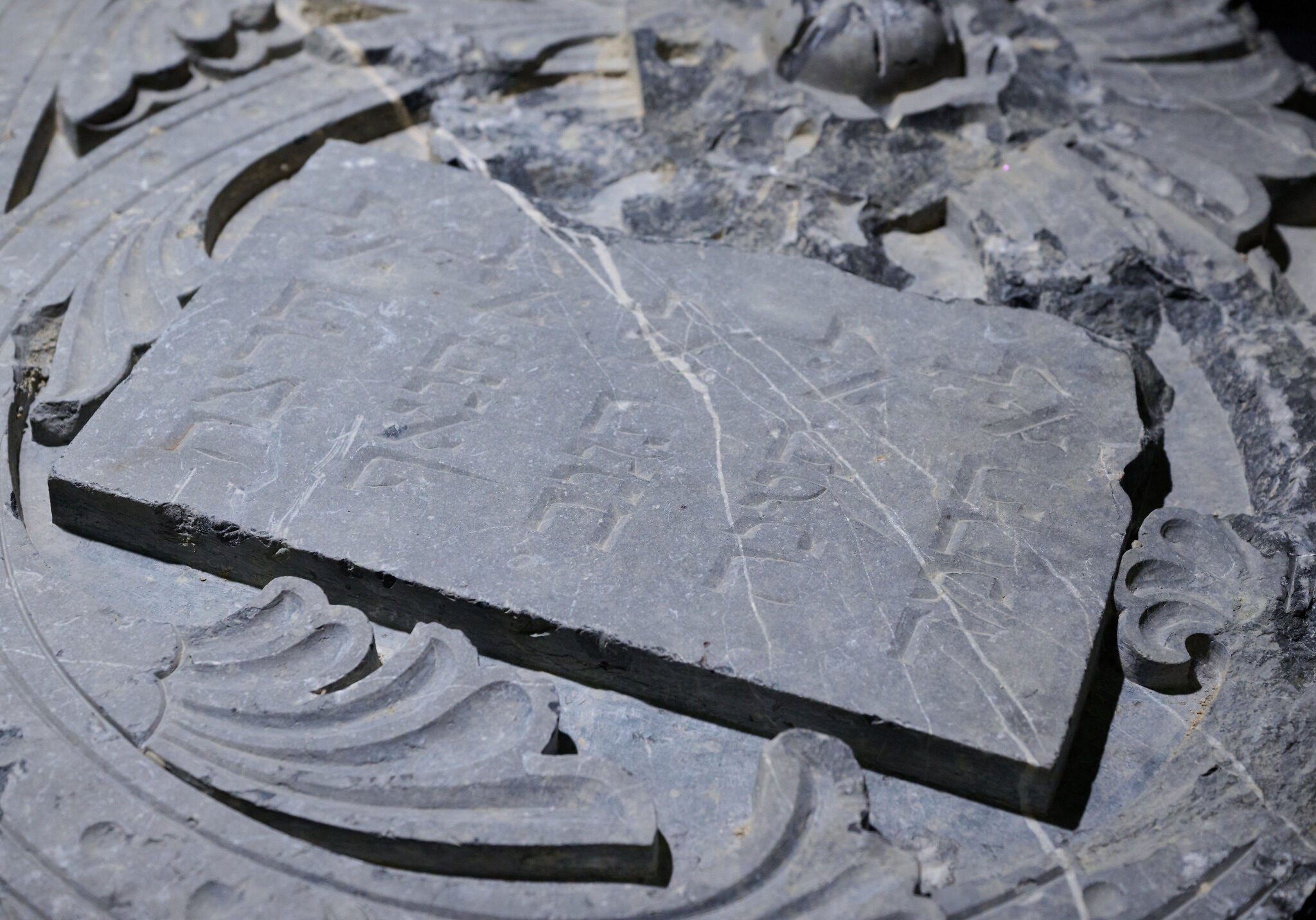
The Jewish Museum Munich worked with a Berlin law firm specializing in provenance research and looted art to determine who legally owned the stones, according to BR24. The investigation found that the stones legally belonged to the German state of Bavaria, which has since transferred them to the Jewish Community of Munich and Upper Bavaria, headed by Knobloch.
“In this way, Munich residents will be able to see what was once part of their city, and understand in a tangible way that the Jewish community was, and still is, part of this city,” Knobloch said, according to Haaretz.
Researchers have established the original positions of 29 of the 109 identified stones. The planned exhibition will include a visualization showing where they were originally located in the synagogue.
Munich’s cultural affairs official, Marek Wiechers, said the recovered stones served as a warning about the city’s Nazi past and the importance of protecting democracy, Haaretz reported.
Munich Deputy Mayor Mona Fuchs also described the stones as a reminder of the need to combat all forms of antisemitism, according to Jüdische Allgemeine.










The Times of Israel Community.