

US Jewish day schools ‘not immune’ to e-cigarette epidemic among teens
With flavors such as mango, fruit medley, and creme brulee, American youth are taking up ‘vaping’ — including at Orthodox institutions
 Add ToI as a Preferred Source on Google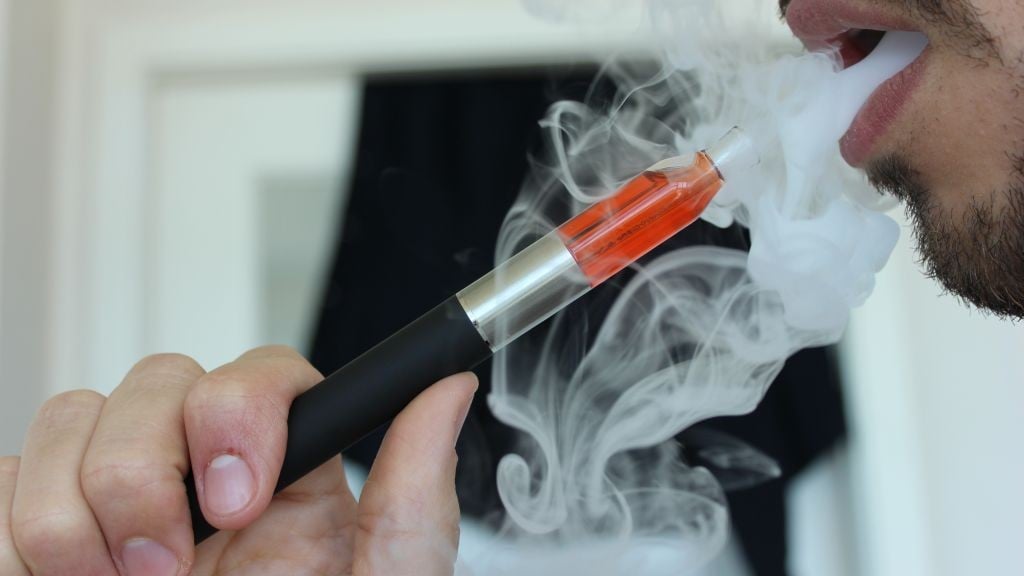
You know something is popular when a brand becomes a verb: We Google, Skype, and WhatsApp our friends. And since the 2015 introduction of Juul electronic cigarettes, millions of people have begun Juuling.
The company, now valued at $15 billion, had sales surge more than 700 percent in the past year and owns more than 70% of the fast-growing $2 billion e-cigarette sector.
But while Juul publishes data about how many traditional smokers have turned away from tobacco in favor of e-cigarettes –millions, to be sure — the popularity of vaping among teens across the US is skyrocketing, according to middle and high school officials.
Facing an imminent US government ban on sales of flavored e-cigarettes in gas stations and convenience stores, along with other restrictions, Juul Labs announced this week that it would suspend its social media promotions and stop selling most of its flavored e-cigarette pods in American retail stores.
In August, the Israeli Health Ministry limited the import and sale of Juul’s e-cigarettes, citing “a grave risk to public health.”
In a Washington, DC-area Jewish day school, 15-year-old “Asher,” a 10th grader, says he Juuled for a year until his parents caught him. He claims “dozens” of his classmates take bathroom breaks to Juul throughout the day and adds that they “sneak puffs in the middle of class when the teacher’s back is turned.”
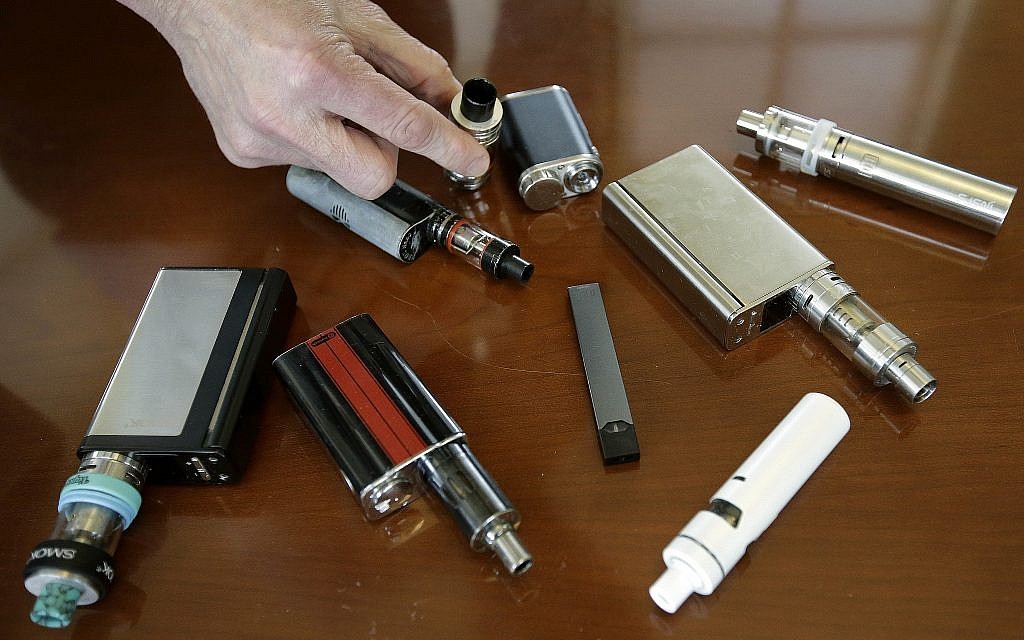
It’s easy to see why Juuling is attractive to teens. The product comes in flavors such as mango, fruit medley, and creme brulee. And e-cigarettes are sleek, high-tech, and easy to hide as they fit in the palm of your hand. They essentially look like a flash drive and can be charged in USB ports.
“Michael,” 13, is a seventh grader at Asher’s school and says even kids in his middle school class are experimenting with Juul.

“I’ve seen my friends in the bathrooms or outside Juuling and hiding it from teachers,” Michael says, adding that the product is readily accessible.
“It’s so easy,” he says. “Lots of kids are selling them around school.”
In fact, despite an FDA ban on selling e-cigarettes to minors, the 2016 National Youth Tobacco Survey showed 1.7 million high school students and 500,000 middle school students using e-cigarettes worldwide. A Science News article said that Juul is the most popular e-cigarette among underage users.
But are teens in Jewish day schools more susceptible to picking up the e-cigarette habit?
Rabbi Maury Grebenau, principal of the Yavneh Academy of Dallas, doesn’t think so, but still describes “vaping,” as e-cigarette use is commonly known, as “a real threat to teens.”
“Just because our kids live in a tight-knit Jewish community doesn’t mean they’re not susceptible to this growing trend,” he says. “It’s important to be aware of, too, because they won’t be with us forever. Many will go on to secular colleges, so we should prepare them with knowledge about the harmful effects of Juuling.”
Last year, Grebenau wrote a blog about e-cigarettes which has since been republished by other Jewish day schools across the country.
Dr. Marc Lindner, dean of the Charles E. Smith Jewish Day School (CESJDS) in Rockville, Maryland, doesn’t think Jewish schools have a vaping problem in particular, but rather, “Our country has a vaping problem.”
“I suspect that some number of students at CESJDS vape, but other than one instance which was off campus, I’m not aware of JDS students who have been caught vaping. I don’t think the school is immune to the situation. I do think, in comparison to other middle and high schools, [our] students come from homes that, to a greater extent, prioritize safe and healthful choices and that have involved parents,” Linder says.

Although safer than carcinogenic tobacco-based cigarettes, Juul users risk becoming addicted to nicotine, says the Campaign for Tobacco Free Kids, a global anti-tobacco advocacy group.
Grebenau is particularly worried about the fact that each “Juul pod” contains as much nicotine as an entire pack of cigarettes, “but many young people don’t realize it,” he says.
The Campaign for Tobacco Free Kids says a recent study found 63% of current Juul users aged 15-24 did not know the product always contains nicotine, which “can harm adolescent brain development, affecting attention, learning and susceptibility to addiction.”
In heavily Jewish Bergen County, New Jersey, psychologist Dr. Bin Goldman told the Jewish Link of New Jersey that he works with many middle and high school students from local yeshiva day schools and high schools.
“Kids are Juuling in the school bathroom. Kids are Juuling in class. Teachers are now a little more aware of it, so they might be able to recognize a Juul when they see one and know it’s not a USB device. But it’s so easy to take a hit when no one is looking, or to have it in your pocket,” Goldman says.
Goldman said vaping is common in the Jewish community and cuts across the Orthodox spectrum.
Juul does not deny the dangers e-cigarettes pose to youth. It says its company’s products are intended solely for smokers looking for a safer alternative to cancer-causing traditional cigarettes.

“Juul is intended for current adult smokers only. We cannot be more emphatic on this point: no young person or non-nicotine user should ever try Juul,” says Victoria Davis, a JUUL Labs spokesperson.
Davis told The Times of Israel that underage use of Juul and any other vaping products is “completely unacceptable and directly opposed to our mission of eliminating cigarettes by offering existing adult smokers a true alternative to combustible cigarettes.”
“We stand committed to working with those who want to keep nicotine products out of the hands of young people,” she says.
Even for adults, the company is emphatic that their products are intended for smokers only.
“As scientists, product designers and engineers, we believe that vaping can have a positive impact when used by smokers, and can have a negative impact when used by nonsmokers. Our goal is to maximize the positive and reduce the negative,” says the Juul website.
For now, studies are mixed regarding public health benefits of e-cigarettes. But there’s no denying that the products are harmful to non-smokers.
The American Cancer Society’s (ACS) official position on the subject notes that “combustible tobacco products, primarily cigarettes, are the single greatest cause of cancer and kill about 7 million people worldwide each year. In the United States, 98% of all tobacco-related deaths are caused by cigarette smoking.”
It says smokers who refuse to quit cigarettes “should be encouraged to switch to the least harmful form of tobacco product possible; switching to the exclusive use of e-cigarettes is preferable to continuing to smoke combustible products.”
But it adds: “Of course, these individuals should be regularly advised to completely quit using all tobacco products. The ACS strongly discourages the concurrent (or “dual”) use of e-cigarettes and combustible cigarettes, a behavior that is far more detrimental to a person’s health compared to the substantial health benefit of quitting smoking.”










The Times of Israel Community.