

Boston rabbi helps congregants rewrite their Judaism
Ahead of next week’s biennial conference of the Union for Reform Judaism, meet Rabbi Elaine Zecher, an inspirational liturgical star
 Add ToI as a Preferred Source on Google
Reporter at The Times of Israel
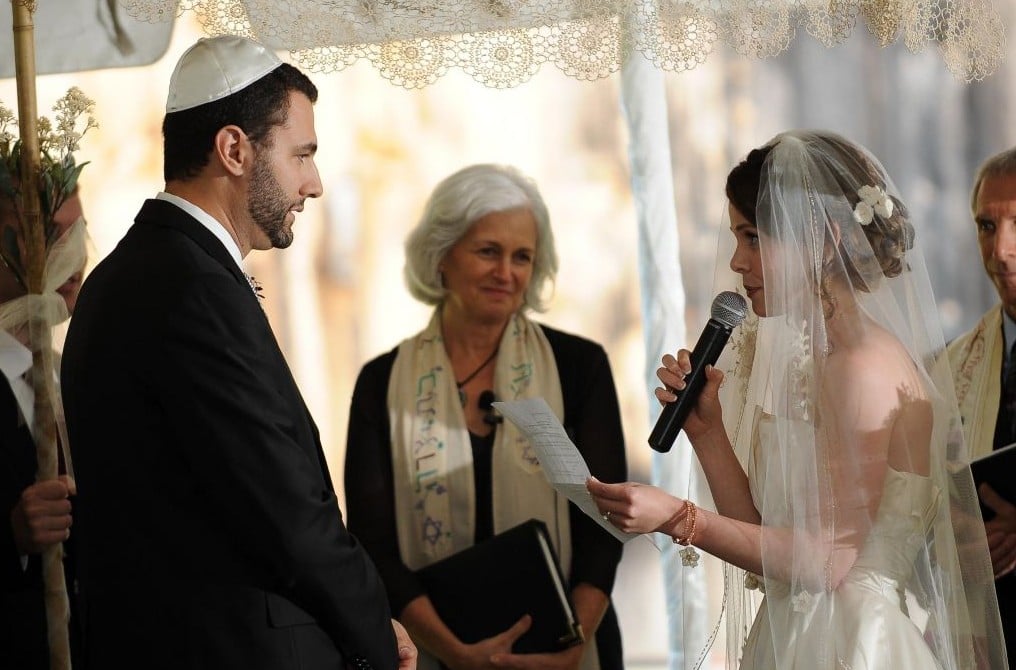
BOSTON — After defeating breast cancer more than a decade ago, Rabbi Elaine Zecher decided she needed another challenge.
Having long been a serious runner, Zecher was looking to “get my body back” after grueling treatment. Never one to think small, she began training for the New York Marathon.
Calling the race “my own healing ritual,” Zecher described the experience in an essay for the book, “The World is a Narrow Bridge: Stories that Celebrate Hope and Healing.”
“In my cancer years, a part of me had died, extinguishing some magic untraceable spark inside of me,” wrote Zecher.
“As I move from the silent 59th Street Bridge to First Avenue’s roaring crowds, I feel like I have been returned to life,” she wrote.
‘In my cancer years, a part of me had died, extinguishing some magic untraceable spark inside of me’
Toward the race’s end, Zecher spotted friends from Boston’s Temple Israel, where she became the Reform synagogue’s first female rabbi in 1990. To her delight, congregants were holding a sign with the words “Lech Lecha, Rabbi,” echoing God’s commandment of Abraham, “Go forward!”
Founded in 1854, Temple Israel grew from a small, German Orthodox shul into one of New England’s largest synagogues. Zecher spoke to the Times of Israel in her cozy office, where a prominent “Trust your crazy ideas” sign is surrounded by pictures of her three children.
“I didn’t feel like I was a pioneer,” says Zecher, who was ordained by Hebrew Union College in 1988. “When I came to Temple Israel, women were in tears. My presence opened a door for people that I was not prepared for. Some of these women had marched [for women’s rights], and now there was finally a female rabbi in their own synagogue,” says Zecher, whose older sister is also a rabbi.

Zecher set up the temple’s first women’s study group, and also created programs for children and newcomers to Judaism. With a melodious intonation and long, silver hair, she has been called “the heart of the service” at Temple Israel.
“I’m hyper-aware of everybody’s presence,” says Zecher of leading services at the diverse congregation. “It’s an experience,” she says.
Temple Israel clergy include three other rabbis and a cantor, with regular participation by guest musicians and singers. Despite a packed stage, Zecher is – for many members – an irreplaceable aspect of their worship experience.
“Rabbi Zecher is at the forefront of not just teaching, but also modeling, and just being,” says long-time congregant David Trietsch, an expert in Jewish institutional leadership.
In addition to watching Zecher battle breast cancer, Trietsch recalls how the rabbi conducted herself during the mourning period for her father.
“She modeled for us what you do with that, when you lose a parent,” says Trietsch. “In the way she spoke about his life and shared with us, she modeled the grieving process in a profound way that let us in,” he says.
Recently, the Central Conference of American Rabbis honored Zecher with a “Baal Shem Tov” award, named for the Chasidic master. Through the Conference, Zecher has helped remake the Reform movement’s approach to ritual.
The rabbi grew up in Monroeville, Pennsylvania, surrounded by born-again Christian friends and highway billboards proclaiming Jesus. Zecher’s parents helped found her childhood synagogue – where her mother sang in the choir – and her father published the local Jewish newspaper.
“My parents had a sense of being responsible for the perpetuation of Judaism,” says Zecher. “Our life revolved around synagogue and federation,” she says.
When she applied to Brandeis University, Zecher wrote an essay about building community among Jewish youth. More than any experience at Brandeis, a semester abroad in Israel proved eye-opening for the undergraduate, who decided to pursue rabbinical studies after graduation.
A few years after living in Jerusalem as a rabbinical student, Zecher’s bond to the Jewish state became even more personal – and permanent – when her brother moved to Israel.
“My spark was when my brother made aliyah [immigrated to Israel] with his wife, three kids and the dog to Jerusalem,” says Zecher. “I’ve seen my niece and nephews in an IDF uniform, and then have their own Israeli children. For me, Israel is about what I am willing to do to protect my family. That’s where I start. My family represents a shared, extended family, too.”
‘For me, Israel is about what I am willing to do to protect my family’
Back home, Zecher’s synagogue is engaged in a three-year “congregational conversation” about Israel, which can sometimes be a “high-voltage” topic in the synagogue. Dozens of programs have helped members learn about – for instance – the centrality of Jerusalem to Judaism, and aspects of the peace process.
“In a course I am teaching about Israel, we’re looking at the country based on what kind of responsibility you have when you are a nation,” says Zecher. “This includes power, sovereignty and peoplehood,” she says.
Israel isn’t the only aspect of Judaism that Zecher helps congregants reimagine. For two decades, the rabbi has helped write new prayer books for the Reform movement. Along the way, she’s developed a spiritual recipe for “integrated theology.”
Early in her rabbinate, Zecher recognized the challenge of prayer books that “did not speak to congregants in ways that resonated with them,” she says. “The rabbis knew where we stood, and certainly, you knew where you sat,” she says of four generations dominated by the movement’s monolithic Union Prayer Book.
“The old ‘Gates of Prayer’ book offered ten separate services, each with a different theology, making for a diverse, unconnected whole,” says Zecher. “When we created the [more recent] ‘Mishkan T’filah’ prayer book, we tried to have different voices rising from the page together,” she says.
Zecher remembers learning about integrative medicine from her physician husband, and thinking that its focus on “person-centered” care was ready-made for synagogue life.
“You can use different modalities in prayer to create and recognize a whole person,” says Zecher. “It can be singing, or meditating, or walking, and the idea that these modalities are not juxtaposed, but integrated,” she says.
Calling integrated theology a “new way to wrestle with God,” Zecher recently told congregants about rewriting the High Holiday prayer book – or Machzor – with other rabbis. The final product will mirror several innovations Zecher helped launch at Temple Israel, including a divided shofar service.
Early in her rabbinate, Zecher faced the challenge of creating sacred space for some of Temple Israel’s closest neighbors – AIDS patients being treated in the neighborhood’s many hospitals, some literally across the street from the synagogue.
‘Death walked in this neighborhood. It just struck me’
“You would walk down the street and you would see emaciated men,” she says. “Death walked in this neighborhood. It just struck me.”
Feeling the need to act, Zecher created a monthly “Service for the Healing of the Soul.” The program ran for sixteen years, until it was integrated into regular services, she says.
During Zecher’s own struggle with illness, the rabbi says she found consolation in the prayer Adon Olam, or “Master of the World.” Of particular importance to her were the words, “In God’s hand, I place my soul.”
“I had to learn what those words really mean,” says Zecher. “By placing my soul in God’s hand, I had to acknowledge I could not control everything, much less a serious disease.”
As the mother of three young adults, Zecher has learned even more about flexibility – and resiliency – in recent years. Her two sons and daughter pursue a dazzling array of interests, including urban landscaping, spoken word performance, and pole vaulting.
Having entered the rabbinate to guide others through “the highs and lows of the life cycle,” Zecher has since gone through many of them herself. Though the rabbi is unlikely to enter another full marathon, she trains for half marathons and can’t imagine not running several times a week. For a spiritual leader used to serving others, the practice offers a rare moment of solitude and self-reflection, she says.
“When I run, I don’t listen to any music,” says Zecher, who also enjoys kayaking on the Charles River. “I like to listen to the music that’s in my head. It’s a mindful kind of experience, and my way of being present.”



The Times of Israel Community.