

Coronavirus czar says his post is ‘most thankless job in the world’
Speaking to health officials from quarantine, embattled Ronni Gamzu insists he has backing from public and government, and that the backlash he’s receiving is just part of his work
 Add ToI as a Preferred Source on Google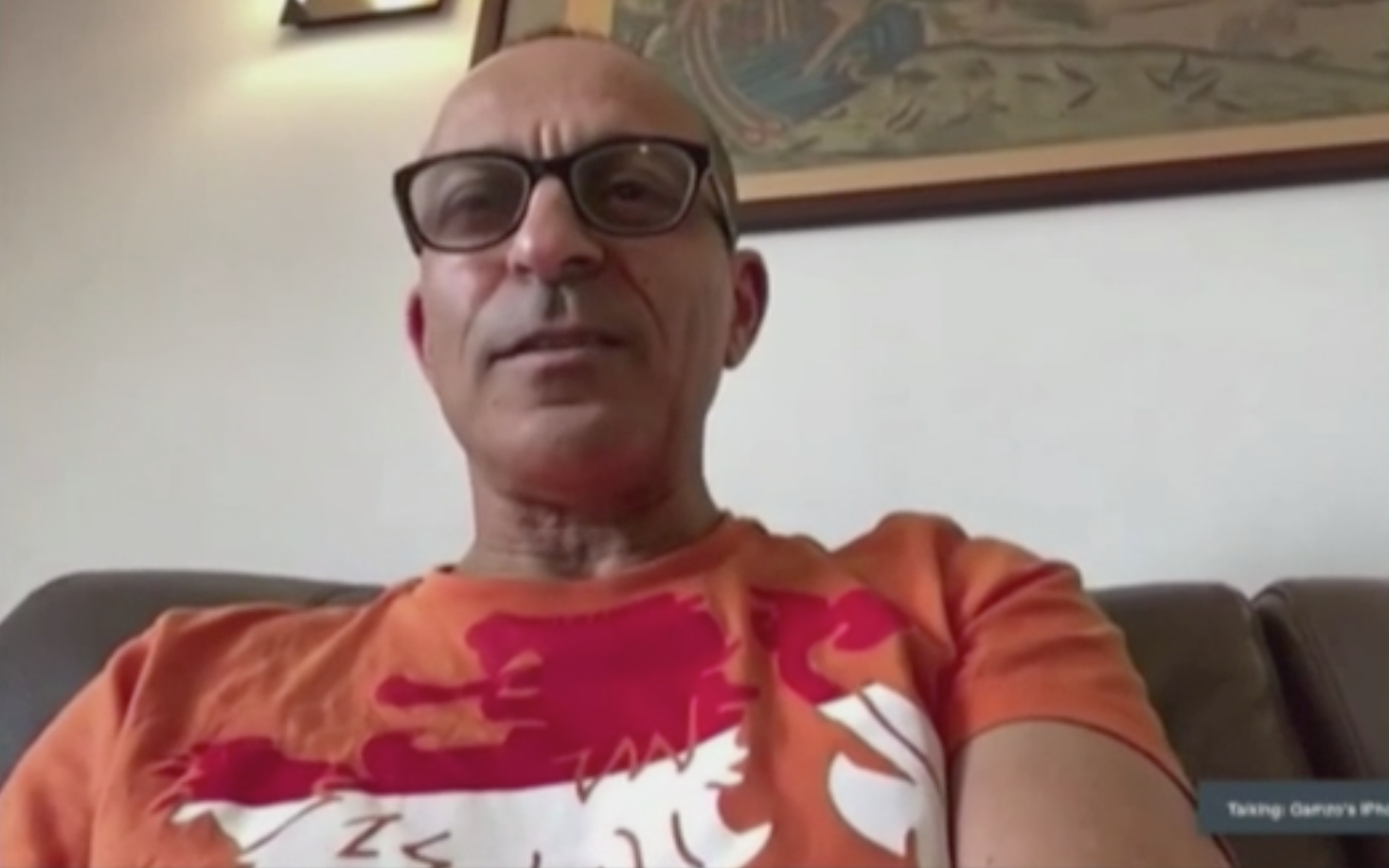
Responding to reams of criticism against him by various officials, the government’s coronavirus czar Prof. Ronni Gamzu said Wednesday that his new post is “the most thankless job in the world.”
Speaking on Zoom from quarantine to a conference organized by the Israel National Institute for Health Policy Research, Gamzu said, “You don’t give out gifts, just restrictions. You suggest broad things — and everyone yells at you, ‘Why am I red and he’s green?’ In the end, the virus will continue to run wild until we have a vaccine.”
He was referencing his “traffic light” system, aimed at curbing the pandemic. The system has seen cities color-coded from green to red based on their infection rates, with corresponding levels of restrictions. It took weeks to gain the cabinet’s approval and has faced immense backlash from Haredi lawmakers, who claim it’s discriminatory against their communities. Several ultra-Orthodox towns, along with many Arab locales, have received the harshest restrictions due to their high infection rates.
“Many times the morbidity rate for a disease is not homogeneous, and in Israeli society it creates gaps. Of course you want to be able to carry out homogeneous policies, but we are facing an unprecedented epidemiological complexity,” Gamzu lamented.
Ultra-Orthodox lawmakers have called for Gamzu’s resignation over his actions, which they claim target their community, while anonymous government officials have on various occasions lambasted his policies to the press.
Still, Gamzu insisted that he has been getting backing from the public as well as the government.
“I receive support. This is the most complex managerial role I have ever [had]. I have never taken on easy roles where you just receive compliments. Getting shouted at, cursed and criticized is a part of our lives,” he claimed.
Gamzu dismissed claims that hospitals across the country are collapsing, pointing out that medical centers have been able to manage treating as many as 25,000 coronavirus patients at a time and that nearly 110,000 have fully healed from COVID-19. ״The hospitals provide the best care and are not collapsing,” he added.
The virus czar went on to admit that he was concerned about the possibility of a rise in cases during the holiday season which starts at the end of next week. “It requires us to make complex decisions ahead of the holidays, and that is what we will do. We are smarter than we were during the first wave. The decisions will be measured and tailored,” Gamzu assured.
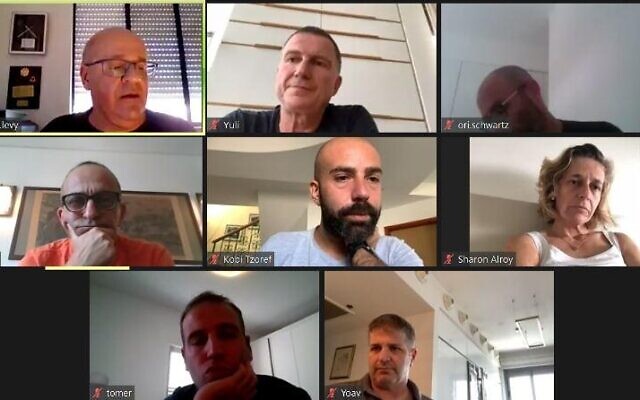
Gamzu, Health Ministry Director-General Chezy Levy, Health Minister Yuli Edelstein and several other senior officials entered quarantine on Tuesday after a staff member in the government’s COVID-19 task force caught the coronavirus, the Health Ministry said.
While the heads of several hospitals warned this week that their facilities would collapse if a country-wide lockdown was not put in place to curb the spread of the virus, one medical center chief said Wednesday that a lockdown might actually make things worse.
“We still need to wait and see where the trend is going,” before a decision to impose a broad lockdown is made, the director of Holon’s Wolfson Hospital, Dr. Anat Engel told Channel 12.
She said the number of serious and moderately ill patients at her hospital has stabilized at 30 in recent weeks. While there has been a slight uptick in the last several days, Engel said it was too early to draw conclusions.
Engel advocated in favor of sticking with Gamzu’s traffic light program, enforcing restrictions only on locales where the infection rates have spiked.
“At the moment hospitals are still able to hold their own and can still receive patients, so I think we should let this program play its course and let local authorities do their jobs with very high enforcement. There’s no need to jump straight to a countrywide lockdown,” she said.
Her remarks came just hours after Levy reportedly told health officials that Israel could soon be returning to a full national lockdown for more than a month amid rising coronavirus infection rates.
An adviser to Gamzu said Wednesday that if there is a lockdown, there must first be a detailed and gradual strategy for lifting it to avoid repeating the costly mistakes in ending the lockdown of March-April.
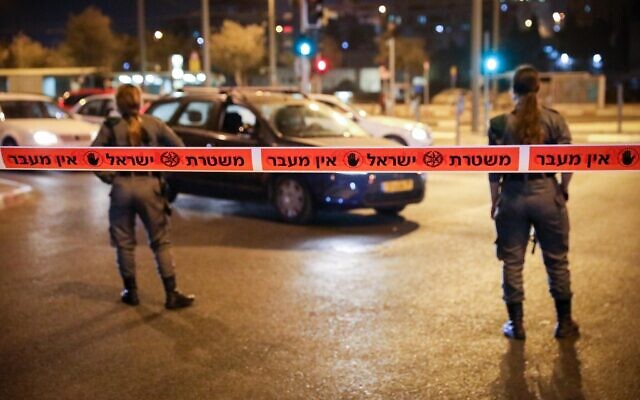
Also Wednesday, 40 towns and neighborhoods across the country awoke after their first overnight curfew, ordered by the government in an effort to slow the virus spread in areas with high infection rates. However, those measures largely went unenforced and are seen by many as ineffective.
The curfew, lasting from 7 p.m. to 5 a.m., targets nightlife activities, from bars and restaurants to the traditional slichot prayer gatherings held ahead of the Rosh Hashanah holiday, which falls on September 18 this year.
Most of the municipalities affected are among the poorest in Israel, with Arab and ultra-Orthodox towns making up much of the list. Some 1.3 million Israelis were covered by the curfew, according to a Channel 12 tally.
The Health Ministry said Wednesday that there were at least 3,506 new coronavirus infections diagnosed on Tuesday, in one of the highest figures for fresh cases detected in Israel in a 24-hour period.
The number, published mid-morning Wednesday by the Health Ministry, was just short of the record for daily cases, set the day before at 3,514. It took the total number of cases patients past 30,000 for the first time.








The Times of Israel Community.