

Human rights concerns prove no obstacle in Trump-Saudi ties
Massive arms deal shows US puts national security and economic ties over rights record, Yemen war, says Human Rights Watch
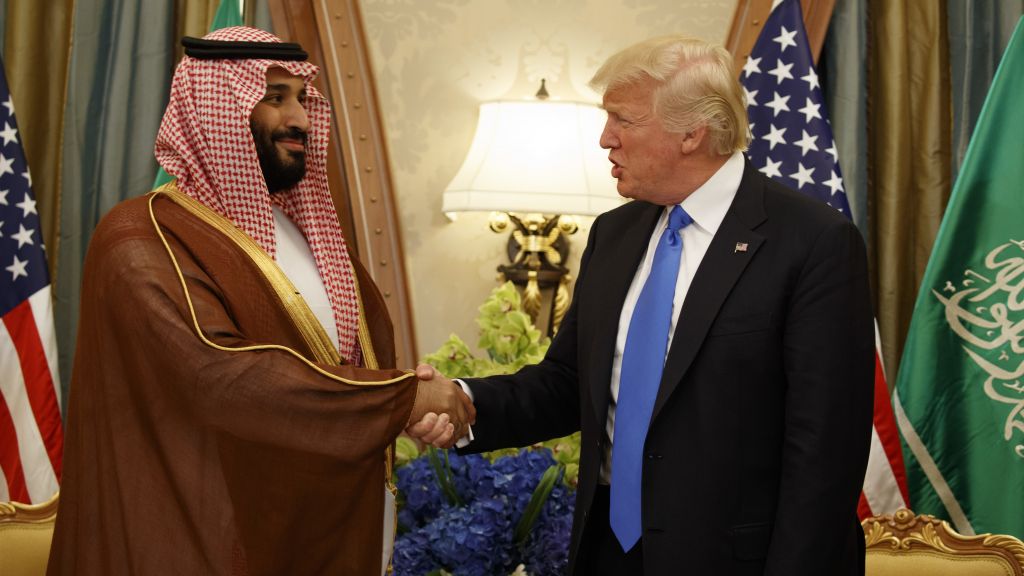
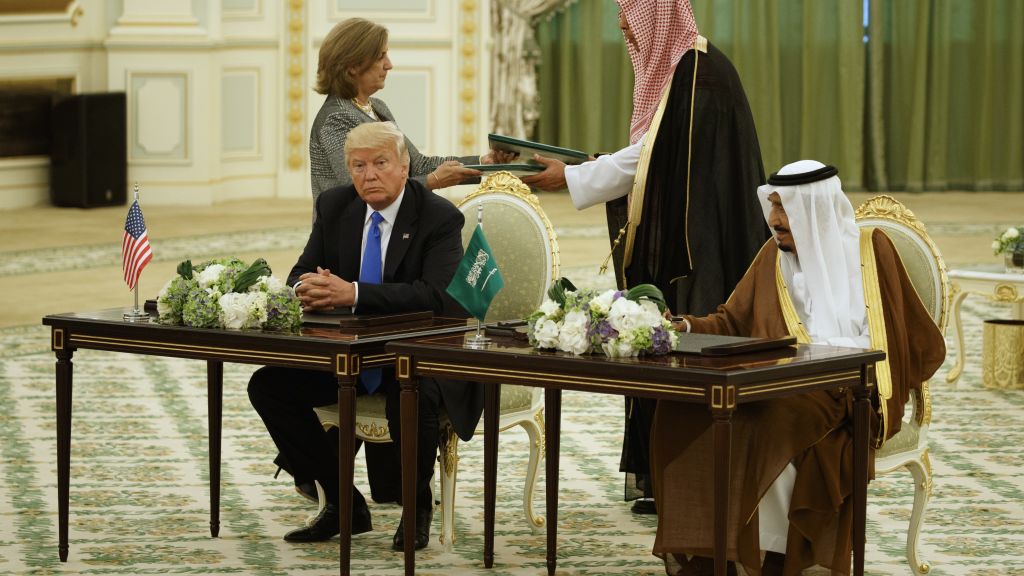
DUBAI, United Arab Emirates (AP) — On the first day of his first overseas visit, US President Donald Trump presided over a nearly $110 billion sale of military equipment to Saudi Arabia that made clear his administration did not see the kingdom’s human rights record or its devastating war in Yemen as an obstacle to restoring ties that had been strained under his predecessor.
Saturday’s military agreement with Saudi Arabia, effective immediately, could expand up to $350 billion over 10 years. It appeared to reverse an Obama administration decision to pull back sales of precision-guided munitions to Saudi’s armed forces over concerns sparked by a Saudi-led coalition bombing of a funeral hall in Yemen that killed more than 140 people.
It also surpasses the total amount of deals offered to Saudi Arabia in president Barack Obama’s eight years in office.
The Obama administration had also curbed some intelligence-sharing with Saudi Arabia, saying it was “deeply disturbed” by the attack and that US security cooperation with Saudi Arabia was not a “blank check.”
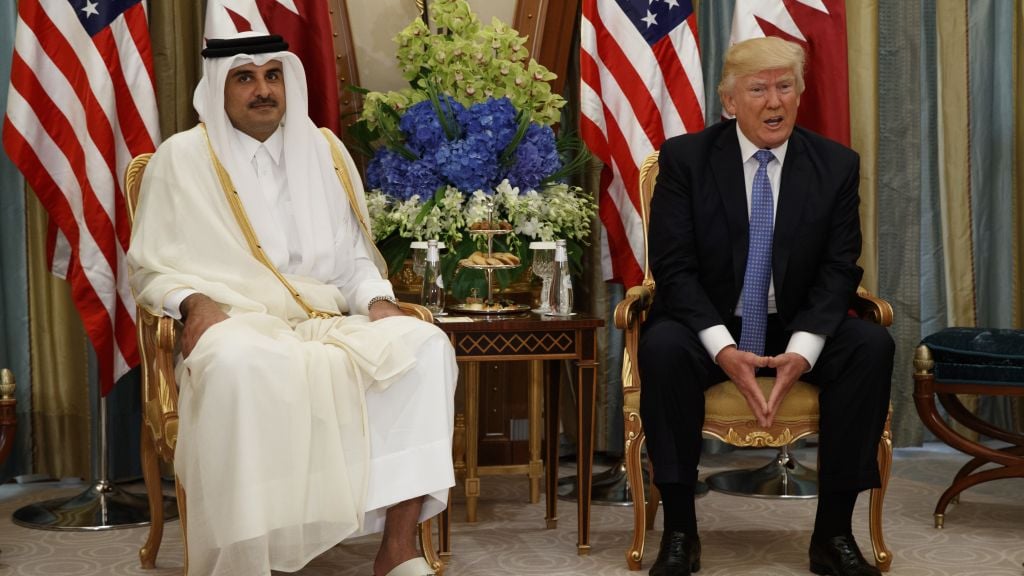
Making no mention of these concerns, the Trump administration framed the massive military deal as an opportunity to create potentially tens of thousands of new jobs in the US, adding that it would also reduce the burden on US military forces by bolstering the kingdom’s ability to provide for its own security.
The Trump administration’s deal includes tanks, helicopters, combat ships, Patriot and THAAD missiles, radar and communications, and cybersecurity technology.
Under Obama, Washington had backed Saudi Arabia in its Yemen war with logistical support, including refueling of coalition aircraft by the US military, and intelligence sharing. A report by the DC-based Center for International Policy said the Obama administration had offered over $115 billion worth of weapons to Saudi Arabia in 42 separate deals, more than any other US administration before him.
His administration’s decision to pull back on some military sales underscored the complicated, and at times tense, relationship Obama had with Saudi Arabia.
In stark contrast, Trump made Saudi Arabia his first overseas stop and was given a royal welcome by the king. Saudi Arabia is working hard to dazzle and impress Trump during his two-day visit, including inviting dozens of heads of state to its capital, Riyadh, for a summit Sunday to meet the US president.
Ahead of the summit, Trump held talks with Egypt’s President Abdel Fattah el-Sissi, who oversaw a lethal crackdown against the Muslim Brotherhood group and who has already paid Trump a visit to the White House. Unlike Obama, Trump and Sissi have formed a warm relationship.
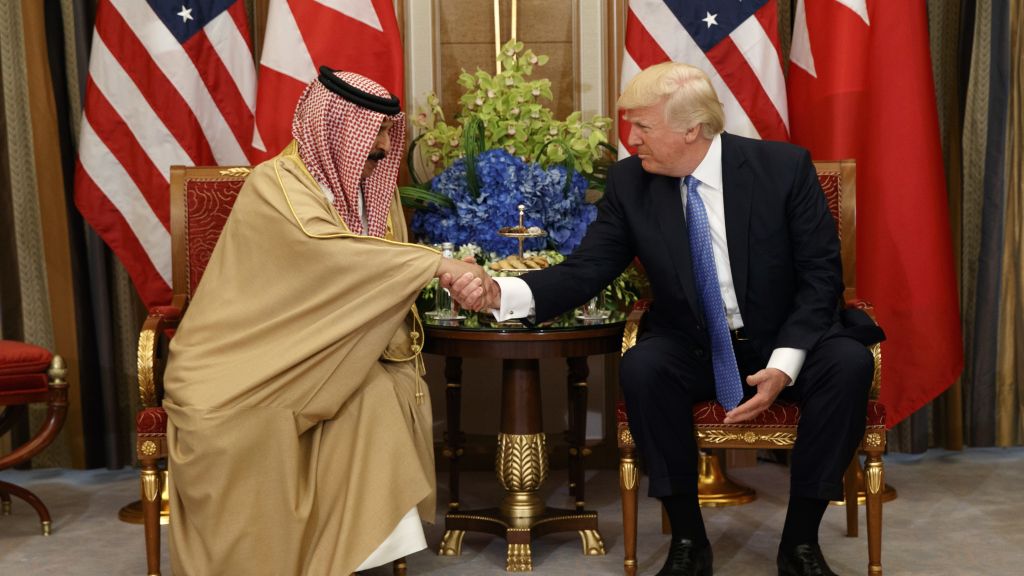
Trump on Sunday also touted Washington’s “wonderful relationship” with Bahrain, which hosts the US Navy’s 5th Fleet. Earlier this year, his administration notified Congress it planned to approve a multibillion-dollar sale of F-16 fighter jets to Bahrain without the human rights conditions imposed by the State Department under Obama.
In blunt terms, US Secretary of State Rex Tillerson has said Washington cannot always afford to put conditions like human rights on others because it creates obstacles to advancing national security and economic interests.
Human Rights Watch described the sale as rewarding “Saudi war crimes” with weapons. The rights group has documented 81 apparently unlawful coalition attacks since the start of Saudi Arabia’s war in Yemen. The rights group says it was able to identify American weapons had been used in many of those attacks.
The war has devastated the Arab world’s most impoverished nation. The conflict has killed thousands of civilians, pushed more than half of the country’s population into a state of dire poverty, overwhelmed hospitals, shuttered schools, debilitated an already fragile electricity network and forced millions to the brink of famine. Around 20 million Yemenis are in need of humanitarian relief.
With the help of its closest Arab allies, Saudi Arabia launched its war in Yemen in March 2015, two months after King Salman ascended to the throne and appointed his then 29-year-old son as defense minister. The war helped whip up nationalist fervor in the kingdom around the new monarch and his son, who was later appointed second-in-line to the throne.
Saudi Arabia says it launched airstrikes against Yemeni rebels known as Houthis in self-defense. The Houthis in late 2014 overran Yemen’s capital, Sanaa, and forced the Saudi-backed president into exile. The Houthis’ stronghold lies near Yemen’s long border with Saudi Arabia.
Saudi Arabia accuses its Shiite rival Iran of trying to turn the Houthis into a militant group similar to Lebanon’s Hezbollah. Iran denies this and says it has only offered political support to the Houthis.
After the deal was inked, Saudi Foreign Minister Adel al-Jubeir and Tillerson used a joint press conference in Riyadh to further castigate Iran, which was not invited to Sunday’s summit.
Tillerson said the package supports the kingdom “in the face of malign Iranian influence and Iranian-related threats which exist on Saudi Arabia’s borders on all sides.”
Human rights group Amnesty International said the “glaring absence of human rights from Trump’s agenda” in talks with Gulf Arab rulers will only embolden further violations against critics, peaceful dissidents and human rights defenders. It called on the US to “immediately halt all arms transfers” that could be used by members of the Saudi coalition in Yemen.
Copyright 2017 The Associated Press.



The Times of Israel Community.