

Karhi’s media overhaul has democracy in its crosshairs, not just broadcasting, expert says
Media scholar says government knew law could not survive judicial review, but advanced it anyway in order to shatter legislative norms and provoke showdown with High Court to please political base

 Add ToI as a Preferred Source on Google
Ariela Karmel is a political correspondent at The Times of Israel. She previously reported for Calcalist and Haaretz. She holds an MA in Middle Eastern and African History from Tel Aviv University and a BA in Political Science from the University of British Columbia.
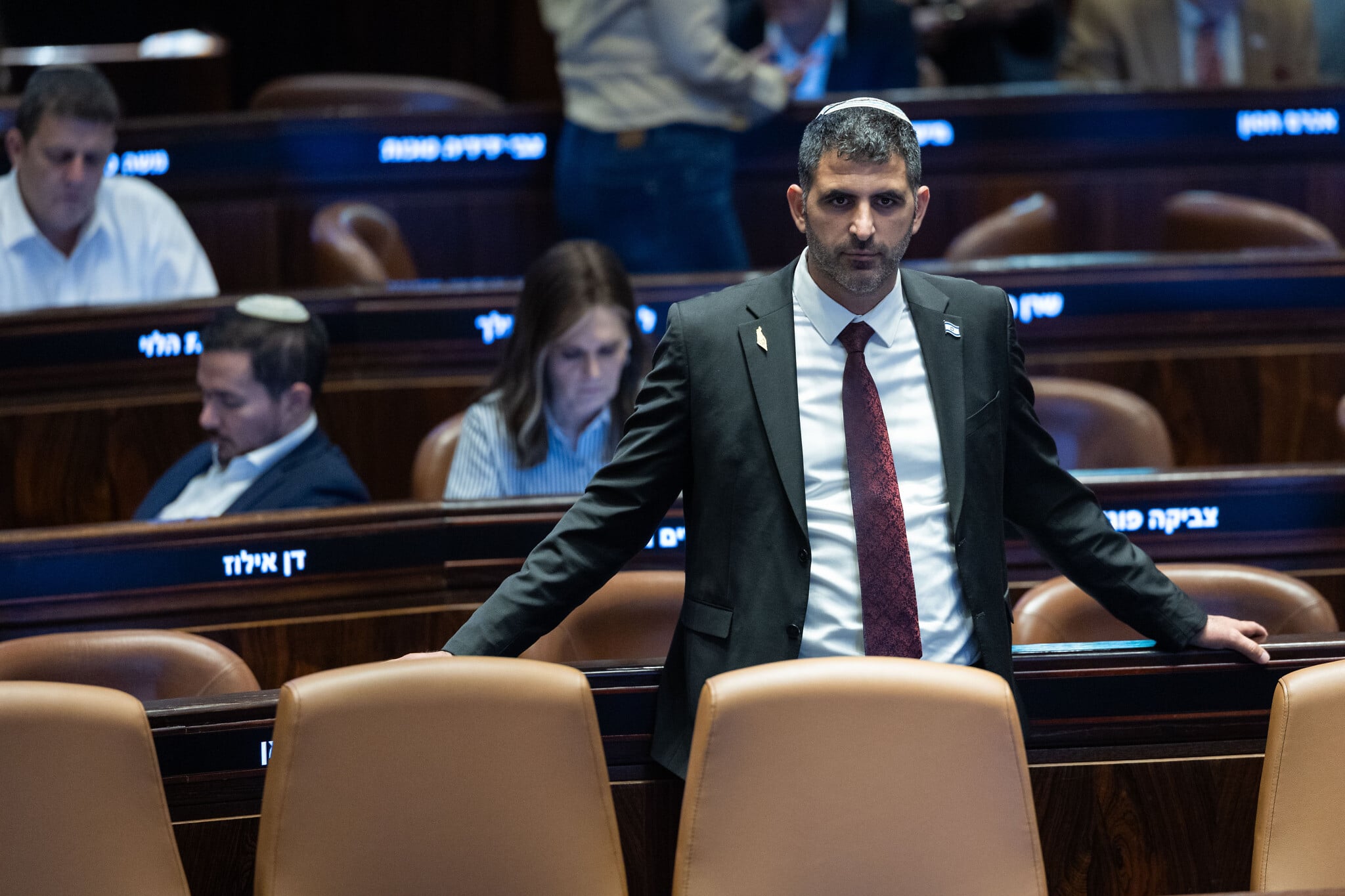
In the early hours of Friday morning, after months of one of the Knesset’s most contentious legislative battles in recent memory, the coalition pushed Communications Minister Shlomo Karhi’s sweeping media overhaul through its final readings, expanding the government’s ability to influence Israel’s broadcast media right before parliament adjourned for its pre-election recess.
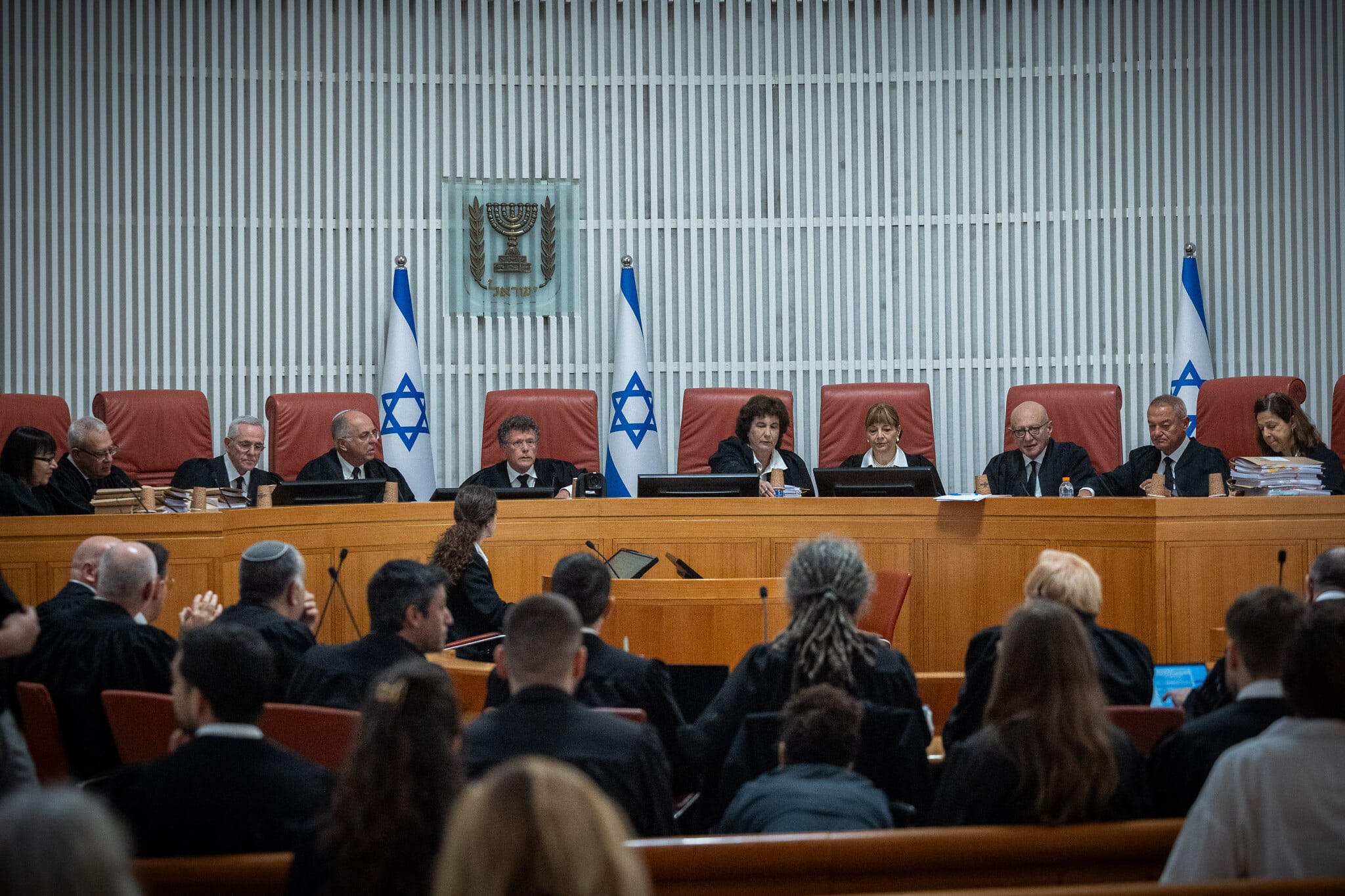
Immediately following its passage, the law was challenged at the High Court of Justice, which on Sunday froze implementation of the provisions scheduled to take immediate effect. Karhi then called on the government to defy the court.
The law establishes a new broadcast regulator whose members would largely be appointed by the communications minister or officials subordinate to him. This regulator is grant sweeping new powers, including setting the ethical codes governing news organizations, collecting television ratings data, and imposing fines of up to 1% of a broadcaster’s annual revenue — potentially millions of shekels. Financial penalties are currently generally limited to tens of thousands of shekels.
At the same time, it would remove longstanding safeguards intended to shield news organizations from political and commercial influence by abolishing restrictions on cross-ownership and the requirement that television news companies operate independently of their commercial owners.
While the overhaul is aimed at broadcast media, it does not clarify whether online news sites with video content such as The Times of Israel, Haaretz or Ynet could eventually be required to register with the new regulator. Because the High Court froze implementation of the law, however, the regulator has not been established, and that question remains unresolved.
The law forms the centerpiece of the coalition’s broader campaign to weaken the media sector, including Karhi’s parallel legislation to first dismantle and then seize the budget of the Kan public broadcaster and the bid to shut down Army Radio.
Prime Minister Benjamin Netanyahu and his government have long maintained an adversarial stance toward much of Israel’s media-sphere, with the premier largely blackballing stations that refuse to toe the government line. Both he and senior ministers frequently accuse Israeli media of bias against them or of acting against the interests of the state. “Fake news” has been a favorite phrase of the prime minister.
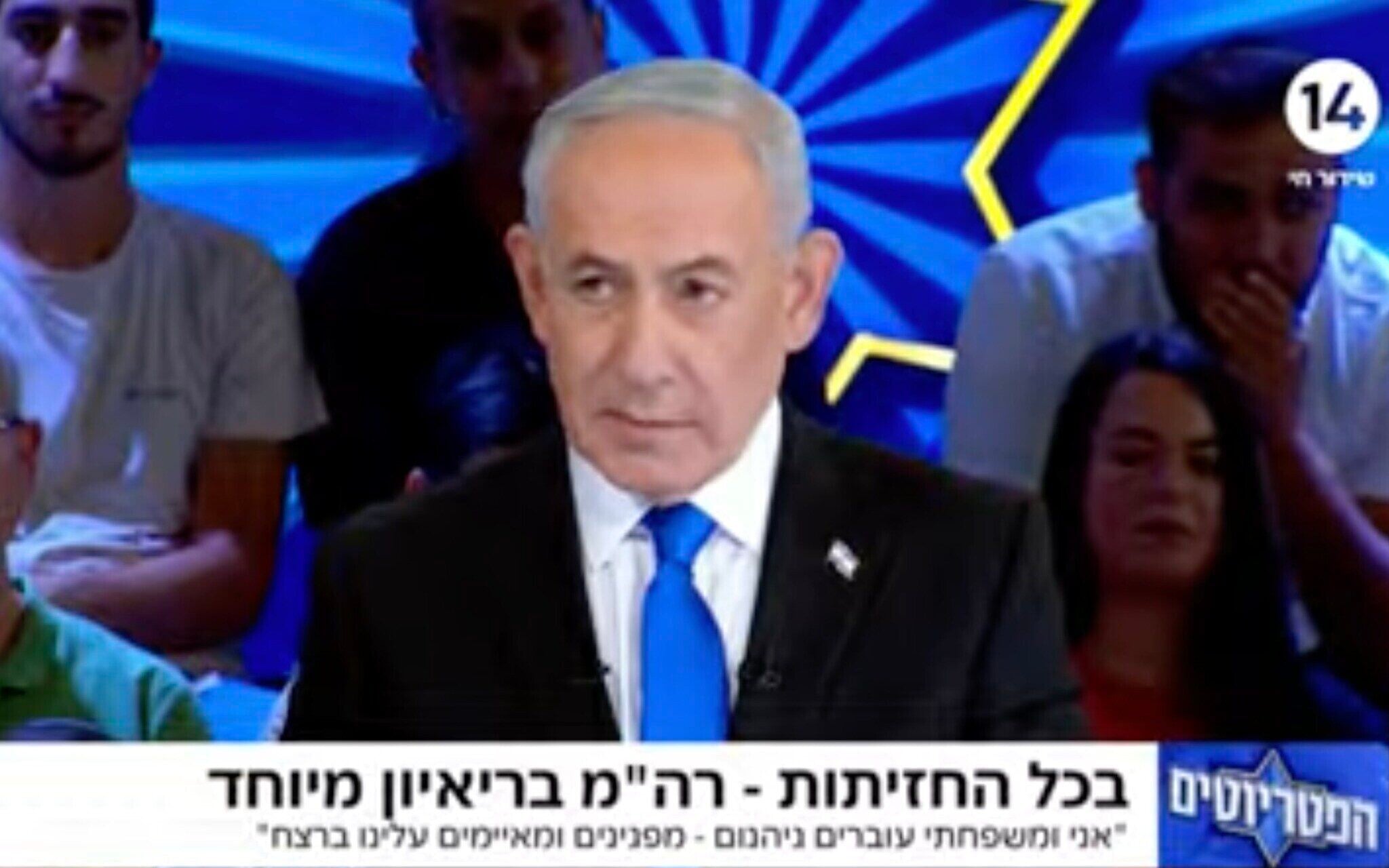
Critics argue the overhaul is intended to hand greater control of news organizations to a government that has long portrayed much of Israel’s media as politically hostile just months before a national election.
Karhi has said that Netanyahu personally tasked him with advancing the overhaul, even though the prime minister is barred under his conflict-of-interest arrangement from involvement in matters that could affect his ongoing corruption trial, which includes allegations that he sought favorable media coverage in exchange for regulatory benefits.
While much of the public debate has centered on what the law would do to Israel’s media, Tehilla Shwartz Altshuler, a senior fellow at the Israel Democracy Institute, argues that the law’s target is not really Israel’s competing press outlets, and that its significance is actually rooted in what it reveals about the collapse of democratic norms in the Knesset.
The committee established to debate the law was repeatedly accused by the Knesset legal adviser of flouting established legislative procedures, ignoring legal advice and introducing substantial amendments late in the legislative process, despite warnings that these irregularities could themselves imperil the law.
Shwartz Altshuler composed the code of ethics for Israel’s Public Broadcasting Corporation. Since 2023, she has overseen the ethical tribunal of Israel’s Journalists’ Association, and she testified before the Knesset committee that debated the legislation. She argues that the process by which the law was enacted was unprecedented and crucially exposed the vulnerability of Israel’s institutional safeguards when confronted with a government determined to bypass them.
“Not for the first time, but in a very clear way, you are seeing that if someone wants to abuse the system, the rule of law and procedural norms don’t matter. If someone wants to destroy, they will succeed,” she said.

Karhi, a far-right lawmaker in Netanyahu’s Likud party who has sought to fundamentally reshape Israel’s media landscape, took an unusually hands-on role in steering the legislation through the Knesset despite serving as a cabinet minister rather than an MK.
He has argued that the overhaul is intended to increase competition in the media market and lower costs for consumers. Shwartz Altshuler counters not only that the law will do no such thing, but that Karhi himself never believed it would.
In her view, the law’s function was primarily as a political weapon designed to inject instability into the broadcast market on the eve of the election, with the ensuing legal battle serving to bolster the coalition’s long-running campaign to cast the High Court as a political adversary thwarting reforms demanded by Karhi’s political base.
“It was clear to all the players, including the communications minister, that the Supreme Court would invalidate the law not because of its content alone, but also because its procedure was flawed from the beginning, and Karhi knew this,” she said.
Shwartz Altshuler spoke to The Times of Israel after the High Court froze the law’s implementation on Sunday. The interview has been edited for clarity.
The Times of Israel: What are the immediate consequences of this law?
Tehilla Shwartz Altshuler: The High Court’s order [freezing implementation of the law] applies to the entire law, not just the provisions that were due to take effect immediately. But some consequences can’t easily be undone. Because the legislative process was so fundamentally flawed, the court is preventing any irreversible steps from being taken while it considers the petitions.
The first thing Karhi wanted to do immediately, and which the court has now frozen, was to establish a new politically appointed regulatory authority during an election period.
The second thing is to allow cable and satellite to start broadcasting commercials. Once that happens, it will be very difficult to reverse.
The move is intended to weaken commercial broadcasters such as Channels 12 and 13, which currently rely on advertising for most of their revenue, while cable and satellite providers like HOT and Yes are barred from selling ads. Allowing those providers into the advertising market would divert advertising revenue away from the commercial channels, weakening them ahead of an election and undermining their business model.
What kind of media does the law apply to?
It applies only to commercial television. It doesn’t cover public radio, print media, or public broadcasting, including Army Radio or the Kan public broadcaster, which are being targeted separately.
There is still some uncertainty, however, about whether online news platforms that also produce video content, such as Ynet or Channel 12’s Mako, could be affected. One of the main criticisms of the legislation is that its definitions are not sufficiently clear, leaving room for uncertainty about who exactly falls under its scope.

Does the law actually achieve what it claims to do in terms of lowering consumer prices?
Who is going to finance this new regulatory authority? Karhi repeatedly said that the funding would come from the NIS 25 million the state currently spends each year on Idan Plus, the free television platform intended to help people (particularly elderly or less technologically savvy viewers) access broadcast channels. He planned to eliminate Idan Plus, use that money to establish the new regulator, and replace it with a simple, free app that would provide access to all the channels.
But that’s not what ended up in the law. They eliminated Idan Plus, but also dropped the app because the Haredi parties objected to it operating on Shabbat. So the very people Karhi said he wanted to help are left with neither Idan Plus nor the replacement app he promised.
Will it help increase competition?
Competition in the broadcasting market is only possible if there’s enough advertising revenue to sustain multiple players. Under this law, however, HOT and Yes would also be allowed to sell advertising. So where is all that additional advertising revenue supposed to come from? How exactly are Channels 12, 13, 14, 15 — not to mention any future entrants — all supposed to survive in the same market?
At first, there might be more competition. But only for a few months. Eventually, some of those channels will collapse because Israel’s advertising market is simply too small to support them all.
One of two things will then happen: either we’ll end up with a large number of financially weak broadcasters and weak news organizations who don’t have the resources or independence to hold the government to account, or, more likely, the market will consolidate. Channels that can’t survive will close or merge with those who can, leaving just a handful of dominant players.
So if the law doesn’t benefit the public, who does it benefit?
First, it will help i24 News because it can become a broadcast channel.
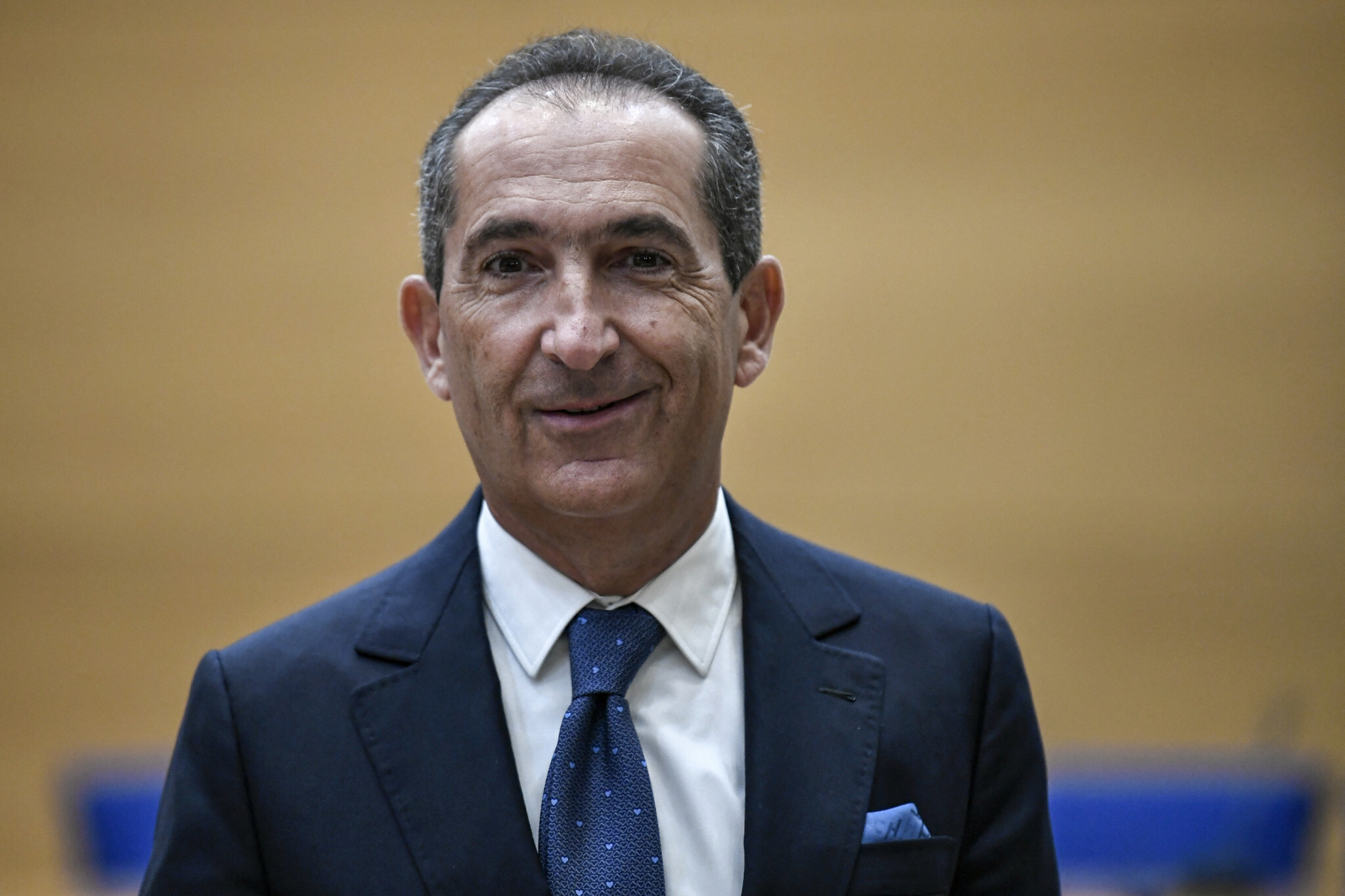
[The law eliminates longstanding restrictions on cross-ownership in Israel’s media market, allowing the owners of broadcast television channels to also own news outlets. This will directly benefit i24, which is owned by billionaire Patrick Drahi, a Netanyahu ally who also owns the HOT telecommunications company, and has until now been barred from broadcasting over cable and satellite platforms. By removing the restrictions – designed to prevent a small number of owners from amassing excessive influence over public opinion – large media conglomerates can expand across multiple sectors and significantly broaden their reach.]
It also benefits Channel 14. The channel was established as a “minor channel,” which exempted it from obligations imposed on larger broadcasters, such as investing in original Israeli productions and operating a separate news company. But it has since grown substantially and now generates revenues comparable to those of larger broadcasters and was facing the prospect of having to meet the same obligations.
Instead, Karhi changed the law so that all commercial broadcasters, including Channels 12, 13 and 14, are treated as “minor channels,” exempting all three from those obligations.
That really harms the public because Channels 12 and 13 will no longer be required to operate independent news companies, which weakens the separation between media owners and the news they broadcast and brings them closer to the model that already exists at Channel 14.
What about investment in original Israeli productions?
If Channels 12 and 13 are now treated as “minor channels,” they no longer have to invest in original Israeli productions, like Channel 14.
So just Yes and HOT are supposed to fund Israeli content? It’s not sustainable. Karhi argued that international streaming services such as Netflix and Disney+ would be required to contribute, but that provision was also dropped after US Ambassador Mike Huckabee said President Donald Trump opposed taxing American companies.
[Karhi admitted to the Knesset panel debating the legislation in March that Netanyahu unilaterally decided to strike the requirement after Trump demanded it.]
But now that the High Court has frozen implementation of parts of the law, what does that mean in practice?
In the end, the law as it was passed cannot achieve its stated goals. It’s not a law that can realistically be implemented, and it was rushed through without any consideration of the practical consequences.
But it was clear to everyone involved, including Karhi, that the Supreme Court was likely to strike it down, not only because of its substance, but because the legislative process was fundamentally flawed. Karhi knew that.
He knew it when he brought the bill to the Ministerial Committee for Legislation without the attorney general‘s approval, bypassed the Knesset Economics Committee [headed by Likud MK David Bitan, who refused to advance the law] by creating a special committee, curtailed opposition debate, repeatedly split and amended the bill, and kept adding provisions until it no longer had any internal coherence.
Why would he push forward legislation if he knew that the court was likely to strike it down?
It’s a political play aimed at his base, and it serves him either way. He has already succeeded in sowing chaos in the broadcasting market — and ahead of an election — and if the court ultimately strikes down the law, he can tell his supporters, “I worked, I did everything I could, and the court stopped me.”
So if the law was never likely to survive in its current form, is the alarm over it overstated?
No. The fact that they produced the most tainted legislative process in the history of Knesset legislation is itself deeply alarming. So is the fact that Karhi is now saying that he will not accept or obey the High Court ruling.
Beyond the law’s actual content, they’ve used it to establish dangerous precedents, both for the legislative process and for the broader campaign to weaken judicial oversight.
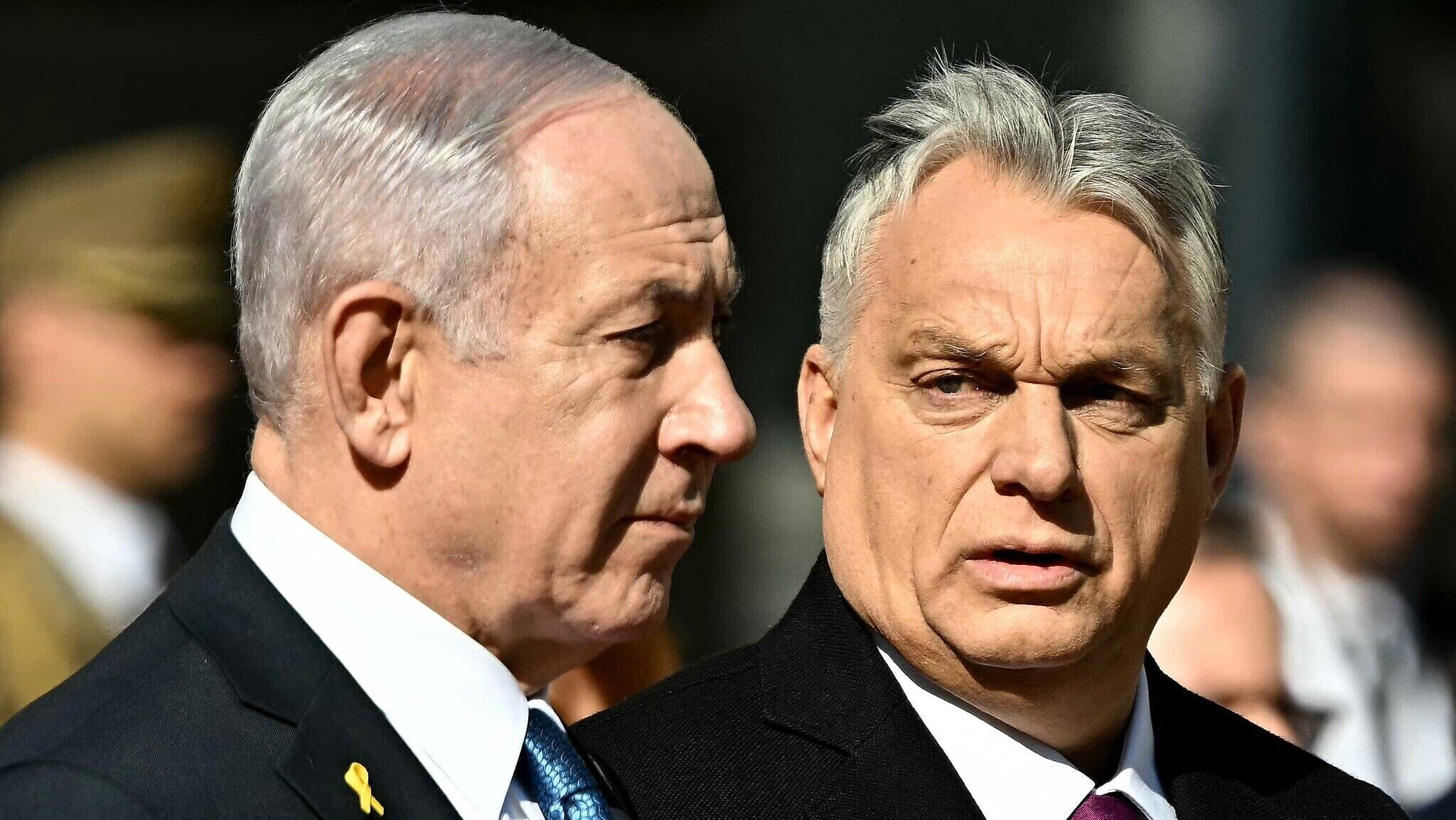
What does this kind of law mean for the state of the media in Israel? Are we heading toward something like Poland, or Hungary, where the government under Netanyahu ally Viktor Orbán seized control of broad swaths of the media (along with the courts)?
Look, we’re not Hungary or Poland. The fact that the Supreme Court stepped in to halt implementation of this law shows that. And we all knew that it would, including the government.
But does that mean the only thing standing between Israel and Orbán’s Hungary is the Supreme Court?
Exactly. What this shows is that if someone wants to abuse the system, they can.
Before this government, there were simply things that weren’t done. Certain kinds of legislation weren’t advanced, and there were accepted procedures for passing laws. There are limits that governments respect because of democratic norms and the rule of law.
What we’re seeing now — very clearly, though not for the first time — is that if someone is determined to abuse the system, the rule of law and democratic norms don’t matter. If someone wants to destroy it, they can.
So right now, my greatest concern isn’t ultimately press freedom, because the Supreme Court, at least for now, stopped that. My concern is the chaos [the coalition] created around the legislative process itself and whether we want to live in a country where there are no longer any rules governing how laws are passed.










The Times of Israel Community.