

Located near Sderot and now shuttered, Sapir College community looks to the future
The institution is closed indefinitely and the surrounding communities have been evacuated, but returning to the area is ‘a national Zionist mission,’ college head says
 Add ToI as a Preferred Source on Google
Gavriel Fiske is a reporter at The Times of Israel
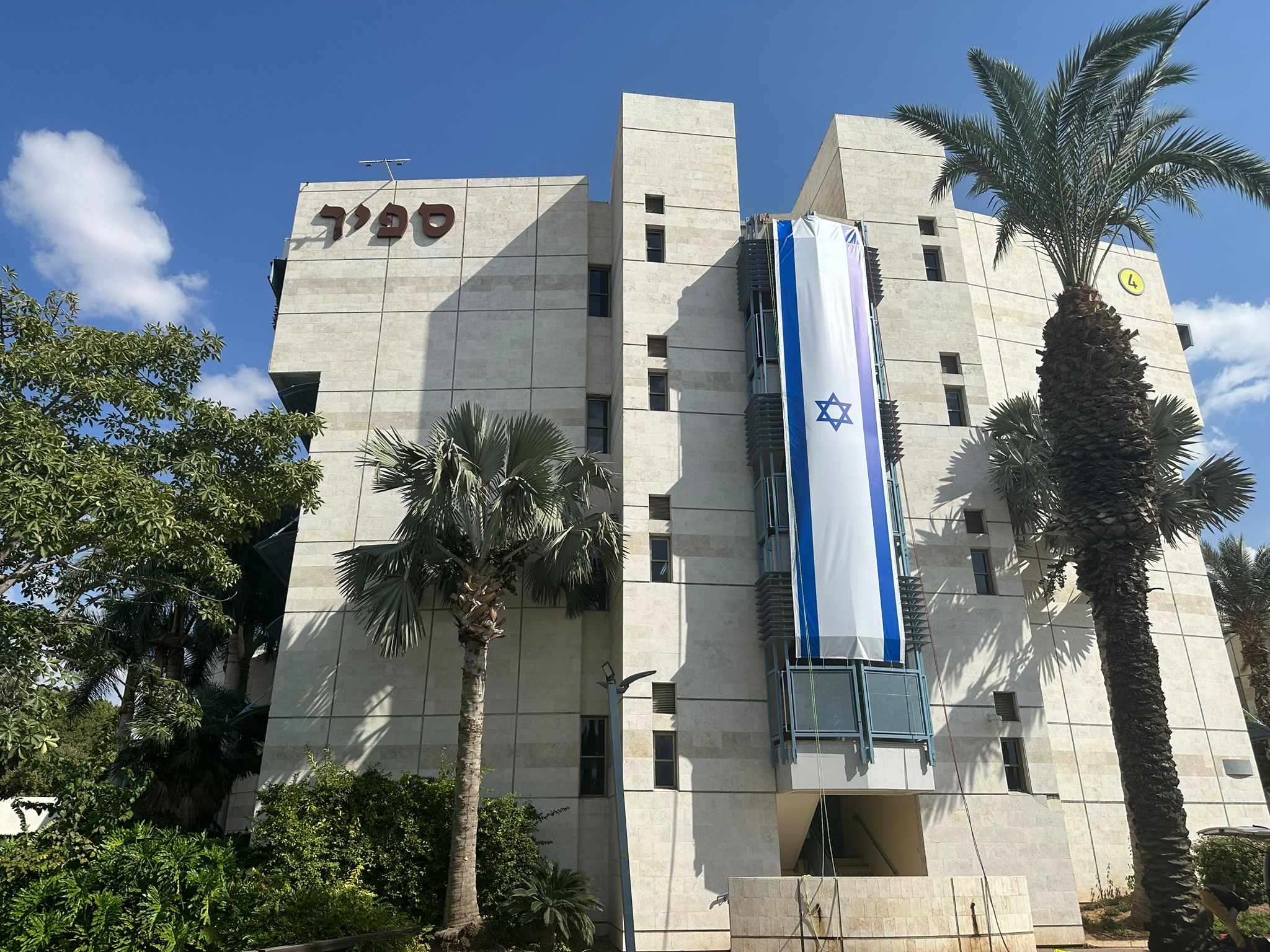
The campus of Sapir Academic College, which lies just south of the town of Sderot, was spared scenes of death and destruction by the Hamas terrorists who carried out the October 7 massacres in the western Negev. The college was closed and empty on that fateful holiday Saturday.
But nonetheless, as the only academic institution in the area adjacent to the Gaza border, Sapir was dealt a deeper blow than other colleges and universities in Israel, which, although the fall semester has been pushed off until at least December 3, have been able to keep their campuses open and their communities largely intact.
Sapir College campus has been shuttered indefinitely and the surrounding communities have been evacuated.
“We are working to begin the academic year online, in full consideration of the students who are doing reserve duty and the community members displaced from their homes. At the moment, we are expected to begin the semester in parallel with the other institutions, on December 3, 2023,” Sapir said in a statement.
“There is no idea of how to return, or if we will return,” says Shahar Talmon, 25, a third-year law student at Sapir, speaking of both her academic life and her living situation.
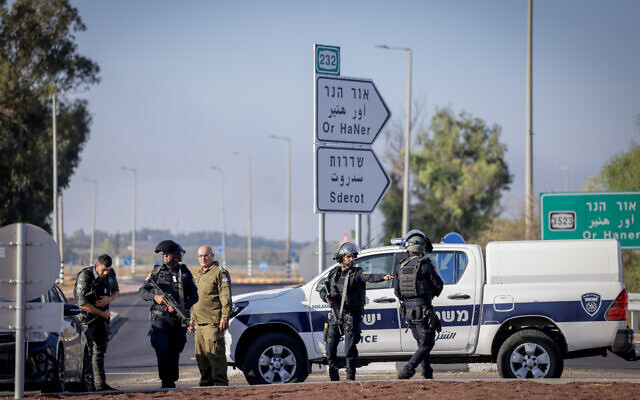
Talmon lived with her partner at Kibbutz Or Haner, just a few kilometers from Gaza, a community that didn’t sustain the kind of destruction that some nearby kibbutzim did. But after spending two days in a security room during the assault, Talmon was evacuated when the IDF secured the area.
“We grabbed things in a bag and simply left without looking back,” she says. The couple is staying with her parents, but most of the kibbutz residents are now in a hotel near the Sea of Galilee, she tells The Times of Israel.
“It’s a very small area, everyone knows everyone. The distance between kibbutzim is just a few minutes’ drive. I am in touch with friends and other people from Sapir. There were so many students who lived in the Gaza border area. There are students who have experienced horrible things,” she said.
“Before all this, I was interested in my grades and in making progress… now, I have friends who are fighting and my house is in a closed military zone,” said Talmon.
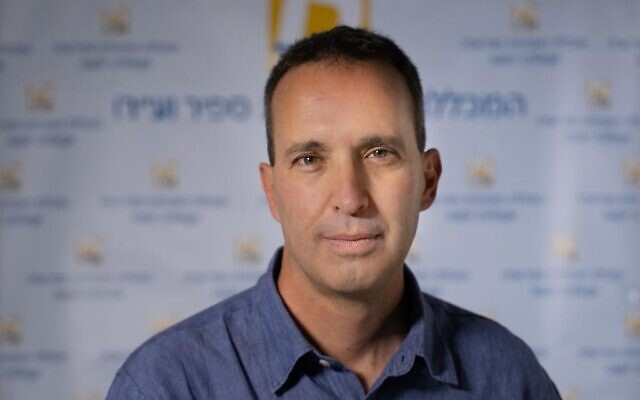
Sapir College president Prof. Nir Kedar told The Times of Israel that “at least 10 members of our community have been killed. We have 250 staff members who live in the area, and hundreds of students. Most of them were at home during that Shabbat, and they were the ones who experienced this big trauma.
“Now we have a great difficulty: The staff and faculty are scattered throughout the whole country. Some left with nothing — they fled only in their underwear,” Kedar adds. “We decided on a few things that had to happen, for example, salary payments, payments to suppliers, contact with students… we are doing the maximum, but it’s very difficult and people are traumatized.”
Ofir Libstein, the head of the Sha’ar Hanegev Regional Council who was killed in a firefight with Hamas gunmen during the initial assault, was a member of Sapir’s board of directors, Kedar notes.
The college has set up a special humanitarian fund in order to help faculty, staff, students and other members of the community with basic needs and trauma treatments.
The events of October 7 saw thousands of Hamas gunmen break through Israel’s security perimeter around the Gaza Strip in a well-planned, early-morning assault that caught Israeli security forces flatfooted. The Hamas terrorists committed atrocities in communities adjacent to the border, drove on pickup trucks shooting with impunity through Sderot and other towns, and massacred hundreds at an outdoor dance party. All this took place while Hamas shot thousands of rockets into Israeli territory as a distraction.
It took Israeli security forces all day — and in some cases longer as some gunmen had hidden themselves — to drive Hamas back and restore some semblance of order to the area. In the end, some 1,400 Israelis lost their lives, the largest single-day loss of Jewish life since the Holocaust, and over 240 people were taken hostage, triggering an ongoing crisis.
Israel declared war on Hamas the next day and since then the country has been on a war footing. Some 350,000 citizens have been called up for IDF reserve duty, and over 200,000 have been evacuated from the areas around Gaza and along the Lebanon border.
Sapir Academic College grants BA and MA degrees in various fields and has more than 8,000 students, the majority drawn from the diverse communities in southern Israel. It has a significant number of Arab-Israeli citizens among the student body.
It is also the largest single employer in the area, according to Kedar, who emphasized that Sapir strives to integrate itself into the local community in multiple ways as an engine of “social mobility,” and not be just an “academic ivory tower.”
Kedar now sees another task besides just reopening the college. He envisions Sapir being an integral part of the revitalization of the entire Gaza border area.
“The next phase, returning back to life… It’s a national Zionist mission for the whole Jewish nation. We need to rebuild this whole area. The state can’t leave a desert around Gaza, no matter who rules there,” says Kedar.
Even as some of the displaced have spoken about not returning, Kedar said he was “shocked” to receive inquiries, after October 7, from potential students wanting to enroll, and volunteers wanting to come south to help.
Many of those who live and work in the area have complained for years about government neglect, the inability to stop the periodic rocket fire from Gaza, and the psychological toll this takes. Now, Kedar pointed out, some are afraid that the government won’t be able to allocate the funds needed to truly revitalize the Gaza border area.
The government will have to “contribute a lot of money” for rebuilding, he said. “I hope they won’t wait, it will take years to do it.”
Aside from bringing young people to study and settle in the area, “I believe we will do something else, a different kind of learning,” Kedar says, describing a potential program that would combine theoretical and practical learning, related to different aspects of rebuilding the surrounding communities.
“We want in the future that every Sapir student, no matter what they are learning, be it social work, economics or film school — they will identify an issue or problem in the area, learn for a year and then go into the field [to try and help].”
This is “a wonderful idea,” says Talmon, the law student. She says that the young students “definitely want to return, to finish what we started. Sapir students feel that the area is their home… They will be first in line to help.”










The Times of Israel Community.