

Ministers to share spot in security cabinet to bring it in line with law
Yuval Steinitz and Ze’ev Elkin to switch off in top-level body each month so it won’t have more members than legally allowed
 Add ToI as a Preferred Source on Google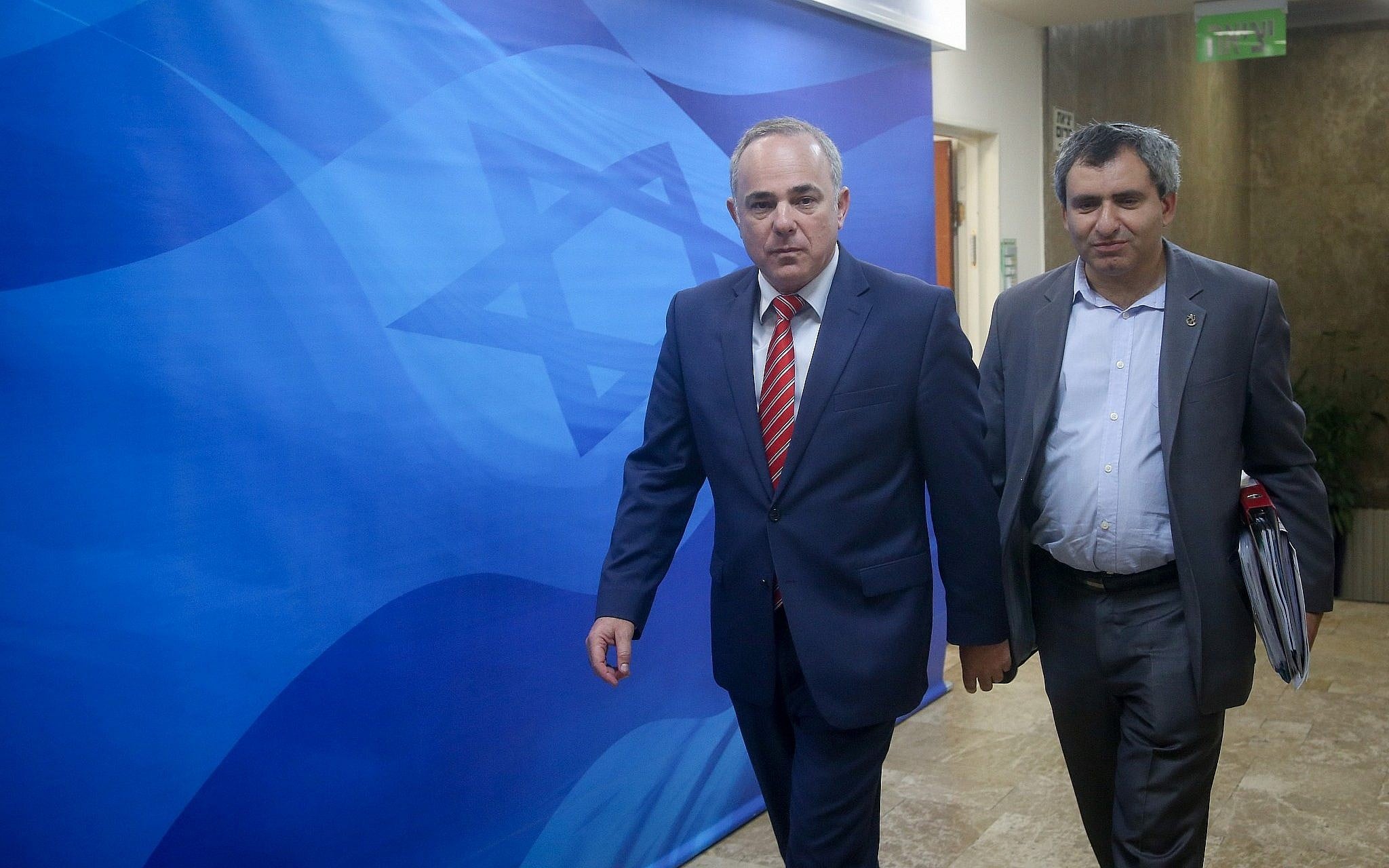
Ministers on Tuesday approved an agreement for two members of the security cabinet to share a spot on the panel after the resignation of the defense minister cast doubt on whether the top-level decision-making body was operating legally.
Under Israeli law, the number of ministers that can sit in the cabinet is not allowed to exceed half of the number of ministers in the full cabinet.
Energy Minister Yuval Steinitz and Environmental Protection Minister Ze’ev Elkin, both members of the security cabinet, will now switch places on the panel each month, bringing its membership down to nine members from 10. The full cabinet currently has 19 ministers.
Though Avigdor Liberman’s resignation as defense minister earlier this month drew attention to whether the security cabinet had the legal authority to operate. The apparent violation of the law appears to have occurred on October 30 when the number of government ministers fell to 21 after the death of religious affairs minister David Azoulay, but the number of security cabinet members remained at 11.
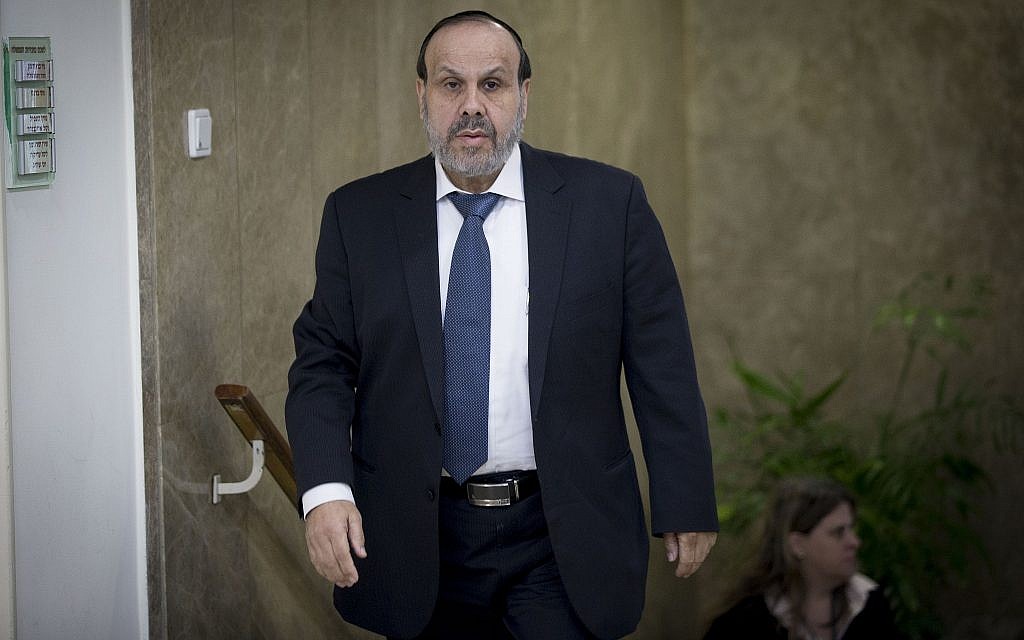
Following the resignation of Liberman and Yisrael Beytenu minister Sofa Landver, the number of ministers in the full cabinet dropped from 21 to 19, while the number of members of the security cabinet fell only from 11 to 10.
The discrepancy was first reported by Israel’s Channel 10 news Sunday.
The security cabinet is charged with guiding Israel’s foreign and defense policies, particularly during national emergencies, and is made up of top ministers.
Under the 2001 Government Law, which created the panel, the security cabinet must consist of the prime minister, defense minister, foreign minister, justice minister, public security minister, and finance minister. The cabinet is also entitled to appoint other members to the body, so long as it does not exceed half the total number of ministers.
The forum now has nine members, including Prime Minister Benjamin Netanyahu, who also serves as defense minister and foreign minister, as well as various coalition party heads and other senior lawmakers.
In its current makeup, ministers Aryeh Deri, Ze’ev Elkin, Naftali Bennett, Yoav Gallant, Israel Katz, and Yuval Steinitz are appointed to the panel, along with Netanyahu, Justice Minister Ayelet Shaked, Public Security Minister Gilad Erdan, and Finance Minister Moshe Kahlon.
The security cabinet is charged with launching wars or major military operations, pursuing ceasefires or other diplomatic initiatives and dealing with sensitive intelligence matters. Before its creation in 2001, prime ministers would convene ad hoc war cabinets during national emergencies, including Golda Meir’s famous Kitchen Cabinet during the Yom Kippur War of 1973.
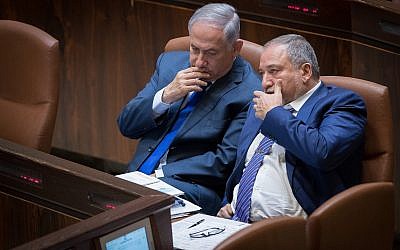
While security cabinet meetings are closed to the public, their inner working came under increased scrutiny after ministers, including Liberman, accused Netanyahu of pushing for a ceasefire with Gaza-based terrorists after a two-day flareup without taking a vote, and misrepresenting their views.
An unnamed officials told the Kan state broadcaster earlier this month that the Netanyahu government had failed to even inform the security cabinet of the official policy on military action in Gaza.





The Times of Israel Community.