

 From the Liveblog of
Wednesday, November 5, 2025
From the Liveblog of
Wednesday, November 5, 2025
Citing corruption, Lapid says Yesh Atid to distance itself from ‘Zionist institutions,’ push to nationalize KKL-JNF
 Add ToI as a Preferred Source on Google
Sam Sokol is a former political correspondent at The Times of Israel. He was previously a reporter for the Jerusalem Post, Jewish Telegraphic Agency and Haaretz. He is the author of "Putin’s Hybrid War and the Jews"
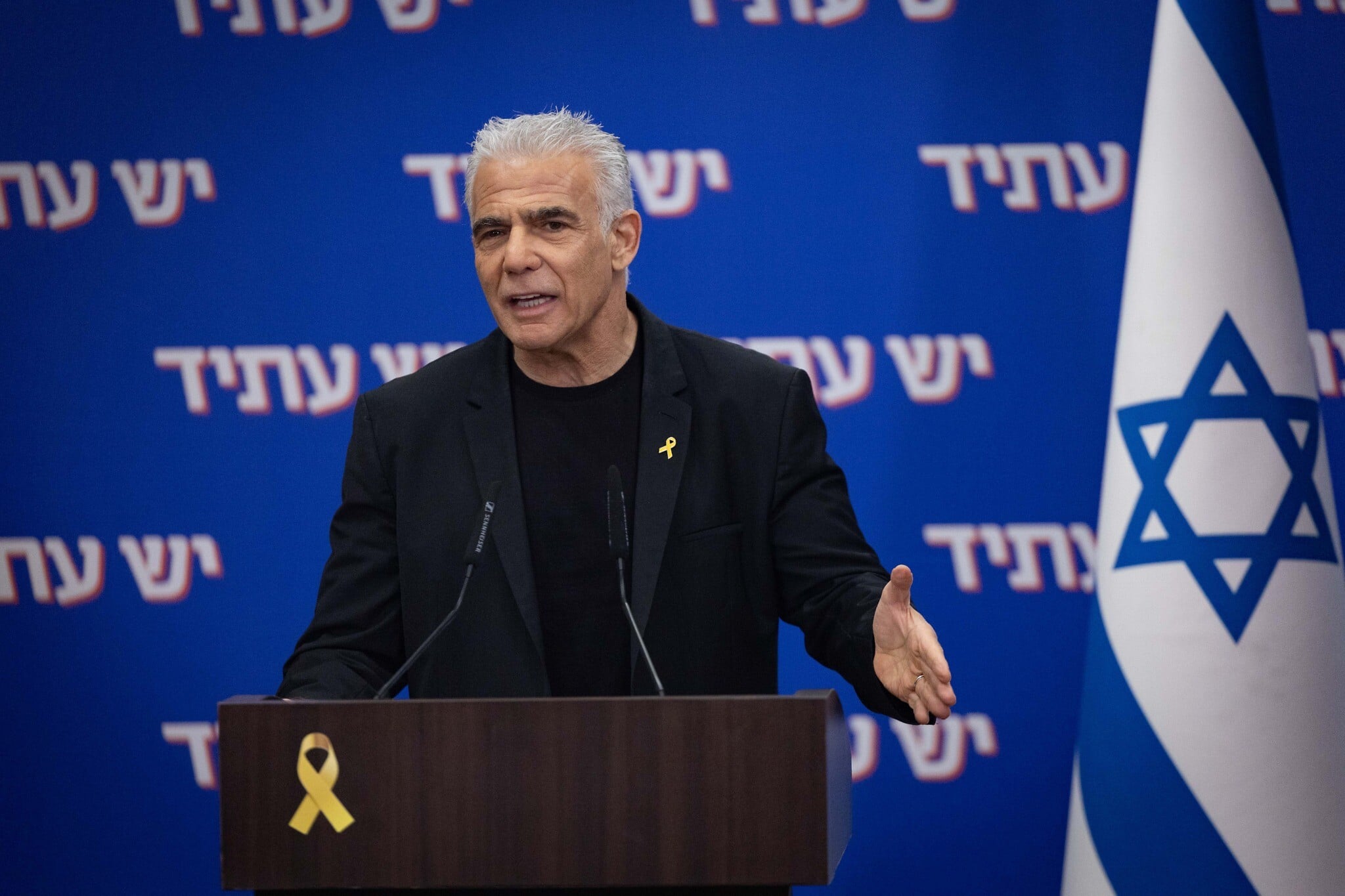
Opposition Leader Yair Lapid announces that his Yesh Atid party will no longer seek any positions in any of the so-called Zionist institutions and will advance legislation to nationalize the Jewish National Fund-KKL, arguing that this is the only way to “clean up this organization and the other national institutions is to bring them under state law, state audit, and the strictest transparency regulations.”
In a message to the press, Lapid says that his party “will not be part of any of the agreements in the Zionist institutions. We will not take budgets, we will not take managerial positions, and we will not be part of the deal being stitched together there.”
“We entered politics to fight corruption, not to be part of a system to arrange jobs for the Netanyahu family and the Deri family. We wanted to clean the national institutions of the culture of corruption and political appointments — but it’s not possible.” Lapid says, referring to Prime Minister Benjamin Netanyahu and Shas chairman Aryeh Deri. “There’s no way to do it, and no one to do it with.”
During this year’s World Zionist Congress, representatives of Israel’s political parties and Diaspora Jewish organizations vied for control over national institutions such as the World Zionist Organization, Jewish National Fund-KKL and Keren Hayesod, which control billions of dollars in funding for Jewish causes.
A compromise over positions that would have seen Yesh Atid MK Meir Cohen serve as the next chairman of the Jewish National Fund-KKL fell apart last week after Netanyahu’s controversial elder son, Yair Netanyahu, was unexpectedly tapped for a cushy board position at the World Zionist Organization.
The national organizations are used for patronage and are being expanded in order “to hand out more and more jobs and budgets to political cronies – at the expense of the Jewish people, and at the expense of Israeli taxpayers,” says Lapid, promising to “fight it, not join it.”
This alleged corruption pushes Diaspora Jews “even further away from the State of Israel and from Zionism,” he continues, calling on other political parties “to reconsider whether they are willing to be part of an agreement that is so clearly an act of corruption and dirty politicking.”









The Times of Israel Community.