

Live updates (closed)
 Add ToI as a Preferred Source on Google
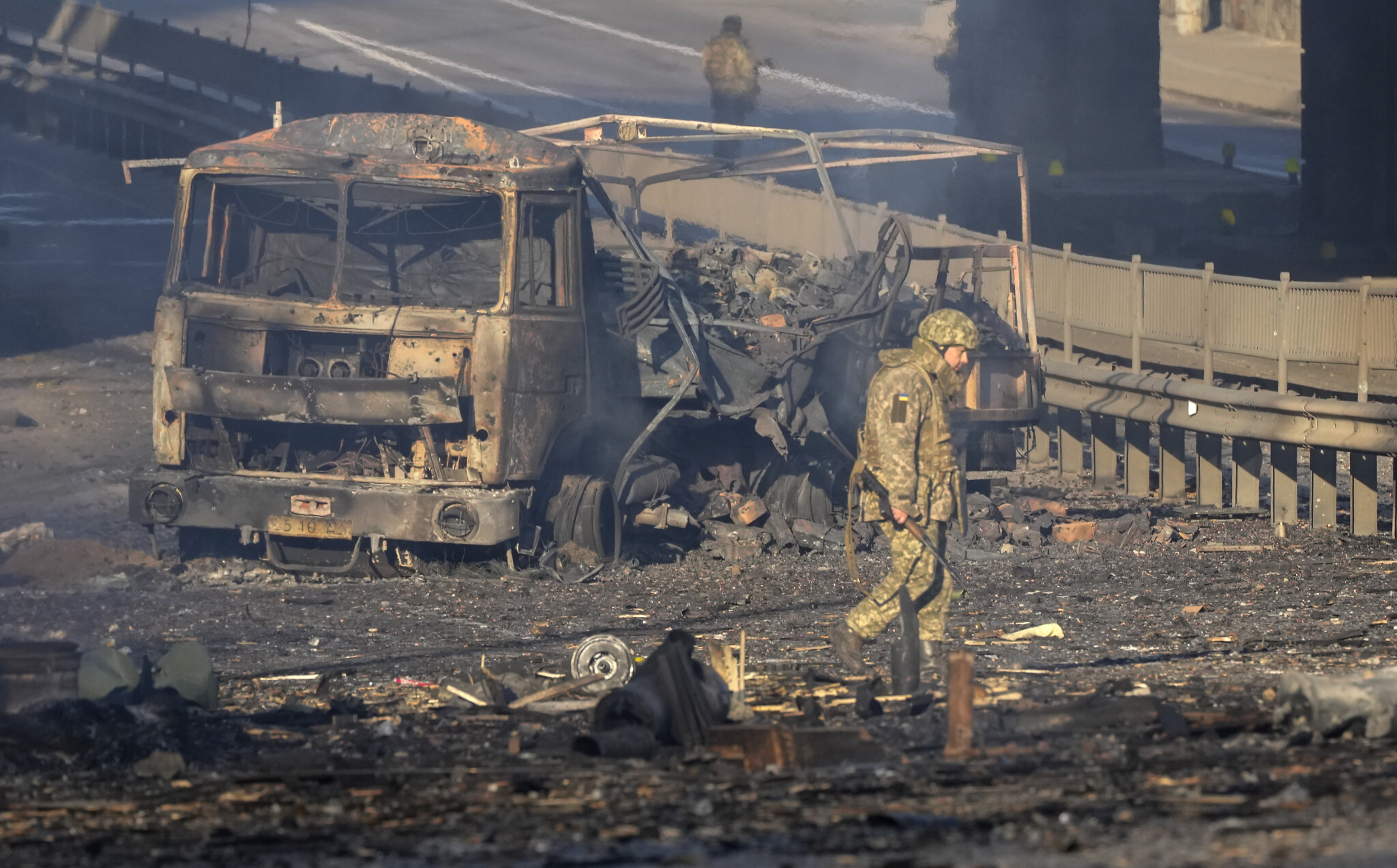
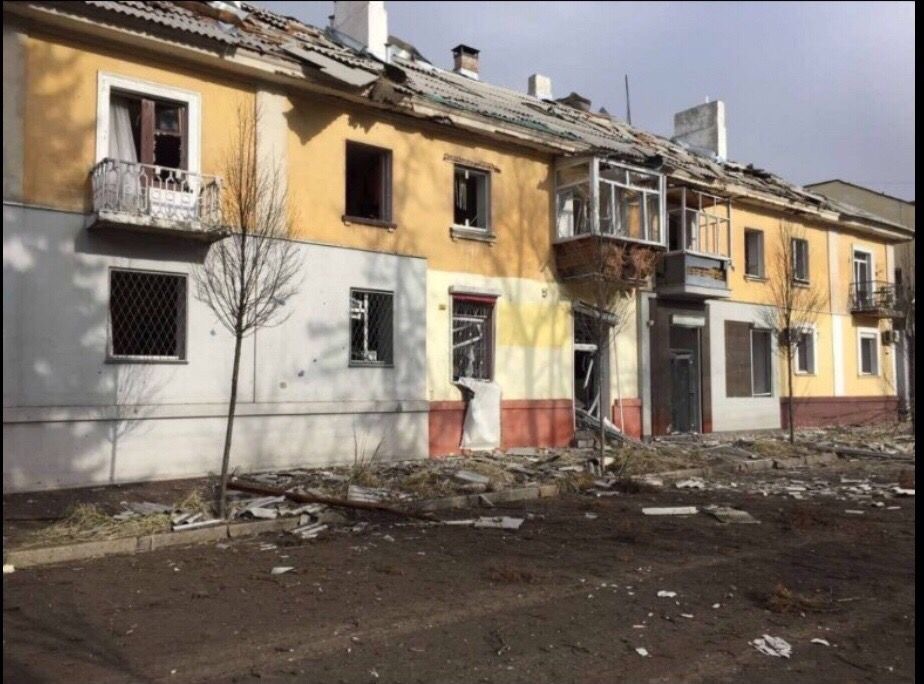
The Times of Israel live blogged Sunday’s events as they unfolded.
Ukraine reports civilian casualties in overnight fighting
Ukraine reports several civilian casualties in overnight fighting as dawn breaks.
A six-year-old boy was killed by gunfire in Kyiv, a local hospital says.
Several other people were injured, including two teenagers and three adults, CNN reports.
The Kyiv Independent says a 7-year-old girl was killed by Russian artillery in the city of Okhtyrka.
A woman was also killed by Russian artillery in the eastern Ukrainian city of Kharkiv, officials say.
The shelling hit a nine-story apartment building, causing heavy damage. Around 80 people were rescued.
North Korea test fires ballistic missile
Since Western leaders don’t have enough to worry about, North Korea fires a ballistic missile, resuming a weapons-testing blitz following a month of relative calm during the Beijing Winter Olympics.
The launch is Pyongyang’s eighth so far this year.
Despite biting international sanctions, Pyongyang has doubled down on military development and last month threatened to abandon a self-imposed moratorium on firing long-range and nuclear weapons.
Analysts had widely predicted Pyongyang would seek to capitalize on US distraction over Russia’s invasion of Ukraine with new tests.
South Korea’s military says it detected a ballistic missile fired toward the Sea of Japan at 07:52 local time from Pyongyang.
“The latest ballistic missile has a range of around 300 kilometers and an altitude of around 620 kilometers and details are under close analysis by South Korean and US intelligence,” it adds. Japan also confirms the launch.
The recent pause in testing during the Beijing Winter Olympics was seen as a mark of deference to North Korea’s key diplomatic ally and economic benefactor China.
The latest launch also comes as South Korea gears up to elect its next president on March 9.
Times of Israel staff contributed to this report.
Ukrainian prime minister thanks Western ‘friends’ for sanctions
Ukrainian Prime Minister Denys Shmyhal thanks Western countries for announcing sanctions against Russia.
“Grateful for our friends from the US, France, Germany, Italy, Canada and UK,” he says.
He thanks the countries for ordering some Russian banks removed from the SWIFT financial system for global transactions, freezing assets of Russia’s central bank and taking measures against Russia oligarchs.
The EU and White House announced the punitive financial measures last night.
Grateful for our friends from 🇺🇸🇫🇷🇩🇪🇮🇹🇨🇦🇬🇧 for:
– commitment to removal of several Russian banks from #SWIFT;
– paralysis the assets of #Russia’s central bank;
– prohibition for Russian oligarchs to use their financial assets on Euroatlantic markets.— Denys Shmyhal (@Denys_Shmyhal) February 26, 2022
Ukraine asks Red Cross to repatriate bodies of Russian soldiers killed in fighting
The International Committee of the Red Cross says it is aware of requests by Ukraine’s UN ambassador and others to repatriate the bodies of Russian soldiers killed in action in Ukraine but has no numbers.
Ambassador Sergiy Kyslytsya tweeted Saturday that Ukraine has appealed to the ICRC “to facilitate repatriation of thousands of bodies of Russian soldiers” killed during its invasion of Ukraine. An accompanying chart claimed 3,500 Russian troops have been killed.
Kyslytsya tweeted that parents in Russia should have a chance “to bury them with dignity.”
“Don’t let Putin hide scale of tragedy,” he said.
Laetitia Courtois, ICRC’s permanent observer to the United Nations says that the current security situation “is a primary concern and a limitation for our teams on the ground” and “we therefore cannot confirm numbers or other details.”
She says “the ICRC can act as a neutral intermediary” on the return of bodies and other humanitarian issues in conflict, including clarifying the fate of missing persons, reuniting families, and advocating for the protection of detainees “within its possibilities.”
North Korea blames US as ‘root cause ‘ of Ukraine crisis, defends Russia
North Korea accuses the United States of being the “root cause of the Ukraine crisis” while defending Russia, in Pyongyang’s first official response to Moscow’s invasion of Ukraine.
Russia ordered troops into neighboring Ukraine this week, prompting global outcry and punishing sanctions from the West, some directed against Russian President Vladimir Putin himself.
But North Korea, in a muted response issued in the form of a commentary posted on the Foreign Ministry’s website, says the United States is to blame for the unfolding disaster.
Washington has pursued “military supremacy in disregard of the legitimate demand of Russia for its security” according to the commentary, attributed to Ri Ji Song, a researcher at the North’s Society for International Politics Study.
“The root cause of the Ukrainian crisis also lies in the high-handedness and arbitrariness of the US,” says the post uploaded on the North’s foreign ministry website.
Ri slammed the US for holding a “double standard” — saying it meddled in the internal affairs of other countries in the name of “peace and stability” but “but it denounces for no good reason self-defensive measures taken by other countries to ensure their own national security.”
“Gone are the days when the US used to reign supreme,” the post says.
Elon Musk says Starlink internet ‘active’ in Ukraine

SpaceX owner and Tesla CEO Elon Musk arrives on the red carpet for the Axel Springer media award in Berlin on December 1, 2020. (Hannibal Hanschke/Pool Photo via AP)
Elon Musk says his SpaceX company’s Starlink satellite internet service is now “active” in Ukraine.
The tech billionaire makes the announcement on Twitter in response to a tweet by Ukraine’s minister of digital transformation saying that while Musk tries to “colonize Mars,” Russia is trying to occupy Ukraine. The minister called on Musk to provide his country with Starlink stations.
Musk says: “Starlink service is now active in Ukraine. More terminals en route.”
Starlink is a satellite-based internet system that SpaceX has been building for years to bring internet access to underserved areas of the world.
It markets itself as “ideally suited” for areas where internet service is unreliable or unavailable.
Internet monitor NetBlocks says Ukraine has seen a “series of significant disruptions to internet service” since Thursday, when Russia launched military operations in the country.
Russian troops enter Kharkiv, Ukraine’s second-largest city
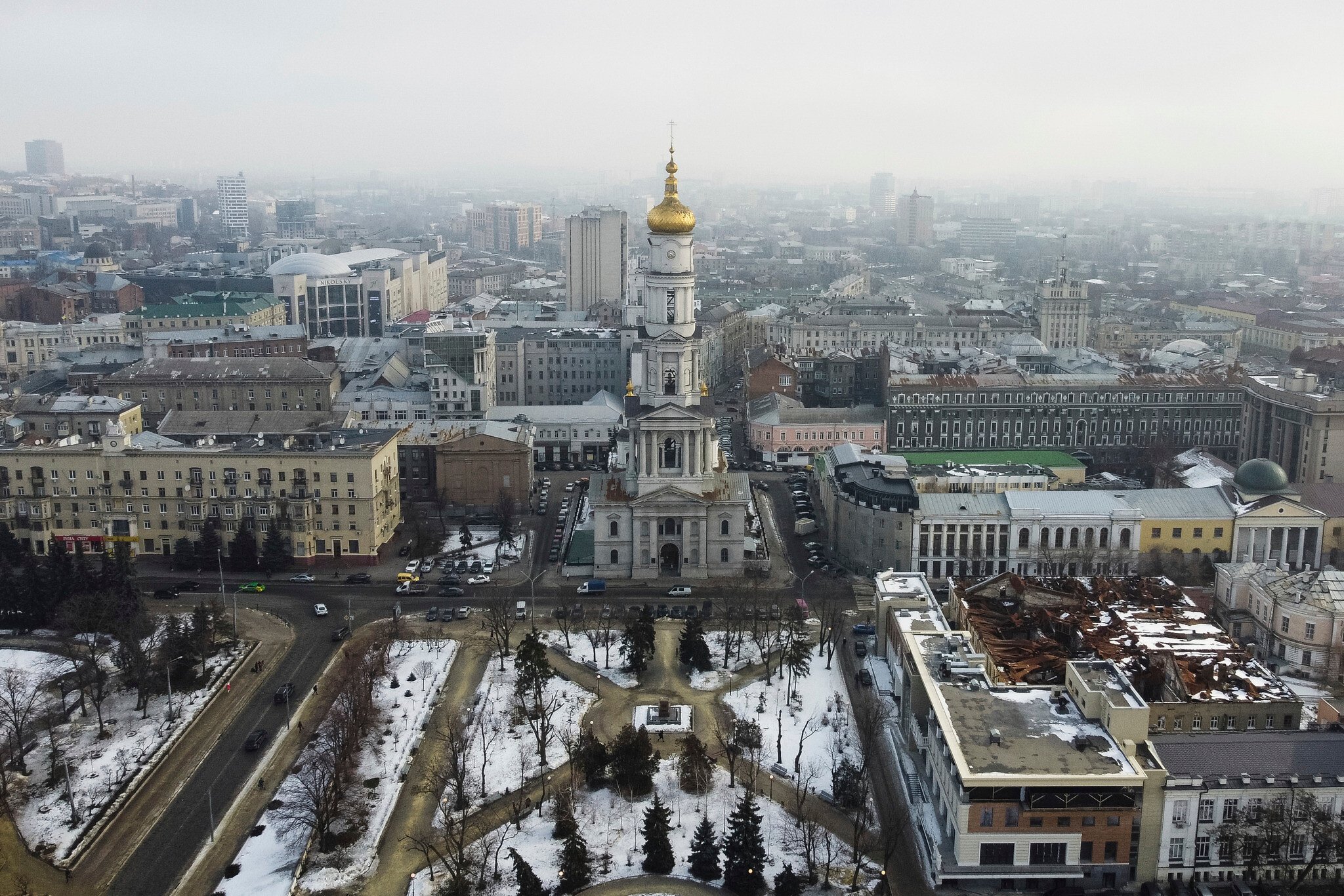
The Assumption or Dormition Cathedral, the main Orthodox church of Kharkov, stands out in the center of Kharkiv, Ukraine's second-largest city, Wednesday, Feb. 16, 2022.(AP Photo/Mstyslav Chernov)
Russian troops have reportedly entered Ukraine’s second-largest city — Kharkiv in the northeast of the country.
According to the BBC, the move has been confirmed by the local governor.
Videos circulating on social media appear to show a number of Russian light military vehicles on the streets of the city, with some footage showing vehicles on fire.
One RU vehicle out! Good job, Kharkiv! pic.twitter.com/crivP0pmEh
— olexander scherba🇺🇦 (@olex_scherba) February 27, 2022
There are also reports of explosions.
Hours earlier, Ukrainian President Volodymyr Zelenskyy’s office said Russian forces blew up a gas pipeline in Kharkiv, prompting the government to warn people to protect themselves from the smoke by covering their windows with damp cloth or gauze.
The footage shows a gas pipeline on fire in Kharkiv after a Russian attack.
Video: State Special Communications Service of Ukraine pic.twitter.com/owuSoKqoFA
— The Kyiv Independent (@KyivIndependent) February 27, 2022
Russia claims to have ‘entirely’ besieged 2 big cities in Ukraine’s south, southeast
Moscow claims its troops have “entirely” besieged the southern Ukrainian city of Kherson and the city of Berdyansk in the southeast, as the Russian army presses ahead with the invasion of the pro-Western country.
“Over the past 24 hours, the cities of Kherson and Berdyansk have been completely blocked by the Russian armed forces,” defense ministry spokesman Igor Konashenkov says in a statement carried by Russian news agencies.
Kharkiv governor: Russian light military vehicles entered city, have met resistance
Oleg Synegubov, head of the Kharkiv regional state administration, says light military vehicles “broke” into Ukraine’s second-largest city.
Synegubov says Russian troops have reached the central part of the city and he urges residents to shelter in place.
“The Armed Forces of Ukraine are eliminating the enemy,” Synegubov writes in a Facebook post.
Lapid reportedly says in private gathering: Israel ‘must condemn dictators who attack democracies’
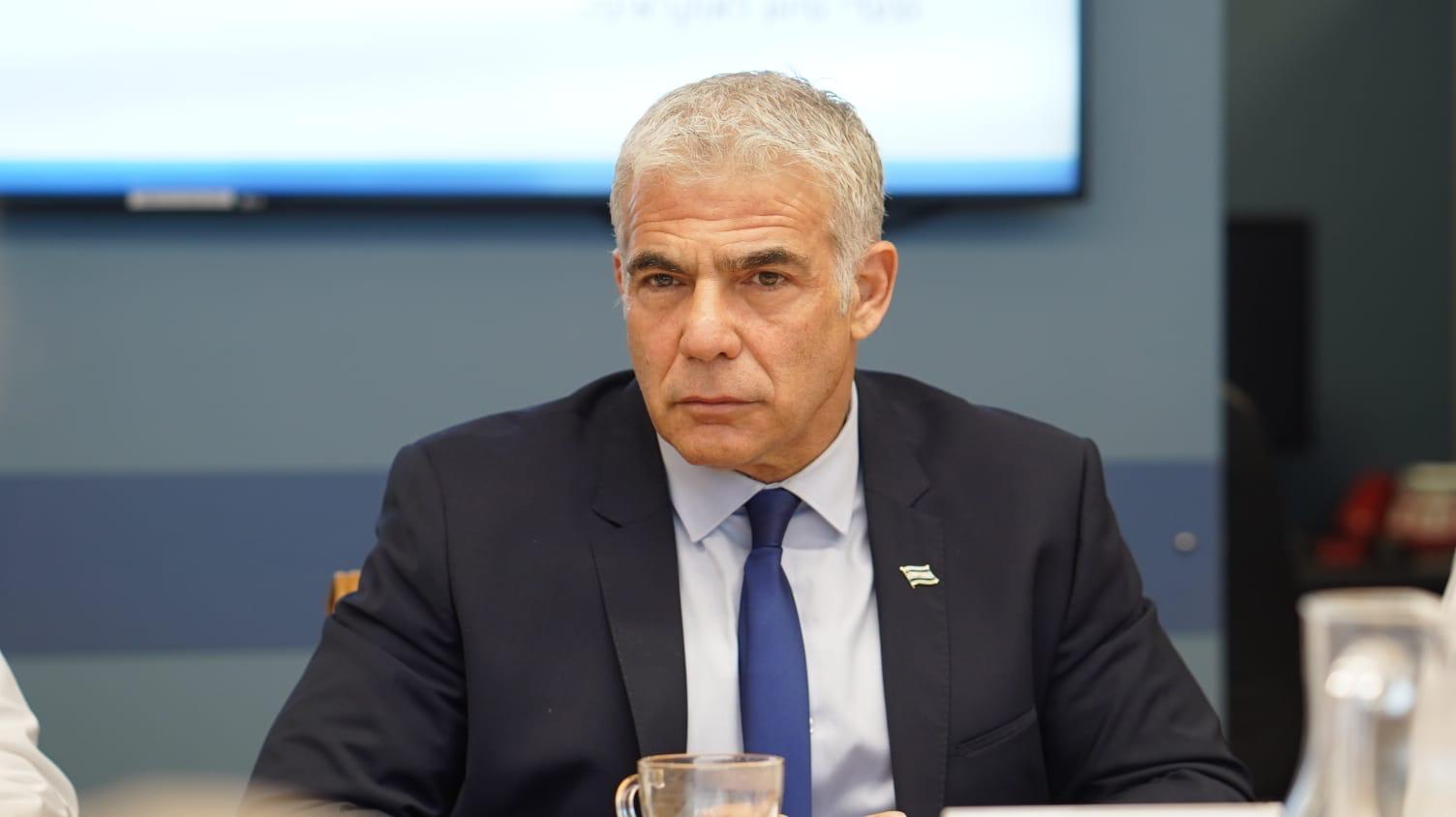
Illustrative: Foreign Minister Yair Lapid at a situational assessment on Russia's invasion of Ukraine, on February 24, 2022. (Niv Musman/GPO)
Foreign Minister Yair Lapid reportedly tells a private meeting during a discussion on Russia’s invasion of Ukraine that Israel must condemn dictators.
“Israel must be on the right side and condemn dictators who attack democracies,” Lapid says in an apparent reference to Russian President Vladimir Putin, according to Army Radio.
Lapid’s office says they will not comment on a private gathering.
Israel is walking a delicate line between Russia and Ukraine, with concerns over Jerusalem’s coordination with Moscow over Israeli airstrikes on Iranian-backed targets in Syria.
Ukraine’s President Volodymyr Zelensky has asked that Jerusalem serve as a mediator with Russia to help resolve the military conflict between the countries.
While Lapid has previously condemned Russian aggression, Prime Minister Naftali Bennett has refrained from mentioning Moscow in public statements on the war.
Putin praises Russian special forces as Kremlin says it’s ready for talks in Belarus
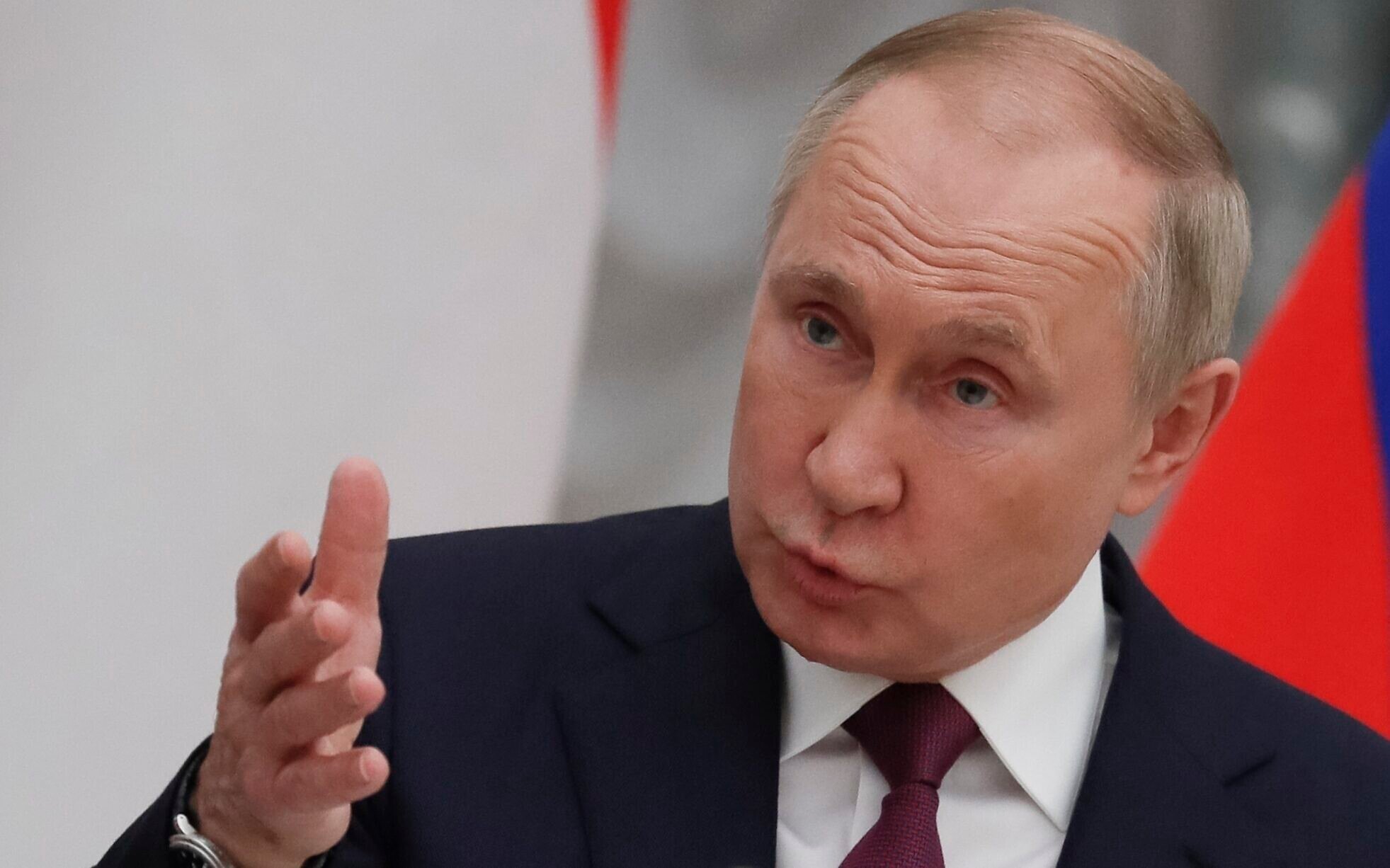
Russian President Vladimir Putin speaks during a news conference in Moscow, Russia, on February 1, 2022. (Yuri Kochetkov/Pool Photo via AP, File)
Russian President Vladimir Putin congratulates members of special forces on their professional holiday, saying they fought “heroically” in Ukraine, while the Kremlin insists it’s ready for talks with Kyiv.
“Special gratitude to those who these days are heroically fulfilling their military duty in the course of a special operation to provide assistance to the people’s republics of Donbas,” Putin says in a televised address.
Separately, Kremlin spokesman Dmitry Peskov tells Russian news agencies on Sunday that Russia was ready for talks with Ukraine, adding that a delegation from Moscow had already arrived in the Belarusian city of Gomel.
“We will be ready to begin these talks in Gomel,” Peskov says.
Ukrainian authorities have refused to hold talks in Belarus, which has allowed Russian troops passage to pro-Western Ukraine.
Ukraine rejects Belarus as location for talks with Russia
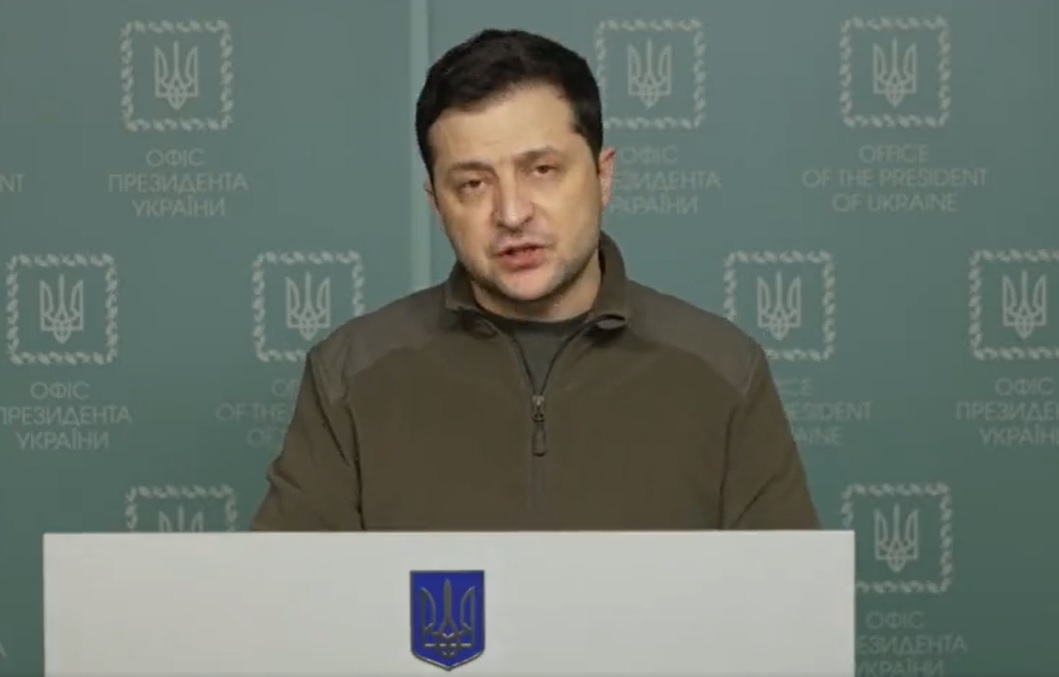
Ukrainian President Volodymyr Zelensky addresses his nation in a speech on Saturday, February 26, 2022, saying troops were successfully thwarting Russian attacks. (Screenshot/Twitter)
Ukraine’s president says his country is ready for peace talks with Russia but not in Belarus, which was a staging ground for Moscow’s 3-day-old invasion.
Speaking in a video message, Ukrainian President Volodymyr Zelensky names Warsaw, Bratislava, Istanbul, Budapest or Baku as alternative venues.
He says other locations are also possible but made clear that Ukraine doesn’t accept Russia’s selection of Belarus.
The Kremlin says a Russian delegation had arrived in the Belarusian city of Homel for talks with Ukrainian officials. Kremlin spokesman Dmitry Peskov says the delegation includes military officials and diplomats.
“The Russian delegation is ready for talks, and we are now waiting for the Ukrainians,” Peskov says.
Russia invaded Ukraine on Thursday, with troops moving from Moscow’s ally Belarus in the north, and also from the east and south.
Ex-IDF spokesman: Netanyahu should negotiate between Russia, Ukraine
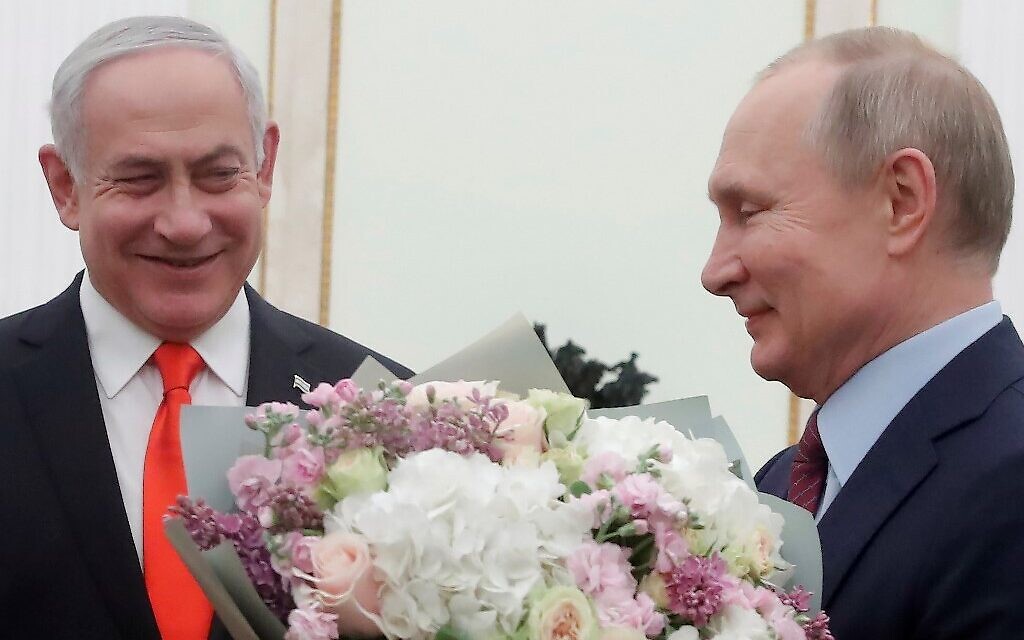
Russian President Vladimir Putin (right) with a bouquet of flowers and then-prime minister Benjamin Netanyahu at the Kremlin in Moscow on January 30, 2020. (Maxim Shemetov/Pool/AFP)
Israeli Defense Forces (IDF) Spokesperson Ronen Manelis tweets that he believes opposition leader Benjamin Netanyahu should work as an envoy to negotiate between Russia and Ukraine after the former’s invasion of its democratic neighbor.
“Netanyahu must be appointed as a special envoy to Russia and Ukraine,” Manelis tweets. “I got to see up close how Russian President Putin listens to the [Israeli] opposition leader, if Israel has a chance to influence this event through him.”
“It will also be a certificate of honor for the Israeli government. After he succeeds (or God forbid he fails) we will return to today’s matters,” Manelis tweets.
Israel is walking a delicate line between Russia and Ukraine, with concerns over Jerusalem’s coordination with Moscow over Israeli airstrikes on Iranian-backed targets in Syria. Netanyahu, while prime minister, met with Putin on a number of occasions for talks on the matter.
Ukraine’s President Volodymyr Zelensky has asked that Jerusalem serve as a mediator with Russia to help resolve the military conflict between the countries.
While Lapid has previously condemned Russian aggression, Prime Minister Naftali Bennett has refrained from mentioning Moscow in public statements on the war.
MK asks Israel to allow entry of immigrants from Ukraine, extend visas of others
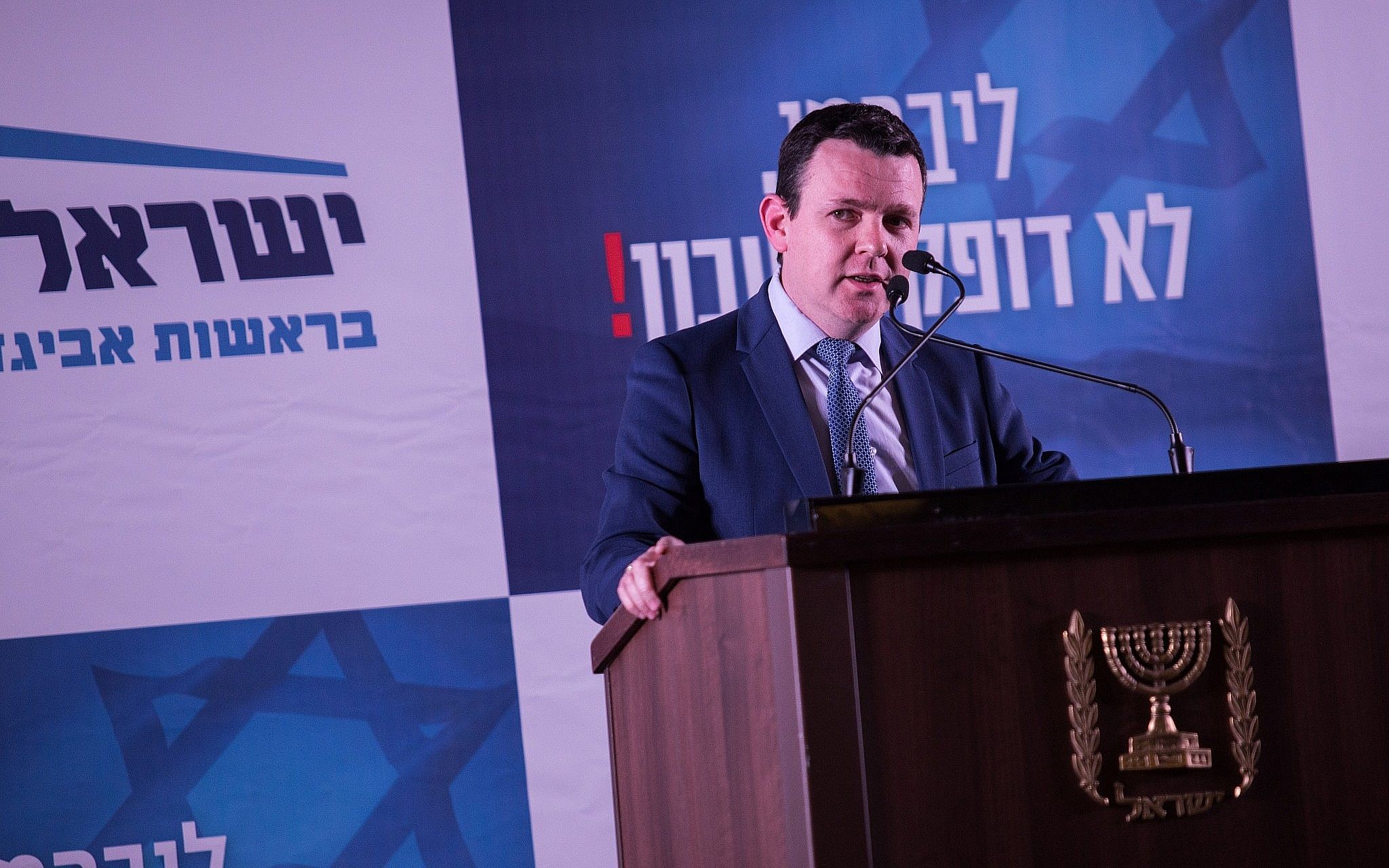
Yisrael Beytenu member Evgeny Sova at a party event in the southern coastal city of Ashkelon on February 19, 2019. (Hadas Parush/Flash90)
Ukraine-born Yisrael Beytenu MK Evgeny Sova, deputy speaker of the Knesset, asks Interior Minister Ayelet Shaked to allow the entry of thousands of immigrants who have expressed a desire to come to Israel after Russia’s invasion of Ukraine.
Sova also asks for help in the extension of visas for Ukrainian citizens currently in Israel who are unable to return home, many of them relatives of Israelis.
“In addition, Israel should consider allowing the entry of Ukrainian citizens who have first-degree Israeli relatives for a limited period of time as tourists, thus assisting in the humanitarian crisis plaguing Eastern Europe,” Sova writes.
Sova was born in the city of Pervomaisk, Ukraine, and immigrated to Israel in 1997 at the age of 17. Speaking on Saturday to Channel 12, he said he has many friends and relatives still living in Ukraine.
PM says Israel sending 100 tons of humanitarian aid to Ukraine; doesn’t condemn Russia
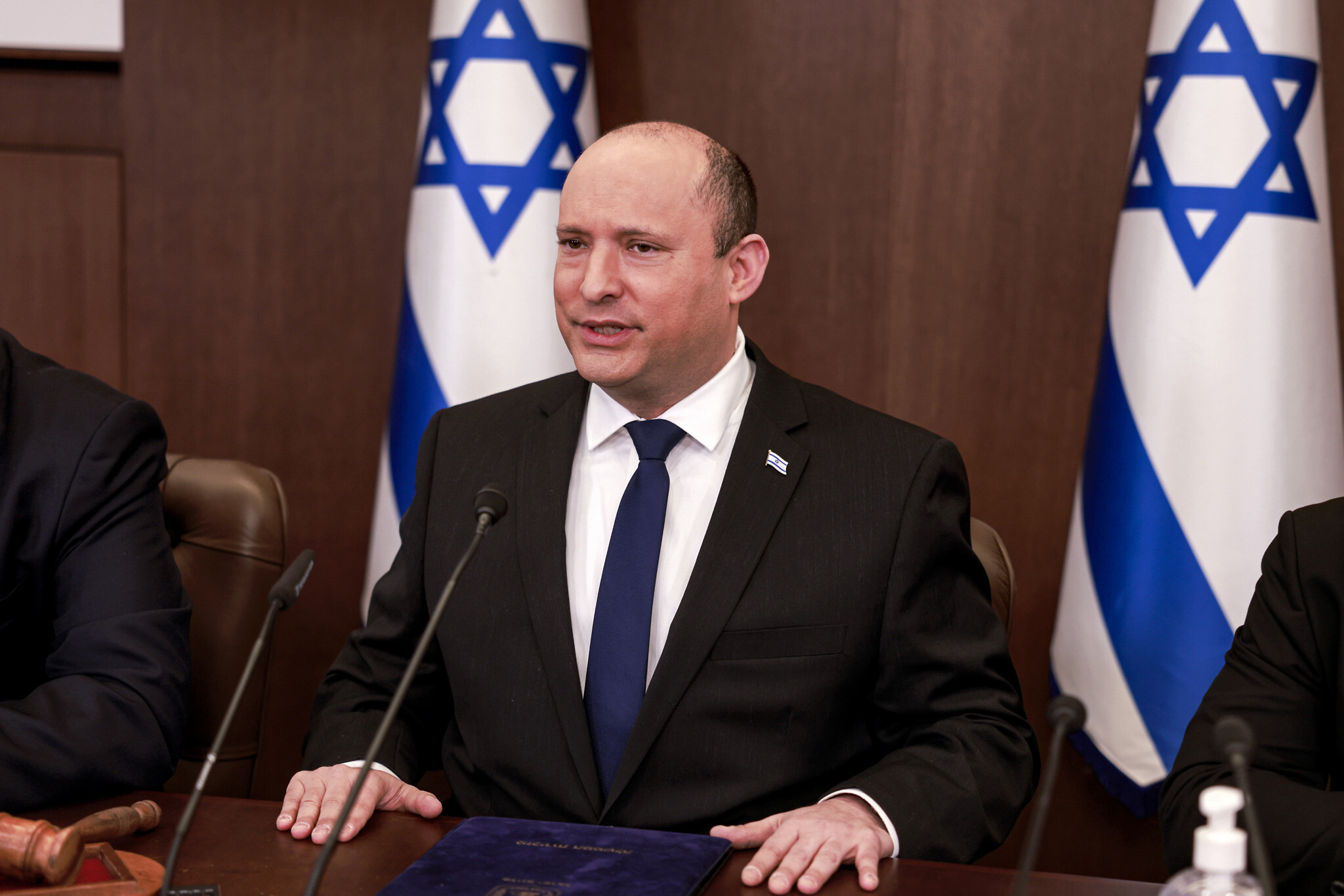
Prime Minister Naftali Bennett chairs the weekly cabinet meeting at the Prime Minister's office in Jerusalem, Feb. 13, 2022. (Menahem Kahana/Pool via AP)
Prime Minister Naftali Bennett says that Israel is flying 100 tons of humanitarian aid to Ukrainian citizens in the coming days, including water purification systems, medical equipment, tents, blankets, sleeping bags, and more.
Speaking at the beginning of the weekly cabinet meeting, Bennett again declines to condemn or even mention Russia by name, instead expressing Israel’s hope “that this conflict will be resolved before the war spreads even more and there will be humanitarian implications far worse than we can imagine.”
“We are praying for the welfare of Ukraine’s citizens and hope that additional bloodshed will be avoided,” he says.
Last Thursday, during an address to new IDF officers, Bennett did not condemn Russia, nor did he do so in a Friday statement after a conversation with Ukrainian President Volodymyr Zelensky.
Sources told The Times of Israel that Foreign Minister Yair Lapid’s direct condemnation of Russia on Thursday was made in coordination with Bennett’s office.
Lapid tells diplomats to focus on assisting Israelis at Ukraine borders, sending aid
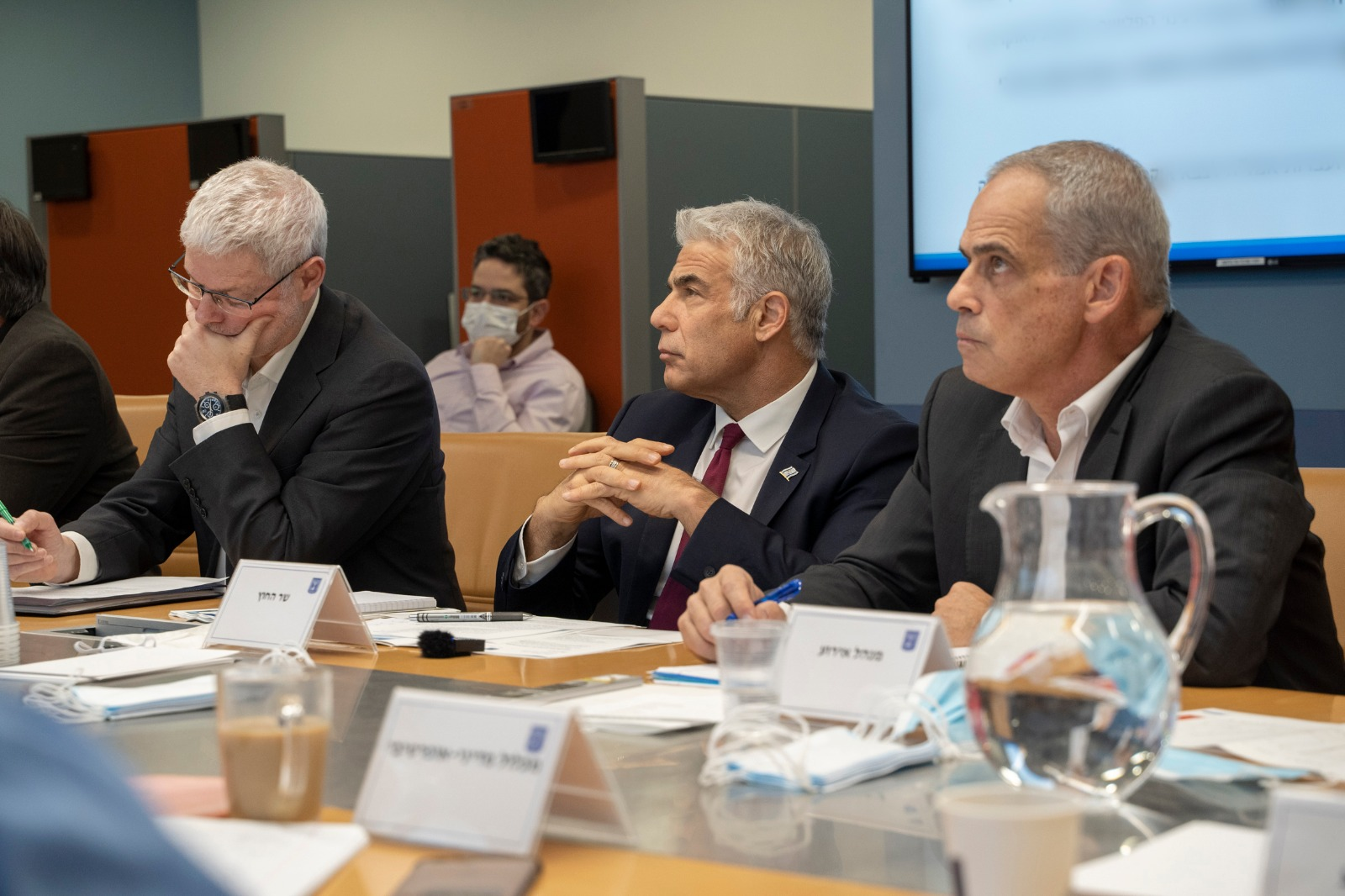
Foreign Minister Yair Lapid (C) at a situational assessment on February 27, 2022 (Yossi Pines/GPO)
Foreign Minister Yair Lapid participates in a situational assessment this morning in the Foreign Ministry and instructs diplomats to focus on assisting Israeli citizens waiting in line at border crossings out of Ukraine, and on providing Ukraine with the humanitarian assistance it has requested.
Mashav, Israel’s international development agency, is preparing the humanitarian aid, which will be flown to Ukraine later this week.
Since the beginning of the invasion on Thursday, 2,000 Israelis have left Ukraine, according to the ministry’s latest figures.
Israel is now recommending that Israelis trying to leave Ukraine head for the Slovakian, Hungarian, Moldovan, and Romanian borders, since the Polish crossings are overcrowded.
60 Israeli students leave Ukraine overnight; some need medical attention
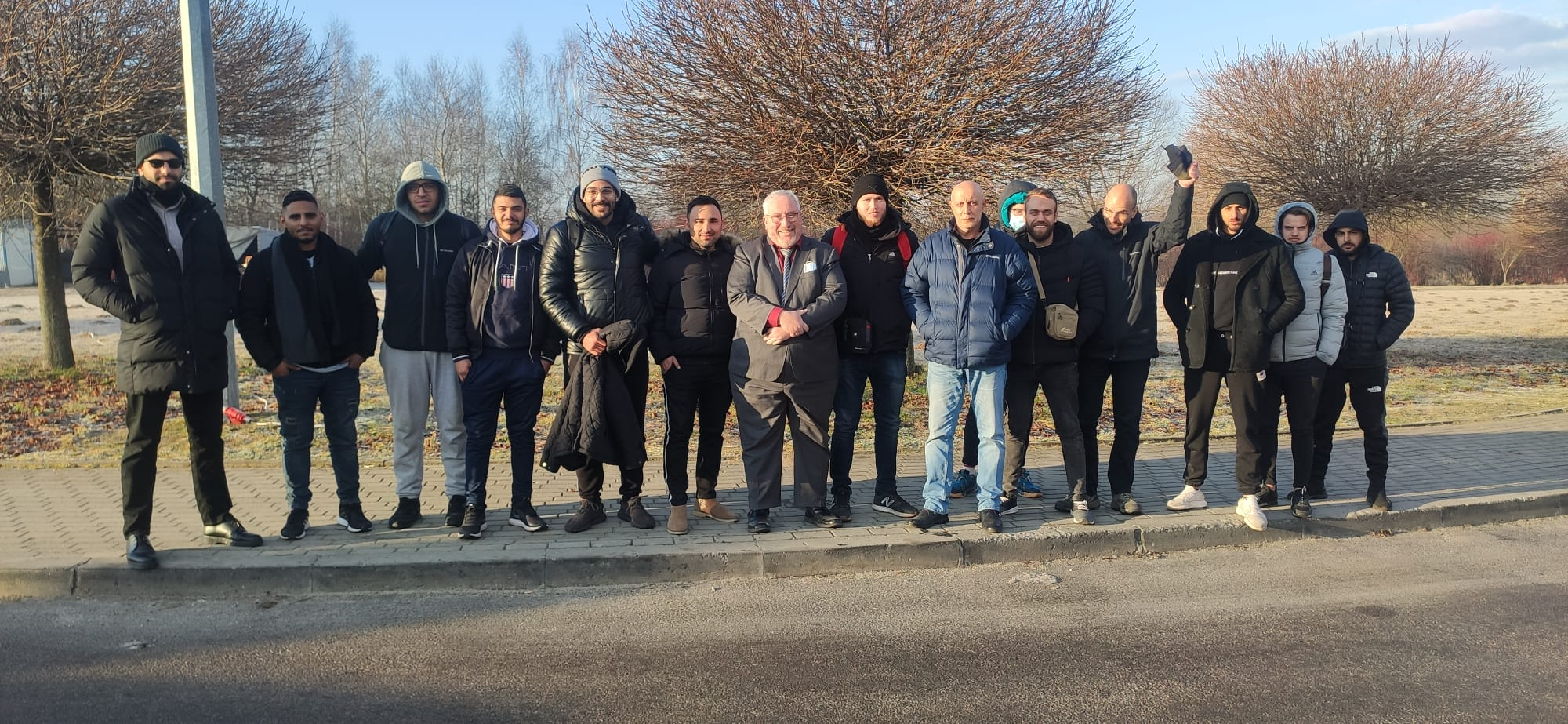
Israeli students who reached Poland on February 27, 2022 (Israel Embassy in Poland)
Israel’s diplomatic staff in Poland helped more than 60 students leave Ukraine through the Korczowa-Krakovets crossing overnight.
Some of the students needed medical aid.
Many Arab Israeli students study in Ukraine, and some even flew back from Israel to the Eastern European nation last week to take exams.
Israeli diplomats from the embassy in Warsaw are at border crossings with Poland, and have also opened up a situation room in Przemyśl on the border.
NSO files defamation lawsuit against Calcalist over reports on police use of spyware

An Illustration of a man holding his phone with an NSO Group logo with a computer screen in the background, in Jerusalem, on February 7, 2022. (Yonatan Sindel/Flash90)
Israeli spyware company NSO Group files a defamation lawsuit against financial daily Calcalist, owned by Yedioth Ahronoth, as well as the publication’s founder and publisher and its editor-in-chief, over a series of articles alleging that the Israel Police illegally used the company’s spyware against activists, journalists, and government officials without judicial oversight.
The lawsuit, filed at the Magistrate’s Court in Rishon Lezion, demands NIS 1 million ($309,000) in damages.
NSO had previously warned that it would sue Calcalist for a number of exposés in recent weeks that alleged police misuse of NSO’s powerful cyber espionage tool, Pegasus, and sparked an uproar in Israel that led to a Justice Ministry probe and calls for a state commission of inquiry.
Earlier this month, Calcalist reported, without providing evidence, that dozens of high-profile figures — including former ministry directors, prominent business figures and family members and associates of former prime minister Benjamin Netanyahu — were spied on by police using the NSO Group’s Pegasus spyware without any judicial oversight.
In its lawsuit Sunday, lawyers for NSO write that Calcalist’s series was not part of a “journalistic investigation but a one-sided, biased and false reporting that was made public in circumstances that raise real concerns regarding its purpose.”
The suit takes aim at a report published last Tuesday by Calcalist saying that NSO offers its clients a way to cover its tracks after a breach, by deleting or amending logs on compromised cellphones. The article was taken down from the Calcalist site after NSO sent a warning letter.
NSO maintains that it does not operate Pegasus for its clients and is not exposed to the information its clients gather on targets via cloud architecture.
“Contrary to the lie that the newspaper chose to publish, the systems ‘log’ a complete record of all the actions performed by the client and the client has no option to change or delete the documentation,” the lawsuit says.
NSO said the lawsuit was filed “solely for the purpose of uncovering the truth and presenting it publicly,” adding that any damages awarded by the court would be given to various organizations working “for the welfare of Holocaust survivors and victims of sexual assault.”
Russian embassy announces fundraising efforts in Israel for Ukraine separatist regions
On Facebook, Russia’s embassy in Israel announces in Russian that the embassy, in conjunction with Tel Aviv’s Russian House, Gesher Hazikaron (Memory Bridge), and the “Rostov Regional Patriotic Movement Roads of Glory – Our History” is holding a fundraiser for orphans and children with disabilities from Luhansk and Donetsk, the Ukraine breakaway regions whose independence was recognized by Russian President Vladimir Putin ahead of the invasion.
“Israelis, who wish to help the children of Donbas, can turn to the pages in the social networks of Memory Bridge, of the Russian Embassy in Israel and the Russian House in Tel Aviv,” reads the post.
“We are sure that very soon the long-awaited peace and tranquility will come to the DPR and LPR. Children will be able to return to kindergartens and schools in order to continue learning in their native Russian language.”
Israeli legal experts condemn Ukraine invasion, say it’s illegal under international law
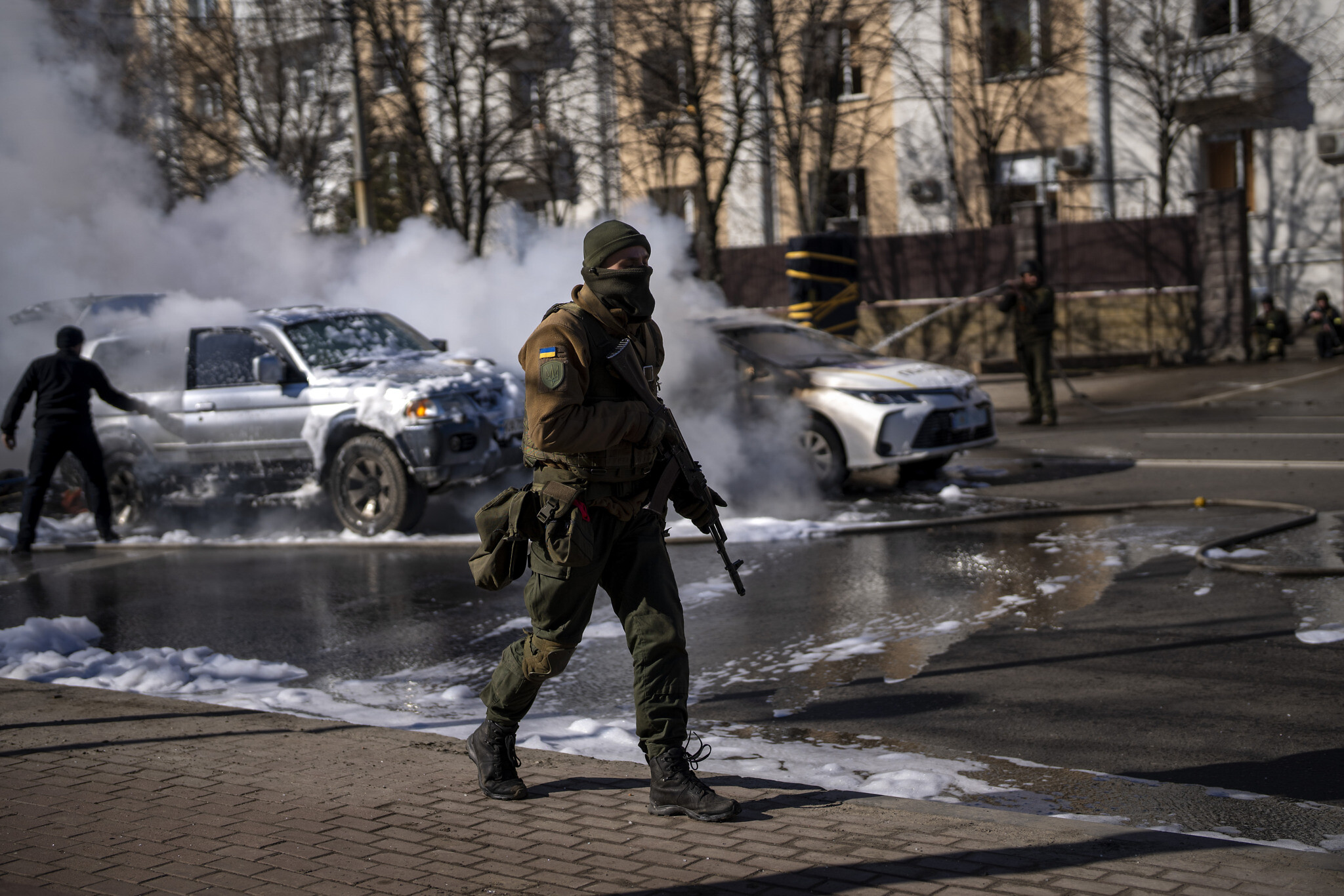
Ukrainian soldiers take positions outside a military facility as two cars burn, in a street in Kyiv, Ukraine, on February 26, 2022. (Emilio Morenatti/AP)
Top Israeli legal experts condemn “in the strongest terms” Russia’s invasion of Ukraine, saying it is illegal under international law and refuting Moscow’s justifications for the offensive.
In an open letter, 21 international law experts call on Israel to “adopt a principled position on the situation in Ukraine, reflective of the long-term community interests of international peace and security.”
The experts, including several deans of leading Israeli law schools, say Russia’s recognition of Luhansk and Donetsk, two areas of eastern Ukraine, as independent republics violates Kyiv’s sovereignty and territorial integrity and has “no legal validity.”
“Consequently, the Russian Federation cannot invoke collective self-defense, pursuant to Article 51 of the UN Charter, to justify armed intervention in Ukraine on the basis of the ‘request’ by these territories,” the experts write.
“Furthermore, the Russian Federation has no right of individual self-defense against Ukraine, as there was no ongoing or imminent armed attack by Ukraine against Russia. Claims that Ukraine must be ‘demilitarized’ do not give rise to any valid right of self-defense under international law,” they add.
Ukraine: Over 210 civilians have been killed and 1,100 wounded in Russian invasion
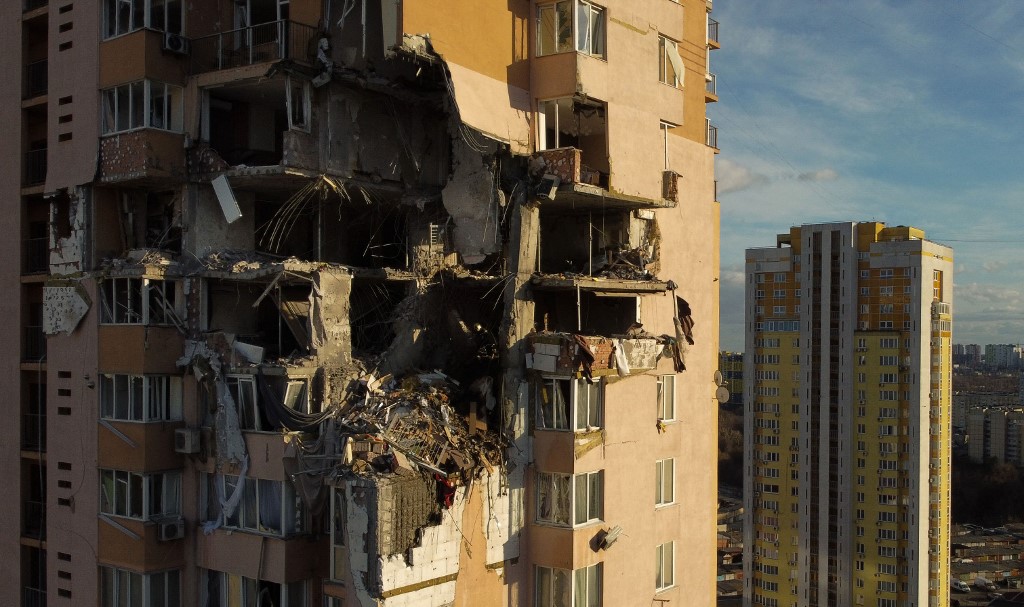
This general view shows damage to the upper floors of a building in Kyiv on February 26, 2022, after it was reportedly struck by a Russian rocket. (Daniel LEAL / AFP)
A Ukrainian official tells the BBC that over 210 civilians have been killed and 1,110 injured in Russia’s invasion.
At least two children are among the dead.
The official says that hospitals, ambulances and residential buildings have been targeted. The official also says that an orphanage has been shelled.
Ukraine also claims that 4,300 Russian troops have been killed. Moscow has not released any casualty figures.
None of the figures could be independently verified.
Ukrainian refugee tally tops 368,000 since Russian invasion, UN agency says
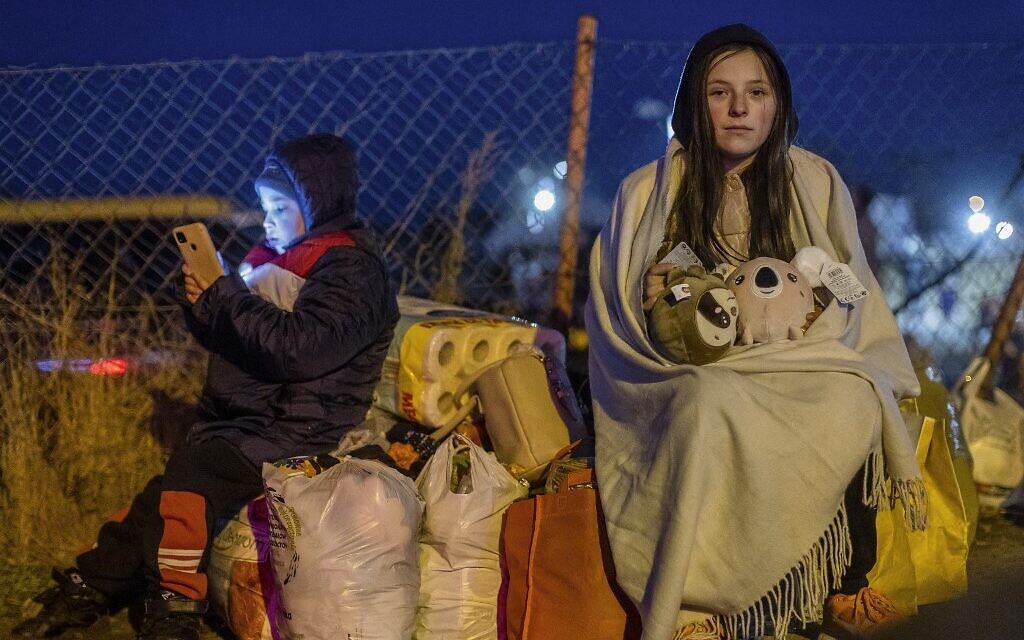
Helena (R) and her brother Bodia (L) from Lviv are seen at the Medyka pedestrian border crossing, in eastern Poland on February 26, 2022, following the Russian invasion of Ukraine (Wojtek RADWANSKI / AFP)
The UN refugee agency says more than 368,000 people have fled Ukraine since Russia invaded on Thursday.
“The current total is now 368,000 and continues to rise,” United Nations High Commission for Refugees, or UNHCR, says in a tweet, adding the new figure was based on “data made available by national authorities.”
A large number of those escaping to neighboring countries have crossed over into Poland, where the authorities have counted some 156,000 since the invasion started early Thursday.
Border guards counted some 77,300 arrivals from Ukraine on Saturday alone.
Others have also headed to Moldavia, Hungary, Slovakia and Romania.
The refugees are arriving in cars, in packed trains and on foot.
Growing list of EU countries announce closing of skies to Russian flights, as Moscow increasingly isolated
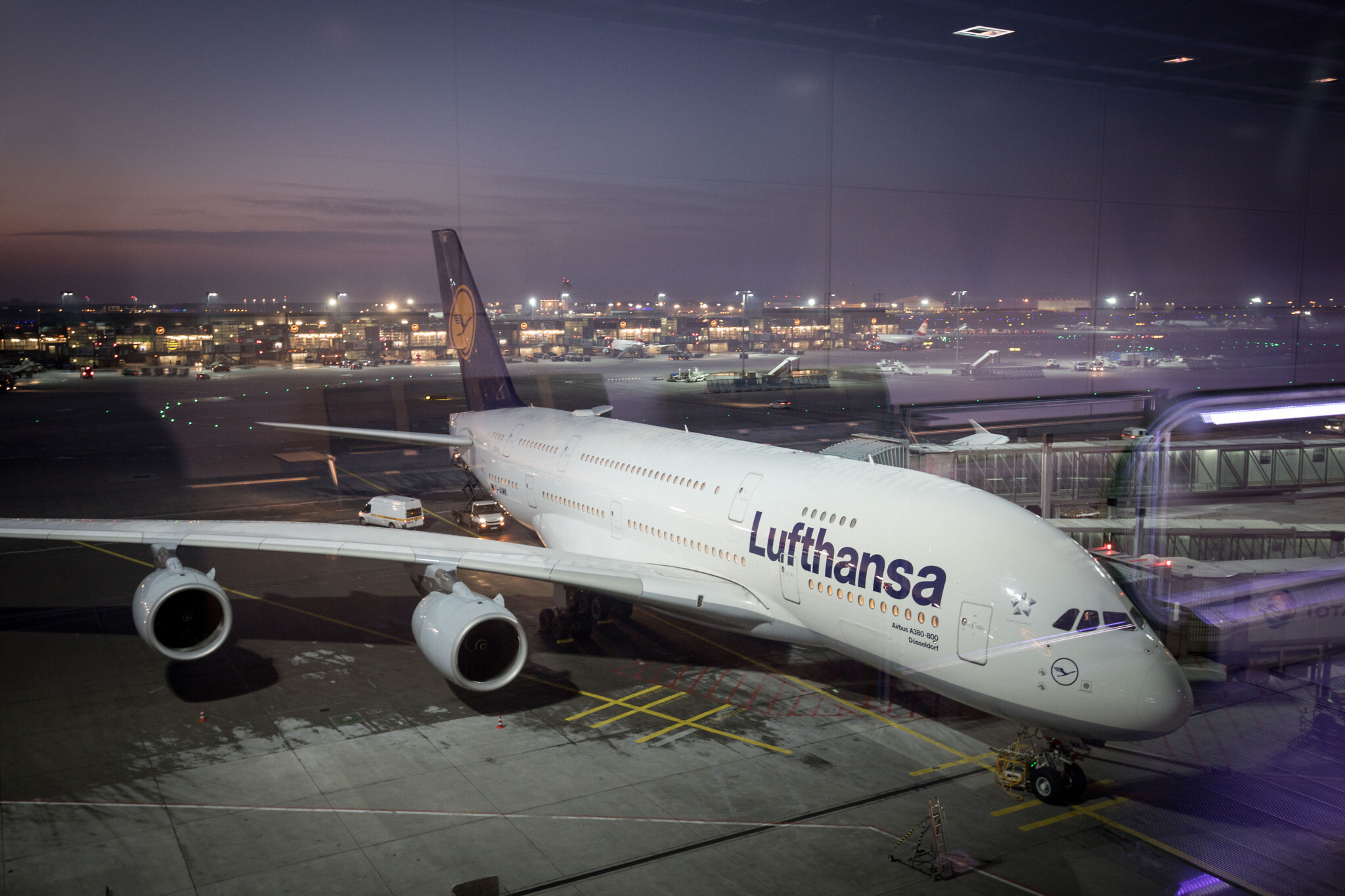
A Lufthansa airplane at Frankfurt Airport. (Nati Shohat/FLASH90)
Belgium is closing its airspace to Russian flights, the country’s prime minister says, adding to a growing number of EU countries that have done the same.
Neighboring Luxembourg — a tiny EU country but a major hub for cargo flights — says it was about to take the same step, taking effect later today.
The measures, in response to Russia’s invasion of Ukraine, follow similar bans by other EU countries including Bulgaria, Poland, the Czech Republic, Estonia, Latvia, Lithuania, Germany, Italy, Slovenia, Finland and Denmark.
Russia has responded by closing its own airspace to flights operated by carriers from EU Baltic countries.
No EU-wide ban on Russian flights has been announced, and EU countries are deciding themselves for their sovereign airspace.
France’s transportation minister, Jean-Baptiste Djebbari, calls for “rapid European coordination on this issue” and told AFP his country was considering “the principle” of doing the same.
Bennett and Putin speak for the first time since Russia’s invasion of Ukraine
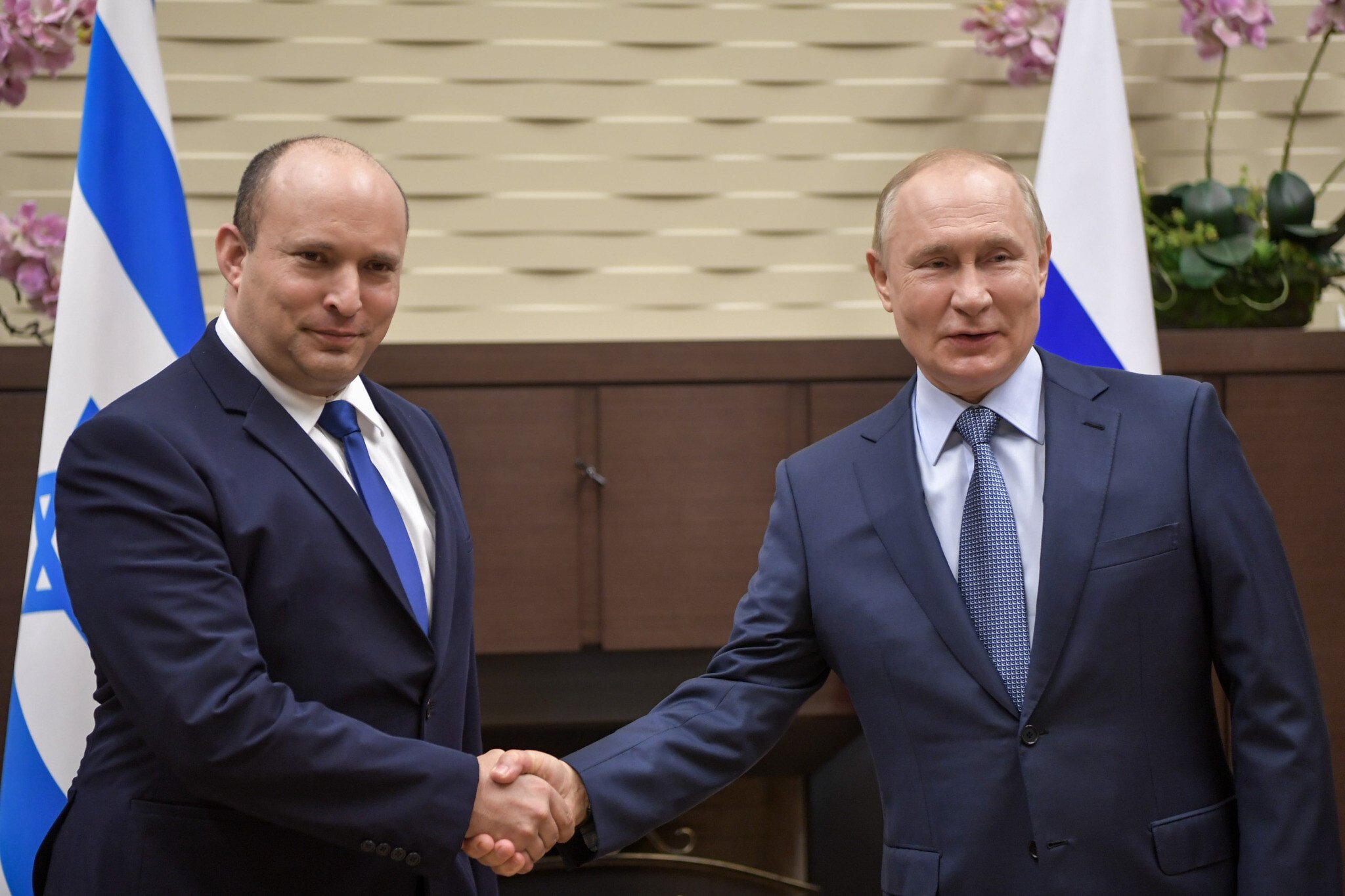
File: Prime Minister Naftali Bennett (left) meets with Russian President Vladimir Putin in Sochi, Russia, on October 22, 2021. (Kobi Gideon/GPO)
Prime Minister Naftali Bennett speaks by phone with Russian President Vladimir Putin for the first time since Russia’s invasion of Ukraine.
They discuss the situation in Ukraine, according to a statement from Bennett’s office that does not provide further detail.
Pope condemns ‘diabolical logic’ of war, but makes no mention of Russia in Ukraine statement
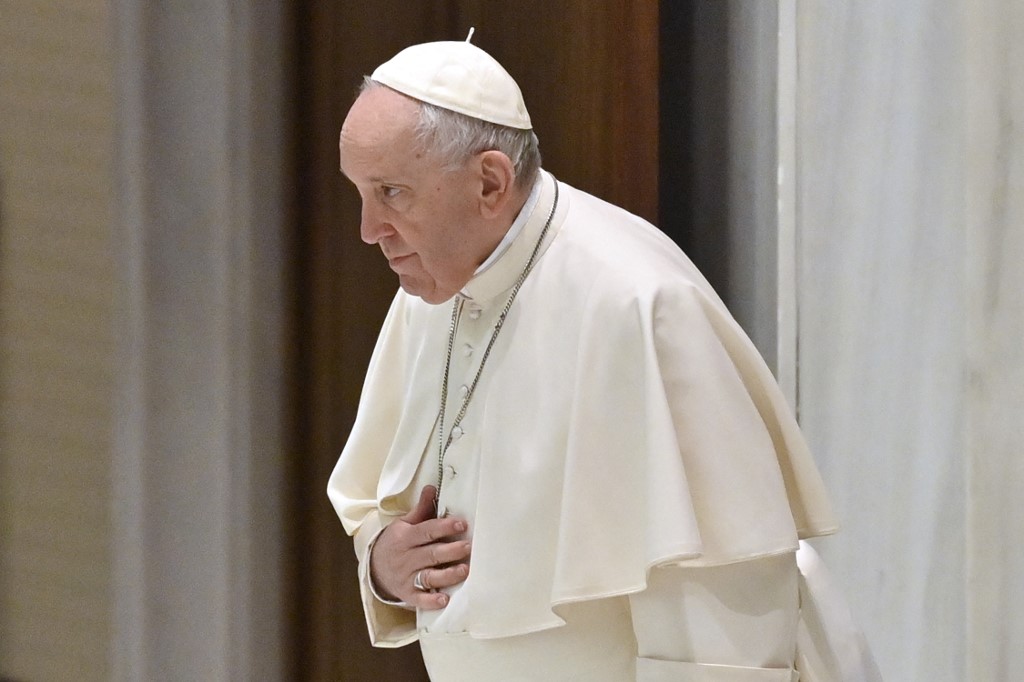
Pope Francis attends his weekly general audience at the Paul VI hall on February 23, 2022 in the Vatican. (Alberto PIZZOLI / AFP)
Pope Francis has denounced the “diabolical and perverse logic” of launching a war in Ukraine in his strongest public comments yet.
Francis also calls for humanitarian corridors to welcome Ukrainian refugees fleeing the “tragic” invasion of their homeland.
Francis has refrained from calling out Russia by name as he seeks to mend ties with the Russian Orthodox Church, and he again omitted any reference to Moscow. But he says: “Those who make war forget humanity,” adding that warfare “relies on the diabolical and perverse logic of weapons, which is the farthest thing from God’s will.”
Francis repeats his call for the faithful to mark Ash Wednesday this week as a day of fasting and prayer to show solidarity with the “suffering people of Ukraine.”
Earlier today, the Ecumenical Patriarch of Constantinople described Russia’s invasion as “beyond every sense of law and morality” and pleaded for an end to the war.
Patriarch Bartholomew is considered the spiritual leader of Eastern Orthodox Christians worldwide. In 2019 he granted the independence of the Orthodox Church of Ukraine, severing it from the Russian church it had been tied to since 1686.
In call with Putin, Bennett proposes that Israel mediate between Russia and Ukraine
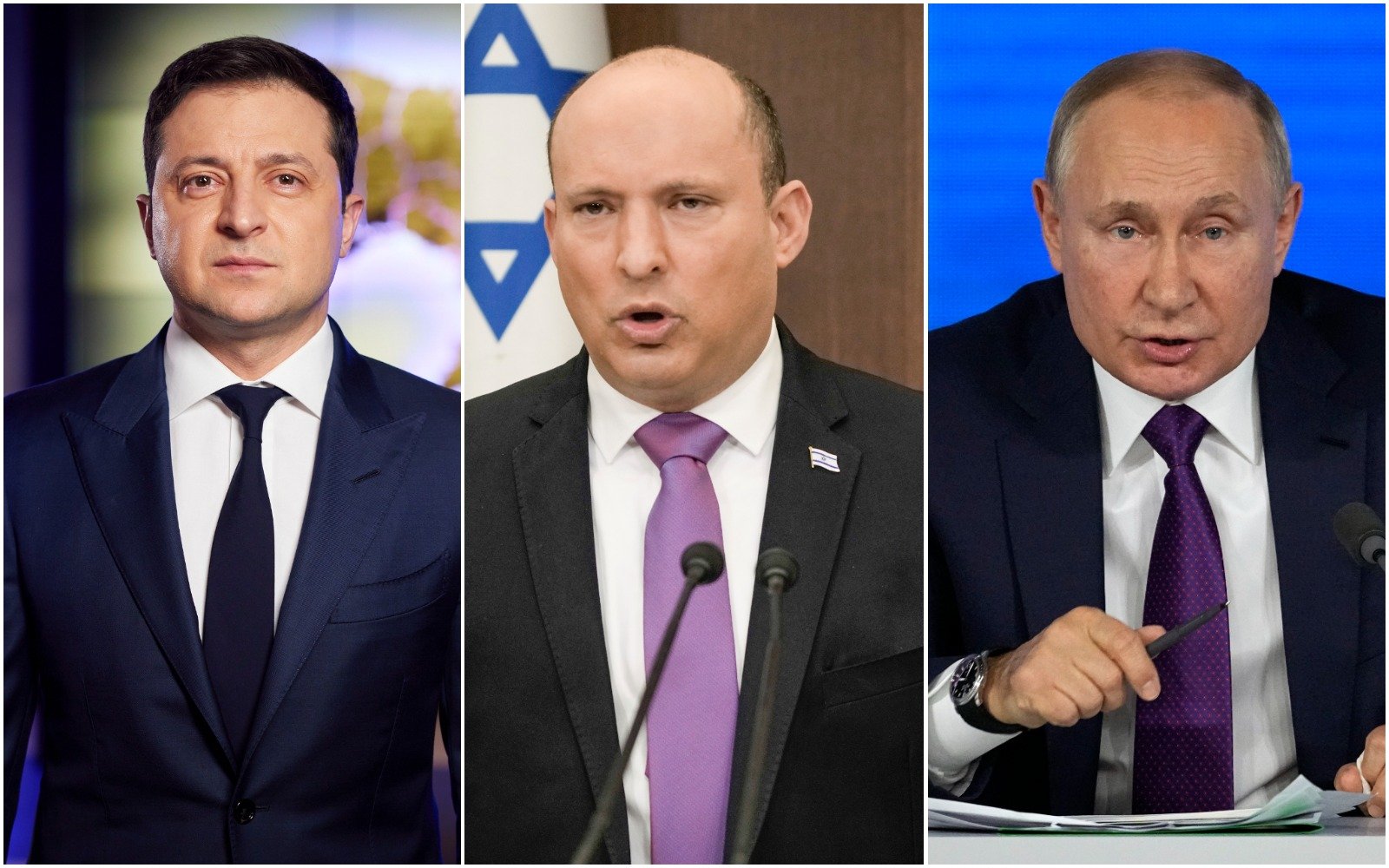
Ukrainian President Volodymyr Zelensky; Prime Minister Naftali Bennett; and Russian President Vladimir Putin. (Composite/AP)
Prime Minister Naftali Bennett proposes that Israel serve as a mediator between Russia and Ukraine during his phone call with President Vladimir Putin, according to the Kremlin’s readout, which doesn’t say how the latter responded to Jerusalem’s offer.
The Kremlin says Putin told Bennett that Russia has sent a delegation to Gomel in southern Belarus to conduct peace talks with Ukrainian officials, who have refused to come. Ukrainian officials have described the Russian move as a “manipulation,” noting that Ukraine hasn’t agreed to hold talks in Belarus.
Ukraine’s President Volodymyr Zelensky emphasized the country’s readiness for peace talks but has said that they can’t be held in Moscow’s ally Belarus, which has allowed Russia to use its territory as a staging ground for the invasion that began Thursday.
Putin told Bennett that he is ready to negotiate, according to an Israeli official.
Bennett says Israel is ready to assist in any way possible in bringing the sides together, in light of its unique relationship with both countries.
The two spoke around noon today, and agreed to remain in close contact, an Israeli official says.
The Israeli readout does not include any points on Iran, which is usually a top issue for Bennett in calls with foreign leaders.
It is the first time that Bennett and Putin have spoken since Russia’s invasion of Ukraine.
Bennett spoke with Zelensky on Friday, during which the Ukraine president proposed the same Israeli mediation idea.
Former Miss Ukraine heeds call to fight for country, taking up arms
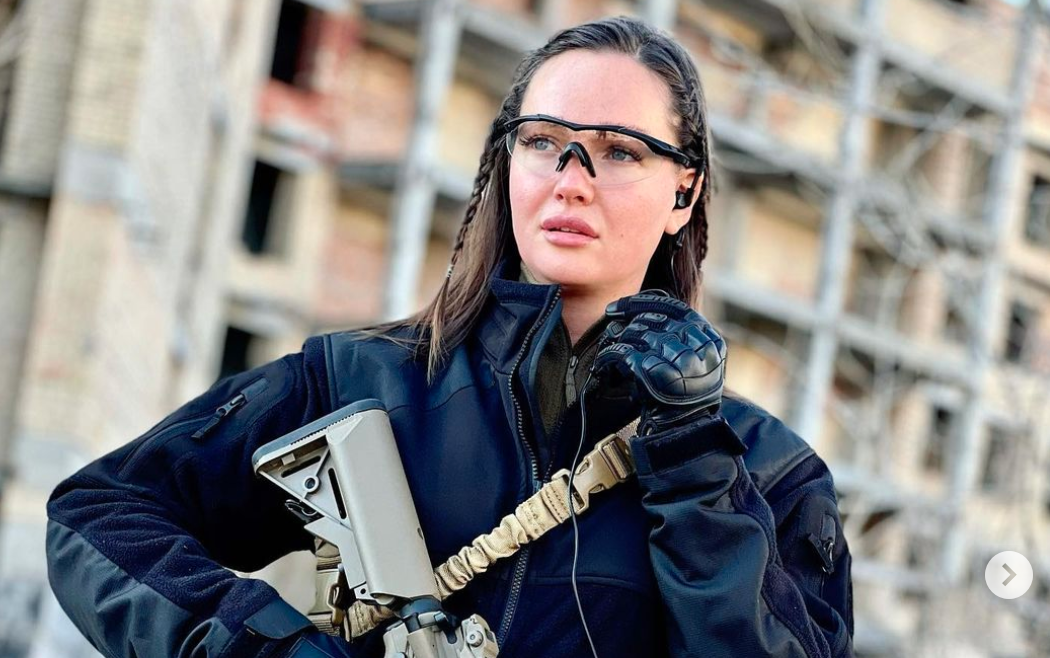
Miss Ukraine Anastasiia Lenna in military gear on February 22, 2022. (Anastasiia Lenna/Instagram)
Anastasiia Lenna, a beauty pageant competitor who won the title of Miss Ukraine in 2014, has heeded President Zelensky’s call on citizens to take up arms to fight against the Ukraine invasion.
She posts a pair of photos on Instagram holding a gun and wearing military gear.
Footage shows Ukranian troops collecting equipment from abandoned Russian military vehicles
Video footage shows Ukrainian troops collecting equipment from abandoned Russian military vehicles in Ukraine.
Video of Ukrainian soldiers taking equipment from the damaged and abandoned Russian Tigr-M vehicles in Kharkiv. https://t.co/vgEVEyndfw pic.twitter.com/6j3xYrsUzl
— Rob Lee (@RALee85) February 27, 2022
Migrants from other countries welcomed, but some Indians trying to flee Ukraine are stuck at border
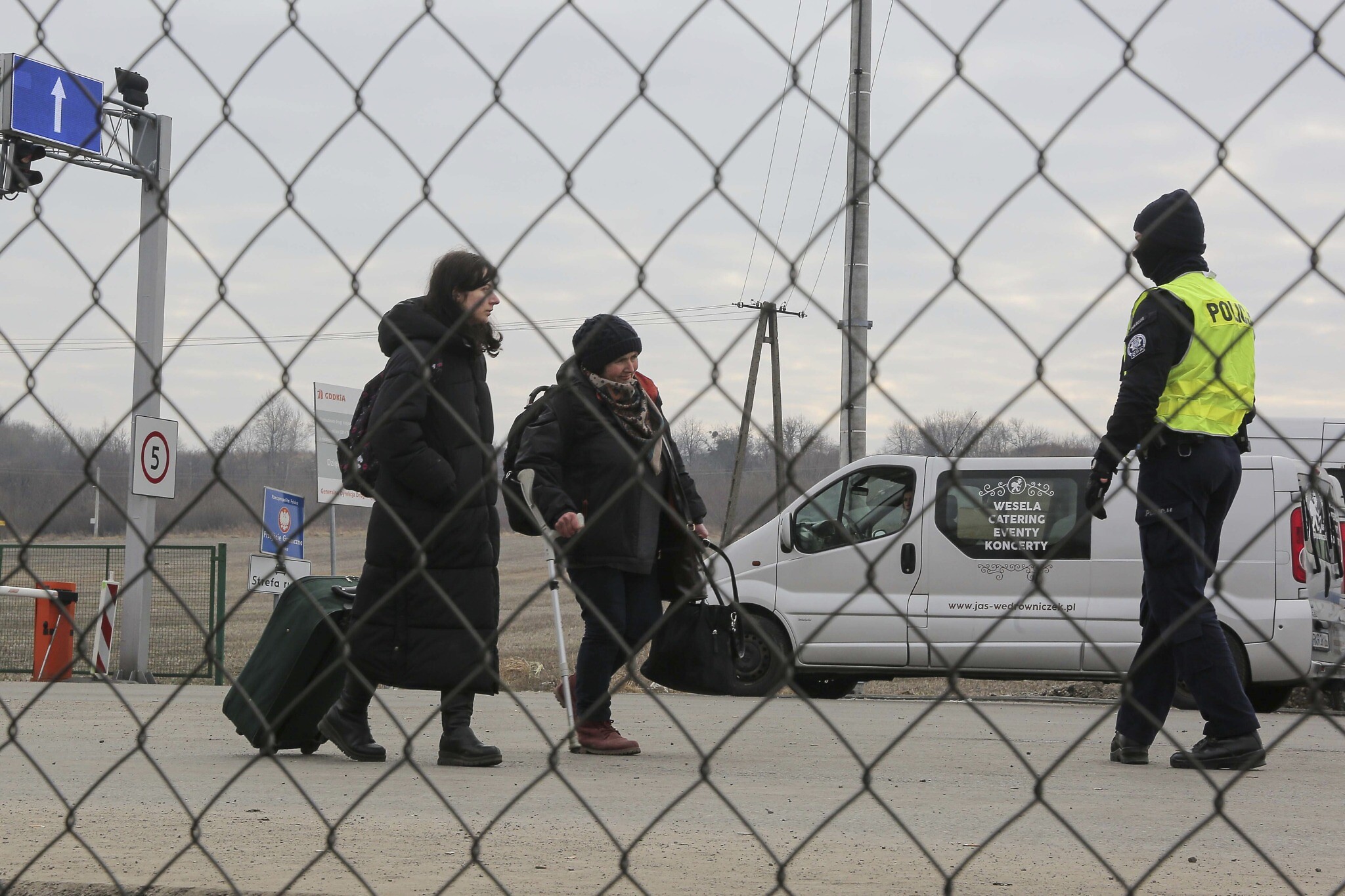
Police officers directs refugees fleeing conflict in Ukraine as they arrive, at the Medyka border crossing, in Poland, Sunday, Feb. 27, 2022. (AP Photo/Visar Kryeziu)
While countries like Poland and Hungary have welcomed fleeing Ukrainians, some foreign citizens seeking to leave Ukraine have reported difficulties at the Polish border.
An Indian volunteer in Poland says some Indian citizens seeking to flee Ukraine into Poland are stuck at the border leading into Medyka, Poland, and unable to cross.
The Indian Embassy in Kyiv says Sunday that Indian citizens are being evacuated from Ukraine to Romania and Hungary. But some have arrived at the border with Poland apparently unaware of this and are stuck.
Ruchir Kataria, the volunteer, tells The Associated Press that the Indians seeking to cross at Medyka were told in broken English: “Go to Romania.” But they had already made long journeys on foot to the border, and have no way to reach the border with Romania hundreds of kilometers away.
Some other Indian citizens who managed to cross into Poland have been denied a place to stay in shelters set up by Polish authorities and charities, and were told that the help was reserved for Ukrainians, according to Kataria’s wife, Magdalena Barcik, who is working with him to help those fleeing.
Footage shows long line at Moscow ATM as sanctions against Russia have residents scrambling
Video footage shows a long line at an ATM machine in Moscow, indicative of Russian fears that they won’t be able to withdraw cash as sanctions against their country kick in.
The ATM in the clip runs out of money after 40 minutes.
The Moscow bank run: a queue for a Tinkoff ATM in the Liga shopping center in Khimki. There are about 70 people in line. Eyewitnesses say the money in the ATM runs out within 40 minutes. @bazabazon pic.twitter.com/MTMkEiCRHJ
— Jason Corcoran (@jason_corcoran) February 27, 2022
Japan says joining measures to cut Russian banks from SWIFT
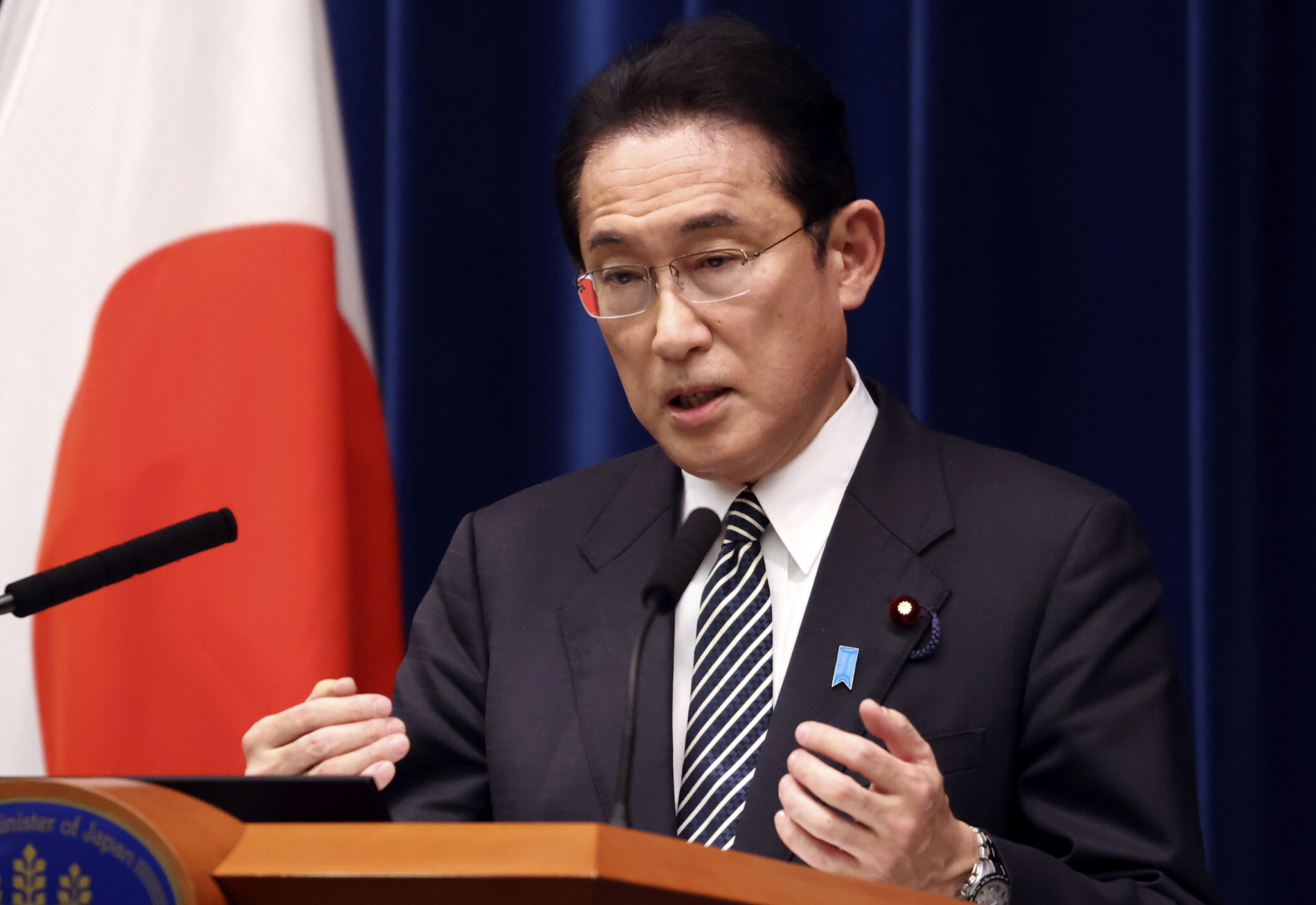
Japanese Prime Minister Fumio Kishida speaks during a press conference at the prime minister's official residence in Tokyo Dec. 21, 2021. ((Yoshikazu Tsuno/Pool Photo via AP)
Japan will join Western nations in removing selected Russian banks from the SWIFT messaging system, the country’s prime minister says, piling further pressure on Moscow over its invasion of Ukraine.
“In what was released this morning by the Western nations, steps are taken to isolate Russia from the international financial system and the world economy including exclusion of specific Russian banks from SWIFT,” Prime Minister Fumio Kishida says.
“Western nations have requested Japan participate. Japan will join this initiative,” he adds.
SWIFT’s messaging system allows banks to communicate rapidly and securely about transactions, and cutting Russia off would cripple its trade with most of the world.
Embattled Ukrainian President Volodymyr Zelensky on Saturday once again asked the international community to sever Russia from the SWIFT system.
World champion France calls for Russia to be thrown out of 2022 World Cup
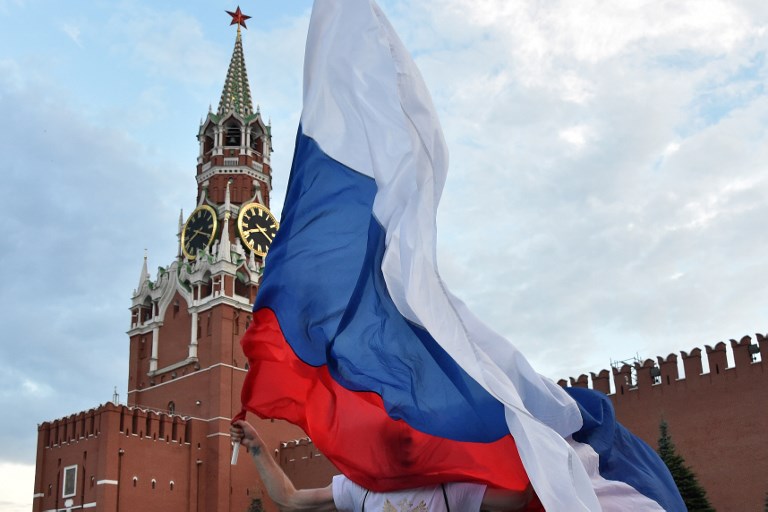
A young Russia fan holds the national flag at the Red Square in Moscow on July 1, 2018, after Russia won the Russia 2018 World Cup round of 16 football match against Spain. (AFP PHOTO / Vasily MAXIMOV)
Russia should be expelled from the 2022 World Cup after invading Ukraine, French Football Federation president Noel Le Graet told Le Parisien newspaper on Sunday.
France was crowned world champion in 2018 after beating Croatia in the final in Moscow.
“The world of sport, and especially football, cannot remain neutral. I certainly would not oppose the expulsion of Russia,” said Le Graet.
Poland, Sweden and the Czech Republic have all refused to play Russia in the World Cup playoffs.
Putin orders Russian nuclear deterrent forces on high alert
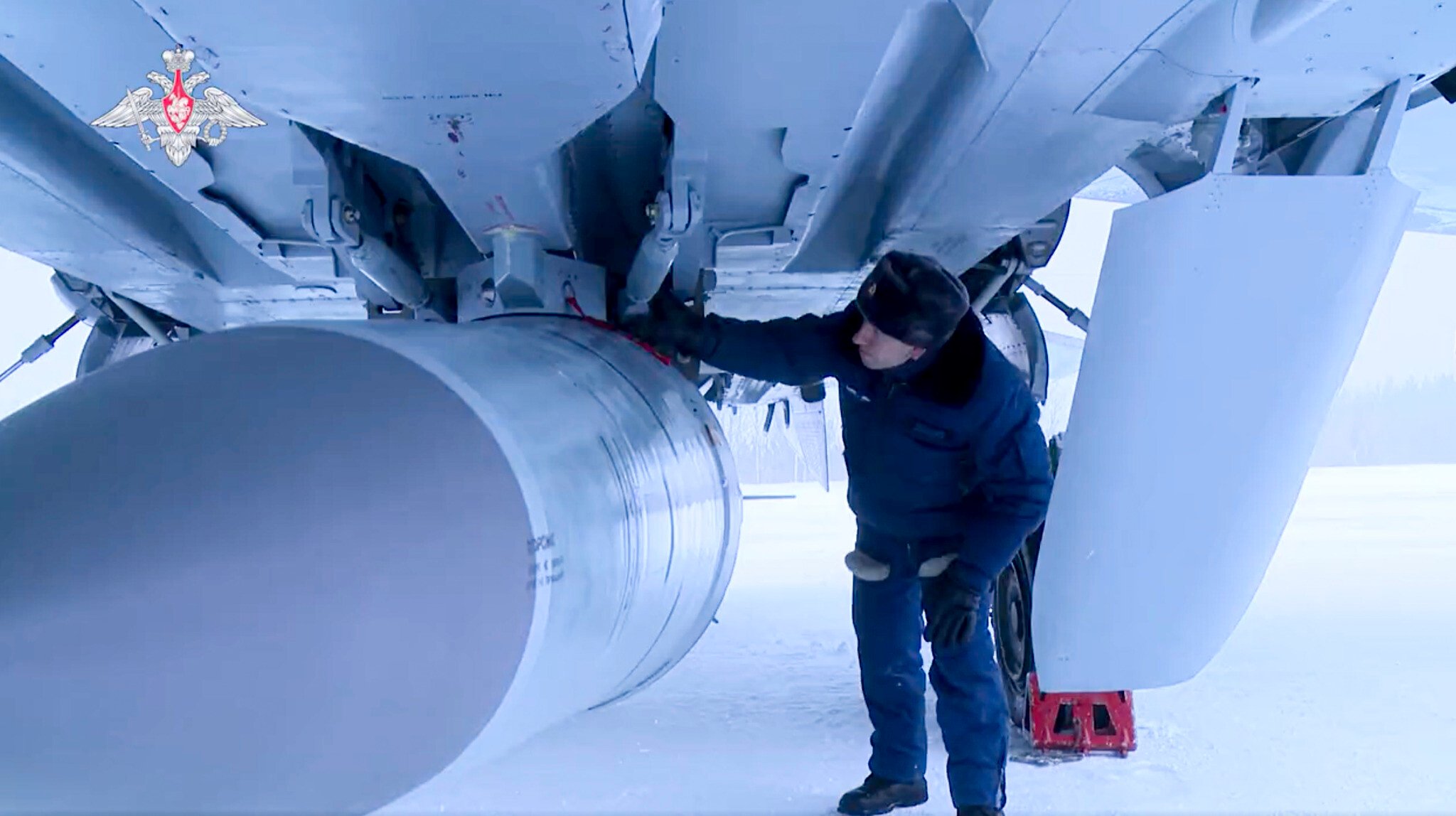
A Russian military technician checks a MiG-31K fighter of the Russian air force carrying a Kinzhal hypersonic cruise missile parked at an air field during a military drill, on February 19, 2022. (Russian Defense Ministry Press Service via AP)
MOSCOW — President Vladimir Putin has ordered Russian nuclear deterrent forces put on high alert amid tensions with the West over his invasion of Ukraine.
Putin asserts at a meeting with his top officials on Sunday that leading NATO powers had made “aggressive statements” along with the West imposing hard-hitting financial sanctions against Russia, including the president himself.
The alert means Putin has ordered Russia’s nuclear weapons prepared for increased readiness to launch. He told the Russian defense minister and the chief of the military’s General Staff to put the nuclear deterrent forces in a “special regime of combat duty.”
EU ministers to discuss helping Ukraine troops
European Union foreign ministers will hold emergency talks later today to discuss ways to help Ukraine’s armed forces fight back against the Russian invasion.
EU foreign policy chief Josep Borrell will chair the videoconference, starting at 1700 GMT. Borrell says he will urge the ministers to endorse “a package of emergency assistance for the Ukrainian armed forces, to support them in their heroic fight.”
The 27-nation bloc has set up a European Peace Facility, a fund with a ceiling of around 5.7 billion euros ($6.4 billion), to bolster its military training and support missions around the world. Some of the money can be used to train and equip partner countries, including with lethal weapons.
The meeting comes a day after Germany announced a major shift in policy to send weapons and other supplies directly to Ukraine.
US announces $54 million in humanitarian aid for Ukraine
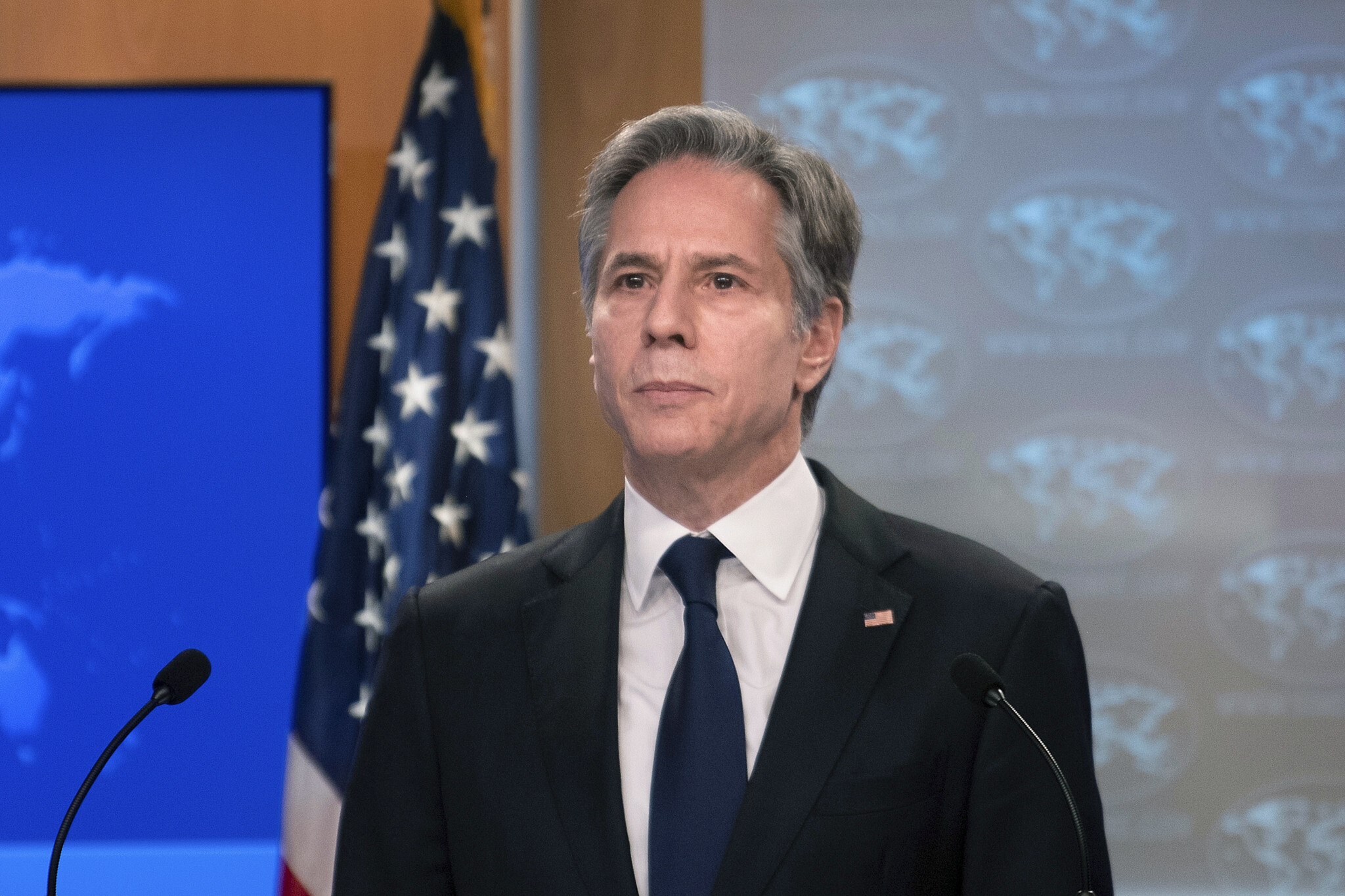
US Secretary of State Antony Blinken speaks about Russia and Ukraine during a briefing at the State Department in Washington, Jan. 26, 2022. (Brendan Smialowski/Pool via AP)
The United States says it is sending nearly $54 million in new humanitarian aid to Ukraine as it grapples with the Russian invasion.
This assistance includes “provision of food, safe drinking water, shelter, emergency health care, winterization, and protection,” Secretary of State Antony Blinken says in a statement.
Ukraine army secures Kharkiv, expelling Russian troops, governor says
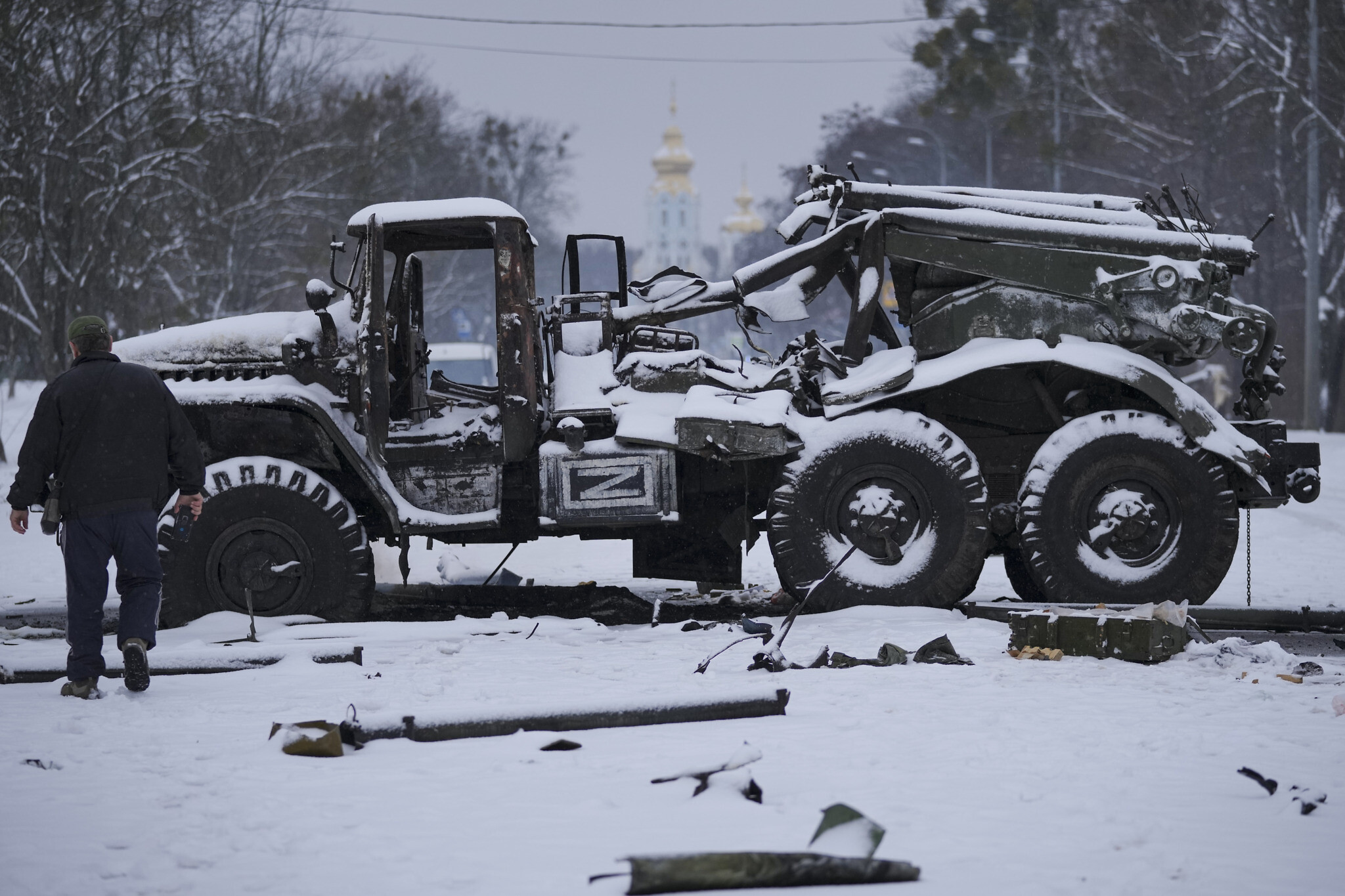
A man walks by a destroyed Russian military multiple rocket launcher vehicle on the outskirts of Kharkiv, Ukraine, Feb. 25, 2022. (Vadim Ghirda/AP)
Ukrainian forces secured full control of Kharkiv on Sunday following street fighting with Russian troops in the country’s second biggest city, the local governor says.
“Kharkiv is fully under our control,” the head of the regional administration, Oleg Sinegubov, says on the messaging app Telegram, adding that the army was expelling Russian forces during a “clean-up” operation.
Earlier today he had said that Russian forces’ light vehicles broke into the city, with fighting breaking out in the streets.
An AFP correspondent in the city heard machine gun fire and explosions.
Sinegubov says that Russian troops were “absolutely demoralized.”
He says Russian forces were abandoning their vehicles “in the middle of the road” and groups of five were surrendering to the Ukrainian army.
“As soon as they see at least one representative of the armed forces, they surrender,” Sinegubov says.
He said that “dozens” of Russian soldiers have already surrendered.
“The captured Russian fighters speak of complete exhaustion and demoralization, they have no connection with the central command, they do not understand and do not know what they do next,” the Kharkiv governor says.
“Since the beginning of the attack on Ukraine, they have not received food and water,” he adds.
“Leaving the positions, Russian fighters are trying to hide among the civilian population, asking people for clothes and food.”
‘Putin, go to therapy and Ukraine in peace’: 100K in Berlin protest Ukraine invasion
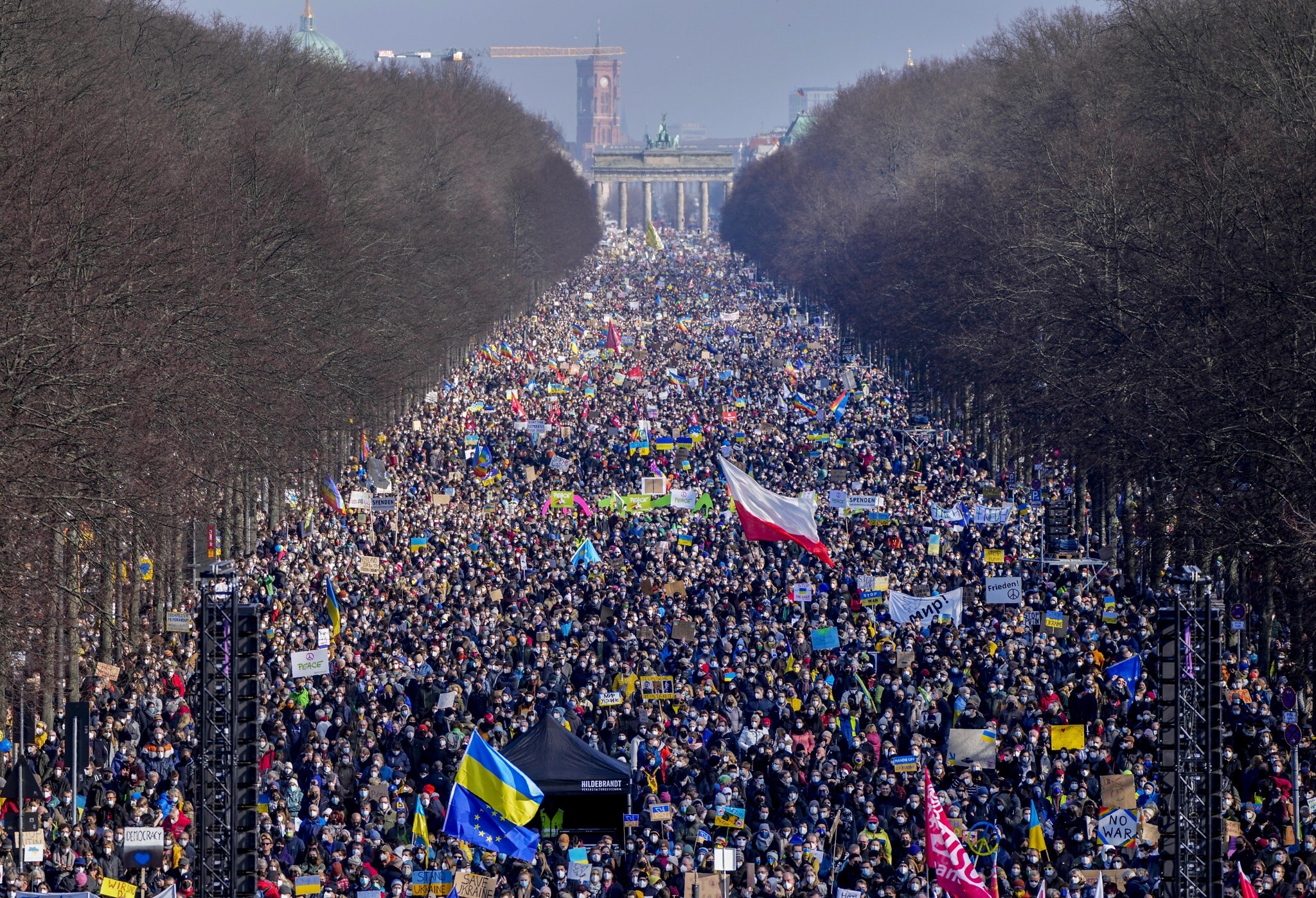
People walk down the bulevard 'Strasse des 17. Juni' ahead of a rally against Russia's invasion of Ukraine in Berlin, Germany, Sunday, Feb. 27, 2022. (AP Photo/Markus Schreiber)
Approximately 100,000 people have turned out in Berlin to protest Russia’s invasion of Ukraine and show solidarity with the Ukrainian people.
Police say large crowds have filled the area originally planned for the demonstration, around the Brandenburg Gate in central Berlin, and that they were allocating additional space to accommodate the protesters.
The protest is peaceful, including many families with children. People wave yellow and blue Ukrainian flags to show their support. Some carried placards with slogans such as “Hands off Ukraine” and “Putin, go to therapy and leave Ukraine and the world in peace.”
Beate Schmid, who works as a scientist in Berlin, said she works closely with academics in Ukraine. “Their sons and brothers and husbands are now being drafted to fight against the Russians,” she said. “It’s so sad. Simply unbelievable.”
Report: Zelensky agrees to have Ukrainian, Russian negotiators meet at Belarus border
During a phone call with Belarusian President Alexander Lukashenko, President Volodymyr Zelensky agreed that a Ukrainian delegation would meet with a Russian delegation, without preconditions, near the Pripyat River along the Ukrainian-Belarusian border, the Kyiv Independent reports.
Ukraine agrees to talks with Russian delegation at Belarus border without preconditions
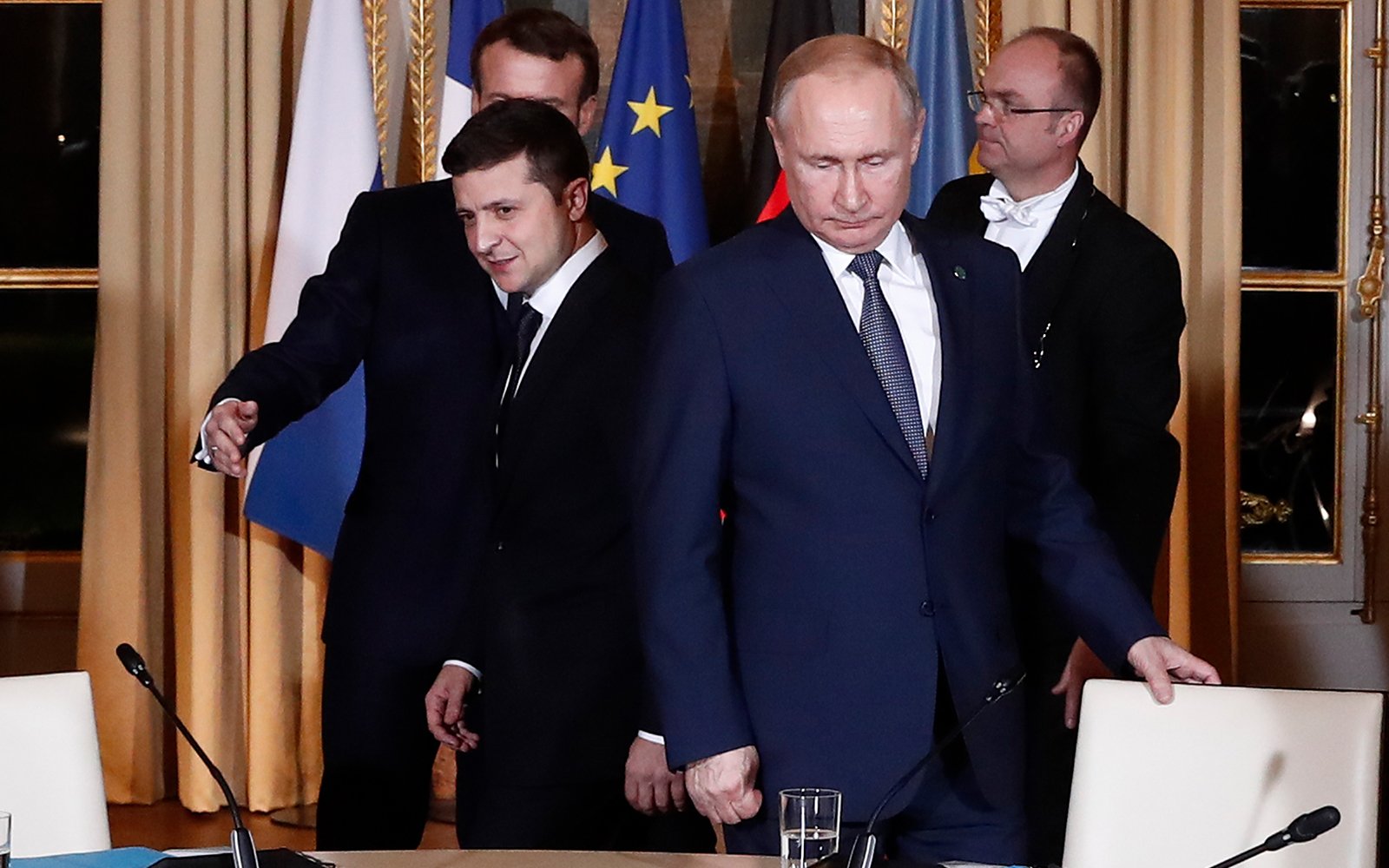
Russian President Vladimir Putin (right) and Ukrainian President Volodymyr Zelensky arrive for a working session at the Elysee Palace, on December 9, 2019, in Paris. (Ian Langsdon/Pool via AP)
Ukraine on Sunday said it would hold talks with Russia at its border with Belarus — near the Chernobyl exclusion zone — after a phone call between President Volodymyr Zelensky and Belarusian leader Alexander Lukashenko.
“The politicians agreed that the Ukrainian delegation would meet the Russian one without preconditions at the Ukraine-Belarus border, near the Pripyat River,” Zelensky’s office says in a statement.
Russian President Vladimir Putin has said that a Russian delegation was currently in the Belarusian city of Gomel.
Police snatch up hundreds of anti-war protesters in Russia
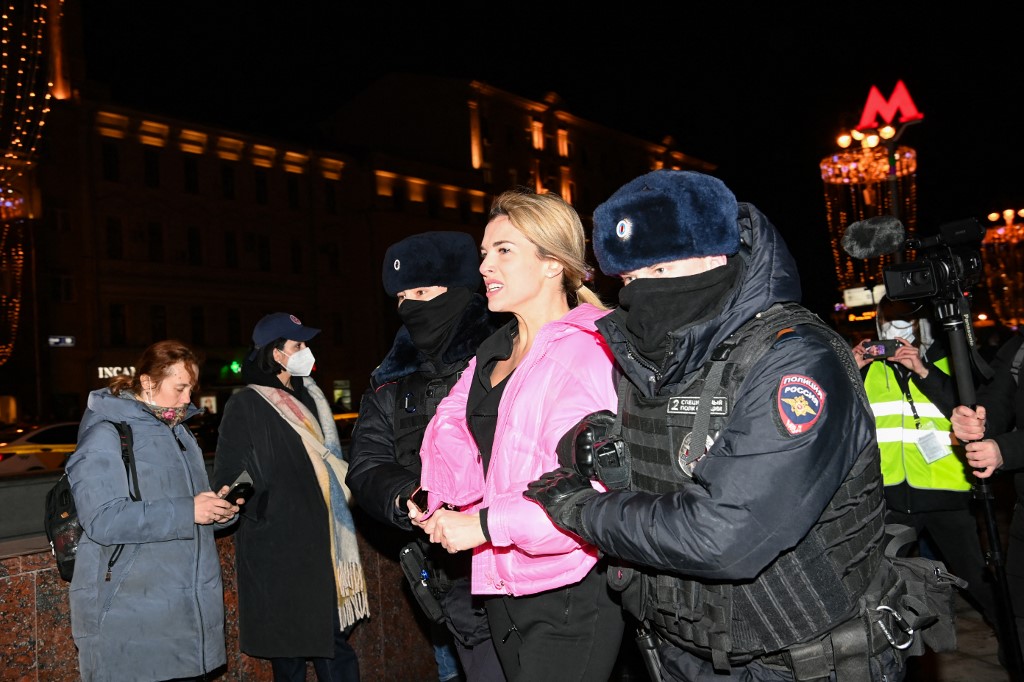
Police officers detain a woman during a protest against Russia's invasion of Ukraine in Moscow on February 24, 2022. (Kirill KUDRYAVTSEV / AFP)
Russians in cities spanning from Moscow to Siberia take to the streets again today to protest Russia’s invasion of Ukraine. Demonstrators march in city centers, chanting “No to war.”
Protests against the invasion started on Thursday and have continued for four days in a row, despite police swiftly moving to detain hundreds of people each day.
In St. Petersburg, where dozens gather in the city center, police in riot gear grab protesters and dragged some to police vans, even though the demonstration was peaceful.
According to the OVD-Info rights group that tracks political arrests, by this afternoon police have detained at least 356 Russians in 32 cities over anti-war demonstrations.
Israel briefed US, Ukraine before and after Bennett’s call with Putin — senior official
File: Prime Minister Naftali Bennett (left) meets with Russian President Vladimir Putin in Sochi, Russia, on October 22, 2021. (Kobi Gideon/GPO)
A senior Israeli official says Jerusalem briefed the Biden administration and Ukraine both before and after Prime Minister Naftali Bennett’s call with Russian President Vladimir Putin, during which the premier proposed that Israel mediate between Russia and Ukraine.
Putin was “open” to the proposal, Reuters reports.
Search for Jewish Agency chair drags on as no candidate garners enough support
The Jewish Agency for Israel’s nominating committee announces the extension of the search process for a new chair of body after no candidate managed to garner enough votes to be named chair.
The committee has been working to select a new chair since the election of the previous chair, Isaac Herzog, as president of Israel in July.
In order to be awarded the nomination for the position of chair of the executive, a candidate must receive nine out of ten votes from the committee members.
“At the conclusion of today’s meeting of the nominating committee, all candidates were notified that none had received the votes needed for nomination and that the selection process is being extended until the most suitable candidate is found,” a Jewish agency spokesperson says.
Kahanist MK filmed trying to kick Palestinian activists in Sheikh Jarrah
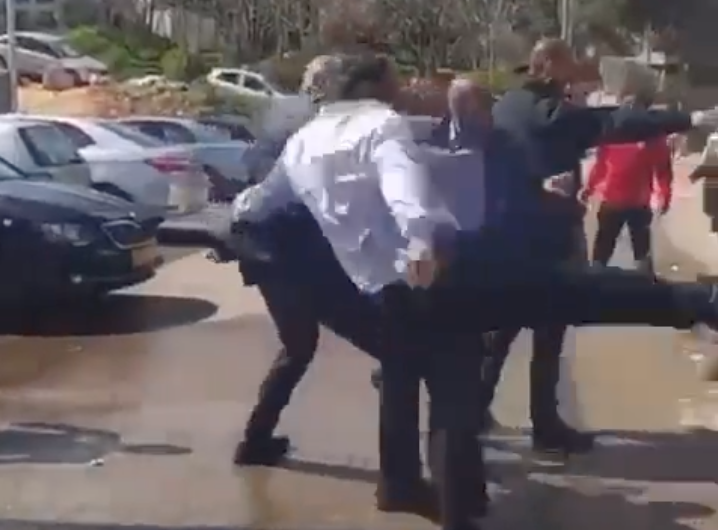
Religious Zionism MK Itamar Ben Gvir tries to kick Palestinian activists in Sheikh Jarrah on February 27, 2022. (Screen capture/Twitter)
Religious Zionism MK Itamar Ben Gvir is filmed trying to kick Palestinian activists in the Sheikh Jarrah neighborhood of East Jerusalem.
Earlier this month, the far-right lawmaker set up a makeshift parliamentary office in the neighborhood where Palestinians face eviction by Israeli authorities. Both Israeli and Palestinian officials have accused Ben Gvir of trying to inflame tensions in the area.
Joint List MK Ahmad Tibi shares the footage and blasts former prime minister Benjamin Netanyahu for orchestrating a merger of far-right parties that ensured Ben Gvir’s entry into the Knesset.
חבר כנסת משתמש בבעיטות (אחרי שבבוקר הוא צעק על אם שכולה לילד אוטיסט). את הסרטון הזה אפשר לראות עם רמקולים ובלעדיהם והתוצאה היא אחרת לחלוטין. pic.twitter.com/VGqVwymC7c
— نير حسون Nir Hasson ניר חסון (@nirhasson) February 27, 2022
White House: Putin ‘manufacturing threats’ with nuclear force alert
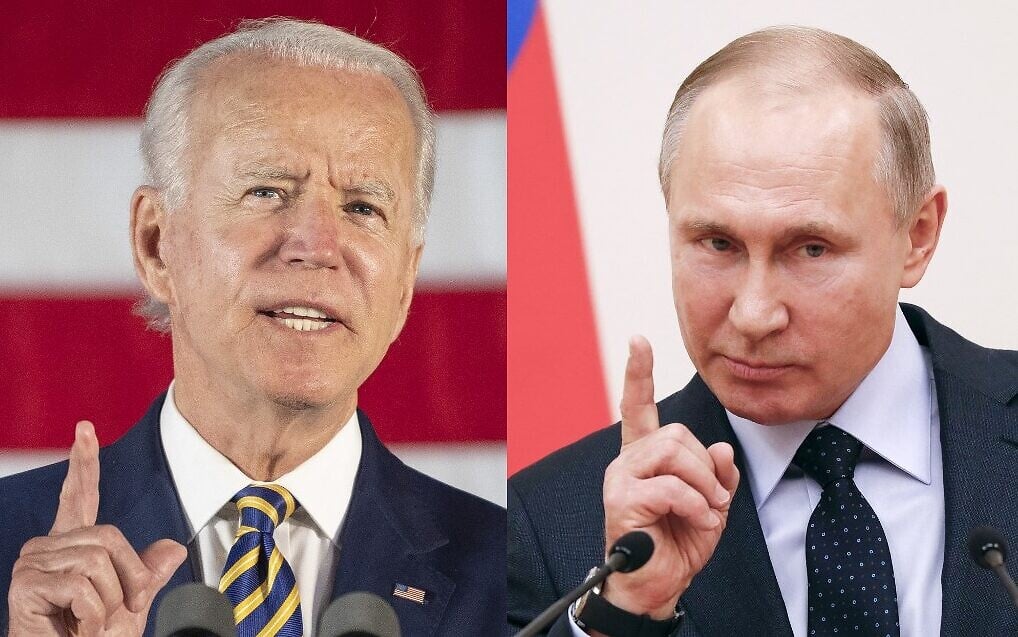
This combination of file photos shows Joe Biden (left) and Russian President Vladimir Putin. (Jim Watson and Grigory Dukor/Various Sources/AFP)
The United States charges that President Vladimir Putin is “manufacturing threats” as he placed Russian nuclear deterrence forces on high alert amid the Ukraine crisis.
“This is a pattern that we’ve seen from President Putin through the course of this conflict, which is manufacturing threats that don’t exist in order to justify further aggression,” White House press secretary Jen Psaki says on ABC when asked about the announcement from Moscow.
Yad Vashem ‘deplores’ Russian invasion, condemns use of Nazi rhetoric by both sides
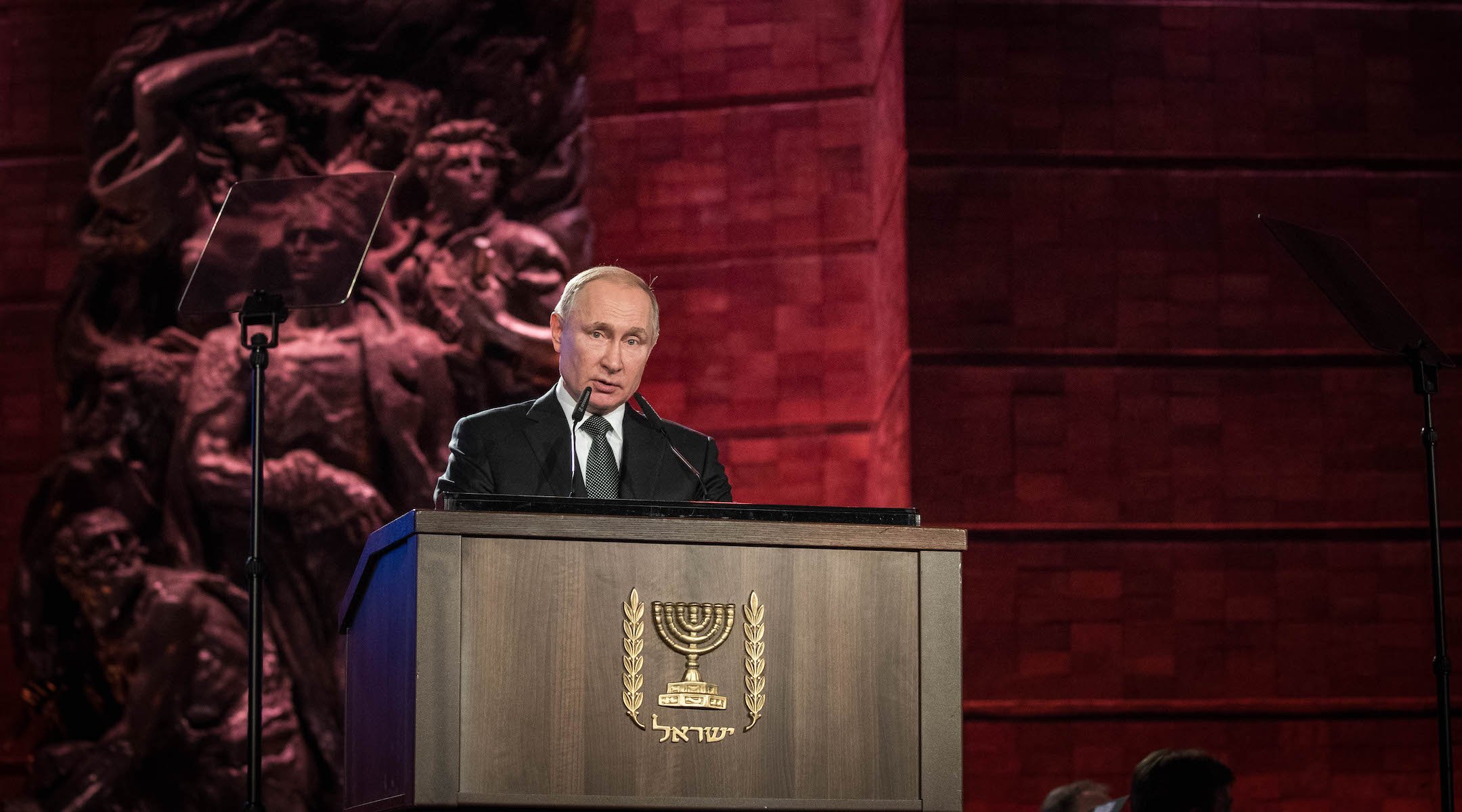
Russian President Vladimir Putin speaks during the Fifth World Holocaust Forum at the Yad Vashem Holocaust memorial museum in Jerusalem, Israel, January 23, 2020. (Yonatan Sindel/Flash90)
Israel’s Yad Vashem Holocaust Remembrance Center says it “deplores” Russia’s invasion of its neighbor Ukraine and condemns the Nazi-related rhetoric being used on both sides of the conflict.
“Yad Vashem deplores the Russian invasion of Ukraine, which will inevitably lead to dire consequences. We fear in particular for the wellbeing of innocent civilians and deplore any deliberate endangerment of their safety,” the museum says in a statement.
In its statement, Yad Vashem says the “propagandist discourse” about the fighting is “saturated with irresponsible statements and completely inaccurate comparisons with Nazi ideology and actions before and during the Holocaust.”
This refers to both Russian President Vladimir Putin’s claims that his country was launching the invasion in order to “denazify” Ukraine, a country that has a democratically elected Jewish president, and explicit comparisons made by Kyiv of Putin to Nazi leader Adolf Hitler, a Yad Vashem spokesperson confirms to The Times of Israel.
“Yad Vashem condemns this trivialization and distortion of the historical facts of the Holocaust,” the museum says.
Spain, Canada and France join growing list of countries closing skies to Russian airlines
Spain, Canada and France separately announce that they are closing their airspace to Russian carriers, following similar moves by several European nations over Moscow’s invasion of Ukraine.
Egypt calls for emergency Arab League meeting on Ukraine
Egypt has called for an emergency Arab League meeting at the delegate level to discuss Russia’s invasion of Ukraine, Reuters reports.
Arab leaders have largely avoided taking public stances on the issue, with many of them having working ties with Russia. Syria is the only one to openly support Putin, while Lebanon has been among those condemning the invasion. The UAE abstained on a Security Council resolution condemning Russia.
Population authority announces halt on deportations of Ukrainians amid Russia conflict
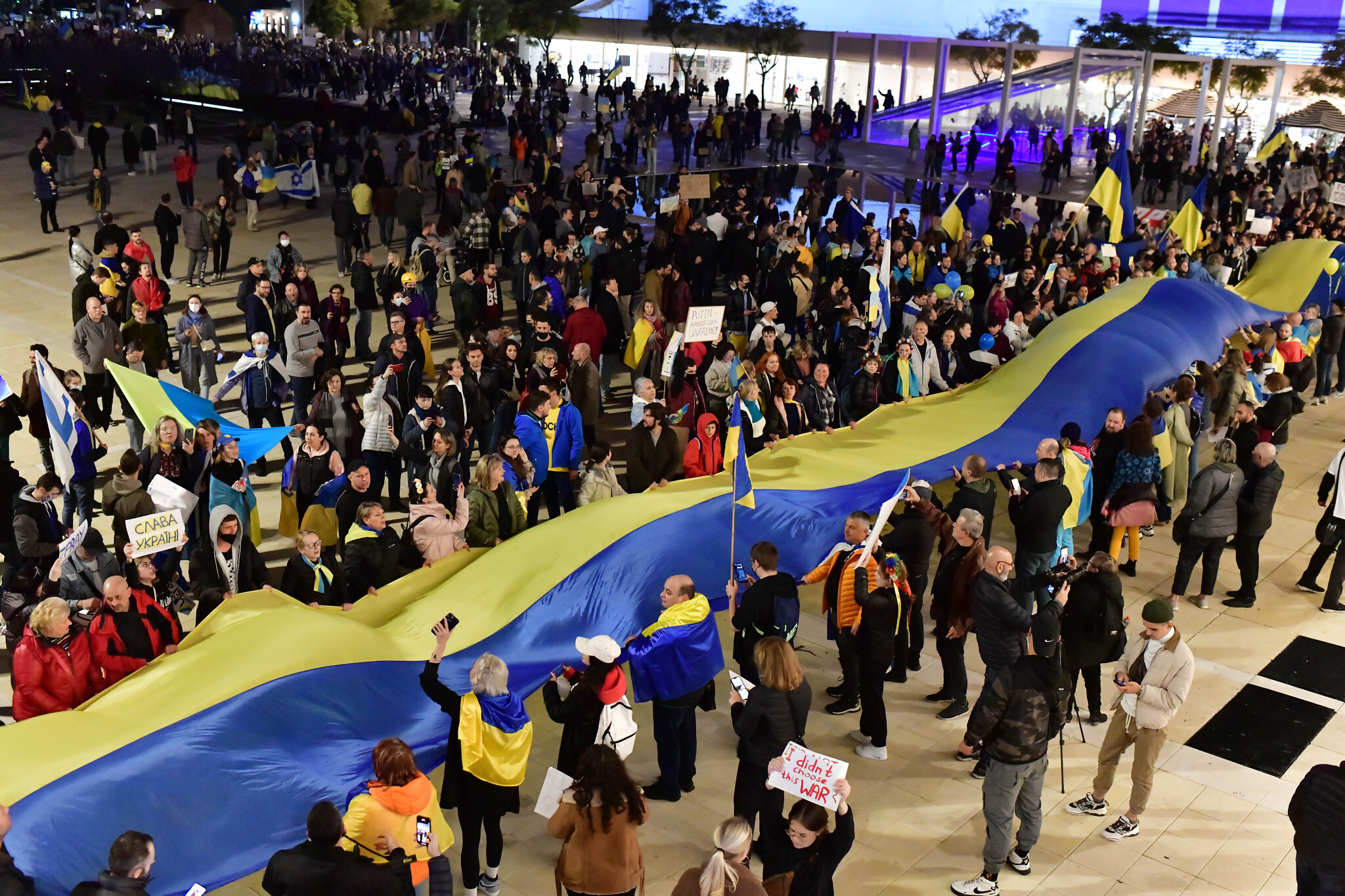
Demonstrators carry placards and flags during a protest march against the Russian invasion of Ukraine, in Tel Aviv, on February 26, 2022. (Tomer Neuberg/Flash90)
The Population Immigration and Border Authority announces that in light of Russia’s invasion of Ukraine it will halt until further notice all deportation measures against Ukrainians illegally residing in Israel.
According to PIBA data published last week, 24% of the over 7,000 foreigners residing in Israel without permits are Ukrainians. Roughly 6,700 Ukrainians have applied for asylum in Israel and have had their requests rejected. Forty-six percent of all those expelled from Israel between the years 2018 and 2021 were Ukrainians.
Putin nuclear alert ‘dangerous’ and ‘irresponsible’ — NATO chief
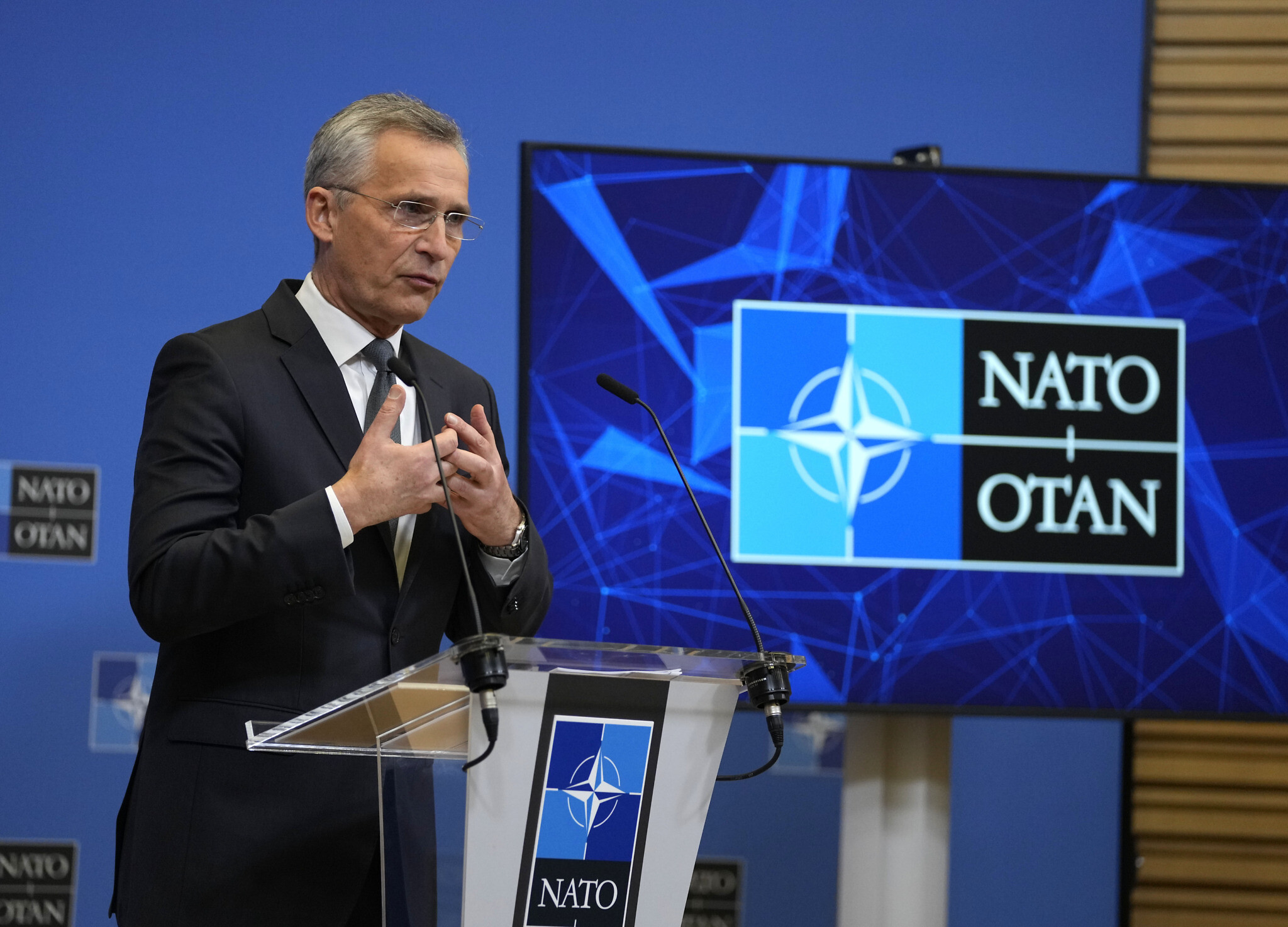
NATO Secretary General Jens Stoltenberg speaks during a media conference at NATO headquarters in Brussels, February 24, 2022. (AP Photo/Virginia Mayo)
President Vladimir Putin’s decision to place his nuclear forces on alert amounts to “irresponsible” behavior, NATO charges.
“This is dangerous rhetoric. This is a behavior which is irresponsible,” the alliance’s secretary-general Jens Stoltenberg tells CNN.
Russia praises India’s ‘balanced’ stance on Ukraine after Security Council abstention
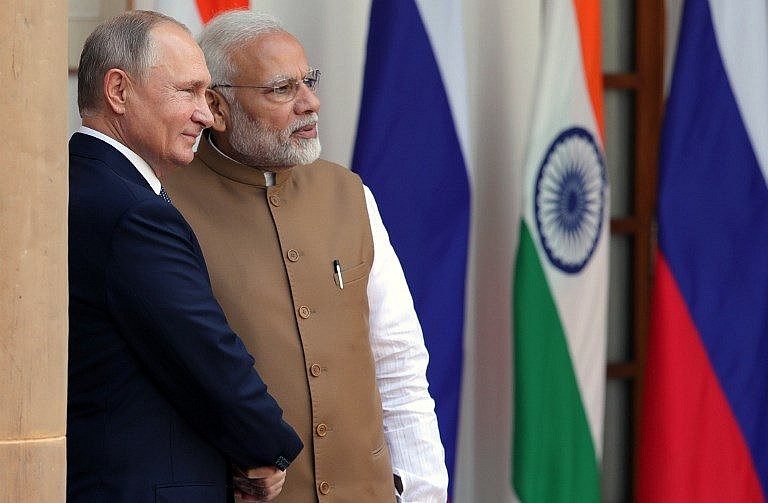
Russian President Vladimir Putin, left, and Indian Prime Minister Narendra Modi pose for photographers ahead of their meeting at Hyderabad House in New Delhi on October 5, 2018. (AFP Photo/Sputnik/Mikhail Klimentyev)
Russia has praised India’s “independent and balanced” position after Delhi abstained from a UN Security Council vote that deplored Moscow’s “aggression” against Ukraine.
India, along with China and the UAE, did not vote on the resolution Friday, a move in line with the fine balance Delhi has sought to strike between partnerships with Moscow and Western allies.
“Highly appreciate India’s independent and balanced position at the voting in the UNSC,” the Russian embassy in India tweets on Saturday, hailing the countries’ “special and privileged strategic partnership.”
Despite being a member of the “Quad” grouping with Australia, Japan and the United States, India has neither explicitly condemned Moscow’s actions, nor called them an invasion so far.
New Delhi and Moscow were close throughout the Cold War, a relationship that endures to this day, and Russia continues to be India’s biggest arms supplier.
On Saturday, Washington urged Delhi to use its influence with Russia to “protect the rules-based international order.”
“India and Russia have a relationship, including in the defense and security sector, that we don’t have,” US State Department spokesman Ned Price told reporters.
“We have asked every country that has a relationship and certainly those countries that have leverage to use that leverage in a constructive way.”
Since the assault, Indian Prime Minister Narendra Modi has spoken with both Ukrainian President Volodymyr Zelensky and Russia’s Vladimir Putin, expressing concern over the violence.
Ukraine will not ‘capitulate’ at Russia talks, country’s FM vows

Ukrainian Foreign Minister Dmytro Kuleba speaks in Copenhagen, Denmark, on January 27, 2022. (Mads Claus Rasmussen/Ritzau Scanpix/AFP)
Ukraine’s foreign minister says that Kyiv will not buckle at talks with Russia over its invasion, accusing President Vladimir Putin of seeking to increase “pressure” by ordering his nuclear forces on high alert.
“We will not surrender, we will not capitulate, we will not give up a single inch of our territory,” Dmytro Kuleba says at a press conference broadcast online.
Ukraine says it destroyed Russian military convoy outside of Kyiv
Ukraine says it has managed to destroy a column of Russian armored vehicles in the city of Bucha, just outside of Kyiv.
“On the approaches to Kyiv, in the town of Bucha, more than 100 units of enemy equipment were destroyed,” a Ukrainian government account posts on Telegram, along with videos of burning or charred tanks and other armored vehicles.
Extraordinary video (and soundtrack) reportedly from Bucha outside Kyiv, near the Hostomel airbase pic.twitter.com/BanGJms3uB
— Shaun Walker (@shaunwalker7) February 27, 2022
Regional officials earlier reported buildings and houses on fire in the town, which lies between the key airfield of Gostomel and Kyiv.
Elsewhere, a local journalist reports what he says is a video of two Russian helicopters being shot down.
The Lithuanian defense minister posts what he says is a tally of Russian losses on Twitter, including over 50 aircraft, nearly 150 tanks, and some 4,300 Russian casualties.
Total losses of the Russian occupation forces over the past three days:
Aircraft: 27
Helicopters: 26
Tanks: 146
Armoured fighting vehicles: 706
"BUK": 1
Grad anti-aircraft systems: 4
Unmanned aerial vehicles: 2
Ships/boats: 2About 4,300 occupying soldiers killed and wounded.
— Arvydas Anušauskas (@a_anusauskas) February 27, 2022
Number of refugees from Ukraine invasion climbs to 400,000
Police officers directs refugees fleeing conflict in Ukraine as they arrive, at the Medyka border crossing, in Poland, Sunday, Feb. 27, 2022. (AP Photo/Visar Kryeziu)
The number of refugees who have fled Ukraine following Russia’s invasion has crossed 400,000, according to an AFP tally.
The United Nations’ refugee agency, UNHCR, says it is planning to deal with up to four million if the situation worsens.
Some 196,000 Ukrainians have already fled over the Polish border, its frontier guards say. On Friday alone, 50,000 Ukrainians arrived.
While 90 percent of the refugees are being put up by friends or relations, nine reception centers are also being set up close to the frontier.
Poland was already home to 1.5 million Ukrainians before Russia invaded.
Across the country people are mobilizing to offer accommodation, money, clothes and work to the new arrivals.
Of the 47,000 Ukrainians who have crossed into Romania since Thursday, 22,000 have already gone on to other countries, the government says.
Most are passing through Siret in the north of the country, where a camp has been set up with a second near Marmatiei. Romanians have also taken to social media to donate food and clothing to the refugees.
Some 71,000 Ukrainian refugees have crossed into Hungary since the invasion, says the country’s interior ministry.
Several border towns such as Zahony have set up public buildings as reception centers, with ordinary people donating food and clothes.
At least 70,000 Ukrainians have also crossed into Moldova, with the UNHRC’s central Europe chief Roland Schilling hailing the small nation for its response to a “heartbreaking situation.”
He said local people as well as the Moldovan government “have been really impressive” in the way they are dealing with flow.
More than 12,400 Ukrainians have crossed into Slovakia in the last 24 hours, the Slovak ministry of interior told AFP, with 6,514 between midnight and 6 am alone.
Although there are no official numbers for previous days yet, 10,000 are reported to have crossed Friday, many met by the country’s large Ukrainian diaspora.
Some 160,000 people are thought to be internally displaced within Ukraine.
“Displacement in Ukraine is growing but the military situation makes it difficult to estimate numbers and provide aid,” United Nations refugee chief Filippo Grandi tweeted Saturday.
Iran’s chief nuclear negotiator returns Sunday to Vienna as talks set to resume
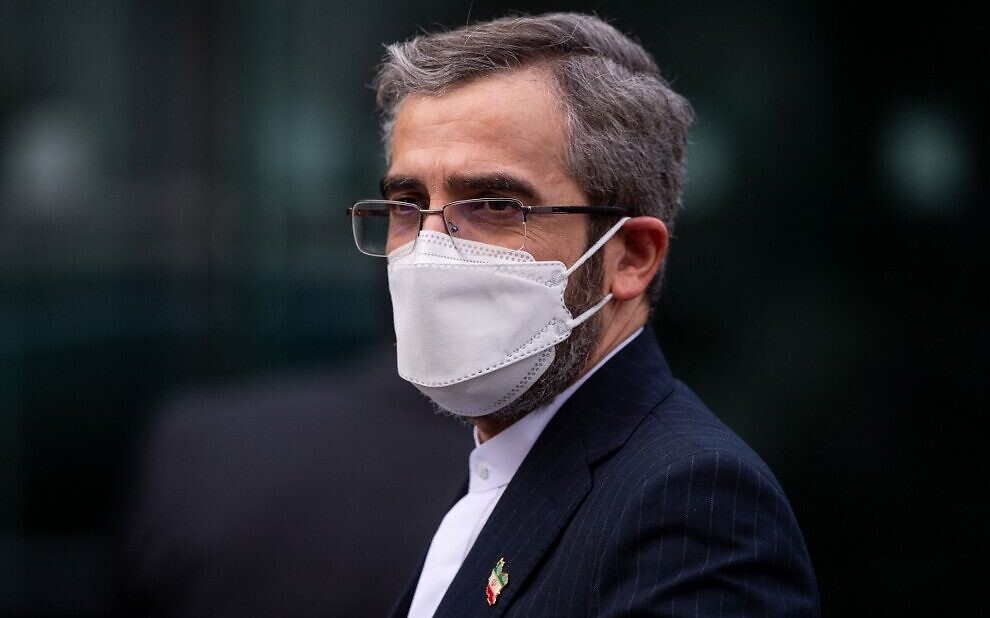
Iran's chief nuclear negotiator Ali Bagheri Kani arrives at the Coburg Palais in Vienna for nuclear talks, on November 29, 2021. (Vladimir Simicek/AFP)
Iran’s chief negotiator will fly back to Vienna on Sunday evening following consultations in Tehran, state media said, as talks to revive the 2015 nuclear deal reached a critical stage.
Ali Bagheri “will return to Vienna this evening with clear instructions to pursue the negotiations with the aim of solving problems in order to reach an agreement,” IRNA news agency reported.
The talks to restore the agreement, known formally as the Joint Comprehensive Plan of Action, involve Iran as well as Britain, China, France, Germany and Russia directly, and the United States indirectly.
Bagheri left Vienna on Wednesday night, but negotiations have continued on the expert level.
Remaining parties to the deal, excluding Iran, met Sunday with the US delegation in Vienna, Russia’s envoy Mikhail Ulyanov said.
“We are waiting for the return of the Iranian chief negotiator… to finalize the agreement on restoration of JCPOA,” Ulyanov tweets.
In recent days, all sides have signaled progress in the talks, saying they have reached a critical stage.
“We usually have to be realistic in our conversations, rather than optimistic or pessimistic,” Iranian Foreign Ministry spokesman Saeed Khatibzadeh told state TV on Sunday.
“Vienna negotiations have reached the point of serious political decisions by the United States and Western parties.”
Ukrainian man seen removing mine from road, without removing lit cigarette from mouth
A Ukrainian man removes a mine from a road in Berdyansk, on February 27, 2022. (Screenshot/YouTube)
Viral footage shows a Ukrainian man removing a mine from a road in Berdyansk, a port city in southeast Ukraine.
The footage has not been authenticated.
A Ukrainian in Berdyansk spotted a mine on the road and didn't wait around for a bomb disposal unit – at great risk to life and limb, he removed the mine, clearing the way for the Ukrainian military. pic.twitter.com/iC9ZTrixlC
— The New Voice of Ukraine (@NewVoiceUkraine) February 27, 2022
Romney blasts GOP’s Taylor-Greene, Gosar as ‘morons’ for speaking at pro-Putin, white nationalist event
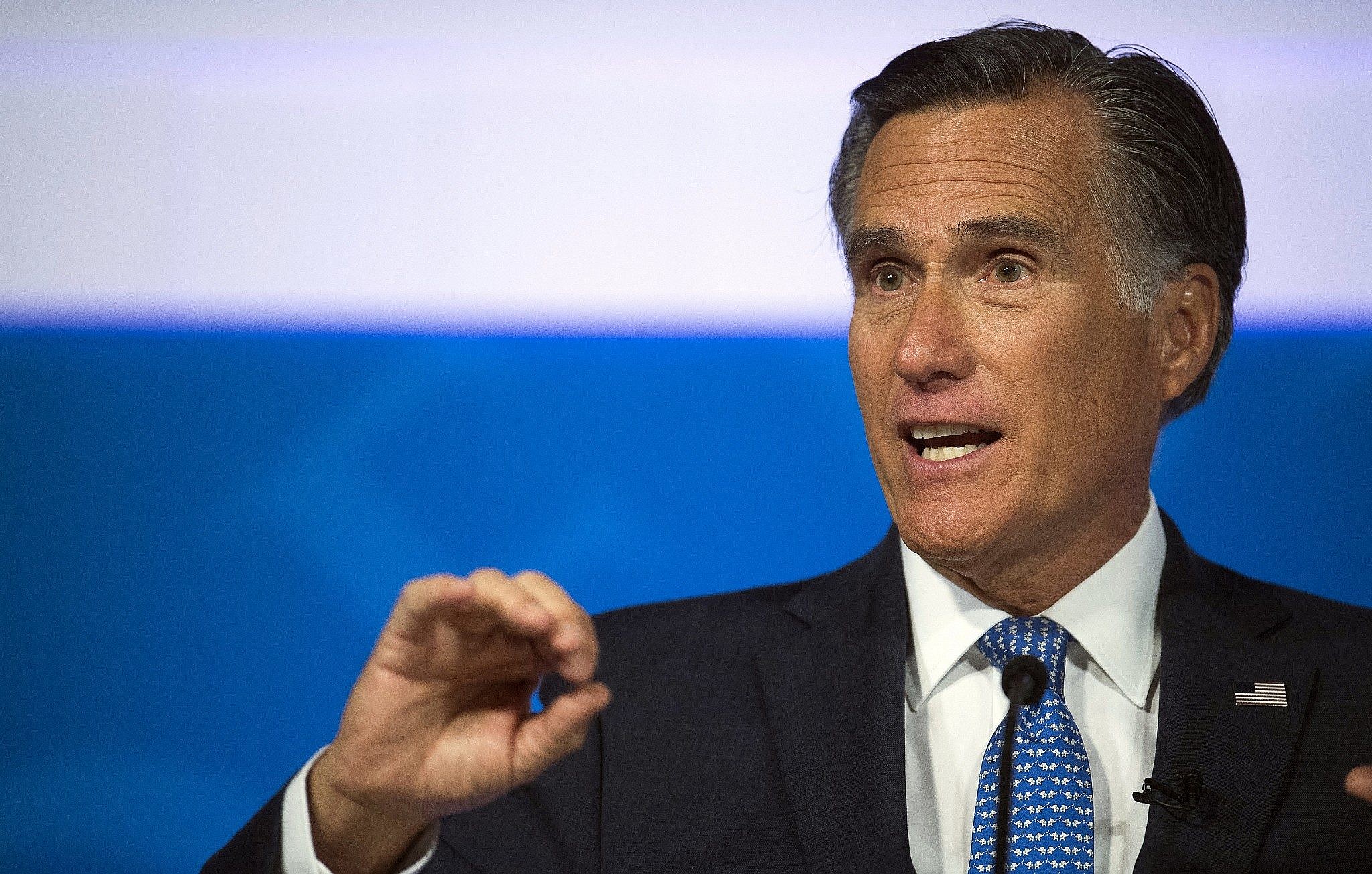
This October 9, 2018 file photo shows Republican US Senate candidate Mitt Romney answering a question about tariffs during the debate with Democratic opponent Jenny Wilson in the America First Event Center in Cedar City, Utah. (James M. Dobson/The Spectrum via AP, File)
Republican Senator Mitt Romney tears into Republican Reps. Marjorie Taylor-Greene and Paul Gosar for attending a pro-Putin, white nationalist event over the weekend.
Romney: "Marjorie Taylor Greene & Gosar, I don't know them. But I'm reminded of the old line from Butch Cassidy where one character says, 'Morons, I have morons on my team.' I think anybody who would sit down w/ white nationalists at their conference is missing a few IQ points." pic.twitter.com/sCEM2rSaxl
— Aaron Rupar (@atrupar) February 27, 2022
Greece sending defense aid to Ukraine
Authorities say Greece is sending ammunition, assault rifles, and missile launchers to Ukraine in response to a request by Ukraine’s government.
The military aid was decided at a meeting this morning between Prime Minister Kyriakos Mitsotakis and senior defense officials.
A C-130 plane with the equipment has arrived in Poland, and a second one will arrive later, a Defense Ministry official says.
Two more planes carrying humanitarian aid such as blankets and food have also left Athens International Airport for Poland, the spokesman says.
British FM says she would ‘absolutely’ support Brits who go and fight Russians in Ukraine
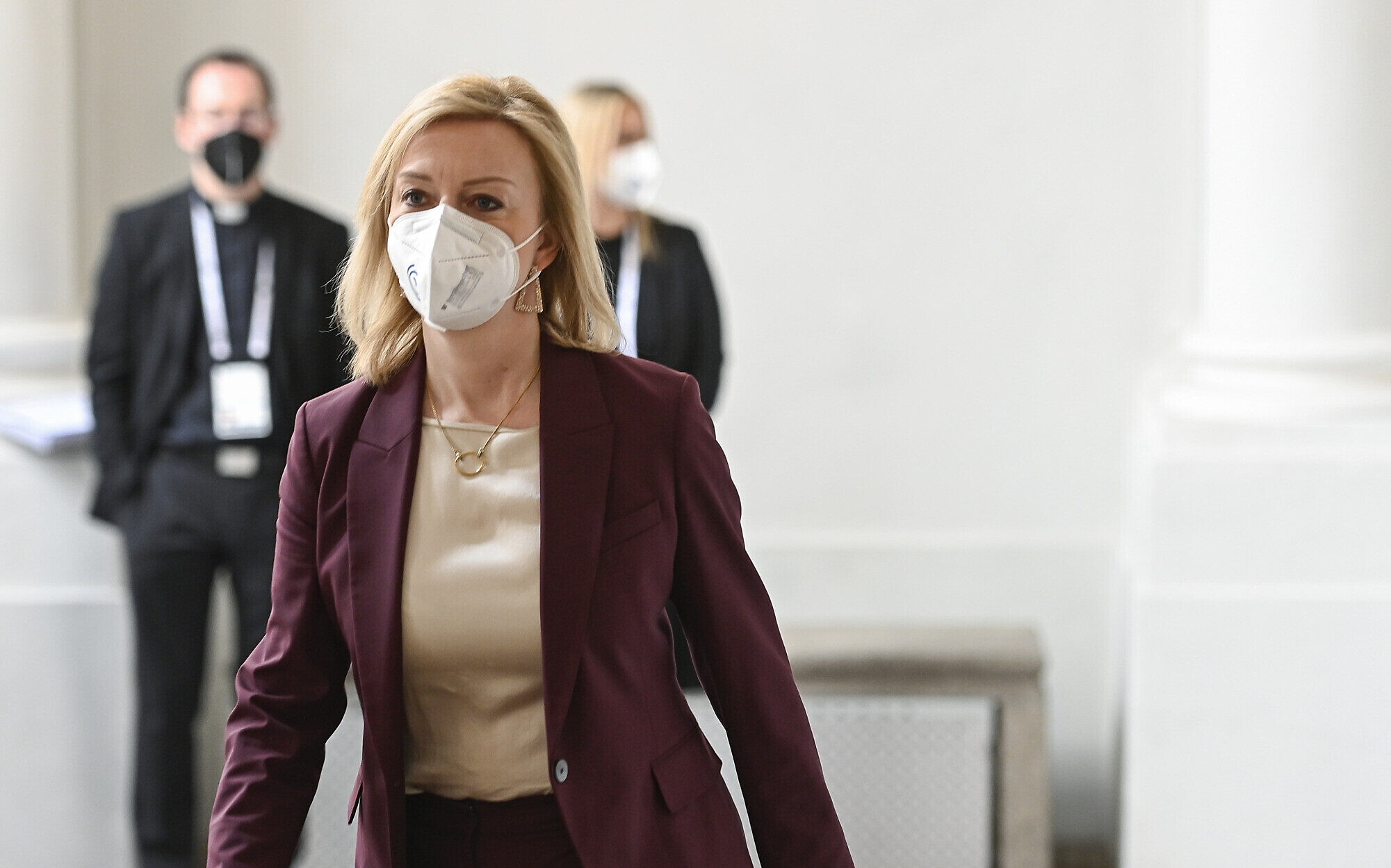
British Foreign Secretary Liz Truss arrives for a meeting with the Foreign Ministers of the G7 Nations at the Munich Security Conference (MSC) in Munich, southern Germany, on February 19, 2022. (Ina Fassbender/Pool via AP)
Britain’s foreign secretary says she would “absolutely” support Britons who choose to go to Ukraine to help fight the Russian invasion.
“Absolutely, if people want to support that struggle I would support them in doing that,” Liz Truss says, when asked by the BBC whether she would back British people who want to answer the Ukrainian president’s call for international volunteers to help defend his country.
“The people of Ukraine are fighting for freedom and democracy, not just for Ukraine, but for the whole of Europe,” she adds.
Russia destroys world’s largest transport aircraft Ukraine used for humanitarian flights
Russia has destroyed the world’s largest transport aircraft, the AN-225 ‘Mriya,’ which belongs to Ukraine and performed a host of humanitarian flights, including the delivering of medical supplies to countries throughout Europe to combat the pandemic, Ukraine’s foreign minister tweets.
This was the world’s largest aircraft, AN-225 ‘Mriya’ (‘Dream’ in Ukrainian). Russia may have destroyed our ‘Mriya’. But they will never be able to destroy our dream of a strong, free and democratic European state. We shall prevail! pic.twitter.com/TdnBFlj3N8
— Dmytro Kuleba (@DmytroKuleba) February 27, 2022
WHO urges safe corridor for medical supplies to Ukraine as oxygen runs low
The World Health Organization calls for a safe corridor through Poland to deliver critical medical aid to Ukraine and warned that hospital oxygen supplies in the country were dangerously low.
WHO chief Tedros Adhanom Ghebreyesus and Europe regional director Hans Kluge say oxygen supplies were “nearing a very dangerous point” and that most hospitals could exhaust their reserves within the next 24 hours, putting thousands of lives at risk.
The WHO is working to deliver oxygen cylinders and liquid from regional networks, they said, adding that the supplies would need “safe transit, including via a logistics corridor through Poland.”
“It is imperative to ensure that life-saving medical supplies — including oxygen — reach those who need them,” they say in a joint statement as Moscow’s incursion into its neighbor reached its fourth day.
The disruption caused by Russia’s invasion of Ukraine has prevented trucks from transporting oxygen from plants to hospitals, which have also suffered power shortages.
Medical oxygen generator manufacturers are also facing a shortage of zeolite, a mainly imported chemical product essential for producing medical oxygen.
Concerns have grown over a looming humanitarian crisis as hundreds of thousands of Ukrainian civilians flee to neighboring countries or become internally displaced.
IAEA calls meeting to discuss Ukraine; Russian missile hits site of radioactive waste
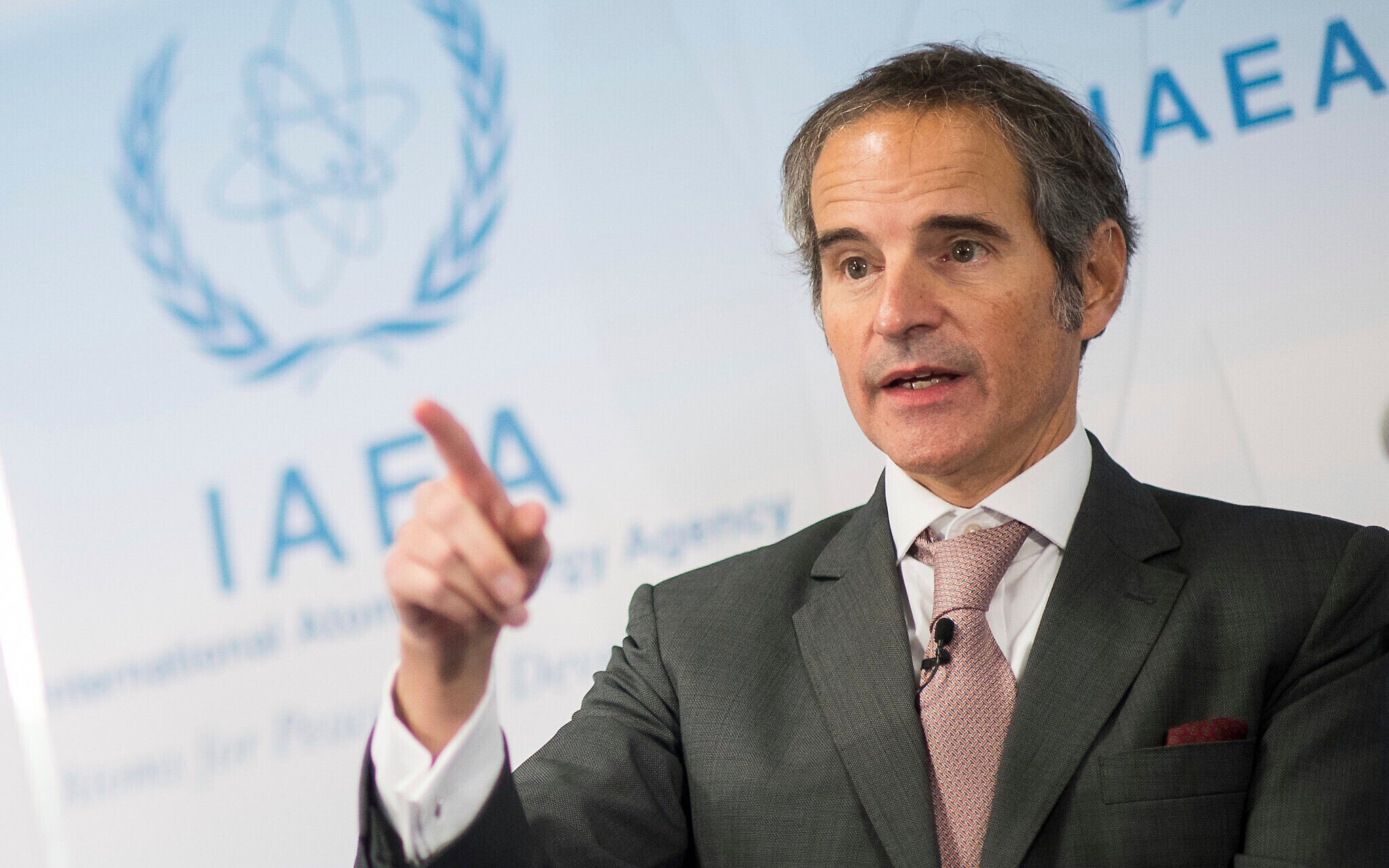
Director-General of the International Atomic Energy Agency Rafael Mariano Grossi speaks during a press conference in Vienna, Austria, on December 17, 2021. (Michael Gruber/AP)
The International Atomic Energy Agency (IAEA) says that it is calling an extraordinary meeting of its board of governors next week “to discuss the current situation in Ukraine.”
The meeting will begin at 11 a.m. (1000 GMT) on Wednesday at the IAEA’s Vienna headquarters, the agency said in a statement.
It says IAEA Director-General Rafael Grossi “is actively in contact with all involved to ensure the safety and security of nuclear facilities and material in Ukraine.”
Ukraine has four active nuclear power plants, as well as stores of nuclear waste such as the one at Chernobyl.
That was the site of the worst nuclear accident in history in 1986, and on Thursday the site fell to Russian troops.
Ukrainian authorities said that radiation levels had increased there following the Russian takeover, but the IAEA said the levels remained low and did not “pose any danger to the public.”
The IAEA also says it had been informed by Ukraine that “missiles hit the site of a radioactive waste disposal facility in Kyiv overnight but there were no reports of damage to the building or any indications of a radioactive release.”
Nevertheless, Grossi said such incidents “highlight the very real risk that facilities with radioactive material will suffer damage during the conflict, with potentially severe consequences for human health and the environment.”
Security cabinet session on Ukraine commences
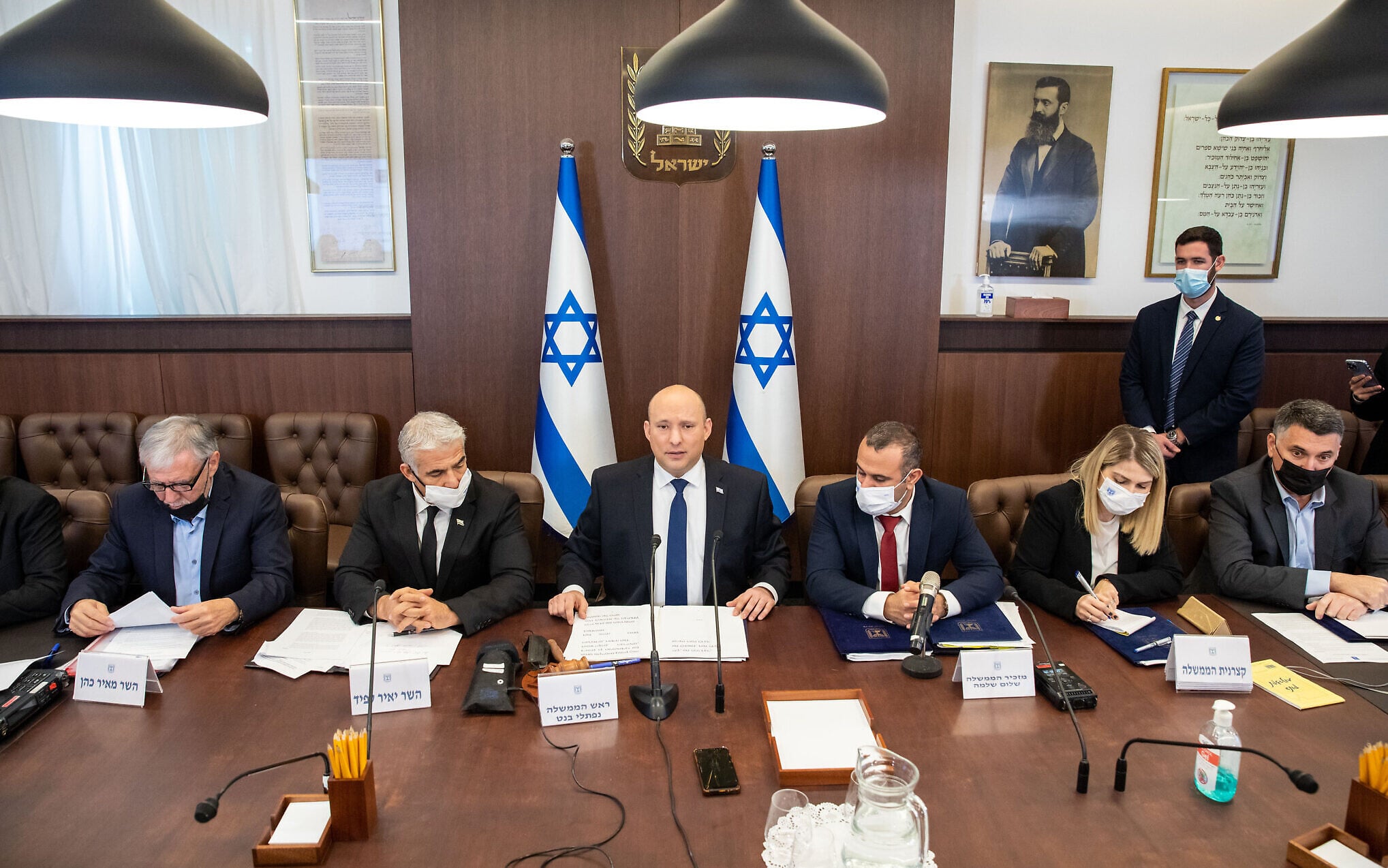
Prime Minister Naftali Bennett leads a cabinet meeting at the Prime Minister's Office in Jerusalem, on December 5, 2021. (Emil Salman/Pool/Flash90)
Israel’s security cabinet has begun a meeting to discuss the country’s response to the ongoing Ukraine invasion.
Yisrael Beytenu MK: Israeli authorities on the ground risking their lives to save Ukrainians
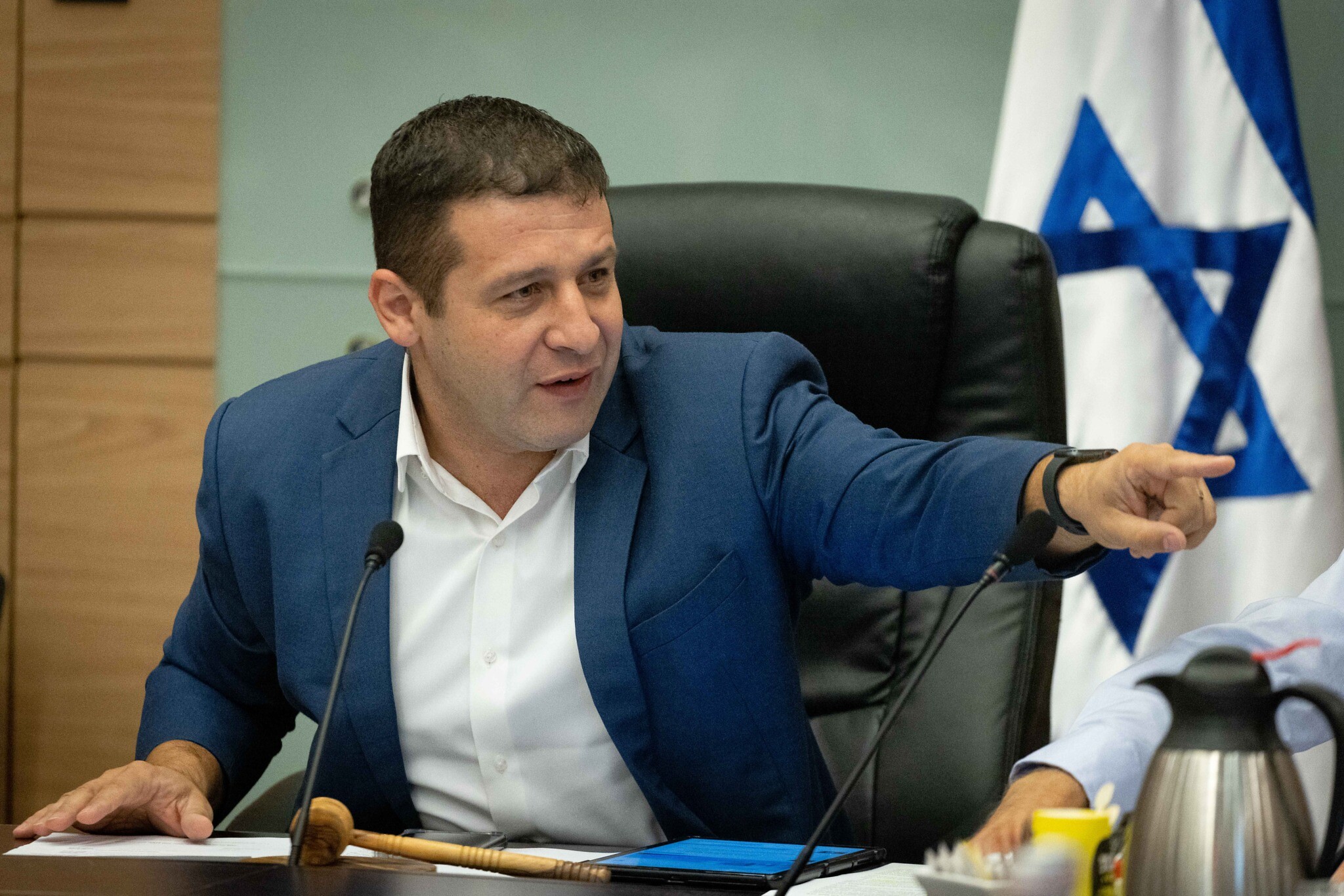
Alex Kushnir, head of the Knesset Finance Committee, leads a meeting in the Knesset, on June 23, 2021. (Yonatan Sindel/Flash90)
Ukraine-born Yisrael Beytenu MK Alex Kushnir, a former head of the Nativ civilian conversion prep program and ex-director of the Absorption Ministry, tells Channel 12 footage of Ukrainian children and their families forced from their homes amid Russia’s invasion is “heartbreaking.”
Kushnir says the Foreign Ministry, Nativ, the Absorption Ministry, and the Jewish Agency “are out there on the ground, doing holy work, risking their lives… They were in Kyiv, then Lviv, and now they’re in Poland, Moldova, Hungary, and Romania — doing everything possible to save Israelis, to save Jews.”
“We owe them a huge thank you,” he says. adding that Finance Minister and Yisrael Beytenu chair Avigdor Liberman has ensured whatever funding needed is available to bring Ukrainians to Israel.
Airport in central Ukraine reportedly targeted by missile fired from Belarus
Zhytomyr Airport in central Ukraine has been targeted by a missile fired from Belarusian territory, the Kyiv Independent reports.
Belarus has offered to host ceasefire talks between Russia and Ukraine, and has pledged not to allow its territory to be used by Russia for attacks on Ukraine.
Trump-backed GOP state senator attacks ‘globalist’ Zelensky, claims ‘bankers’ pushing WWIII
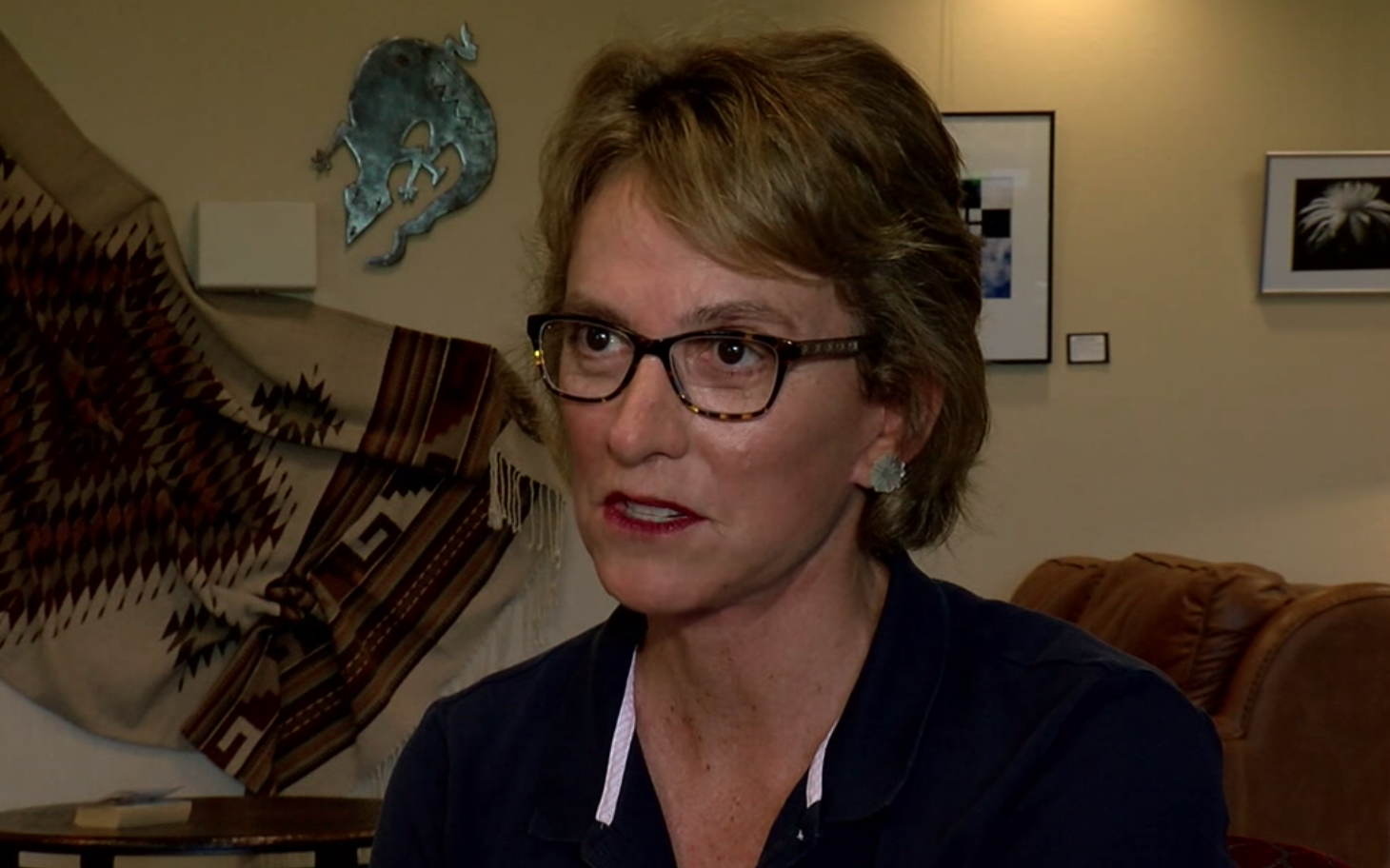
Arizona State Senator Wendy Rogers. (Screenshot/YouTube)
A Trump-endorsed Arizona state senator is attacking Ukraine President Zelensky while pushing a myriad of conspiracy theories on her Twitter account.
“I stand with the Christians worldwide not the global bankers who are shoving godlessness and degeneracy in our face,” Wendy Rogers in one post.
“Zelensky is a globalist puppet for Soros and the Clintons,” she writes in another. Both Zelensky and Soros are Jewish, and rights groups note that “bankers” is often used as an antisemitic dog whistle.
“Macron, Ardern, Trudeau, Zelensky… they all report to the same Satanic masters,” she adds.
Russia admits its troops have been ‘killed and injured’ in Ukraine
The Russian army has admitted that there were “killed and injured” soldiers among its troops in Ukraine on the fourth day of its invasion of the country, without specifying how many Russians had died there.
“Russian servicemen are showing courage and heroism while fulfilling combat tasks in the special military operation. Unfortunately, there are killed and injured among our comrades,” Moscow’s army spokesman Igor Konashenkov says on state television.
Zelensky says he is willing to ‘try’ Russia talks, but skeptical
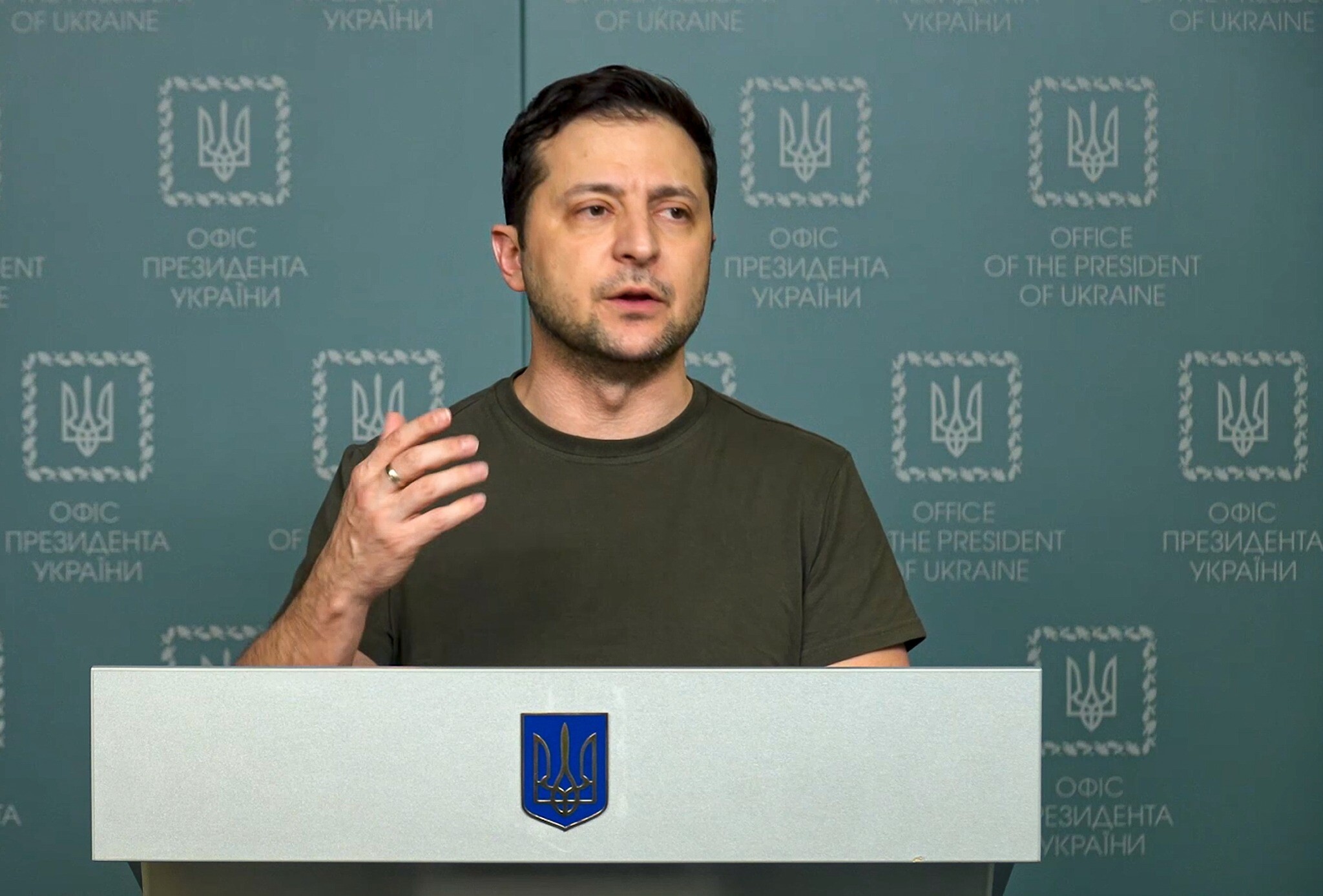
In this photo taken from video provided by the Ukrainian Presidential Press Office, Ukrainian President Volodymyr Zelensky speaks to the nation in Kyiv, Ukraine, on February 27, 2022. (Ukrainian Presidential Press Office via AP)
Ukraine leader Volodymyr Zelensky says he is willing to “try” talks with Russia but was skeptical, as Kyiv and Moscow prepare to meet at Ukraine’s border with Belarus on the fourth day of Russia’s invasion.
“I will be honest, as always: I do not really believe in the outcome of this meeting, but let them try,” Zelensky says in a video address. He added that if there was a “chance” to end the war, he should take part in the talks.
Zelensky issues the video after speaking with Belarus leader and Moscow ally Alexander Lukashenko.
EU escalates sanctions on Russia by closing airspace and banning media
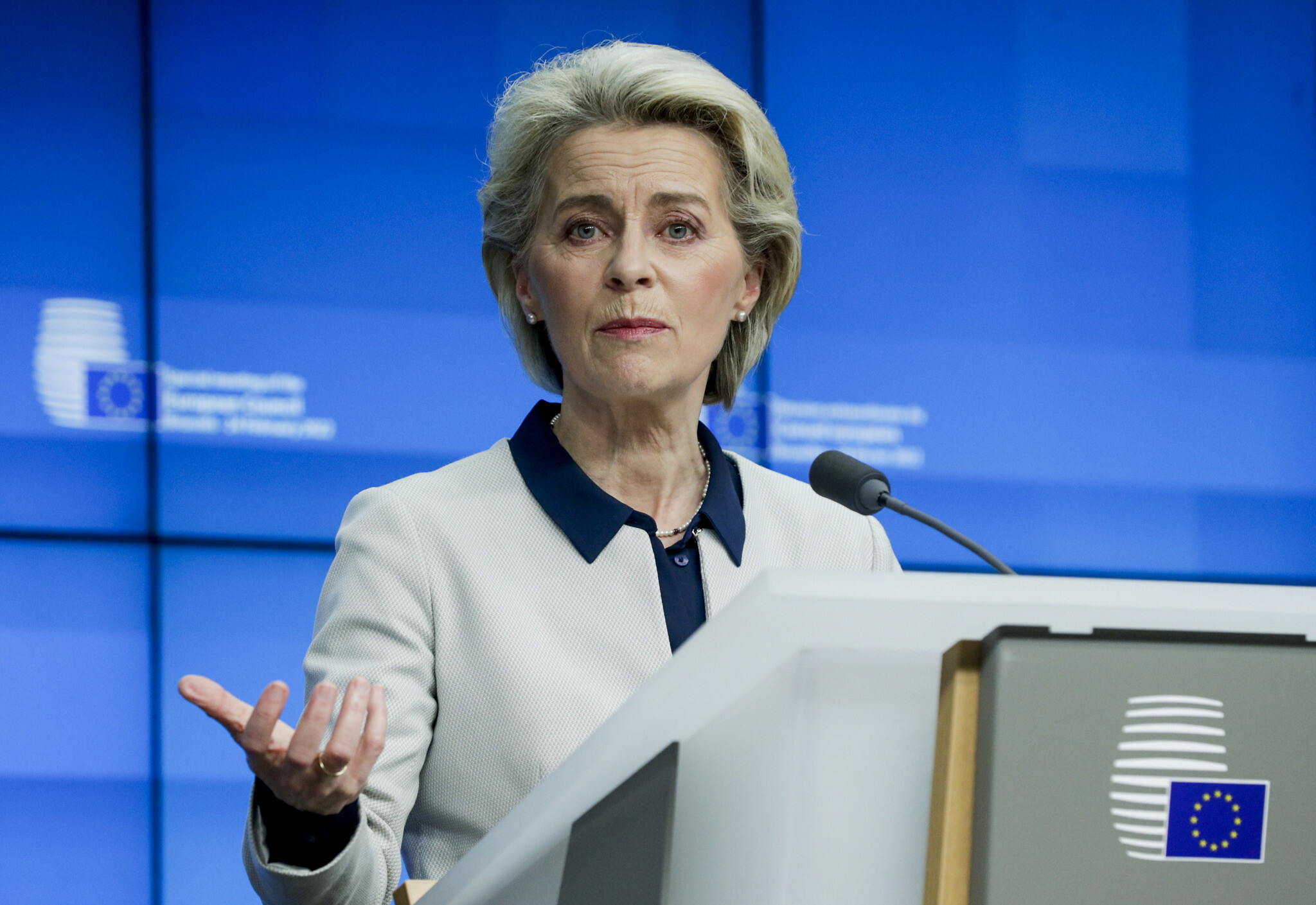
European Commission President Ursula von der Leyen speaks during a media conference after an extraordinary EU summit on Ukraine in Brussels, on February 25, 2022. (Olivier Hoslet, Pool Photo via AP)
The European Union on Sunday announced severe new sanctions against Russia over its invasion of Ukraine, closing its airspace to Russian aircraft and banning Russian state media outlets broadcasting in the bloc.
EU chief Ursula von der Leyen, announcing the measures, also said the EU was taking the unprecedented step of financing arms to Ukraine, and was hitting Russian ally Belarus with sanctions for facilitating the invasion.
Oil giant BP says it is pulling its capital out of Russia’s Rosneft
The BP oil giant says it is pulling its capital out of Russia’s Rosneft oil firm.
Ukrainian-born Fridman becomes first Russian Oligarch to speak out against invasion
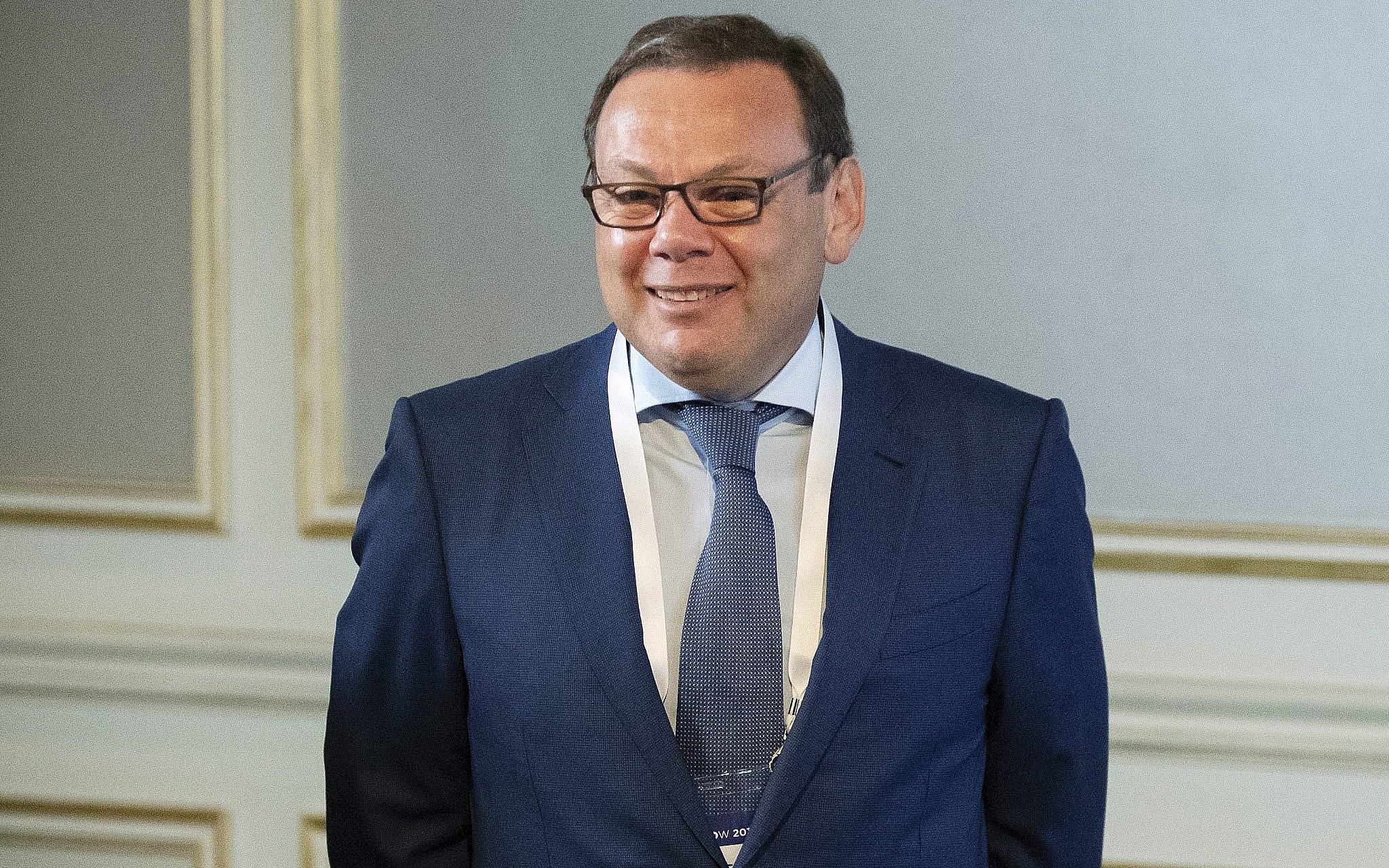
Russian businessman Mikhail Fridman attends a conference of the Israel Keren Hayesod foundation in Moscow, Russia, on September 17, 2019. (AP Photo/Pavel Golovkin, Pool)
Ukrainian-born financier and one of Russia’s richest men, Mikhail Fridman, has told employees at his private equity firm LetterOne that “war can never be the answer” and called for the “bloodshed” to end, the company says.
The billionaire Fridman, who divides his time between London and Moscow, is the first oligarch to speak out against Russian President Vladimir Putin’s invasion of Ukraine.
“I do not make political statements, I am a businessman with responsibilities to my many thousands of employees in Russia and Ukraine,” Fridman says in a letter, whose contents were seen by the FT and confirmed to AFP by a company spokesman.
“I am convinced however that war can never be the answer. This crisis will cost lives and damage two nations who have been brothers for hundreds of years.”
“While a solution seems frighteningly far off, I can only join those whose fervent desire is for the bloodshed to end,” he tells staff at the firm, which has an office in London.
Forbes estimates Fridman’s fortune at $15.5 billion, and The Sunday Times last year ranked him as Britain’s 11th-richest man.
He co-founded Alfa-Bank, one of the largest private banks in Russia, in 1991.
Fellow oligarch Roman Abramovich on Saturday handed over control of Chelsea Football Club to trustees of its charitable foundation, hinting that he fears his assets in Britain are about to be frozen as the government imposes sanctions on a “hit-list” of Kremlin-linked tycoons.
Russia war on Ukraine has displaced ‘over 7 million people,’ EU commissioner says
Russia’s war on Ukraine has displaced “over seven million people”, the EU commissioner for crisis management says.
“We are witnessing what could become the largest humanitarian crisis on our European continent in many, many years,” Janez Lenarcic tells a media conference after a meeting of EU interior ministers focused on the refugee flow out of Ukraine.
Sweden to send arms to Ukraine in break with tradition
Sweden announces it will break its doctrine of not sending arms to countries in active conflict and send military equipment, including anti-tank launchers, to Ukraine.
The decision to send 135,000 field rations, 5,000 helmets, 5,000 pieces of body armour and 5,000 single use anti-tank launchers is the first time Sweden has sent weapons to a country in armed conflict since the Soviet Union invaded Finland in 1939, Prime Minister Magdalena Andersson tells reporters.
UN Security Council to hold meeting Monday on Ukraine
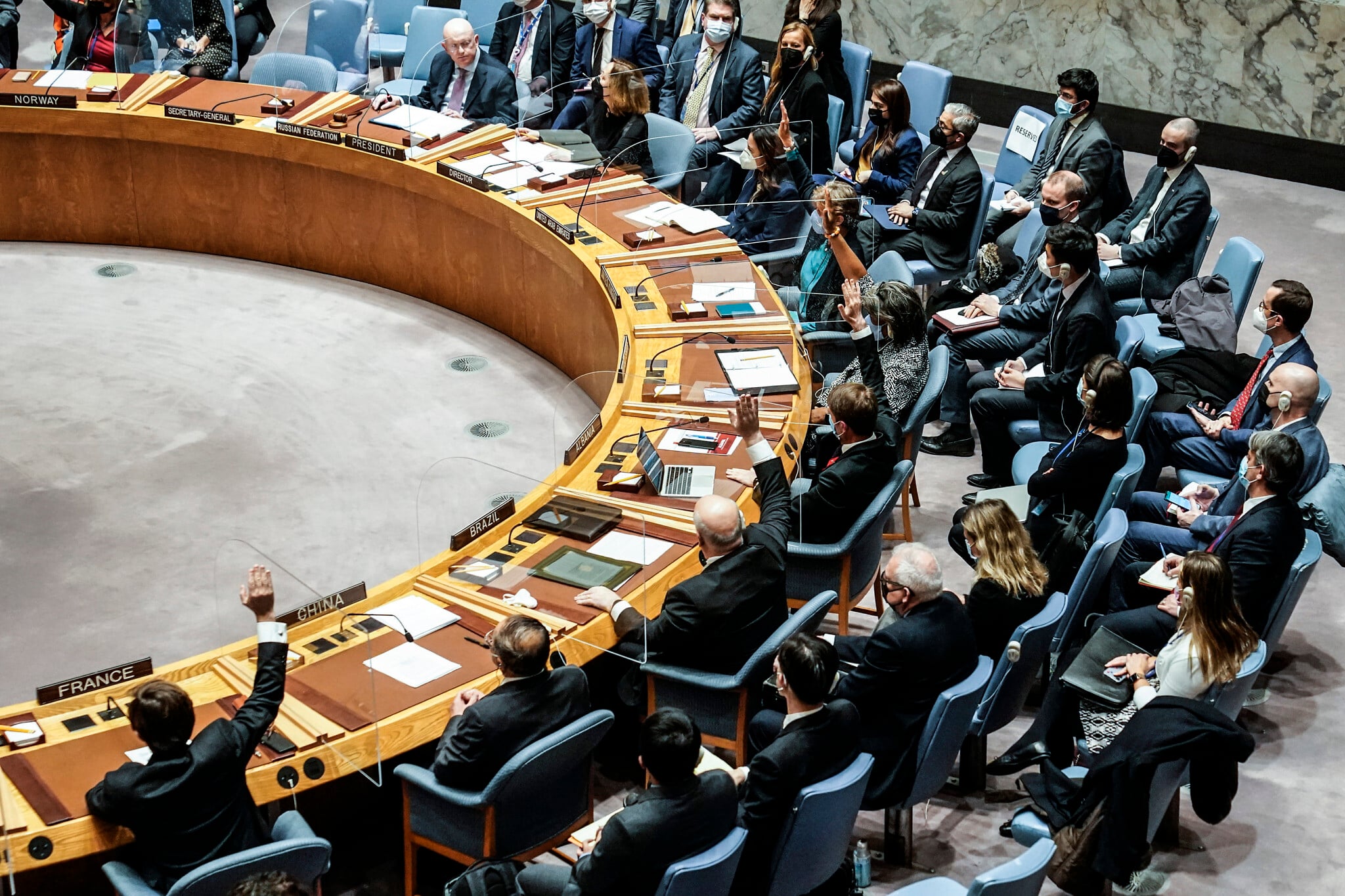
Representatives attend a UN Security Council meeting on the Russian invasion of Ukraine, on Friday, February 25, 2022, at UN headquarters. Russia vetoed a Security Council resolution demanding that Moscow stop its attack on Ukraine and withdraw all troops. Friday’s vote was 11-1, with China, India, and the United Arab Emirates abstaining. It showed significant but not total opposition to Russia’s invasion of its smaller, militarily weaker neighbor. (AP Photo/John Minchillo)
The UN Security Council will hold another emergency meeting on Russia’s invasion of Ukraine, diplomats said Sunday.
The session, to be held in New York on Monday at 3:00 p.m. (2000 GMT), will focus on the developing humanitarian crisis in Ukraine, diplomats said.
It was requested by French President Emmanuel Macron, and will feature officials from the UN’s humanitarian affairs and refugee agencies.
Hundreds of Belarusians protest Russian attack on Ukraine
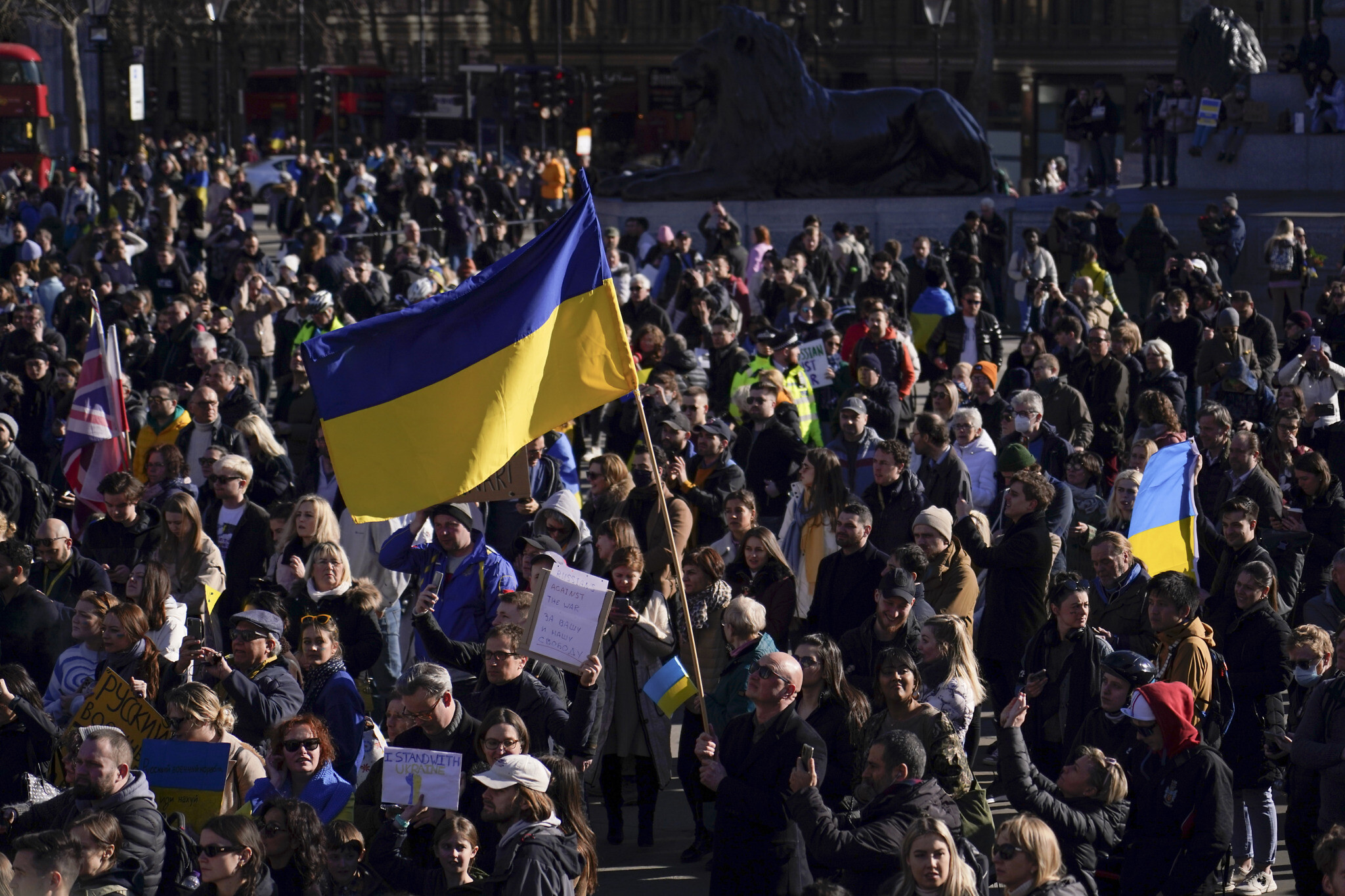
Ukrainian flags wave in Trafalgar Square as people descend to attend a protest, in London, on Sunday, February 27, 2022. (AP Photo/Alberto Pezzali)
Hundreds of people protested Russia’s invasion of Ukraine in Belarus. The protests come despite the fact that the authoritarian Belarusian government has sided with Moscow.
The anti-war rallies spanned at least 12 Belarusian cities, and human rights advocates reported that more than 170 people have been arrested.
In the capital of Minsk, demonstrators marched in different parts of the city carrying Ukrainian flags. A large pile of flowers kept growing at the building of Ukraine’s Embassy.
Pavel Latushko, Belarusian top opposition figure in exile in Poland, condemns Belarus’ role in the Russian attack on Ukraine.
“The illegitimate regime in Belarus, headed by the usurper of power (President Alexander) Lukashenko, has made our country an accomplice in the aggression against the brotherly Ukrainian people,” Latushko says. “We consider aggression against Ukraine an international crime on the part of the Russian and Belarusian regimes.”
2,500 Ukrainian Jews file aliyah requests — Jewish Agency
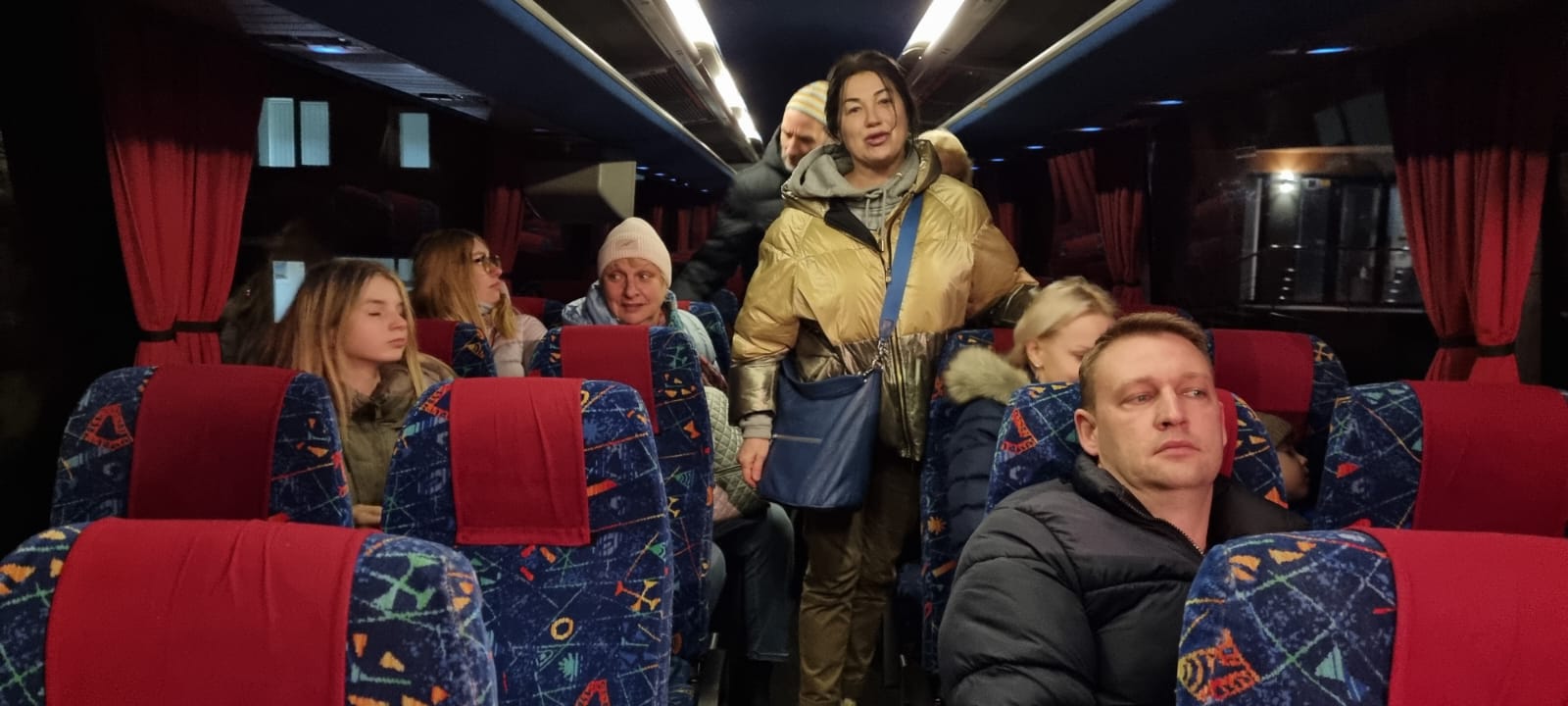
A group of Ukrainians travel to Poland before immigrating to Israel, on February 26, 2022. (Jewish Agency)
Around 2,500 Ukrainian Jews have asked to immigrate to Israel and take citizenship since the onset of Russia’s invasion, a quasi-governmental organization says.
The Jewish Agency for Israel, which handles immigration matters, says that it has received over 5,000 inquiries about immigration to Israel. Around half have requested to immigrate immediately, the agency said.
Ukraine is home to a Jewish community of around 43,000. But approximately 200,000 Ukrainians are eligible for immigration under Israel’s Law of Return, which extends the right to citizenship to anyone with one Jewish grandparent.
Israel’s Immigration and Absorption Ministry said it was making preparations for taking in around 10,000 new immigrants from Ukraine in the coming weeks, including providing housing and financial aid.
A total of around 3,100 Ukrainians immigrated to Israel in 2021, and a comparable number the year prior.
Hundreds of French protesters denounce Putin at Paris demonstration
Hundreds of people protest in Paris and in the Riviera city of Nice against Russia’s invasion of Ukraine, with Ukrainian flags and those of other eastern European nations hoisted high.
Some Russians opposed to the war are also in the Paris crowd.
It is the second day of protests directed at Russian President Vladimir Putin around France, among a string of weekend rallies across Europe.
On the famed Promenade des Anglais in Nice, a hub for Ukrainians, hundreds of people chanted slogans against the war Putin is waging and urged NATO nations to protect them from Russian bombs.
Protesters carry Ukrainian, Moldovan, Georgian, and Chechen flags, and banners denouncing Putin.
UN spokesman says idea of nuclear conflict ‘inconceivable’
A United Nations spokesman says that the idea of a nuclear war is unimaginable, after Russian President Vladimir Putin put his country’s nuclear forces on high alert.
“The mere idea of a nuclear conflict is simply inconceivable,” Stephane Dujarric told AFP when asked for the reaction of UN Secretary-General Antonio Guterres to Putin’s move as part of the Ukraine crisis.
16 children killed since start of Russian invasion in Ukraine, minister says
Ukrainian soldiers take positions outside a military facility as two cars burn, in a street in Kyiv, Ukraine, on February 26, 2022. (Emilio Morenatti/AP)
Sixteen children have been killed since the start of Russia’s invasion of Ukraine on Thursday, the country’s health minister says in a livestream briefing.
Bennett said to have told Putin: It’s one hour before midnight
File: Prime Minister Naftali Bennett (left) meets with Russian President Vladimir Putin in Sochi, Russia, on October 22, 2021. (Kobi Gideon/GPO)
Prime Minister Naftali Bennett initiated a call earlier today with Russian President Vladimir Putin, which was held at around noon and lasted 20 minutes, Channel 12 reports citing Israeli sources.
“We are at one hour before midnight; it’s important to find the optimal points for dialogue,” said Bennett, according to the TV report.
The prime minister updated the United States and Ukraine both before and after the conversation.
Bennett first expressed sorrow regarding the situation, which he said he hoped would not develop into a grave humanitarian crisis.
Putin told Bennett he had no choice but to act, since Ukraine broke its obligations, the report says.
Putin said he is ready to negotiate, and that his representatives were in Belarus, but the Ukrainians were spurning the opportunity to do so.
At that point, Bennett said Israel is ready to assist in any way possible in bringing the sides together, now or in the future, in light of its unique relationship with both countries.
Channel 12 says Bennett’s proposal to serve as mediator did not go anywhere with Putin but that the call still went well as the premier was seen by the Russians to have shown goodwill.
Ukrainian soldiers fire warning shots at Israeli reporter
Ukrainian soldiers fired warning shots at a reporter from the Kan public broadcaster earlier this evening in Kyiv.
The soldiers apparently suspected the reporter to have been a Russian spy, as the city is under lockdown and almost no one other than Ukrainian soldiers are out in the streets.
After the reporter identified himself to soldiers, he was released and ordered to go to a nearby hotel.
"אל תירו, טלוויזיה ישראלית": שוטרים אוקראינים פתחו בירי אזהרה לעבר כתב כאן חדשות דב גיל-הר שדיווח ליד המלון – והרים ידיים pic.twitter.com/ISsOloV1wC
— כאן חדשות (@kann_news) February 27, 2022
Ukrainian MP, former IDF soldier pleads to Israel for aid, military equipment
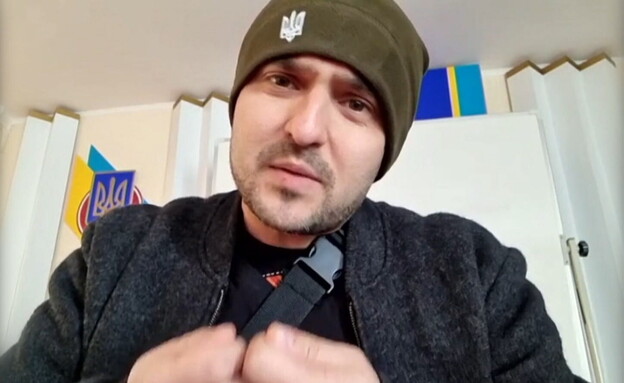
Ukrainian MP Oleksandr Kunytskyi speaks to Israel's Channel 12, on February 27, 2022. (Screenshot/Channel 12)
A Ukrainian MP who once served in the IDF is calling on Israel to provide Ukraine assistance amid the Russian invasion.
“Our situation is not good right now. We really need help from Israel as well. When I was a soldier in the IDF I provided assistance and now I am calling on the people of Israel to do the same. We need helmets, vests — equipment that has not been needed in Israel for a long time. Please send it to us and help our army and our people here,” Oleksandr Kunytskyi tells Channel 12.
“In Israel, people know what missiles are, what bunkers are, what it is like to have to run when rocket sirens go off. I was in Israel and I also know what it is like,” Konitzky says, adding that he was forced to take shelter amid air raid sirens minutes earlier.
“What’s going to happen in Ukraine is even worse than it was last time in Israel. I very much hope that as many people in Israel as possible see this. We really need the help.”
We’re surrounded, civilians cannot escape, Kyiv mayor says
Kyiv mayor Vitali Klitschko says his city of 2.8 million people is surrounded and there is no way to evacuate civilians.
“We can’t do that, because all ways are blocked,” he says after a long pause. “Right now we are encircled.”
The mayor confirms to the AP that nine civilians in Kyiv had been killed so far, including one child.
“Ï just talked to the president [Volodymyr Zelensky]. Everybody is not feeling so well,” Klitschko said, adding that the Ukrainian city government employees were in shock but not depressed. “We show our character, our knowledge, our values.”
He defends a curfew imposed on the city and the creation of a civil defense guard, despite concerns over arming nervous civilians with little military experience amid warnings of Russian saboteurs disguised as Ukrainian police or journalists.
“We are hunting these people, and it will be much easier if nobody is on the street,” Klitschko explained, saying that six Russian “saboteurs” were killed Saturday night.
Earlier in the evening, an Israeli reporter was shot at while reporting next to his hotel after being suspected of being a spy.
“To be honest, we don’t have 100% control,” said Klitschko. “We built this territorial defense in a short amount of time — but these are patriotic people.”
Times of Israel staff contributed
Videos show Turkish-made drones hitting Russian convoys
Ukraine’s army posts a video online of a Turkish-made Bayraktar drone bombing a Russian BUK missile launcher near Zhytomyr.
https://twitter.com/ArmedForcesUkr/status/1497997019515961347
Another video shows another column of troops being hit, apparently also by a drone.
Ukrainian Bayraktar TB2 airstrike
Video source https://t.co/fmxMKITUK8 pic.twitter.com/KIfVSy4jAG
— MilitaryAviationInUa (@MilAviaUA) February 27, 2022
Germany says invasion halted as G7 warns of more sanctions
Russian President Vladimir Putin’s decision to put Russia’s nuclear weapons on high alert shows his offensive in Ukraine is not going to plan, Germany’s defense minister says.
The announcement “crosses another line” and “is to do with the fact that, in [Putin’s] megalomania, the rapid invasion of Ukraine has been halted by Ukraine’s brave and determined actions,” Christine Lambrecht tells public broadcaster ZDF.
Meanwhile, leaders of the G7 group of wealthy nations are threatening fresh sanctions against Russia if it continues its invasion of Ukraine.
Calling for an end to the Russian operation, the joint statement from Canada, France, Germany, Italy, Japan, the United Kingdom, and the United States warns that failing that, the group would “take further steps” to add to the sanctions already announced.
Russians feel start of sanctions squeeze as ruble plummets
Some early signs are emerging of significant economic consequences to Russia following its invasion of Ukraine three days ago. While official quotes for the Russian ruble were unchanged at roughly 84 rubles to the dollar, one online Russian bank, Tinkoff, was giving an unofficial exchange rate of 152 rubles over the weekend.
Videos from Russia showed long lines of Russians trying to withdraw cash from ATMs, while the Russian Central Bank issued a statement calling for calm, in an effort to avoid bank runs. Reports also showed that Visa and Mastercard were no longer being accepted for those with international bank accounts.
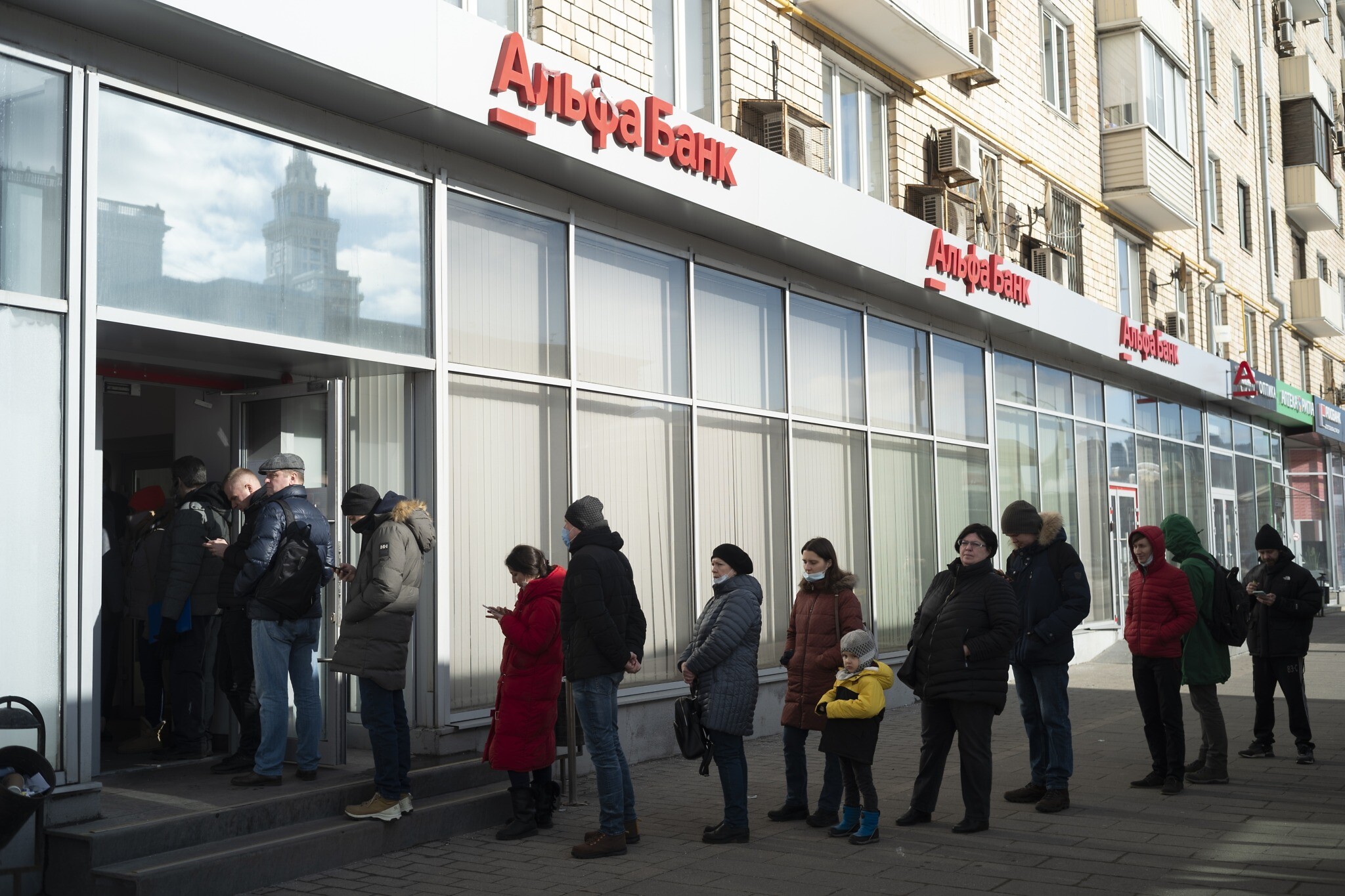
“Banks and credit card companies dealing with Russia are going into lockdown mode given the fast pace and increasing bite of the sanctions,” said Amanda DeBusk, a partner with Dechert LLP.
Russia may have to temporarily close bank branches or declare a national bank holiday to protect its financial system, analysts said.
“If there’s a full-scale banking panic, that’s a driver of crisis in its own right,” said Adam Tooze, a professor of history at Columbia University and Director of the European Institute.
“A rush into dollars by the Russian general population moves things into an entirely new domain of financial warfare.”
Bending on Russia ban, FIFA says team can compete as ‘RFU’
FIFA is backing away from immediately expelling Russia from World Cup qualifying on Sunday but says it remains an option, deciding instead the squad can play using the “RFU” acronym for the country’s football federation.
The unanimous ruling by the FIFA Bureau, featuring the six regional football confederation presidents, also says that the Russian flag and anthem can’t be associated with the team. FIFA also says the RFU team can only play on neutral territory and without spectators.
“FIFA will continue its ongoing dialogue with the IOC, UEFA and other sport organizations to determine any additional measures or sanctions,” FIFA says in a statement, “including a potential exclusion from competitions, that shall be applied in the near future should the situation not be improving rapidly.”
It is not immediately clear if the decision to use the acronym for the Russian Football Union would satisfy Poland, which said Saturday that it would refuse to play Russia in a World Cup playoff semifinal, which is scheduled for Moscow for March 24.
Separately, the English Football Association announces that its national teams would refuse to play Russia for the “foreseeable future.” Russia has qualified for the Women’s European Championship, which is being hosted by England in June.
The English FA says the decision was taken “out of solidarity with the Ukraine and to wholeheartedly condemn the atrocities being committed by the Russian leadership.”
Satellite photos show massive convoy approaching Kyiv
Satellite photos from Maxar Technologies show a massive line of Russian vehicles on a road heading toward Kyiv, some 40 miles from the capital, according to The New York Times.
Satellite images show large unit of Russian troops near #Kyiv. Hundreds of vehicles, around 40 miles NW of the capital. #Ukraine 🛰️📷@maxar https://t.co/ZUmqXaa16Z pic.twitter.com/76uhzZcmZb
— Christoph Koettl (@ckoettl) February 27, 2022
The pictures appear to match a video of what are purported to be Chechen soldiers offering a Muslim prayer in a forest as a long convoy of troops and vehicles sits on the road.
Yes, might be this one. pic.twitter.com/8Y5xN3vlUT
— Arslon Xudosi 🇺🇦 (@Arslon_Xudosi) February 27, 2022
It may also match video that showed a convoy of Russian military vehicles being hit by a drone earlier.
Reports of fighting in Kharkiv, missile strike in Zaporozhye
Fighting around Kharkiv is apparently ramping up as night falls.
Videos show two Russian military vehicles on fire, and several dead bodies in uniform next to a building burning. Their veracity cannot be confirmed.
🛑🛑🛑Ukrainan army and the Kharkiv territorial defense force continuing to engage #Putin regime terrorists on the outskirts of the city #Ukraine #Russia pic.twitter.com/amV3EUgjM5
— paralel_universe (@ignis_fatum) February 27, 2022
There are reports of air raid sirens in other areas. In Zaporozhye, a large fire erupts after an apparent missile strike.
https://twitter.com/UA_BotTwitte/status/1498025382267604992
⚡️The moment of the strike on the airport in #Zaporozhye pic.twitter.com/QoMilW1Fzh
— NEXTA (@nexta_tv) February 27, 2022
At Hague, Ukraine accuses Russia of planning genocide
Ukraine has launched a case against Russia at the United Nations’ highest court, accusing Moscow of planning genocide and asking for the court to intervene to halt the invasion and order Russia to pay reparations.
The case also asks the International Court of Justice, based in The Hague, to indicate “provisional measures” ordering Moscow to “immediately suspend the military operations” that were launched on February 24.
The case says Russia launched its invasion of Ukraine based on false claims of acts of genocide in the Luhansk and Donetsk regions of eastern Ukraine, and now is planning genocidal acts in Ukraine.
Ukraine “emphatically denies that genocide happened in the eastern regions,” and says it filed the case “to establish that Russia has no lawful basis to take action in and against Ukraine for the purpose of preventing and punishing any purported genocide,” the court said in a statement.
The court will schedule a hearing soon to hear the provisional measures request.
The court hears disputes between nations over matters of law, unlike the International Criminal Court, also based in The Hague, which holds individuals criminally responsible for offenses including war crimes and crimes against humanity.
EU to spend $500 million on arms, fighter jets for Ukraine
European Union member states have agreed to unblock 450 million euros ($500 million) for member states to buy arms for Ukraine, the bloc’s foreign policy chief Josep Borrell says.
The arms package will include fighter jets for the beleaguered Ukrainian military, he says.
“Another taboo has fallen. The taboo that the European Union was not providing arms in a war,” said Borrell.
The EU’s plan to fund weapons purchases will also help buy air defense systems, anti-tank weapons, ammunition, and other military equipment for Ukraine’s armed forces. It would also supply things like fuel, protective gear, helmets, and first aid kits.
US protested Israeli decision not to sponsor UN resolution — report
US envoy to the UN Linda Thomas-Greenfield dressed down Israeli UN envoy Gilad Erdan over Jerusalem’s refusal to co-sponsor a UN Security Council resolution condemning Russia for its invasion of Ukraine Friday night, the Walla news site reports.
The US mission had reached out to dozens of countries, asking them to back the resolution, a Western diplomat said. Non-security council members were still able to co-sponsor the resolution, even if they could not vote on it.
Eighty-one countries answered the US call and signed on as co-sponsors according to an official list obtained by The Times of Israel.
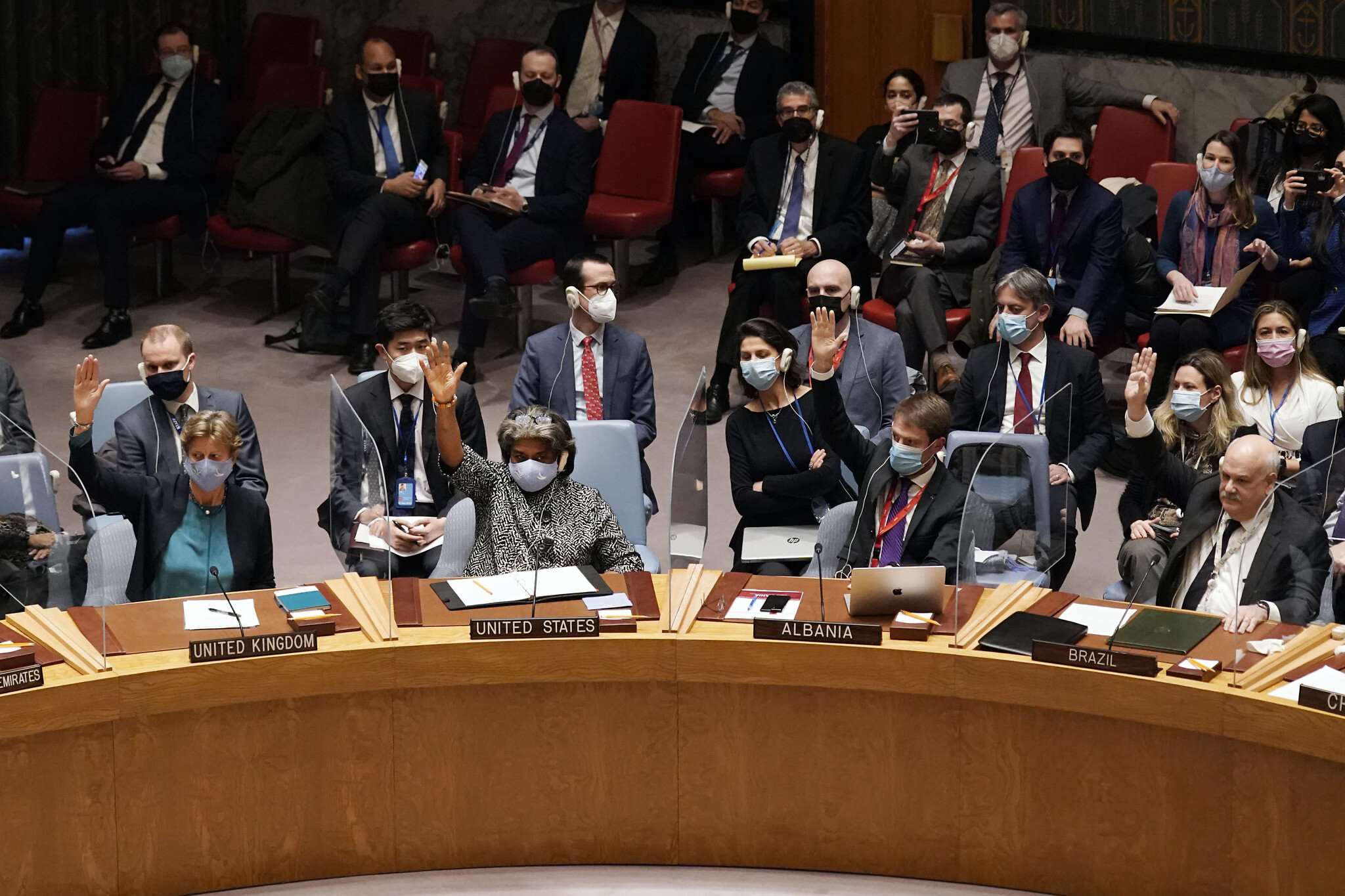
The Israeli mission referred the matter back to Jerusalem for guidance, where a decision was reached earlier Friday to avoid joining in such a strong gesture against Russia, another official told The Times of Israel.
Ultimately, Russia vetoed the resolution. An hour later, Thomas-Greenfield sent a message to Erdan that the Biden administration was disappointed in Israel’s decision, according to the report.
Bennett tells ministers not to speak out about Russian onslaught of Ukraine
Prime Minister Naftali Bennett has asked members of his cabinet to “keep a low profile” on the war in Ukraine, Channel 12 news reports.
“Israel is not the issue right now,” Bennett told ministers in an expanded security cabinet meeting Sunday night, according to the report.
Israel is one of the few countries that maintains relatively warm relations with both Ukraine, a fellow Western democracy, as well as Russia, which controls the airspace over Syria.
Jerusalem has relied on Moscow’s tacit approval for use of that airspace to carry out airstrikes against Iranian proxies just beyond its northern border.
Bennett spoke to Russian President Vladimir Putin Sunday, after which the Russian embassy in Israel reiterated its position to not block Israeli activities over Syria.
“Israel’s interest is to be quiet,” Interior Minister Ayelet Shaked, who is closely aligned with Bennett, told the meeting, according to the channel.
UN General Assembly to hold emergency session on Ukraine tomorrow
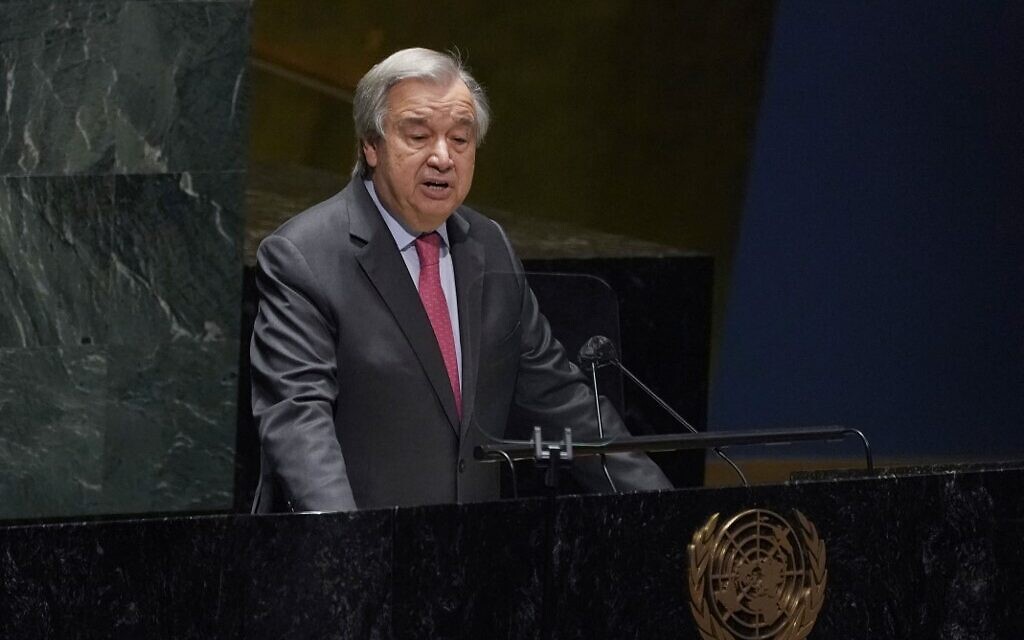
UN Secretary-General Antonio Guterres speaks at the General Assembly 58th plenary meeting in New York, on February 23, 2022, on the Russia-Ukraine conflict. (Timothy A. Clary/AFP)
The UN Security Council votes for the 193-member General Assembly to hold an emergency session on Russia’s invasion of Ukraine tomorrow.
The vote to authorize an emergency meeting is 11 in favor, Russia opposed, with China, India, and the United Arab Emirates abstaining. That was the exact same vote on a resolution Friday demanding that Moscow immediately stop its attack on Ukraine and withdraw all troops. But in that case, Russia used its veto and the resolution was defeated.
Ukrainian Ambassador to the UN Sergiy Kyslytsya asks for the General Assembly meeting to be held under the so-called “Uniting for Peace” resolution, initiated by the United States and adopted in November 1950 to circumvent vetoes by the Soviet Union during the Korean War.
That resolution gives the General Assembly the power to call emergency meetings when the Security Council is unable to act because of the lack of unanimity among its five veto-wielding permanent members — the United States, Russia, China, Britain, and France.
US calls on American citizens to consider leaving Russia immediately
People stand in line to withdraw money from an ATM of Alfa Bank in Moscow, Russia, February 27, 2022. (AP/Victor Berzkin)
MOSCOW — The US Embassy in Moscow urges American citizens in Russia to think about leaving the country immediately, as some airlines halt flights there and some countries close their skies to Russian aircraft.
“US citizens should consider departing Russia immediately via commercial options still available,” the Embassy says in a statement on its website.
US officials in recent weeks have urged Americans not to travel to Russia, and warned that the US government could not help in any evacuation of Americans from there.
An earlier alert recommended Americans develop contingency plans about how to leave the country if necessary.
The European Union was among those announcing today that they are closing their airspace to Russian flights.
Russian carrier Aeroflot says it’s suspending all flights to Europe
An Aeroflot Airbus A330 plane taxies out at Sheremetyevo airport, Moscow, on June 24, 2013. (AP/Sergei Ivanov)
Russia’s flagship carrier announces that it is suspending flights to Europe after the European Union closed its airspace to Russian aircraft for Moscow’s invasion of Ukraine.
“Aeroflot is suspending flights of the European route network from February 28, 2022 until further notice,” the company says on its website.
Sweden, Finland pledge to ship weapons, military aid to Ukraine
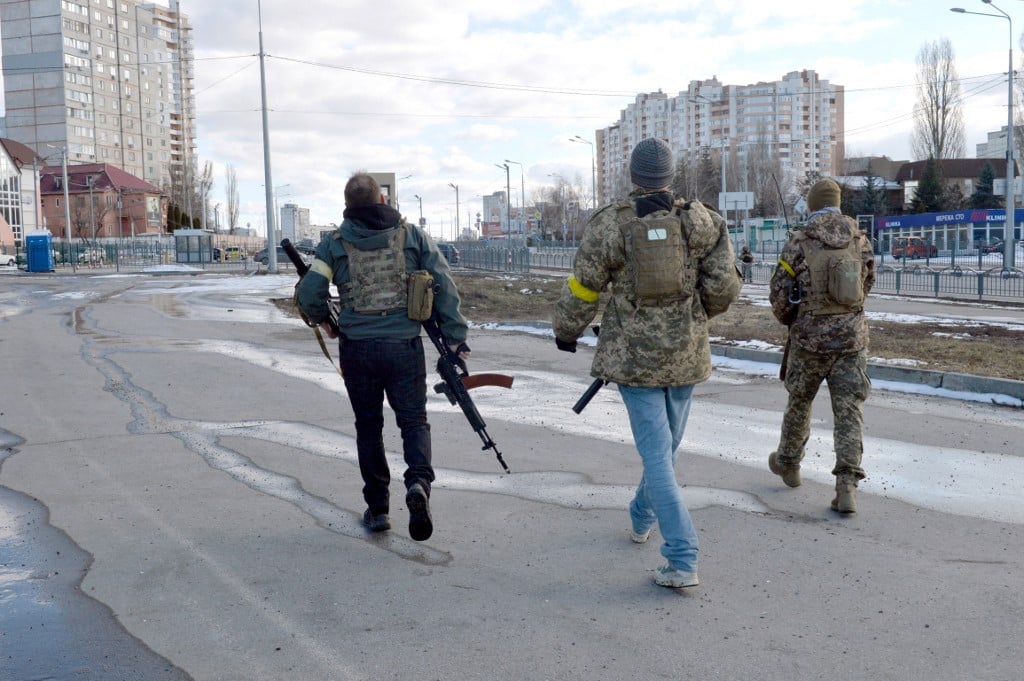
Ukrainian Territorial Defense fighters patrol the streets after a fight in Kharkiv, on February 27, 2022. (Sergey Bobok/AFP)
The Nordic nations of Sweden and Finland say they will send military aid to Ukraine including anti-tank weapons, helmets, and body armor.
Swedish Prime Minister Magdalena Andersson and Defense Minister Peter Hultqvist say at a news conference that Stockholm will ship 5,000 anti-tank weapons, 5,000 helmets, 5,000 units of body armor, and 135,000 field rations in support of Ukraine’s military.
Neighboring Finland said earlier today that it would send 2,000 helmets, 2,000 bulletproof vests, 100 stretchers, and equipment for two emergency medical care stations as aid to Ukraine.
US to send anti-aircraft Stinger missiles to Ukraine

Ukrainian servicemen move US-made FIM-92 Stinger missiles and other military assistance shipped from Lithuania to Boryspil Airport in Kyiv, on February 13, 2022. (Sergei Supinsky/AFP)
The US for the first time approves the direct delivery of Stinger missiles to Ukraine as part of a package approved by the White House on Friday.
The exact timing of delivery is not known, but officials say the US is currently working on the logistics of the shipment. The officials agree to discuss the development only if not quoted by name.
The decision comes on the heels of Germany’s announcement that it will send 500 Stinger missiles and other weapons and supplies to Ukraine.
The high-speed Stingers are very accurate and are used to shoot down helicopters and other aircraft. Ukrainian officials have been asking for more of the powerful weapons.
Estonia has also been providing Ukraine with Stingers since January, and in order to do that had to get US permission.
Sweden, Czech Republic refuse again to play World Cup qualifiers against Russia
The soccer associations of the Czech Republic and Sweden say they will not play games against Russia, despite a compromise planned by FIFA that would allow Russia to participate in World Cup qualifying games.
Poland, Sweden and the Czech Republic have protested Russian participation in the tournament. FIFA, the world governing soccer organization, said today that Russia should play home matches at neutral venues and banned its national flag and anthem from games.
The Czech and Swedish soccer associations both reject the compromise.
“There will be no change in the Czech national team’s… standpoint even after FIFA’s decision to let Russia play at the international level but on neutral grounds, without a flag and anthem,” the Czech Football Association says.
The Czech team could have faced Russia in a World Cup play off game in late March, depending on the outcome of other games.
Swedish Football Association President Karl-Erik Nilsson says: “We have previously made it known that we do not want to face Russia under these circumstances and this remains the case until further notice.”
He adds that he is “displeased” with FIFA’s decision.
Israel leaning toward supporting UN resolution condemning Russia, official says
Representatives attend a UN Security Council meeting on the Russian invasion of Ukraine, on Friday, February 25, 2022, at UN headquarters. Russia vetoed a Security Council resolution demanding that Moscow stop its attack on Ukraine and withdraw all troops. Friday’s vote was 11-1, with China, India, and the United Arab Emirates abstaining. It showed significant but not total opposition to Russia’s invasion of its smaller, militarily weaker neighbor. (AP Photo/John Minchillo)
Israel is leaning toward supporting a UN General Assembly resolution this week that will condemn Russia for invading Ukraine, an Israeli official tells The Times of Israel.
The Israeli official says that a decision to not co-sponsor a similar resolution on Friday in the Security Council was partially due to the belief that Russia was going to veto the measure anyway.
With the General Assembly resolution almost certain to pass, Israel feels like it will have a harder time justifying not supporting the resolution, the official says, while acknowledging that some in Jerusalem are pushing for a decision to abstain in the vote.
A source familiar with the matter confirms an Axios report that the US expressed its disappointment to Israel over Jerusalem’s decision to not co-sponsor last week’s Security Council resolution.
Ukraine says 352 civilians, including 16 children, killed in invasion
Ukraine’s Interior Ministry says 352 civilians have been killed in the Russian invasion and 1,684 injured.
The figure appears to exclude military casualties.
Ситуація щодо російського вторгнення
Втрати серед цивільного населення#stoprussia pic.twitter.com/4NtsEWyQoQ
— МВС України (@MVS_UA) February 27, 2022
The Kyiv Independent says 16 of the fatalities are children, and at least 116 of the injured, citing Ukrainian Health Ministry statistics.
Bolsonaro talks with Putin, says Brazil will stay neutral
Brazilian President Jair Bolsonaro says his government will remain neutral regarding Russia’s invasion of Ukraine.
Bolsonaro says he had a two-hour long conversation with Russian President Vladimir Putin on Sunday to talk about the war and assured Russia’s leader that Brazil will keep a neutral position.
Brazil’s ultra conservative president visited Putin in Moscow earlier this month before the invasion and says he does not want to “bring the consequences of the conflict” to Brazil.
Bolsonaro says that Russia has no intention of carrying out any massacres and that in some regions of Ukraine “90% of the people want to get closer to Russia.”
The Brazilian president also criticizes Ukrainian President Volodymyr Zelensky, saying people “entrusted the fate of the nation to a comedian.”
Saudi Arabia confirms commitment to oil deal with Russia
Saudi Arabia confirms its commitment to the OPEC+ agreement with Russia, the Saudi Press Agency reports.
Crown Prince Mohammed bin Salman makes the comments during a conversation with French President Emmanuel Macron that also covers the situation in Ukraine and its impact on the energy markets, the agency says.
“In this regard, His Royal Highness the Crown Prince affirmed the Kingdom’s keenness on the stability and balance of oil markets and the Kingdom’s commitment to the OPEC Plus agreement,” the agency says.
Members of the OPEC+ oil producers’ group will meet Wednesday to discuss loosening the taps — just days after Russia’s invasion of Ukraine sent crude soaring past $100 a barrel.
The 13 members of OPEC proper will be joined by their 10 allies in the OPEC+ group at the teleconference meeting.
While Saudi Arabia is seen as the kingpin of the original OPEC member states, Russia is the major player among the 10 other countries that make up OPEC+.
Lukashenko tells Russian media: Sanctions pushing Russia ‘toward third world war’
The authoritarian leader of Belarus, Alexander Lukashenko, tells Russian media that Western sanctions are pushing Russia toward a new world war.
“A great deal is being said about the banking sector. Gas, oil, SWIFT. It’s worse than war. Russia is being pushed toward a third world war. We should be very reserved and steer clear of it. Because nuclear war is the end of everything,” Lukashenko tells the Russian state media outlet Tass.
He says the US is the “sole beneficiary” of the war, and says Belarus and Moscow will enact “painful” sanctions against the West.
Lukashenko is a close ally to Russia’s Vladimir Putin. Russian troops massed in Belarus ahead of the attack on Ukraine and invaded from Belarus territory. Missiles have also reportedly been fired from Belarus into Ukraine.
Russian state media has been widely discredited as pro-Russian propaganda during the war and has been sanctioned by leading online platforms.
Zelensky tells UK’s Johnson the coming hours are critical
Ukrainian President Volodymyr Zelensky tells UK leader Boris Johnson that the next 24 hours will be “crucial for Ukraine,” a spokesperson for Johnson says.
Johnson tells Zelensky that the UK and other Western allies will do everything in their power to send defensive aid to Ukraine, the spokesperson says.
The UK and other European countries have vowed to send weapons and other aid to Ukraine, including fighter jets and anti-tank weapons, as Russian forces close in on major Ukrainian cities.
A Ukrainian delegation is set to meet a Russian delegation on Ukraine’s border with Belarus to negotiate, but Zelensky has said he is skeptical of Russian intentions during the talks.
Belarus approves hosting nuclear weapons and Russian forces permanently
Belarusian authorities said voters approved allowing the country to host nuclear weapons and Russian forces permanently, results showed, part of a package of constitutional reforms that also extended the rule of leader Alexander Lukashenko.
Central Election Commission head Igor Karpenko says 65.16 percent of referendum participants voted in favor of the amendments and 10.07% voted against, Russian news agencies report.
According to Karpenko, voter turnout stood at 78.63%.
To come into force, the amendments need to receive at least 50% of the vote with a turnout of over half the electorate.
International monitors say Belarus’s elections are not free or fair. Lukashenko’s victory in 2020 elections sparked massive protests and a brutal crackdown.
Lukashenko, who has been in power since 1994, promised the referendum in the wake of historic protests against his disputed re-election in 2020.
By amending the constitution Lukashenko, 67, follows in the footsteps of Russian President Vladimir Putin, who in 2020 oversaw a vote on constitutional changes that made it possible for him to remain in power until 2036.
The constitutional changes also grant immunity to former leaders for crimes committed during their term in office.
Russia is a key ally of Belarus and last week Lukashenko allowed Russian troops to use Belarusian territory to invade Ukraine from the north.
Belarus inherited a number of Soviet nuclear warheads following the break-up of the USSR in 1991, according to the Nuclear Threat Initiative think tank, which it then transferred to Russia.
Times of Israel staff contributed to this report.
‘No place for dirty money’: UK vows to crackdown on shady Russian cash
Britain will introduce new legislation on Tuesday to crack down on “dirty money” and corrupt elites as it ramps up its campaign to hit Russian finance over Ukraine.
The move comes after the government took flak over its response to date to choke off the years-long flow of rich Russians’ hot cash into the United Kingdom, where it has infiltrated financial and property markets.
Moscow’s invasion of neighboring Ukraine has brought a long-debated issue to a head, moving London to introduce a “Register of Overseas Entities” to crack down on money laundering by foreign criminals.
The new register will require anonymous foreign owners of UK property to reveal their real identities and ultimate “beneficial owner,” meaning they can no longer hide behind shell companies as Britain sets “a new global standard for transparency.”
Failure to comply could bring punishment of up to five years in prison.
“There is no place for dirty money in the UK,” said Prime Minister Boris Johnson.
“We are going faster and harder to tear back the facade that those supporting Putin’s campaign of destruction have been hiding behind for so long.”
“Those backing Putin have been put on notice — there will be nowhere to hide your ill-gotten gains,” Johnson said.
Russian billionaires have in recent decades acquired extensive assets — notably in real estate — in some of London’s swankiest districts, leading to the city earning the nickname “Londongrad” and to NGOs and British officials sounding the alarm.
Four years ago, even before the emergence of the Ukraine crisis, Britain’s National Crime Agency estimated Russians were laundering hundreds of billions of pounds through the country every year.
The British government has already frozen the assets of Putin and his Foreign Minister Sergei Lavrov as well as sanctioning a raft of Russian businessmen and banks.
European Union: ‘Ukraine is one of us and we want them in’
Ursula von der Leyen, president of the European Union Commission, says the bloc wants Ukraine to join.
Ukraine is “one of us and we want them in the European Union,” she tells Euronews.
She does not say is the move is imminent. Ukrainian leader Volodymyr Zelensky has asked to be accepted into the bloc immediately.
She says peace talks between Ukraine and Russia are “important,” but that “the trust in president Putin is completely broken and eroded.”
New York cuts business with ‘Russian entities,’ other states take vodka off shelves
New York Governor Kathy Hochul bars the state from doing business with Russia.
“I signed an Executive Order directing State agencies to stop doing business with Russian entities,” Hochul says.
“We stand firmly with Ukraine and condemn Putin’s actions.”
The details of the order are not immediately clear.
New York State landmarks, including Niagara Falls and the Empire State Building, have lit up with Ukraine’s colors since the invasion in solidarity.
The governors of other US states order government-run liquor stores to take Russian vodka off their shelves.
Utah, New Hampshire, Ohio and Pennsylvania make the largely symbolic gesture to Ukraine.
Belarus preparing to send troops into Ukraine: reports
Belarus is preparing to join Russia’s invasion of Ukraine, a US official tells The Washington Post.
The move could come as soon as tomorrow, the official says.
“It’s very clear Minsk is now an extension of the Kremlin,” the official says.
The Kyiv Independent says a transport plane could carry Belarus paratroopers into Ukraine as early as 5 a.m.
Belarus allowed Russian troops to mass on its territory before the invasion, and directly invade Ukraine from Belarus.
Blasts heard in Kyiv and Kharkiv
Residents of Kyiv and Ukraine’s second city Kharkiv report hearing loud blasts.
Ukraine’s state service of special communications says Kyiv had been calm for several hours before the explosions.
The Kyiv Independent says air raid alerts sounded in the city of Chernihiv in northern Ukraine. Residents are told to take shelter.
Ruble plummets 30% as sanctions begin to take effect
The ruble plummets close to 30% against the dollar in offshore trading.
The Russian currency hits an all-time low against the dollar as trading markets open for the first time since Western countries announced severe sanctions against Russia.
The Ruble fell to as low as 199 per dollar.
The benchmark West Texas Intermediate crude oil price surges over five percent as traders grow increasingly worried about an energy crisis, upping demand for fuel.
The European subsidiary of Russia’s state-owned Sberbank is facing bankruptcy, the European Central Bank says. The bank was targeted in the sanctions announced on Saturday.


read more: