

Sudden focus on teen violence underscores neglect of record bloodletting in Arab society
As government jumps into action following pair of deadly stabbings in Jewish cities, Arabs ask what it will take for leaders to finally deal with crime wave plaguing their communities for years

 Add ToI as a Preferred Source on Google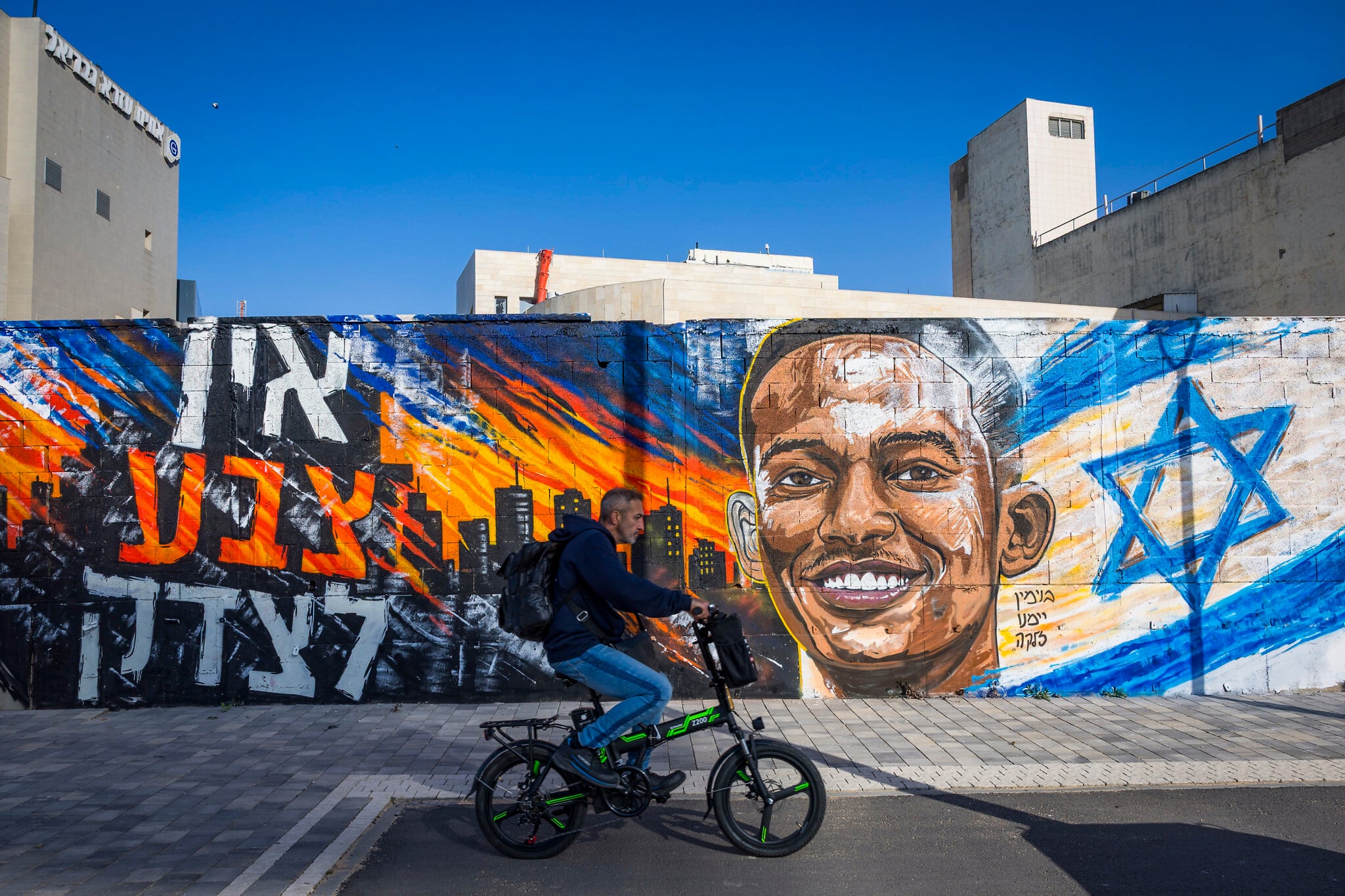
The first Monday of this year, a father and his 15-year-old son traveled to Nazareth to install security cameras outside a customer’s home. Adham Nassar and his son Nazim arrived in Israel’s largest Arab city that afternoon, entered the yard through a tall metal gate and got to work.
At 5:30 p.m., emergency services in the city received a report of a shooting. Paramedics reached the scene to find the two sprawled on the ground, their bodies riddled with bullets.
Nassar and his son were laid to rest in their hometown of Tur’an. Hundreds attended the evening funeral, and photos of the pair were shared far and wide on social media.
But while the killing shook Arab society, it barely registered among the country’s Jews, lost in a news cycle dominated by protests in Iran, the capture of Venezuelan leader Nicolas Maduro, and Knesset sparring.
Only when the death toll in the Arab community climbed into the double digits during that first bloody week of the year did the issue of violent crime plaguing a community that makes up a fifth of the population begin to command attention from the Jewish majority, with President Isaac Herzog calling the issue an “emergency” that should be “occupying the thoughts” of Israel’s politicians daily as a top priority.
According to critics, the issue has not been addressed. A year after a record toll of 252 murders in the Arab, 2026 is on pace to top that by over 20 percent.
This week, though, Israel’s politicians appeared to finally pay attention. “Murderous violence is unbearable,” National Security Minister Itamar Ben Gvir declared, as police launched a major operation to crack down on deadly crime. “We will not accept it, and we will root it out.”
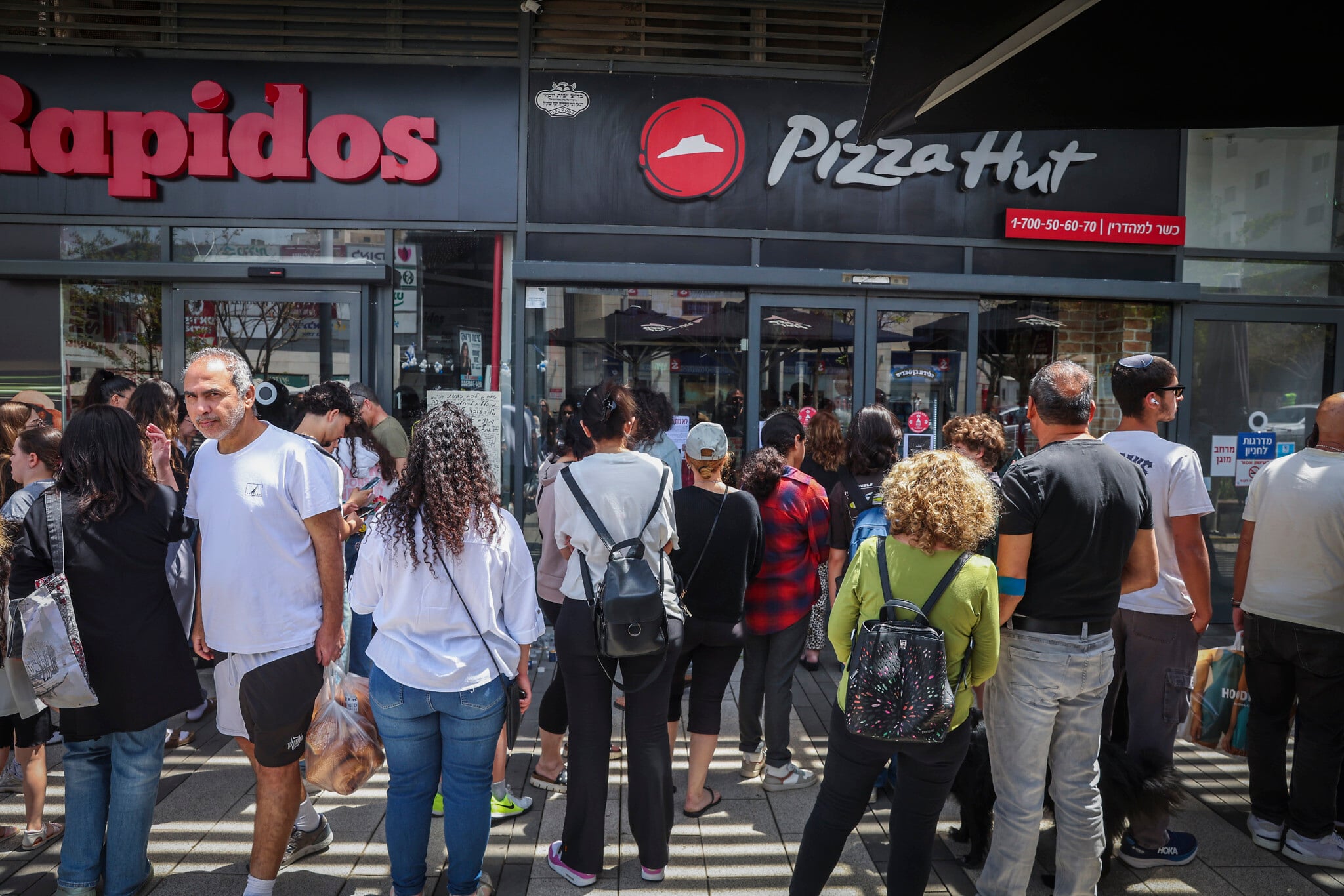
But the impetus for the push was not the 98 people killed in the Arab community so far this year. Rather, it was a pair of deadly stabbings last week: On Independence Day eve, a group of teenagers jumped 21-year-old Yemanu Zelka as he left his job at a Pizza Hut in Petah Tikva, beating him and knifing him to death. Two days later, 19-year-old Destao Tzakul was stabbed to death in Beersheba by another group of teens when leaving his house.
For many in the Arab community, who have been living in the shadow of unfettered violence for many years now, the sudden focus on crime from Israel’s police and decision-makers is seen as more evidence of the country’s perceived neglect of the minority.
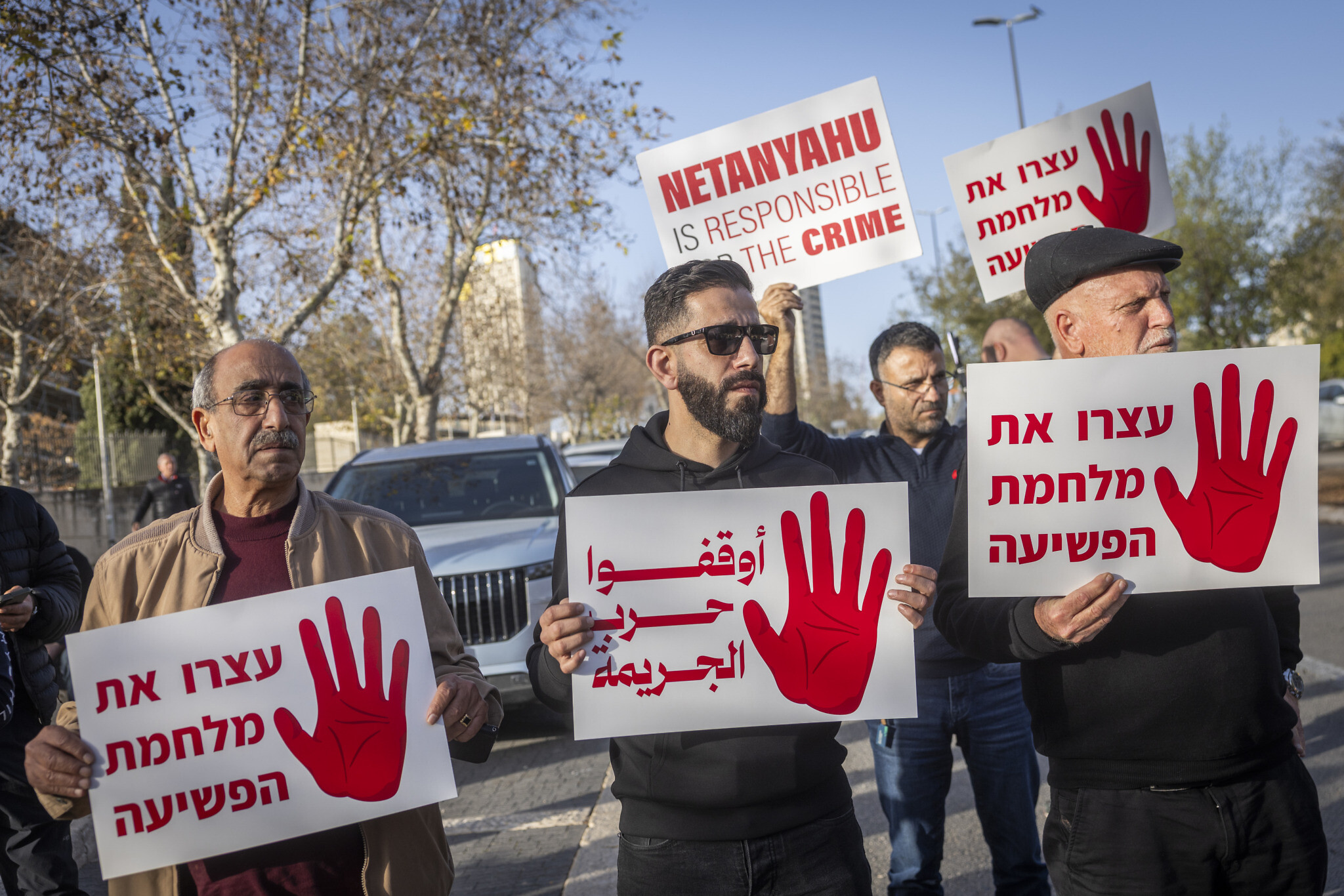
The double standard stems from “racist governance and years-long discrimination,” Deiaa Haj Yahia, a journalist for Nazareth-based Nas Radio station, told The Times of Israel.
“We see this discrimination in police statements, also,” he said. “When there’s shooting in Kfar Saba, they treat it seriously and give details, as opposed to in Tira, where it’s business as usual.”
Mounting violent crime has taken a heavy toll on civic life in most of the country’s Arab cities and towns, where many experience a palpable fear of being shot in gun violence tied to gangland activity. In Nazareth, as in other places, most shops close by sundown and pedestrian traffic becomes scant within minutes. Those who do stay out walk quickly and gaze downward, flinching at the slightest noise.
In Jewish areas, violent crime is largely uncommon, though domestic violence remains a major issue and some underworld-linked attacks do occur. Aside from the slayings of Zelka and Tzakul, the last several days have also seen two murder-suicides carried out by Jewish men against family members.
So far, 13 suspects have been arrested in Zelka’s killing, and three have been arrested for the stabbing in Beersheba. Outside a Petah Tikva court, as the detainees in the Zelka case showed up for a hearing, protesters shamed them with the chant: “A Jew killed a Jew, a Jew killed his own brother.”
No suspects, however, have been arrested in a double homicide in the Druze village of Yarka that took place just hours before Zelka was stabbed to death.
The selective shock “leaves a bitter taste of discrimination in the mouth,” wrote Suleiman al-Amoor in a Thursday column in the Ynet news outlet. “Not because the pain over Zelka’s murder in Petah Tikva is not merited, but because the parallel pain in Arab society is met with a wall of indifference and statistical labeling.”
Parallel protests
Police tarried in putting out a statement documenting the brutal stabbing of Zelka, and only began to make arrests three days after the fact, when anger over the killing, which was caught on security video, began to mount.
Hundreds gathered Saturday night outside the eatery where he was killed, demanding police take action against those involved and implying that their bungled response was rooted in racism against the Ethiopian Israeli community, which Zelka is a member of.
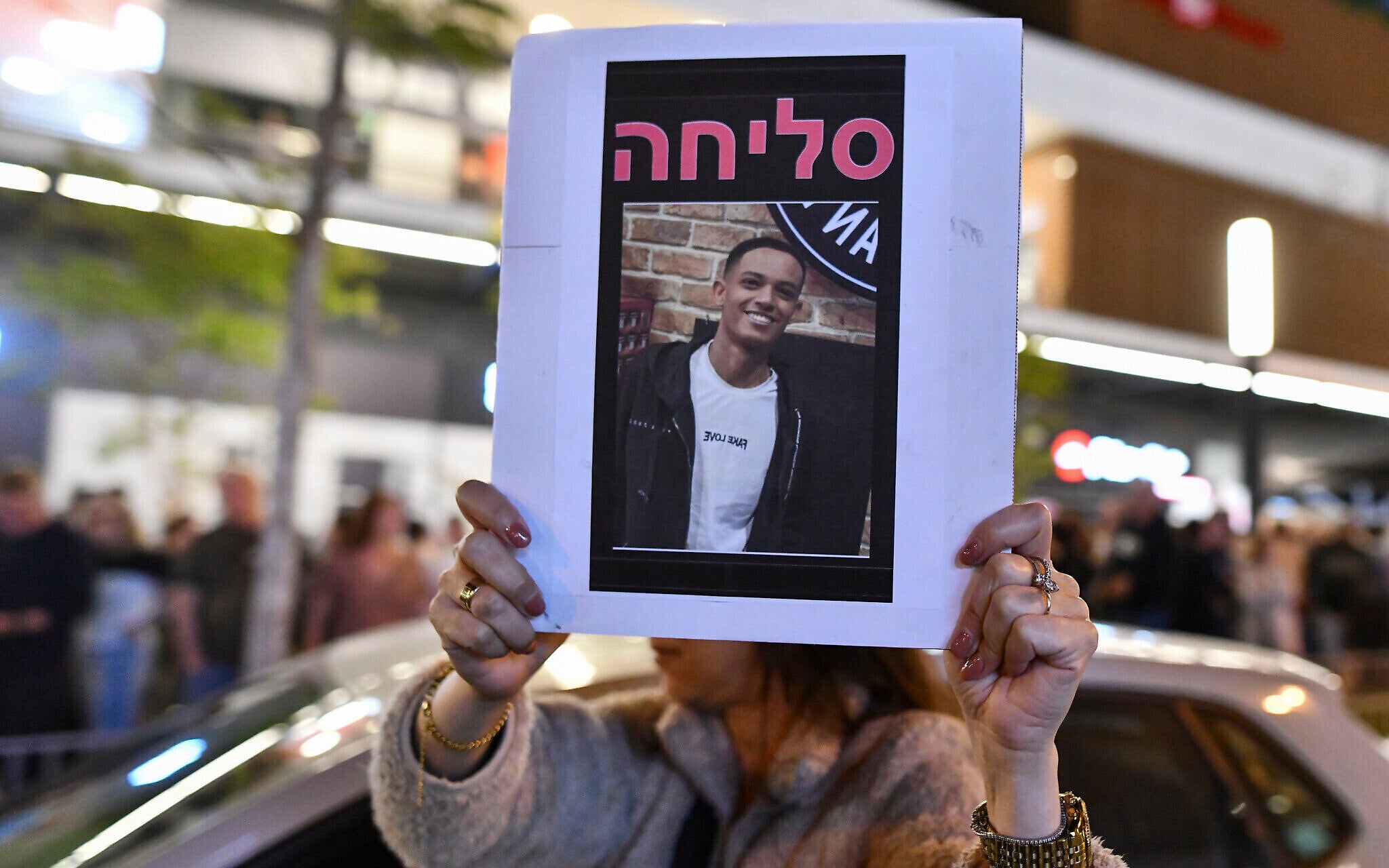
“It took the police three days to arrest the suspects, when every child in Petah Tikva knew their names,” said Ethiopia-born National Unity MK Pnina Tamano-Shata at the event. “The videos and the names were going around, and the police did nothing.”
The lawmaker’s remark evoked a common complaint made by Arab anti-crime activists during a wave of protests against deadly violence earlier this year. Yet rather than push the government to act, those protests were met by silence and inaction, along with derision from Ben Gvir.
The protests began in late January with a days-long strike in Sakhnin led by Ali Zbidat, the owner of a supermarket chain, after his businesses were targeted in shootings. The local strike led to a nationwide one, capped off by a massive march in the northern city for which tens of thousands of Arab citizens turned out. The demonstration ended when heavily armed police blocked protesters from reaching a highway where they sought to shut down traffic, a common tactic by Jewish demonstrators seeking attention for their cause.
Looking to bring the struggle to the Jewish mainstream, Arab representatives organized a protest in Tel Aviv. The rally — a rare instance in which Arab community leaders had a stage to address Jewish protesters — captured Israel’s attention for a split second.
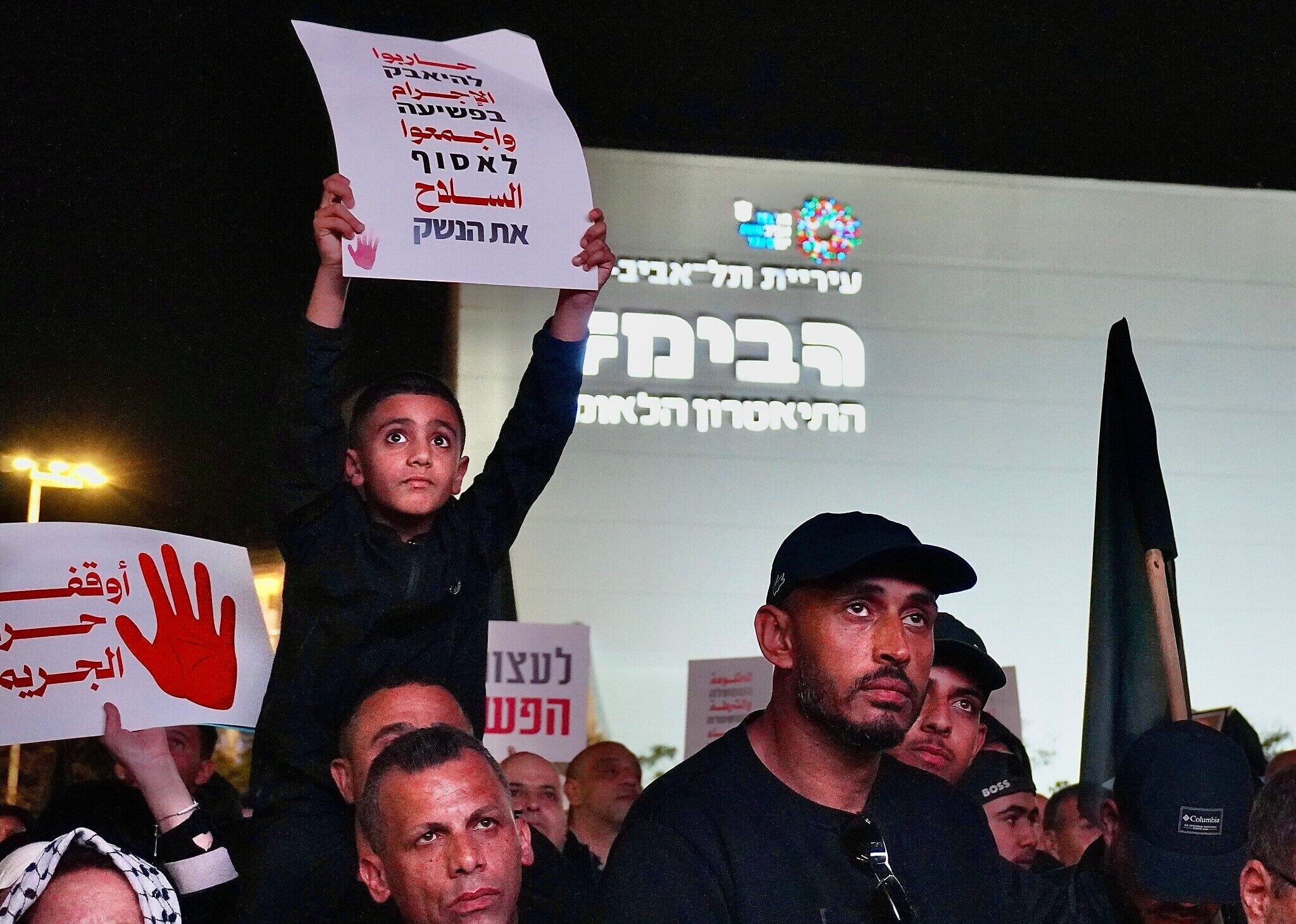
When leaders staged another strike and attempted to deliver a letter to Prime Minister Benjamin Netanyahu at his Jerusalem office the next week, they were turned away at the door. Localized protests in Arab towns continued to take place, always under a heavy police presence, but failed to capture mainstream attention. The Iran war marked the death knell for the protests, dashing the Arab community’s hope of building momentum and forcing the government to act.
Activists have long understood that without political leverage or the backing of a mass movement, getting the authorities to act will likely mean convincing those in charge that the violence wreaking havoc in their communities will someday spill into Jewish society as well.
According to experts, the violence in Arab towns is largely fueled by powerful criminal organizations that have used threats and violence to expand their footholds in Arab society in recent years, running protection rackets, loan-sharking and wielding influence over local governance.
The start of the phenomenon largely coincides with a police effort in the early 2010s to crack down on underworld crime in Jewish society, after years of deadly gunbattles and car-bombings on the streets of Tel Aviv, Bat Yam, Petah Tikva and other locales.
The success of the effort proves to many that concerted police action can bring peace and safety back to Arab streets, and some fear that gangland activity, allowed to grow even more powerful by shifting into the Arab community, may begin seeping back into Jewish areas.
But any hopes that the focus on violence sparked by last week’s killings would help bring the hammer down on organized crime were dashed by the government’s response, which made clear that it intended to concentrate on the teen hooliganism seen as behind the murders.
When Netanyahu convened a meeting on tackling the rash of killings Sunday, he invited not only Ben Gvir but Education Minister Yoav Kisch, urging them to step up their efforts to prevent violent youth crime through enforcement and through teaching.
At Kisch’s initiative, schools across Israel on Tuesday dedicated instructional time to raising awareness against violence.
The same day, Ben Gvir dispatched hundreds of police to crack down on youth violence, sending them to to Petah Tikva and south Tel Aviv. The far-right politician has long advocated against the large concentration of migrants living in south Tel Aviv, where a youth gang known as SSQ has made headlines in recent months for a spate of violent incidents.

The starkly different but parallel waves of violence are further proof of what is obvious for most Arab citizens, that they exist largely separate from Israeli society at large, out of sight and out of mind for the government.
“When a Jewish child holds a knife, the state asks, ‘Where did we go wrong?’ When an Arab child holds a knife, the state shrugs its shoulders with indifference,” Amoor wrote.
Among advocates for Israel in the anglophone world, the Tel Aviv protest in February was framed as a sparkling example of coexistence. “Arabs and Jews in Israel are one society, when one community is unsafe, we are all at risk,” read one post about the protest.
But Haj Yahia was pessimistic that anything would come of the fact that both Arabs and now Jews are concerned about violent crime.
“We saw how the people went out and protested in Petah Tikva. There are murders in Arab society nearly every day, but people are no longer taking to the streets,” he said. “Part of the reason may be fear, but there is also a strong feeling of despair, and most Arabs lack faith that the state will do anything to combat the violence.”







The Times of Israel Community.