

Tens of thousands dance at Western Wall for Jerusalem Day
Arab and Jewish teens clash at Old City march; Muslim shopkeepers close stores as annual parade of revelers passes through
 Add ToI as a Preferred Source on Google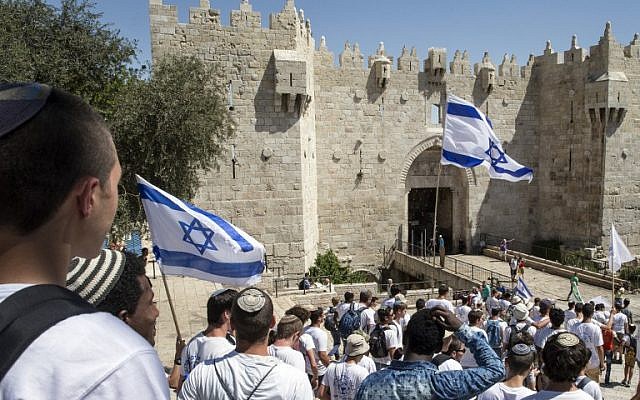
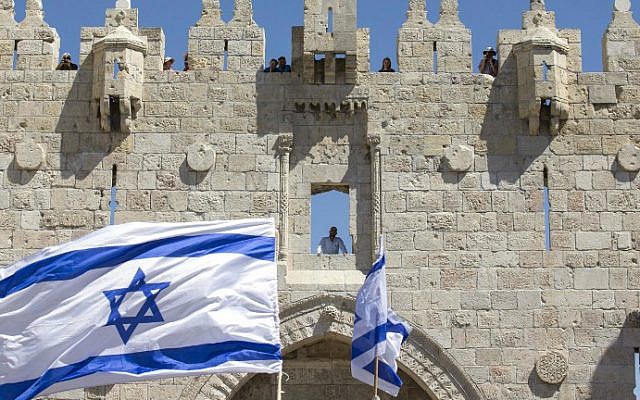
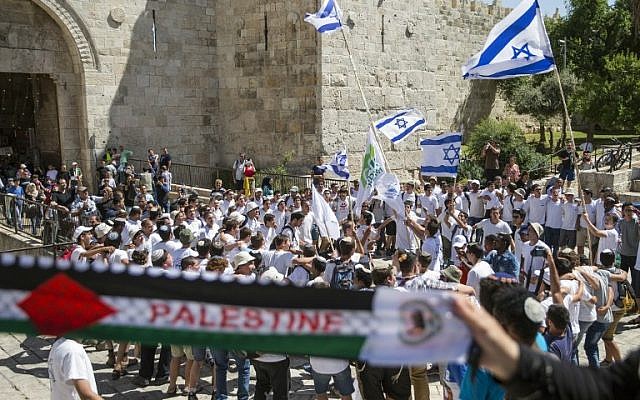
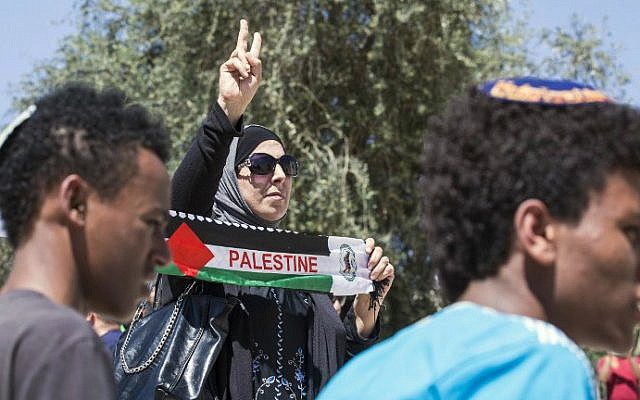
Tens of thousands of revelers danced at Jerusalem’s Western Wall Sunday evening amid celebrations throughout the capital, marking Israel’s conquest of the city in the 1967 Six Day War.
The day was celebrated with official ceremonies, special tours and events, and a march which for years has raised tensions over its route through the Old City’s Muslim Quarter.
The celebrants marched to the Western Wall plaza, adjacent to Judaism’s holiest site, the Temple Mount, through the Old City’s Muslim Quarter, where Jewish marchers and Arab protesters clashed violently throughout the afternoon and evening.
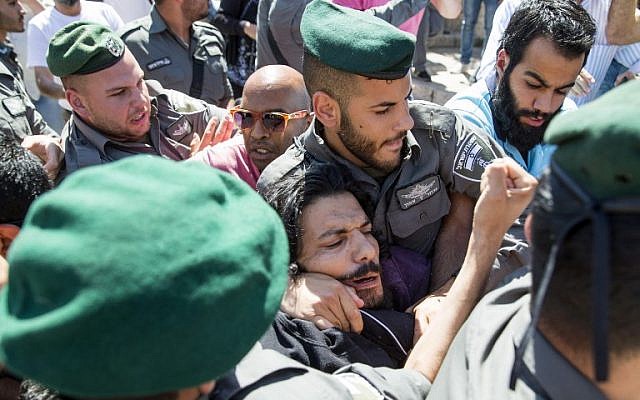
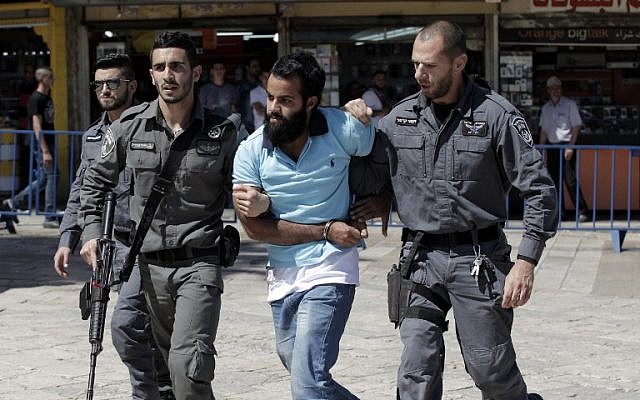
While some 2,000 police were deployed in an effort to preserve the peace and separate Israelis and Palestinians along the route of the march, Jewish teens chanted nationalistic slogans and threw cardboard boxes at the Palestinians, while Arab teens threw stones at marchers and police. Altercations also broke out between the groups at the Old City’s Damascus Gate Sunday evening.
It was the latest of multiple rounds of clashes. In the afternoon, one soldier was lightly injured when he was hit in the head with a rock. He was treated on the spot. Police dispersed the rioters, arresting one Palestinian. Two cops were injured in a subsequent clash at Damascus gate, police said. Two more Palestinian protesters were arrested.
Onlookers quoted by AFP said at least two Palestinians were wounded in the fighting, and video footage showed a man being taken away on a stretcher by Red Crescent ambulance staff.
Sporadic incidents of violence continued into the evening, according to police, including rock-throwing, occasional fights between marchers and protesters and the setting off of fireworks by Palestinians.
Israelis marked the 48th anniversary of the IDF’s capture of East Jerusalem Sunday, a military victory that opened the holy city’s ancient center — and with it the holiest place in Judaism, the Temple Mount and its Western Wall — to Jewish worshipers for the first time since Israel’s founding in 1948.
The march concluded in the evening with tens of thousands of celebrants dancing at the Western Wall in the company of prominent politicians and rabbinic leaders.
NOW: Thousands at Western Wall holding celebrations on Jerusalem Day. pic.twitter.com/BhhtKKJJbq
— Israel Breaking (@IsraelBreaking) May 17, 2015
עם חבריי המוכשרים והטובים, גלעד וגדעון, חוגגים 48 שנים לאחדות ירושלים. חג ירושלים שמח לעם ישראל! pic.twitter.com/8UhGum4QBB
— Naftali Bennett נפתלי בנט (@naftalibennett) May 17, 2015
Events were taking place throughout the city Sunday, including concerts, museums opening to the public for free and parades to mark Israel’s larger victory in the 1967 Six Day War and the unification of the capital under Israeli rule.
Official events included memorials for soldiers killed during the 1967 war and a ceremony featuring Prime Minister Benjamin Netanyahu, President Reuven Rivlin and other prominent officials.
The holiday has sparked controversy in the past. Critics associate the day with nationalist events and the so-called annual “flag march” through the Old City and has been in recent years by racist chants against Arabs and Jewish-Arab clashes.
"They come from all sides" shopkeeper says all shops in Muslim Quarter ordered closed for Jerusalem Day march pic.twitter.com/0ZkVVjVoGn
— joshmitnick (@joshmitnick) May 17, 2015
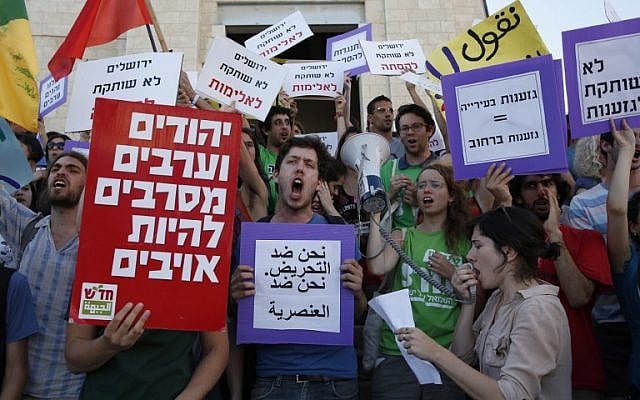
The history of clashes on the day led one anti-racism group, Tag Meir, to hold a counterdemonstration outside Jerusalem’s City Hall Sunday to protest against what it called the “march of hate.”
The group said the event had become “a focus for extremist groups” and was routinely accompanied by “racist slurs and insults, destruction of property and physical violence against the Palestinian residents of the city. “This year we say a loud and clear ‘No to the violence, the hatred and the incitement’ that threaten the delicate fabric of daily life in Jerusalem,” it said.
The group said its supporters would walk through the Muslim Quarter handing out flowers to residents as a gesture of peace and coexistence.
ירושלים לא שותקת לגזענות
ירושלים לא שותקת להסתה pic.twitter.com/0ZEAO3jR35
— חד״ש Hadash (@Hadash_org) May 17, 2015
The group was one of two NGOs that unsuccessfully petitioned the High Court of Justice to change the route of the march.
The court petition sought to force organizers to move the route of the parade away from the Muslim Quarter, but was rejected by the High Court last week.
The justices, who said they reached their decision “with a heavy heart,” ordered police to arrest and prosecute any participants engaging in violence, vandalism or any other overt displays of either anti-Arab racism or violence toward marchers, but did not have legal grounds to force a change in the route.
Police asked Arab shopkeepers along the route of the march to shutter their shops starting at 5 p.m. on Sunday.
In an Arabic-language notice handed out to shopkeepers by the police, they were warned about “unusual visitor traffic in the city” and asked to close their stores “in order to prevent unnecessary friction on this day” between locals and the expected 50,000 marchers.
Israel Police spokesperson Micky Rosenfeld said similar notices had gone out annually in recent years ahead of the Jerusalem Day march.
https://twitter.com/MickyRosenfeld/status/599938037720555520
In 2014, flag-carrying Israelis were filmed skirmishing with Palestinians at Damascus Gate. On nearby Salah a-Din Street, Palestinians stoned an Egged bus, injuring seven Israelis. The previous year, similar disturbances led to the arrest of 23 Palestinians and 13 Israelis.
Some groups have begun alternative events on Jerusalem Day hoping to bridge perceived gaps between the Jewish and Arab residents of the city.
Some of these events are sponsored by the This is Jerusalem coalition and were set to include alternative marches, tours and a concert at the First Train Station entertainment complex in the city’s south.
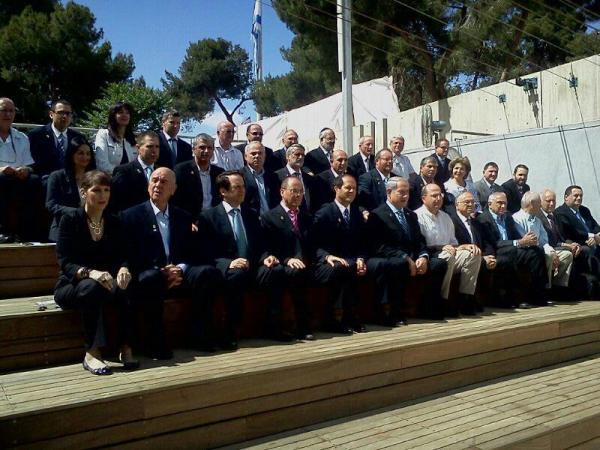
Ammunition Hill, the site of a fierce battle during the fight for the city in 1967 and today home to a monument to fallen soldiers, hosted an official government ceremony attended by Netanyahu, Rivlin, Jerusalem Mayor Nir Barkat and other dignitaries .
A number of other ceremonies were also scheduled at the Mount Herzl military cemetery, at the Rockefeller Museum, the American consulate in Jerusalem, and a special event for Ethiopian Jews who died on their journey to Israel.
Settlements throughout the West Bank also celebrate Jerusalem Day as the beginning of the Jewish settlement movement in the West Bank.
Times of Israel staff contributed to this report.






The Times of Israel Community.