

Envoy: ‘Profound’ feud over Iran deal shouldn’t stop US-Israel talks
Dan Shapiro says dispute between allies is ‘uncomfortable,’ proposes joint preparation for post-deal Mideast
 Add ToI as a Preferred Source on Google
Tamar Pileggi is a breaking news editor at The Times of Israel.
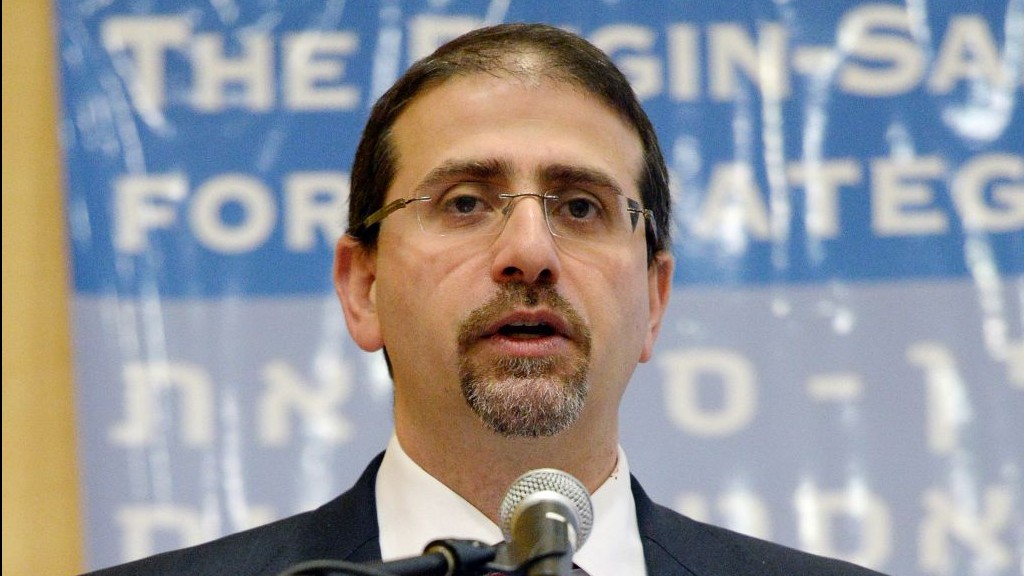
The US ambassador to Israel said Thursday the “profound” disagreements between the US and Israel over the Iran nuclear agreement were “uncomfortable.”
But Dan Shapiro said the tussle between the allies should not get in the way of planning for a future in the Middle East shaped by the agreement.
“We need to acknowledge there is disagreement between us, a profound disagreement on serious issues relating to both our security interests — but it would be better if there wasn’t one,” Shapiro told the Ynet news site. “It’s an uncomfortable situation for good friends to be in such a disagreement.”
Based on the assumption that Congress will approve the nuclear deal with Iran next month, Shapiro proposed Jerusalem and Washington “start discussions on how to deal with the new reality.”
Shapiro said there was much to work to be done on matters including finalizing a defense package for Israel for the coming decade, cutting off the supply of weapons to Hezbollah, and taking care of Israel’s missile defense needs.
Shapiro said he had appealed to Netanyahu to begin “serious and professional” talks with the US to look at ways of increasing security cooperation between the countries, particularly vis-a-vis threats from Iran.
The ambassador said that Prime Minister Benjamin Netanyahu has ignored US appeals to begin talks on ramped up security cooperation with Israel,
Referring to recent reports that the UN nuclear watchdog agency has granted Iran the right to self-inspect a suspect nuclear site, Shapiro said he trusted the International Atomic Energy Association.
“The IAEA is a very professional organization and they say they are satisfied with all the conditions [of the deal],” he said.
Congress is set to vote on the nuclear deal in mid-September. The deal, signed on July 14 between Iran and the P5+1 group of nations — the US, Britain, France, Russia, China, and Germany — calls for curbing the Iranian nuclear program and tighter inspections of nuclear sites by international monitors, in exchange for sanctions relief. Israeli officials have said the agreement doesn’t go far enough in preventing Iran from obtaining nuclear weapons.
Stuart Winer contributed to this report.









The Times of Israel Community.