

Lone soldiers from summer’s war start studies at YU
Overseas IDF volunteers attempt to adjust to American college life after seeing action in Gaza
 Add ToI as a Preferred Source on Google
Reporter at The Times of Israel
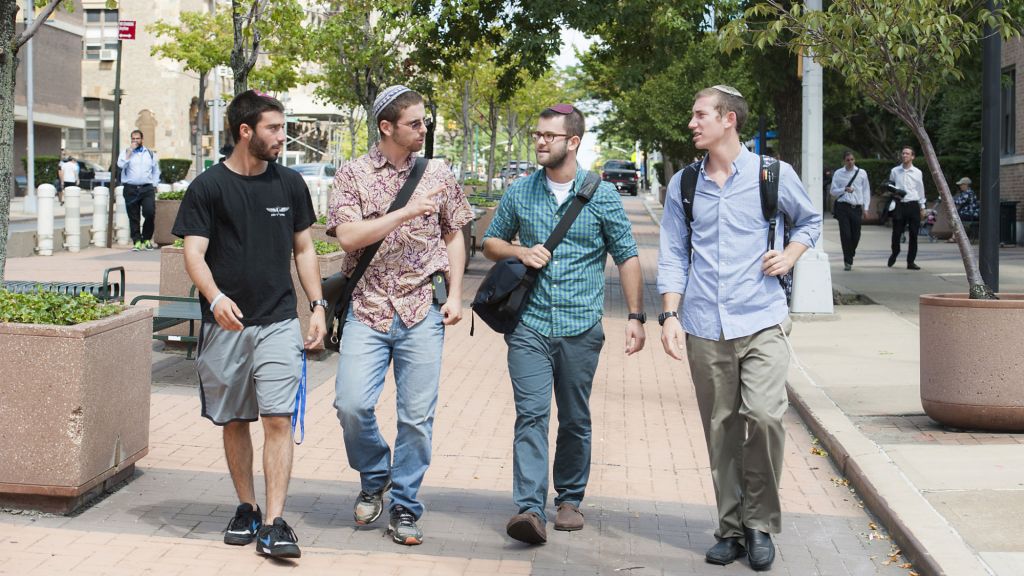
NEW YORK – It was 4 a.m. on the east coast of the United States on July 19, and Florida-native Shmuel Goldis, soldier in the Israel Defense Forces, had just finished speaking with his parents. Then the army took his phone.
Sharp shooter Goldis was going into Gaza.
“I had prepared my mother. I told her, ‘There will come a time when I’ll not have a phone for a little bit and you’ll understand what that means,'” Goldis said. That little bit turned into the many weeks of this summer’s Operation Protective Edge.
More than 2,000 Lone Soldiers serve in the IDF, according to the Friends of the Israel Defense Forces. Of them, many are what is called “Machal” or oversease volunteers, who complete an abbreviated service of typically 18 months, as opposed to Israeli-born conscripts who serve for three years.
This summer Machal volunteer Max Steinberg, who fought in the Golani brigade, was killed on the 13th day of conflict with Gaza.
Today, Goldis, 20, is one of several first-year Yeshiva University students making the transition from combat to campus. After spending 24/7 training or being in enemy territory, these combat veterans say they are slowly acclimating to college life – wearing civilian clothing, having free time, sitting still for lectures and studying for exams.
But they are also keenly aware of how differently they view things from their classmates.
“I’m not sitting in the cafeteria complaining about the food or about my room,” says Jonathan Sidlow, 19, of North Woodmere, NY. “I can’t blame anyone that wasn’t there or didn’t have the same experience as me, but that kind of attitude doesn’t click, it doesn’t register.”
Goldis agrees.
‘You always know things could be worse. I’ve been shot at, so after that it’s all fine’
“You always know things could be worse. I’ve been shot at, so after that it’s all fine. You learn what there is in life to freak out about and what not to freak out about,” says Goldis who served in the IDF’s Tzanchanim, or paratroopers unit.
Goldis and Sidlow entered the draft in 2013 after having studied in Israel for a year. For a time army life was as calm as army life can be, with its cycle of drills, missions and waiting. All that changed on June 12, when Naftali Fraenkel, Gil-ad Sha’ar and Eyal Yifrach were kidnapped and murdered.
“I knew we were going in. I just had a feeling in the pit of my stomach,” Goldis says. All the drills he did during basic training, no matter how pointless they seemed at the time, kicked in. Goldis says he felt thoroughly prepared.
Time and again Goldis and his unit entered a house to clear it, not knowing if it was rigged with explosives. Each time they narrowly escaped. He says he thinks about this every day.
“It’s very hard to understand if you didn’t experience it. It was a very intense and insane experience,” Goldis says. “In a really odd way I miss it a lot. I’ll be sitting in a class with another veteran about to take a test and I’ll turn to him and say, ‘I’d so much rather be in Gaza than doing this.’”

Aside from Yeshiva University’s incoming students, there are 20 upper classmen and some staff who served with the IDF, says Rabbi Kenneth Brander, YU’s vice president for university and community life. This can help soften the landing, Brander says.
“That being said, we have a strong mental health infrastructure here and we will be reaching out to them [combat veterans] making sure they are okay,” Brander says. The university will also check in with students who spent their summer in the southern part of Israel on Gaza’s border.
Ethan Gipsman, originally from San Diego, California served as a light machine-gunner in the Netzach Yehuda Battalion, part of the Kfir Brigade. During his service he went on missions with 19 arrests of Hamas members and members of other terrorist organizations. He was on the Syrian border last year when Syria threatened to attack Israel if the US intervened in the Syrian civil war.
Drafted on March 21, 2013, Gipsman finished serving on May 20, 2014, before Operation Protective Edge.
“I tried going back to the army but they told me I’d have to make aliyah and be there for another 14 months. I told myself if my unit got sent to Gaza I’d go,” the 19-year-old says. They weren’t sent and so he left for university.
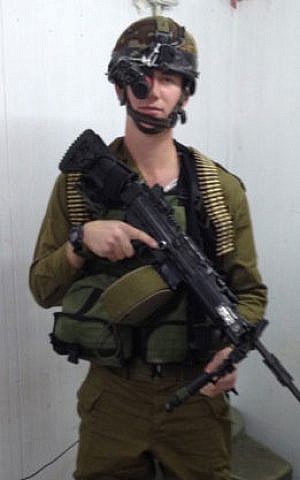
“It was pretty difficult. A lot of my friends from Yeshiva were in Gaza,” Gipsman says. “It’s sometimes hard to see school as the most important thing. I’m here, but my heart is still there.”
He says it’s much easier to speak of his experiences in Israel where everyone serves, even if it’s not in a combat unit.
“I’ve found that there are times where I look back at the missions and experiences, and the intensity of what I did kind of just hits me,” Gipsman says, particularly now that he’s in a civilian environment in America where “the overwhelming majority of people don’t really know what people who have had the same experiences as me went through.”
Serving in the IDF not a choice taken lightly, as YU’s vice president of student life Brander knows all too well.
Brander’s son, 20, is a sharpshooter in the Golani Brigade. They were not prepared when he decided to join.
“We never allowed guns in the house, not even toy guns and now he’s a sharpshooter,” Brander says. “This is a kid who has a poet’s soul but felt he needed to do something to make a difference.
“In my role as a father and vice president of students I’m finding that young people are searching to make a difference in a world where it seems like the individual is powerless,” says Brander.
But for some, getting released from the army gave back their senses of self-determination and power.
Daniel Gofine, 21, who served with Givati Brigade was born and raised in Toronto, Canada. He too had studied for a year in yeshiva in Israel and felt if his Israeli friends were serving then so should he. He spent much of his 14 months of service on the Gazan border. His service ended in May.
‘The key to passing any physical challenge was to get your head around it, and not your body’
Though the first year college student hasn’t opened a textbook for some time, Gofine relishes campus life.
“I thought I might miss the action, but I don’t miss it as much I thought. I do miss Israel and I miss the people in my unit, but I really love the experience here,” Gofine says.
He is looking forward to pursuing Jewish and general studies as well as possibly trying out for the university baseball team. Being a college student also gives him a renewed sense of freedom and control.
“I’m in control of what I want to eat, and when to do so. I’m able to spend my free time as I like. In the army, you don’t have those choices and you really are limited in what you can do,” Gofine said.
But don’t expect Gofine to start sleeping in or missing classes. Because while he likes his newfound freedom, he also said the army instilled a “never quit” work ethic.
“We were taught to always maintain a high level of focus and determination, and that the key to passing any physical challenge was to get your head around it, and not your body,” Gofine says. “University is filled with challenges, but I know that if you work hard and are focused on completing any task, you will get it done. But you first have to believe that you can do it.
Sidlow, of North Woodmere, NJ, who is on the pre-med track, said he can’t wait to return to Israel and when he does he wants to join the reserves.
“Most people my age don’t have an opportunity to stand up for what they believe in,” says Sidlow.
“Quite frankly I did something that is quite normal in another culture. I simply joined and I’m happy I did this. At the end of the day I’d do it again,” he says.






The Times of Israel Community.