

Anti-judicial overhaul protesters gear up to head back to the streets Thursday night
Activists plan to begin march only after end of Tisha B’Av fast day; ‘You don’t negotiate with the dictatorial government. You fight a dictatorial government,’ says protest group
 Add ToI as a Preferred Source on Google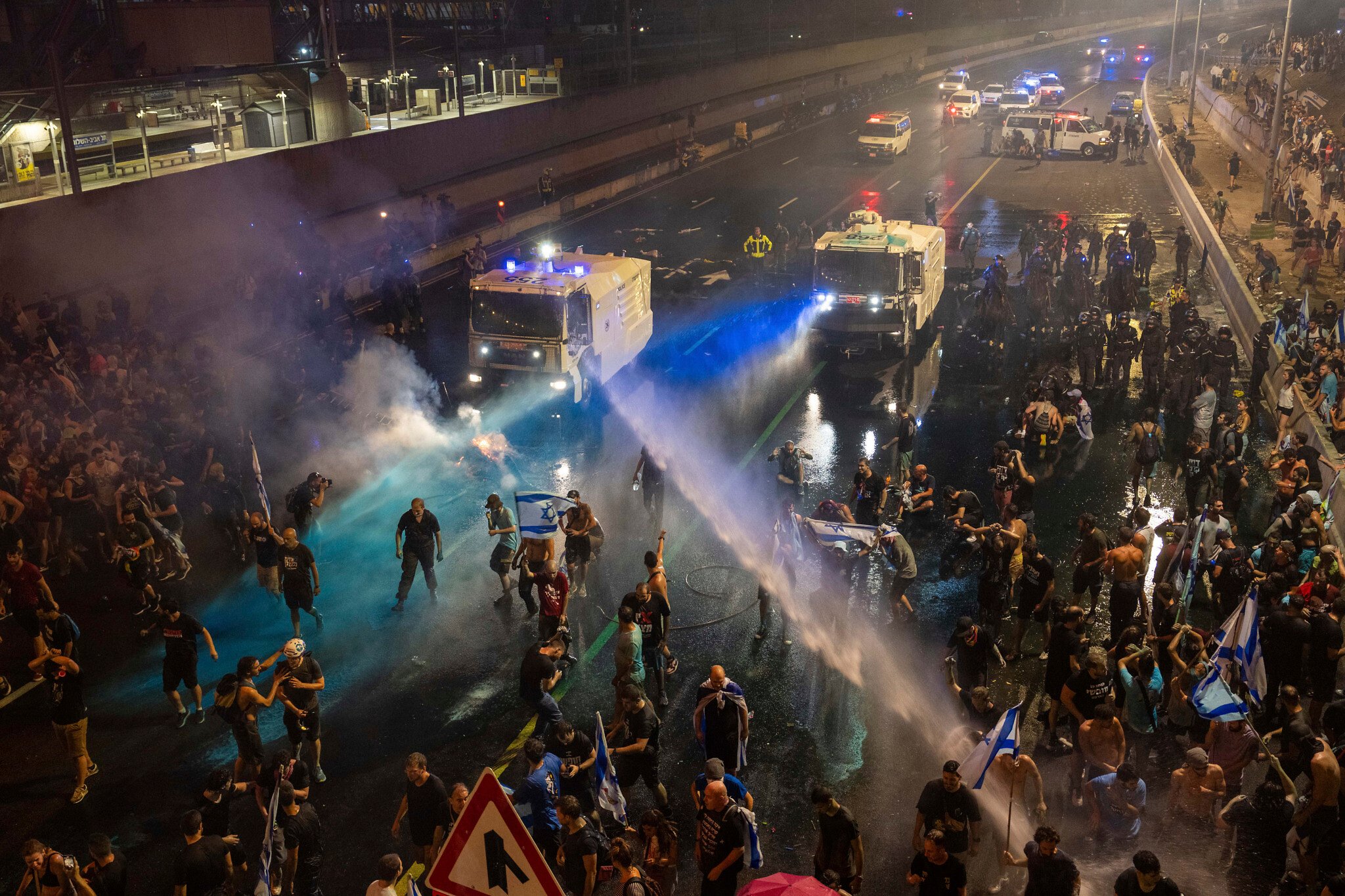
Days after the government passed the first law in its plan to overhaul the justice system, demonstrators were gearing up to once again take to the streets on Thursday, including in a mass protest in Tel Aviv.
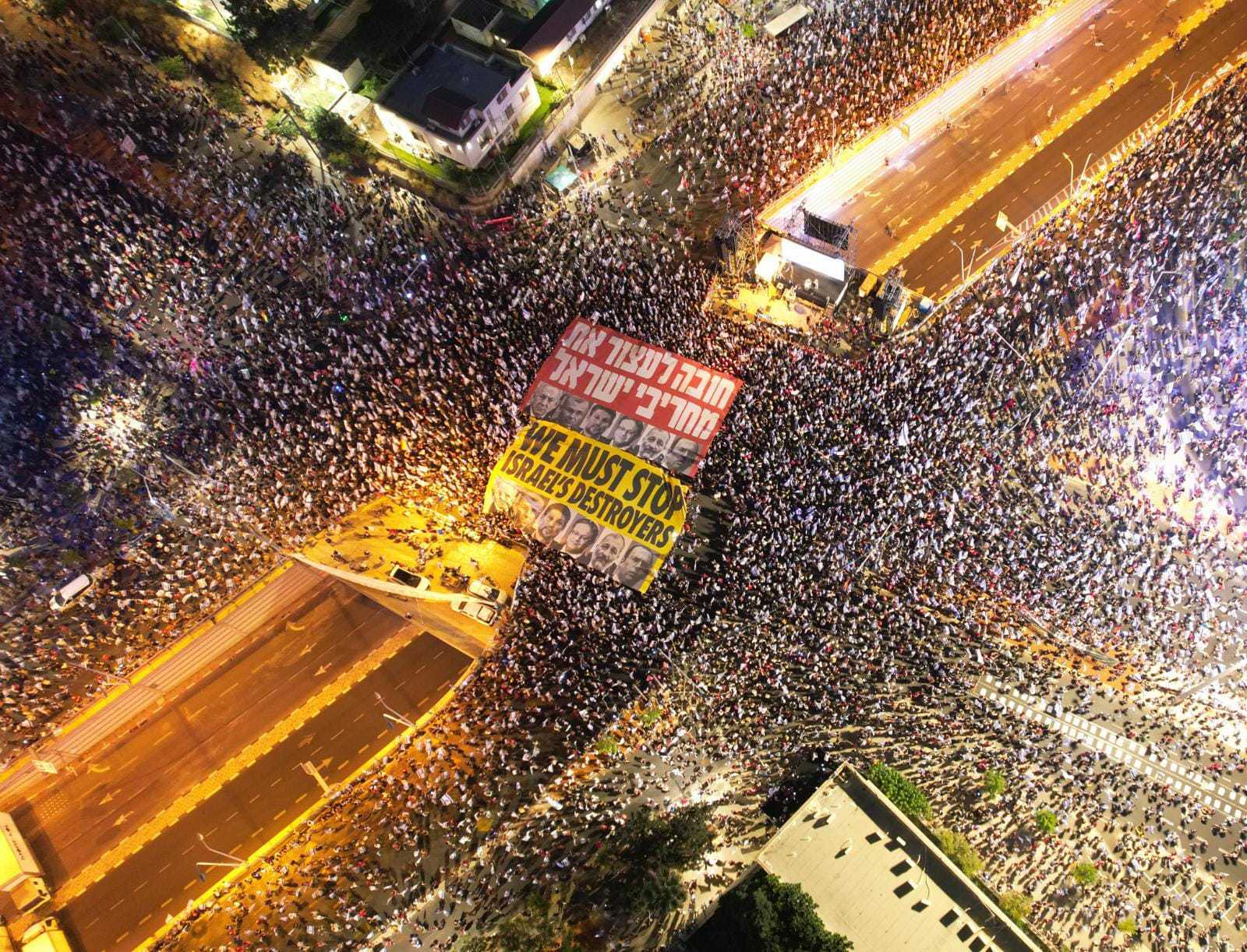
Beginning around noon and stretching into the evening, a group of activists planned to inscribe a “Declaration of Opposition and Destruction” at a central Tel Aviv square.
Also at noon in Haifa, a protest of the hi-tech sector was held, and in the evening, activists planned to gather outside a range of government officials’ homes, including Justice Minister Yariv Levin in Modiin, Intelligence Minister Gila Gamliel in Tel Aviv and Likud MK Eli Dallal in Netanya.
At night, protesters were expected to turn out for a march from Rothschild Boulevard to the rally at Kaplan Street in Tel Aviv, the site of mass protests against the overhaul for the past 30 weeks.
The protest was slated to begin only once the Tisha B’Av fast day ends, “out of respect and consideration for our friends who are fasting and keeping tradition,” organizers said.
Israel Police chief Kobi Shabtai held a meeting Thursday morning to prepare for the coming protests, reiterating police vows to allow and protect demonstrations that do not block roads, cause violence or harm public order. “The Israel Police is apolitical and works for the entire public while maintaining its values,” Shabtai said in a statement, adding that the police is “continuously examining and reviewing its activities and the activities of its officers and commanders while learning lessons for improvement.”
In a statement, the “Kaplan Force” protest group said it was continuing to fight against the government’s legislative plans, including a bill aimed at splitting the role of the attorney general into two: “You don’t negotiate with the dictatorial government. You fight a dictatorial government.”
The group said that it is “clear that the government of destruction will continue to try and pass all its dictatorial laws… therefore we have to intensify the struggle. To use tools that until now have not been utilized,” it added. “Whether on the economic front or disrupting public order and expanding protests.”
According to a report in Ynet on Thursday, the government has issued a tender to purchase six additional large water cannon trucks of two different sizes — weighing 15 tons and 18 tons.
Physicians have urged police to suspend the use of the controversial crowd dispersal tool — a number of protesters have been wounded by the high-powered water jets.
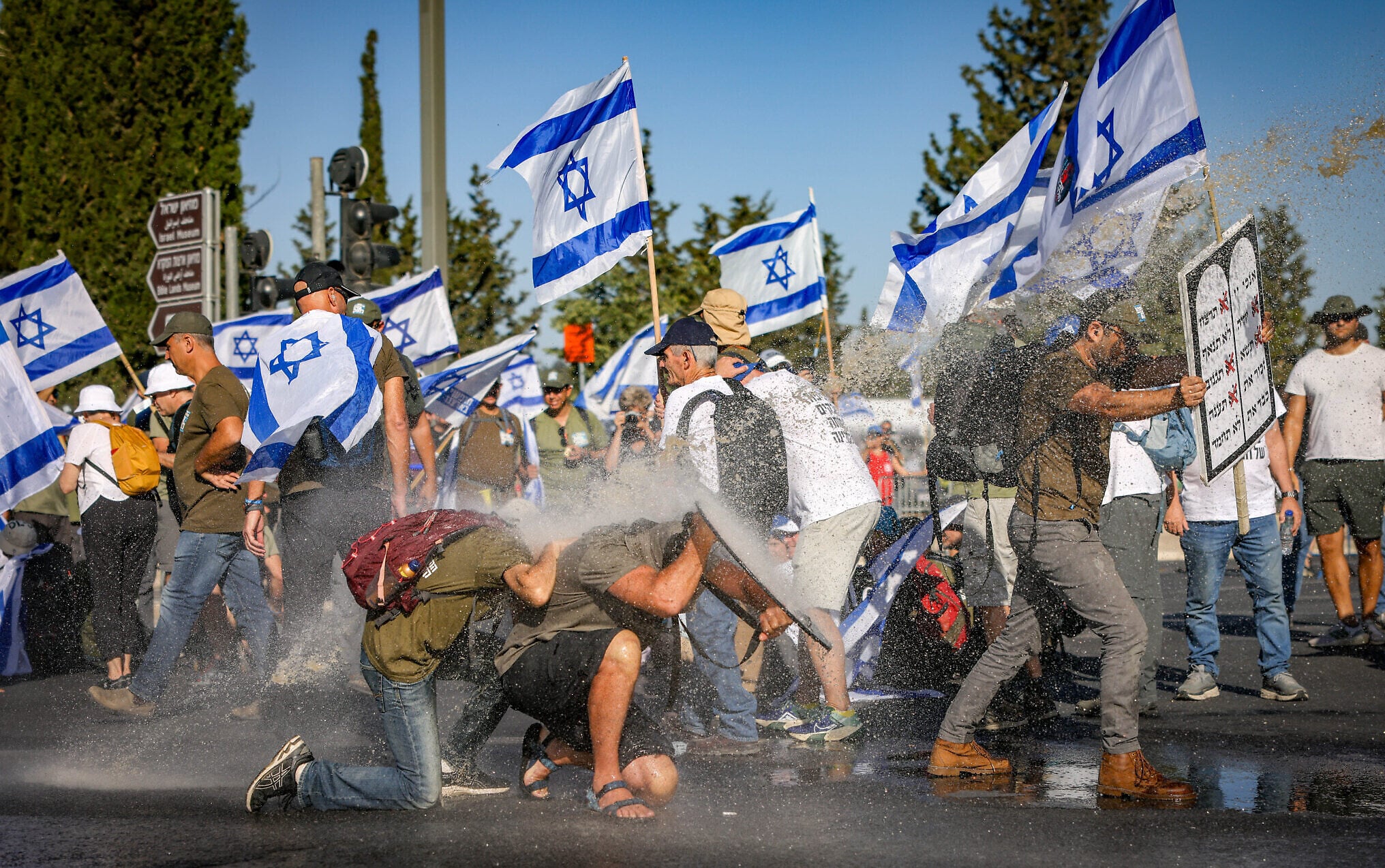
Thursday will mark the first day of mass protests since raucous rallies Monday night following the government’s passage of the “Reasonableness Law” which limits judicial review of governmental and ministerial decisions. The demonstrations were met with an unprecedented show of force by cops, sparking accusations of police brutality and excessive use of force.
During major gatherings in Tel Aviv and Jerusalem Monday and early Tuesday morning, demonstrators blocked freeways and thoroughfares for hours, as police cleared the roads using mounted police and water cannons. More than 30 protesters were reportedly wounded in the clashes, and police said that 14 officers were hurt. Around 40 people were arrested nationwide.
In Jerusalem, police used officers on horseback and powerful blasts of skunk water to drive off protesters who rallied first outside the Knesset and later blocked the Begin freeway and demonstrated near the Supreme Court building.

In Tel Aviv, some 15,000 people initially gathered at Kaplan Street outside Israel Defense Forces headquarters, before protesters began streaming toward the Ayalon highway to block the major thoroughfare. Activists on Kaplan and the Ayalon lit fires, waved flags and sang “we will not give up,” as police attempted to open the highway back up. The closures have become a regular occurrence as protests against the overhaul have ramped up in recent weeks after talks collapsed.
In an apparent first, police were equipped with stun grenades and authorized to use them against the protesters, though none were actually deployed, Channel 12 news reported.
Monday’s vote saw lawmakers approve a measure that prevents judges from striking down government decisions on the basis they are “unreasonable.” The government’s critics say removing the standard of reasonability opens the door to corruption and improper appointments of unqualified cronies to important positions.
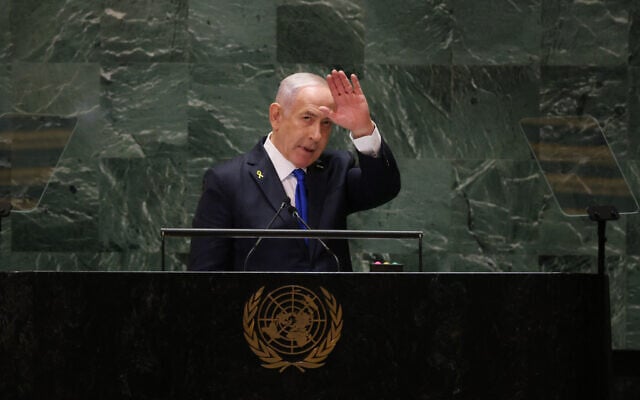
Many members of the coalition have called on the government to push ahead with the rest of its judicial overhaul plans, though Prime Minister Benjamin Netanyahu has said he will seek to reach a broad consensus on the other elements of the proposal.




The Times of Israel Community.