

Battle to save life of Kremlin critic Navalny after suspected poisoning
While spokeswoman for anti-corruption campaigner points finger at Putin, Moscow says claims of sabotage ‘only assumptions’ until tests prove otherwise
 Add ToI as a Preferred Source on Google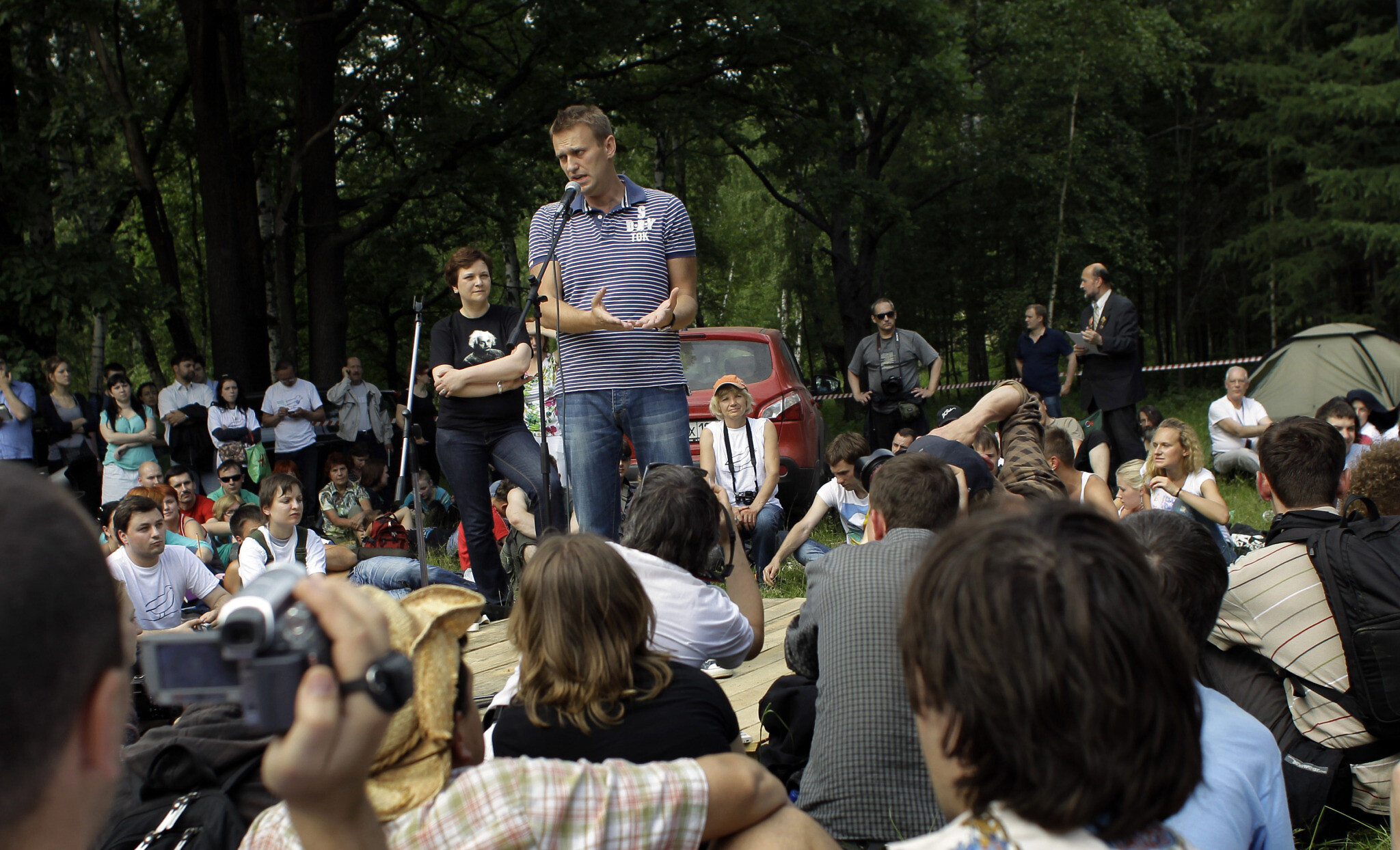
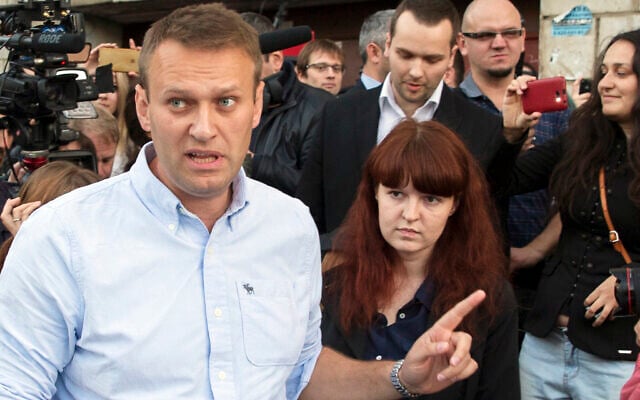
Russian doctors were fighting to save the life of leading opposition figure Alexei Navalny on Thursday, after he was rushed to intensive care in Siberia suffering from what his spokeswoman said was a suspected poisoning.
Navalny, a 44-year-old lawyer and anti-corruption campaigner who is among President Vladimir Putin’s fiercest critics, was in a coma in a hospital in the city of Omsk after he lost consciousness on a flight and his plane made an emergency landing.
“Doctors aren’t just doing everything possible. The doctors are really working now on saving his life,” the hospital’s deputy head doctor Anatoly Kalinichenko told journalists in Omsk.
Navalny’s spokeswoman Kira Yarmysh said he was on a ventilator and tests were being carried out, while he was in a serious but stable condition.

“Alexei has toxic poisoning,” Yarmysh wrote on Twitter, describing how he had taken ill during the flight from the city of Tomsk to Moscow and had to be taken off the plane.
She pointed the finger at Putin, saying: “Whether or not he gave the order personally, the blame lies with him.”
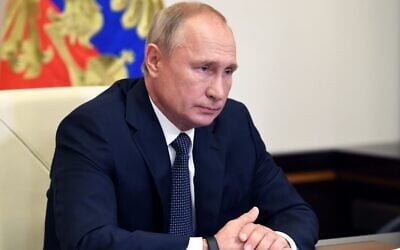
Kremlin spokesman Dmitry Peskov said he knew of Navalny’s illness and “as with any citizen of Russia, we wish him a speedy recovery.”
He said claims of poisoning were “only assumptions” until tests proved otherwise.
Kalinichenko said no diagnosis had yet been reached, while the regional health ministry said Navalny was in a natural, not induced, coma.
Navalny’s wife Yulia arrived at the hospital in the city which lies about 2,200 kilometers (1,400 miles) east of Moscow.
‘Something in his tea’
Yarmysh said police and investigators had also arrived and journalists reported seeing FSB security service agents at the hospital.
“We think that Alexei was poisoned with something mixed in his tea. That was the only thing he drank in the morning,” Yarmysh wrote on Twitter.
Yarmysh told the Echo of Moscow radio station that she was “sure it was intentional poisoning.”
State news agency TASS cited a law enforcement source questioning this.
“We can’t rule out that he drank or took something himself yesterday,” the source said, a claim Yarmysh dismissed as “complete rubbish.”
Political analyst Tatiana Stanovaya said that Navalny has “garnered hundreds of enemies, including some hardened individuals,” pointing to his anti-corruption investigations that attract millions of views online.
British Foreign Secretary Dominic Raab tweeted he was “deeply concerned” while EU foreign affairs high representative Josep Borrell wrote that if the suspected poisoning was confirmed, “those responsible must be held to account.”
Previous attacks
The politician has previously suffered physical attacks, and a number of other Kremlin critics have been poisoned in the past.
Navalny endured chemical burns to his eye in 2017, when attackers threw green dye at him outside his office.
Last year, Navalny said he suspected poisoning after he suffered rashes and his face became swollen while he was serving a short jail term for calling for illegal protests.
Yarmysh said that Navalny seemed “absolutely fine” as they went to the airport in Tomsk.
“He only drank black tea in the airport,” she said.
“Straight after takeoff he quite quickly lost consciousness.”
A charismatic lawyer and whistleblower, Navalny has been traveling the country to promote a tactical voting strategy to oppose pro-Putin candidates in more than 30 regional elections in September.
Navalny went to Siberia to help opposition candidates.
“The ruling party has a lot of money. but we can only rely on the help of good, honest people,” he wrote in an Instagram post from Tomsk this week.
Navalny has been the target of multiple criminal probes, while his Anti-Corruption Foundation is regularly raided by police and investigators.
He has served numerous terms in police cells for organizing illegal protests.
High-profile poisonings
Recently, Navalny has backed the protests in Belarus against strongman Alexander Lukashenko, encouraging supporters who “want what Belarus has” to back opposition candidates.
The incident follows other poisonings of Kremlin critics.
Britain named two Russian military intelligence agents as suspects after Russian double agent Sergei Skripal and his daughter Yulia were poisoned with nerve agent Novichok in the city of Salisbury in March 2018.
In 2006, former Russian security service agent Alexander Litvinenko was fatally poisoned with radioactive polonium in a cup of tea in London. Russia refused to extradite chief suspect Andrei Lugovoi, who became a nationalist MP.
Several other opposition figures have suffered severe illnesses in Russia that they blamed on poisoning.







The Times of Israel Community.