

 From the Liveblog of
Sunday, March 22, 2026
From the Liveblog of
Sunday, March 22, 2026
IAF says failure to intercept two separate Iranian missiles last night in south is coincidental
 Add ToI as a Preferred Source on Google
Emanuel (Mannie) Fabian is The Times of Israel's military correspondent
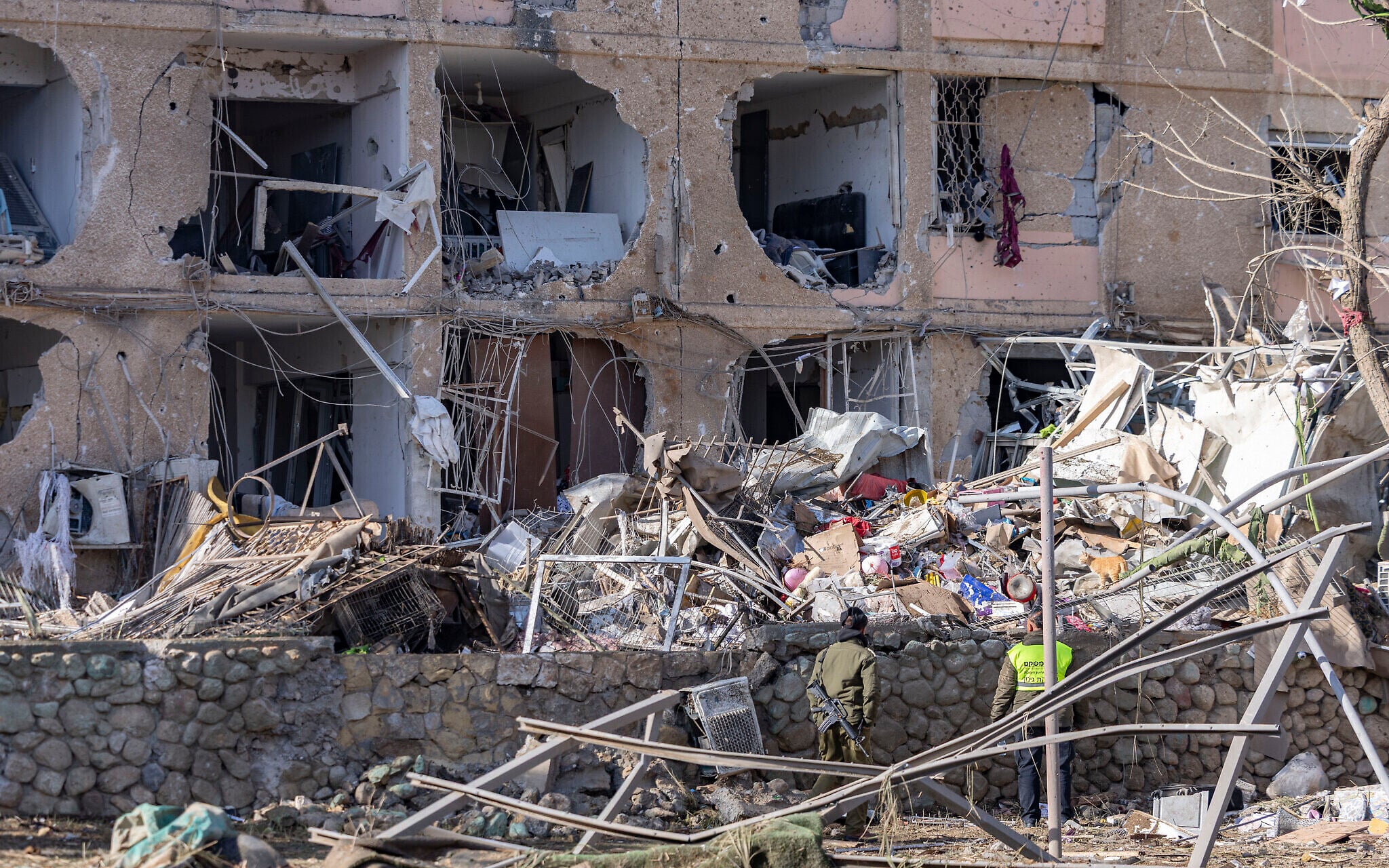
The Israeli Air Force says the failure to intercept the two Iranian ballistic missiles that struck the southern cities of Dimona and Arad last night, injuring over 150 and causing extensive damage, had different and unrelated circumstances.
According to the IAF’s probes of the incidents, there is no relation between the errors that led to the missile impacts. The fact that the incidents occurred in the same area within two hours is entirely coincidental, the IAF says.
The missiles that hit Dimona and Arad carried conventional warheads — not cluster warheads — with hundreds of kilograms of explosives. Air defenses had engaged both projectiles, but the interceptors failed to knock them down.
The IAF says the Iranian missiles were likely from the Ghadr family of projectiles and are a known threat.
Two earlier missile attacks on the same area in southern Israel were successfully intercepted using the same air defense systems, according to the IAF, stressing that there is no “systemic failure” in Israel’s air defenses.
More than 400 ballistic missiles have been launched from Iran at Israel since the start of the war, with the IAF reporting an interception rate of 92 percent of attacks heading for populated areas and key infrastructure.
In all, five missiles carrying conventional warheads with hundreds of kilograms of explosives have struck populated areas in Israel, causing extensive damage in four cases. There have been more than two dozen incidents of missiles carrying cluster bomb warheads hitting populated areas, with over 100 separate impact sites.








The Times of Israel Community.