

Most Israelis don’t believe Netanyahus’ claims of innocence
Nonplussed by Iran threat, Israelis are optimistic, satisfied with life, see cost of living as more worrying than security situation, want ultra-Orthodox drafted into army
 Add ToI as a Preferred Source on Google
Sue Surkes is The Times of Israel's environment reporter
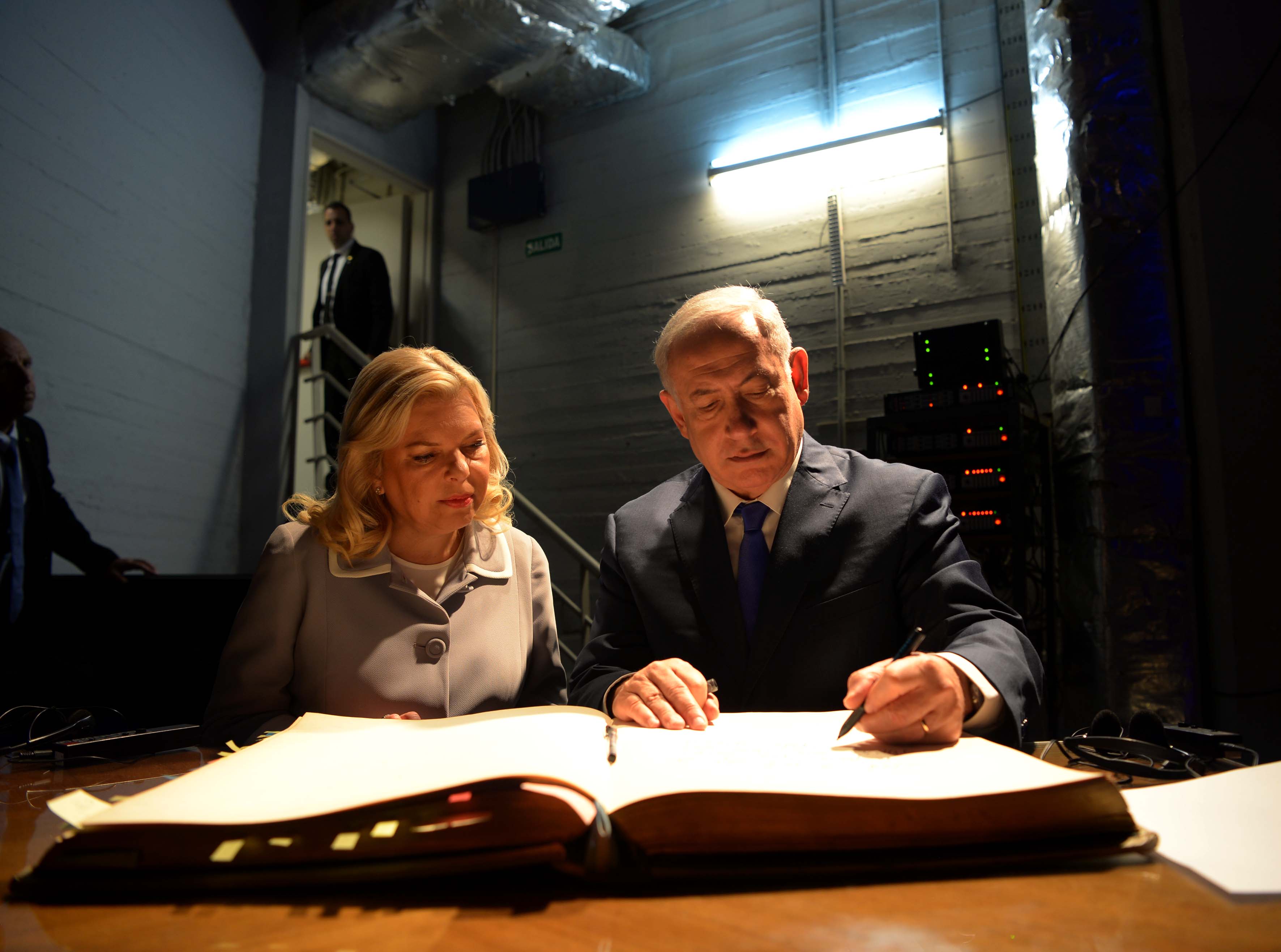
Most Israelis do not believe Prime Minister Benjamin Netanyahu’s oft repeated claim that “there will be nothing, because there is nothing,” in the various corruption investigations against him. Some 54% do not believe him, as compared to 34% who do.
Most (63%) also think that he should resign if the attorney general brings charges against him and that new elections should be called. Twenty-nine percent do not think he should resign.
The findings arise from a survey carried out for the Yedioth Ahronoth newspaper on Wednesday, the eve of the Jewish New Year.
Only 12 percent of respondents completely believe Netanyahu, half tend not to believe him, and a third do not believe him at all when he says the allegations are all hot air, the survey found.
Only 20 percent of the population believes the prime minister’s wife, Sara Netanyahu, when she insists on her innocence regarding meals from top restaurants that were allegedly ordered for her family’s private consumption and paid for by the public. Seventy percent do not believe her.
Despite these attitudes, or maybe because of a perceived lack of alternatives, Netanyahu is still the preferred candidate to lead the country and is rated as a quite good to very good prime minster by 49% of the public, leaving rivals Yair Lapid of Yesh Atid (12%), Avi Gabbay of Zionist Union (ten percent), Naftali Bennett (Jewish Home) and Kahlon (both five percent) trailing way behind.
But the smell of possible corruption, it emerges from the survey by Dr Mina Tsemach and Mano Geva, has nevertheless weakened the Likud.

Were elections to be held today, Netanyahu’s party would get 24 seats (down from 30 after the last general election in 2015), with Zionist Union on 22 (from 24 today), Yesh Atid surging to 18 seats (up from 12), and Jewish Home garnering 12 (up from 8).
While the prime minister rails against the Iranian nuclear threat at every possible opportunity — most recently on Tuesday before the UN General Assembly — most Israelis see the cost of living as their most pressing issue.
Asked to to choose what they view as the most serious problem facing the country, 30% chose the cost of living, 17% the security situation, 15% gaps between rich and poor, 12% the price of home purchase, nine percent tensions between left and right, and eight percent tensions between religious and secular Jews.
The survey indicates that the Netanyahus are not the only public figures apparently out of step with what the public thinks.
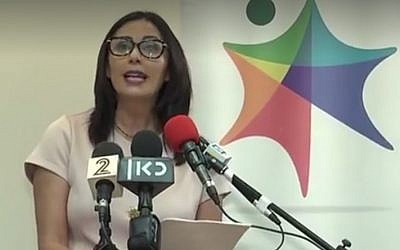
Netanyahu’s culture minister, Miri Regev, whose father was born in Morocco, expends significant energy pushing for state support of institutions and programs that promote what is known as Mizrachi (eastern) culture. And yet just one percent of the public sees the gap between Jews originally from Muslim countries and those from European ones (Mizrachi and Ashkenazi, respectively) as the most serious issue.
Regev, a frequent fixture on the media, who misses no opportunity to shout out against what she sees as the leftist cultural establishment and to threaten to reduce its public funding, comes near the bottom of the list of politicians when it comes to popularity, landing just above Aryeh Deri, leader of the Shas Party and a former convict, who was once the golden boy of the Knesset.
At the top of the popularity list are Transport Minister Yisrael Katz (Likud), followed by Finance Ministry Moshe Kahlon (Kulanu) and Justice Minister
Ayelet Shaked (Jewish Home).
Despite the tendency of Israelis to complain about “the situation,” the survey, conducted among 533 respondents, revealed the population to be optimistic and largely satisfied with their lot.
A whopping 86% rated their personal situation as between excellent and good, with almost half of these answering ‘excellent’ and ‘very good.’
Furthermore, 61% were optimistic about the future, as against 32% who were quite or very pessimistic.
A large majority — 71% think Israel’s security situation “good to excellent,” with 53% believing the same to be true of the economic situation.
More than half (55%), however, see the social situation on a spectrum from not good to bad.

When it came to the issue of recruiting ultra-Orthodox Jews to the army, however — today, they are essentially exempted from service — secular Jews overwhelmingly expressed their resentment that their families had to bear such a large burden of the country’s defense.
Seventy percent of those questioned wanted the state to recruit ultra-Orthodox Jews, with 20% — twice the proportion of the ultra-orthodox in society — opposed and ten percent said that they didn’t know.
On the tension between the Knesset and the High Court, which led last week to Justice Minister Shaked and Education Minister Bennett unveiling a plan to bolster the former at the expense of the latter, almost half the population (46%) thinks the Supreme Court exceeds its purview when it cancels laws passed by the Knesset and 50% are in favor of clipping its wings via legislation. Thirty-nine percent think the court is behaving as it should do.










The Times of Israel Community.