

America’s decaying Rust Belt could decide White House race
If Pennsylvania and Ohio’s disaffected voters swing to Trump in November, the Republican stands a good chance of becoming president
 Add ToI as a Preferred Source on Google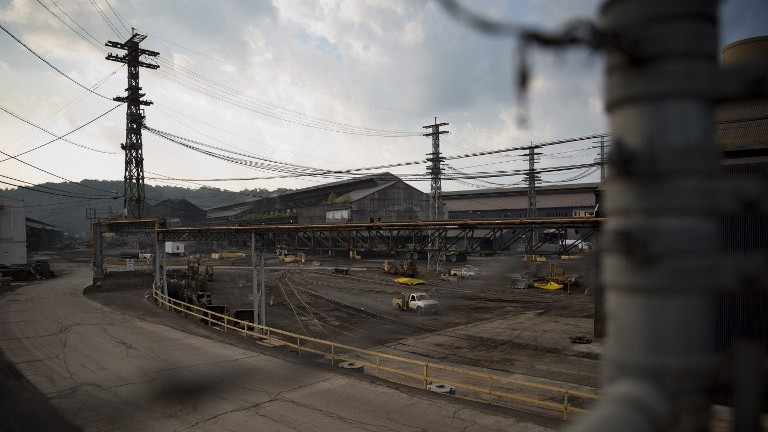
JOHNSTOWN, Pennsylvania (AFP) — The White House race could be decided in the Rust Belt — a vast, decaying former industrial powerhouse in the US Midwest and Northeast where Hillary Clinton and Donald Trump are battling for the support of working class white voters.
The region, also typified by a declining population and urban decay, forms an arc around the Great Lakes, running mainly through Pennsylvania and Ohio.
If those two states — each won twice by Democrat Barack Obama — swing to Trump in November, the Republican stands a good chance of becoming president.
Major cities such as Philadelphia, Pittsburgh and Cleveland are rich in Democratic votes, thanks to their large African American communities. Obama campaigned for Clinton on Tuesday in Philadelphia.
The countryside and small towns are however home to descendants of workers who toiled in steel mills and coal mines that made the area a prosperous one from the end of the 19th century to the late 1970s.
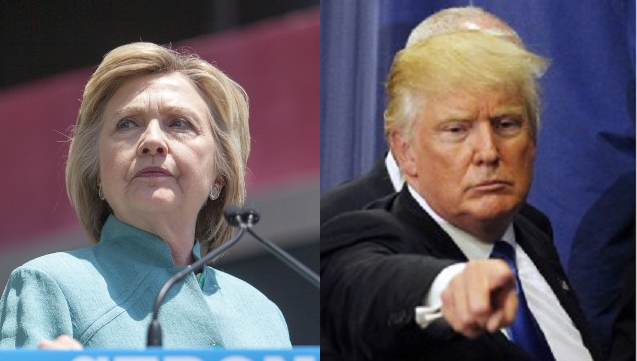
Many of them are unskilled white workers whom Trump is wooing with his promise of reindustrialization and of “making America great again.”
Johnstown, a former steel capital tucked away in a valley, is symbolic of the discontent that exists among the working class towards the Democratic Party.
On the banks of the Conemaugh River, along a train track that used to transport the rails produced here, huge steel mills closed for 25 years still loom, classified now as historic monuments.
There are no jobs, so people leave. Those who have stayed — just over 20,000 — are now more conservative than back in the city’s days of industrial might and glory.
Cambria County, which includes Johnstown, voted for Bill Clinton in 1992. Four years ago, 58 percent of its people voted for Mitt Romney over Obama.
“They’ve jumped off because he’s talking the right way,” said Frank Fantauzzo, the Democratic party’s county chair who is also a former steel worker and union representative.
The Democrats are not giving up. It was here in Johnstown where Hillary Clinton came the day after accepting the presidential nomination in July to promote her plan to resurrect dying industries.
But Trump has been present as well.
He traveled to Monessen, south of Pittsburgh, in June and in August to Altoona, a conservative stronghold. Each time he pledged a manufacturing renaissance and to bring home jobs that were sent abroad to Mexico and China.
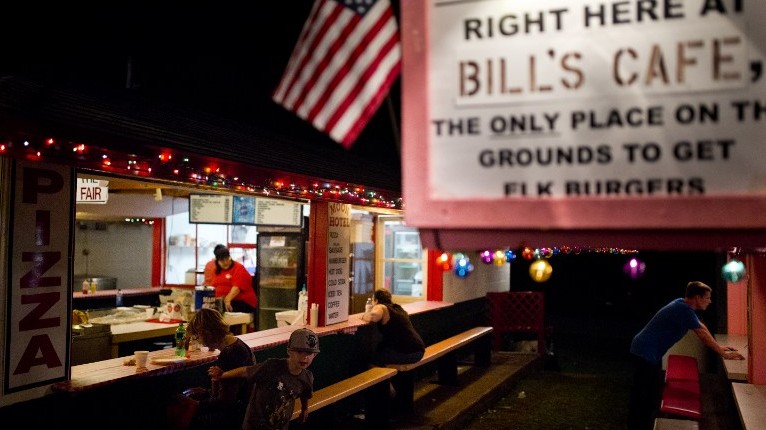
At the annual Cambria County fair in Ebensburg, population 3,000, it was practically impossible to find a Clinton supporter. Some of the town’s people are veterans who say they are voting for Trump because he will be a tough leader.
Scott, a 44-year-old auto mechanic without a college degree, says he thinks Trump has “proven to be successful, so he can start running the country like a business instead of like a politician.”
“I’m going for Trump because he’s for coal,” added Ryan Weakland, 22, a construction worker who has already spent two years working in a mine.
The further you get from the big cities, such as Pittsburgh — where Uber is testing a driverless car — the higher the unemployment rate gets and the more Trump signs you see dotting lawns.
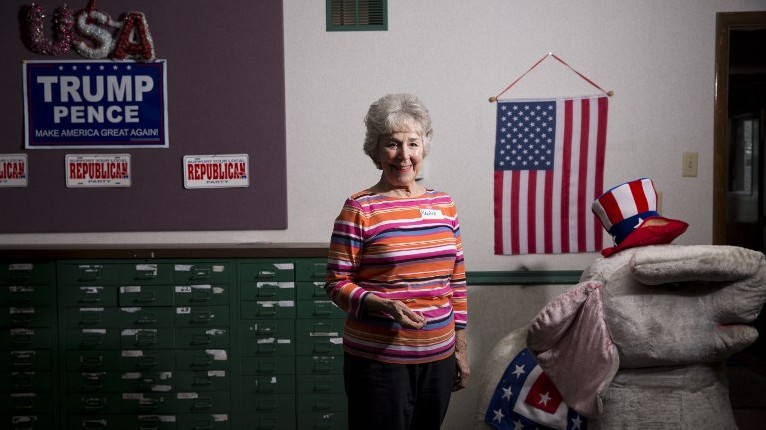
At a Republican Party office in Altoona, people file in to ask for Trump yard signs, only to be told there are no more.
“It’s just been crazy,” said Lois Kaneshiki, chairwoman of the party’s Blair County branch. “The difference is exponential between the interest in Romney in 2012 and the interest in Trump.”
Why is Trump such a hit?
Few Democrats would say so but they see a partial explanation in Trump’s angry discourse against the US political establishment and against immigrants.
From his huge mansion built on land that has belonged to his family for five generations, former Democratic state lawmaker Allen Kukovich sees a link between intolerance and distance from the area’s economic hubs.
“There is a tendency to blame others and to respond to politicians who try to raise fears,” he said.
Harriet Ellenberger, a labor activist and daughter of a railroad worker, still cannot get over having seen a neighbor put a Trump sign in their yard.
“It is so scary. Maybe they are mad. I think they are more racist and homophobic and woman-haters. It’s bias more than any economic thing,” she said.
For now, Clinton is holding on to the white vote and remains ahead in the polls in Ohio and Pennsylvania.
But that could change if Trump can convince more blue-collar workers that Clinton looks down on them. To do that, he repeats Clinton’s own words — she called his supporters “deplorables.”
She has expressed regret, but will that be enough? The outcome on November 8 will tell the tale.









The Times of Israel Community.