

Former minister questioned over bribe allegations
Unnamed official accused of accepting money in exchange for influencing government tenders; suspects’ homes searched
 Add ToI as a Preferred Source on Google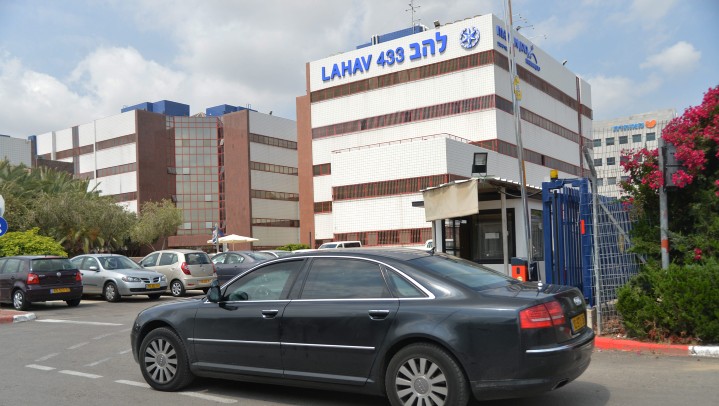
Police detained a former minister for questioning Tuesday morning on suspicion that he took bribes in exchange for swaying government tenders related to his ministry, which were worth millions of shekels.
Several of his associates were also being probed.
Authorities said they had searched the homes of a number of the suspects and confiscated computers and documents.
Police said the allegations pertained to the period in which the as-yet unnamed official served as a minister, 2009-2013. The investigation into his conduct was carried out secretly over the past year, police said, before being revealed on Tuesday.
The former minister will be questioned at police’s Lahav 433 anti-corruption unit in Lod over the coming hours. Officials will then decide whether to bring him before a court or release him conditionally, Israeli media reported.
Ministers, Knesset members and even prime ministers under investigation for corruption and other criminal charges are not uncommon in Israel.
A survey released by Transparency International in December found that Israel ranked as the 36th-least corrupt country — by public perception — out of the 177 in the survey, a rise of three spots since the last study, but came in only at 23rd-least corrupt among the 34 OECD member countries.
The survey also found that Israelis feel that political parties, religious institutions and civil servants are among the most corrupt entities in the country. A full 79 percent of respondents felt that political parties were corrupt or extremely corrupt, 73% said religious bodies were corrupt, and 60% said public officials and civil servants were corrupt.
In June veteran Labor Party MK Binyamin Ben-Eliezer dropped his bid for Israel’s presidency three days before the election, over allegations of financial impropriety
In May, former prime minister Ehud Olmert was sentenced to six years in prison, a two-year suspended term, and a fine of NIS 1 million ($289,000) for his involvement in a graft scandal surrounding the construction of the Holyland residential complex in Jerusalem.
On Monday, a judge said Olmert and other officials convicted in the case could stay out of jail during the appeals process.
Finance minister Avraham Hirchson (Likud/Kadima), who served in Olmert’s government, was jailed in 2009 for embezzling millions from a union he used to run. He was released in January 2013, almost two years before his five-year sentence was up, due to good behavior. Hirchson had also been ordered to pay a NIS 450,000 fine.
Aryeh Deri, leader of the large ultra-Orthodox Shas party, was jailed in 2000 for taking bribes. He served almost two years. Shas’s Shlomo Benizri was jailed in 2009 after being convicted of taking bribes when he served as employment and social affairs minister in 2002 and 2003. He served two and a half years of a four-year sentence.
Former president Moshe Katsav was convicted in 2011 of rape, sexual assault and harassment of a number of female employees during his tenures as tourism minister and president. He was sentenced to seven years in prison, and has since been waging a campaign for release on numerous fronts. In 2012 and again in 2014 he lost appeals for a retrial.
Other former high-ranking politicians convicted of crimes include Kadima’s Haim Ramon (sexual misconduct), Tzomet’s Gonen Segev (smuggling, forgery and fraud), Likud’s Naomi Blumenthal (obstruction of justice and bribery) and Shas’s Yair Levy (embezzlement) and Ofer Hugi (forgery and fraud).
Gavriel Fiske and AP contributed to this report.




The Times of Israel Community.