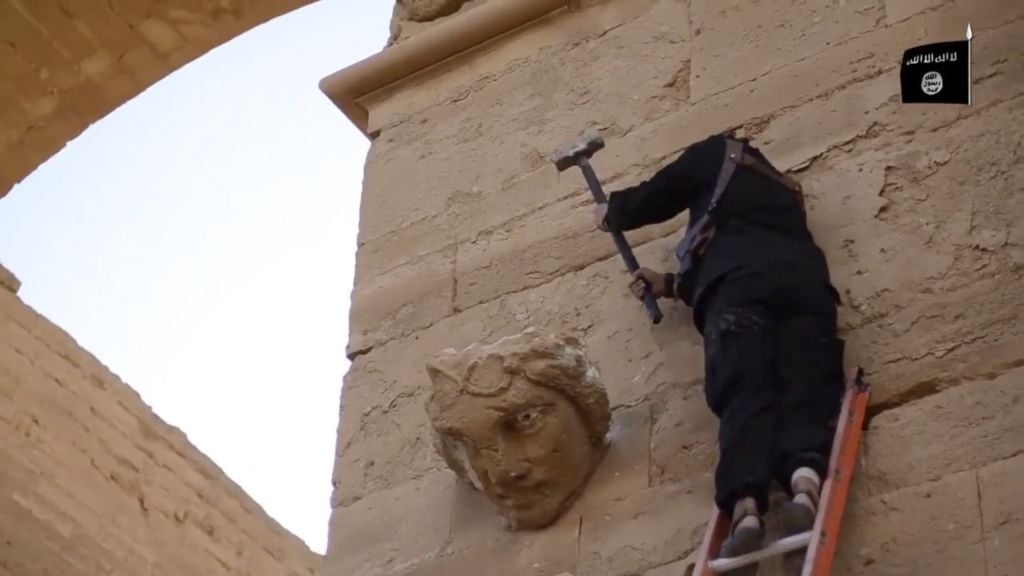
In this image made from a video posted on YouTube on April 3, 2015, a militant hammers away at a face on a wall in Hatra, a large fortified Iraqi city recognized as a UNESCO World Heritage Site. (AP, File)
When Islamic State fighters routed Syrian government forces and took control of the ruins of Palmyra Thursday morning, the ancient city became the latest archaeological site to fall into the hands of the terror group.
The extremist group views ancient ruins as idolatrous and has looted or destroyed several heritage sites under its control in Iraq, raising fears about the fate of Palmyra — one of the best-known historical sites in the Middle East.
The UNESCO World Heritage Site is famous for its 2,000-year-old towering Roman-era colonnades, other ruins and priceless artifacts. Before Syria’s conflict began in 2011, thousands of tourists a year visited the remote desert outpost, a cherished landmark referred to by Syrians as the “Bride of the Desert.”
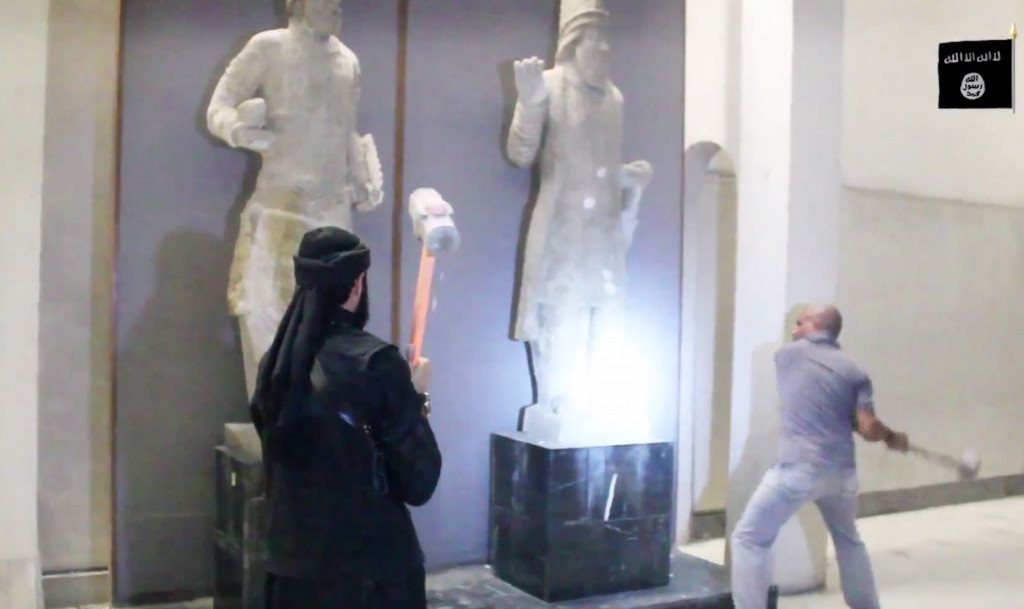
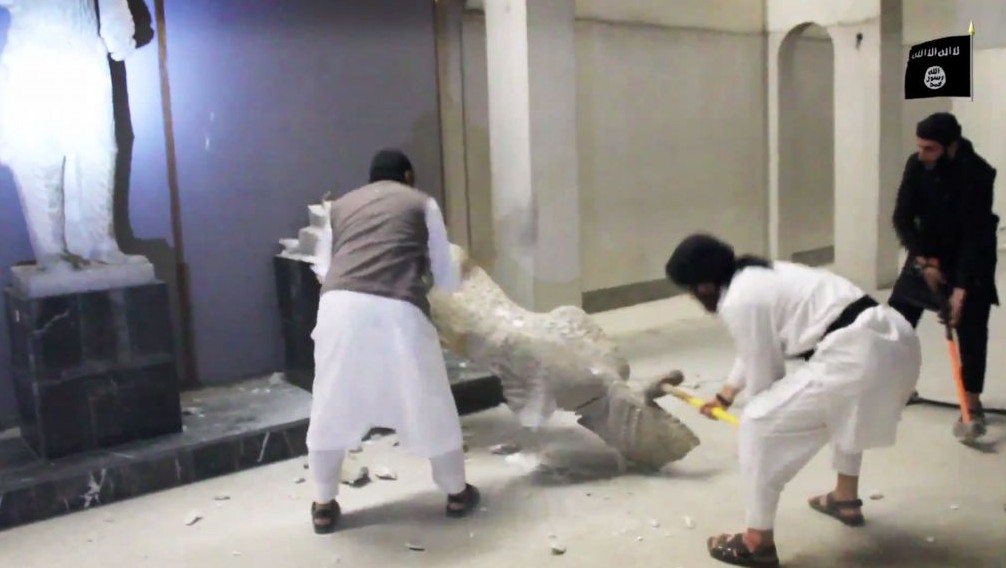
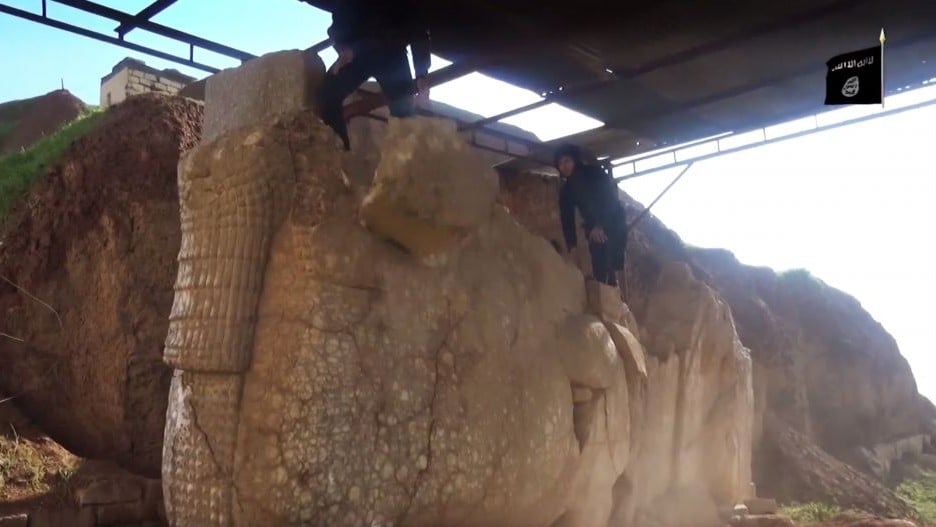
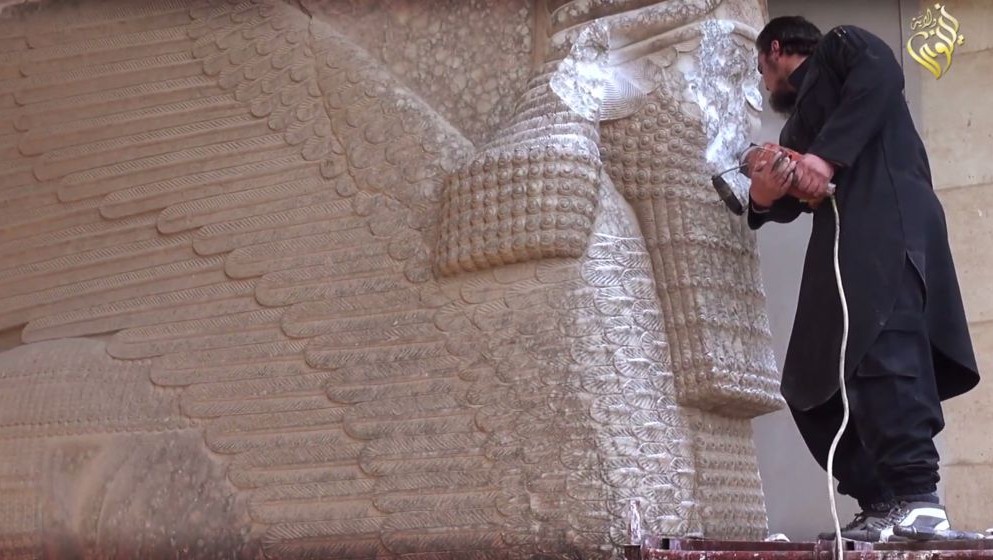
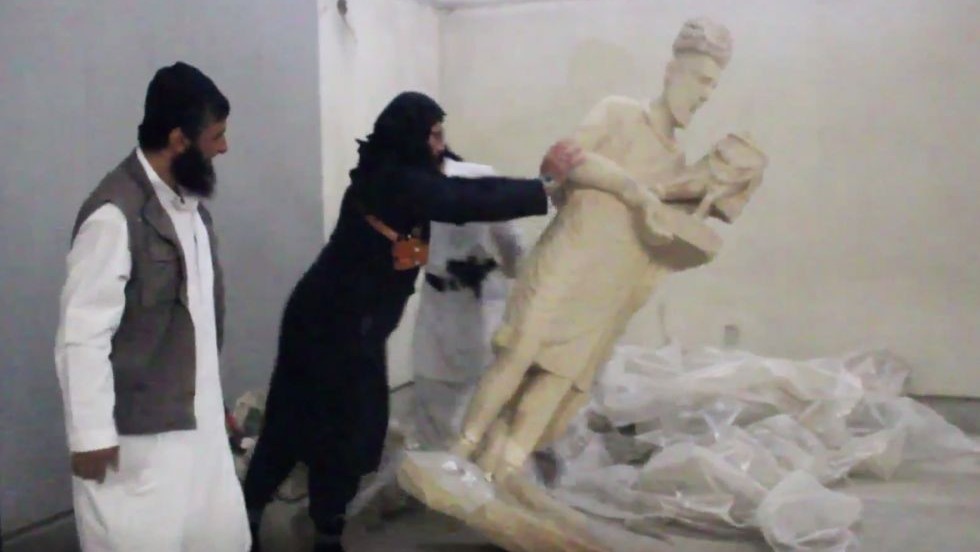
Syrian authorities say they moved hundreds of priceless artifacts to Damascus ahead of the IS takeover, but the fate of those ruins too large to move remains uncertain. Islamic State militants have already looted and vandalized a museum in the Iraqi city of Mosul and have massively damaged the ancient cities of Hatra and Nineveh — both UNESCO World Heritage Sites.
The attacks on the ancient sites are partially motivated by the group’s hostility to non-Islamic and pre-Islamic cultures. But some antiquities authorities have charged that the destruction is a cover for the selling of looted artifacts on the black market. The proceeds have helped fund the group’s rampage across northern and eastern Syria and northern and western Iraq, where it has carved out a self-styled caliphate governed by a violent interpretation of Islamic law.
Get The Times of Israel's Daily Editionby email and never miss our top stories
Here is a series of images of ancient heritage sites currently under Islamic State group control.
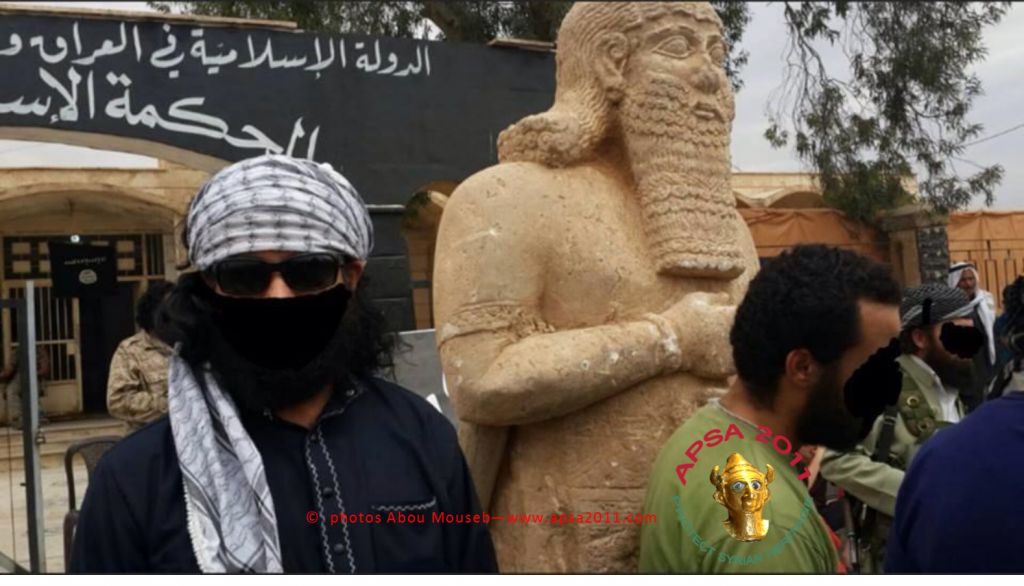
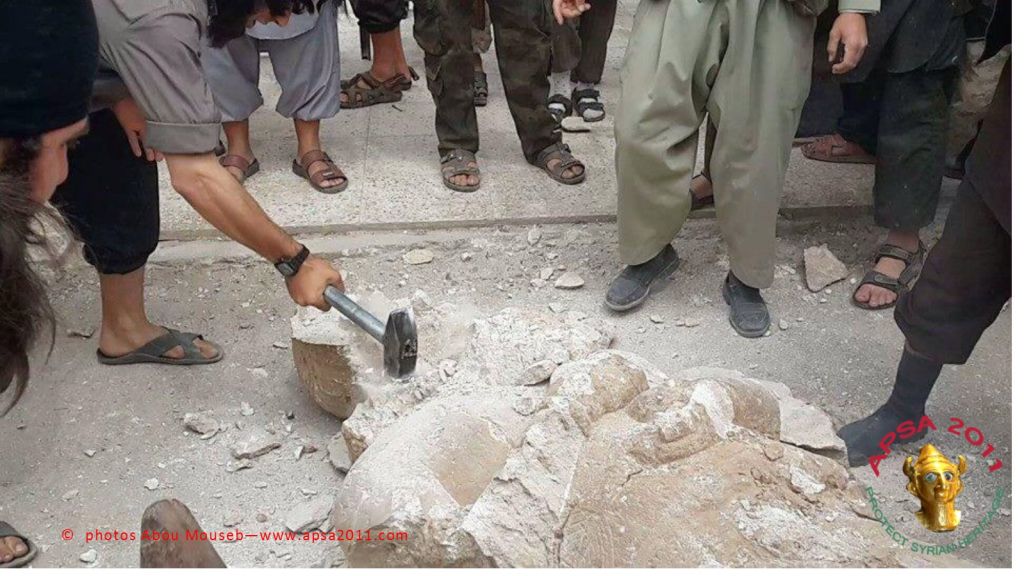
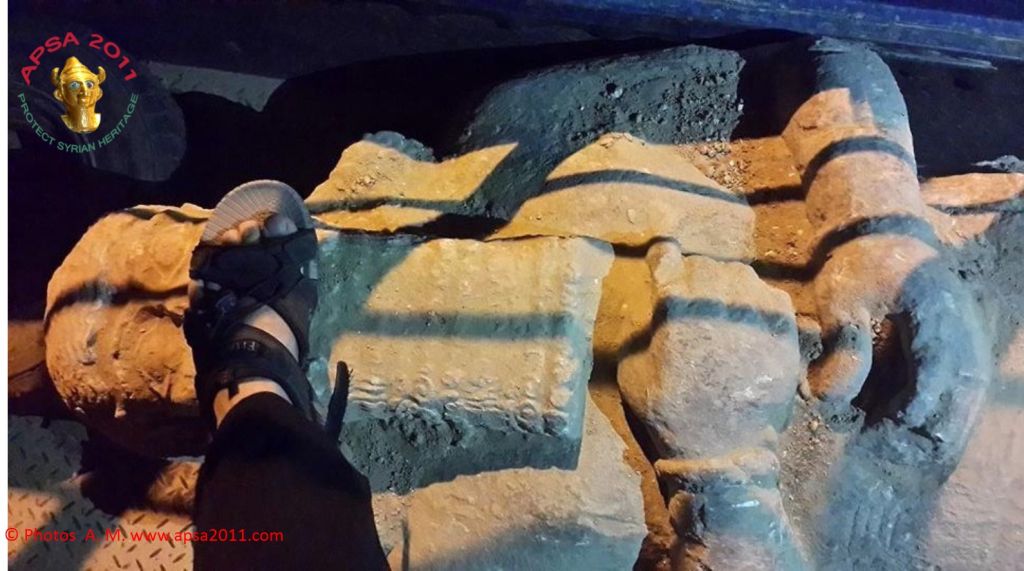
In this image from a from video posted on a social media account affiliated with the Islamic State group on February 26, 2015, militants attack ancient artifacts with sledgehammers in the Nineveh Museum in Mosul, Iraq. (AP, File)In this image made from a video posted on a social media account affiliated with the Islamic State group on February 26, 2015, militants take sledgehammers to an ancient artifact in the Nineveh Museum in Mosul, Iraq. (AP, File)In this image made from a video posted on a social media account affiliated with the Islamic State group on February 26, 2015, militants destroy winged-bull Assyrian protective deity in the Nineveh Museum in Mosul, Iraq. (AP, File)In this image made from a video posted on a social media account affiliated with the Islamic State group on February 26, 2015, a militant uses a power tool to destroy a winged-bull Assyrian protective deity at the Nineveh Museum in Mosul, Iraq. (AP, File)In this image made from a video posted on a social media account affiliated with the Islamic State group on February 26, 2015, a militant topples an ancient artifact in the Nineveh Museum in Mosul, Iraq. (AP, File)Members of the Islamic State of Iraq and the Levant stand before an Assyrian statue before destroying it. (Courtesy of APSA/Abou Mouseb)Members of the Islamic State of Iraq and the Levant smash an Assyrian statue in Mosul, Iraq. (Courtesy of APSA/Abou Mouseb)A member of the Islamic State of Iraq and the Levant desecrates an Assyrian statue by putting his foot on its face before it’s smashed. (Courtesy of APSA/Abou Mouseb)
Help us report truthfully on social media
As a multimedia journalist, my job is to take the quality, fact-based journalism produced by The Times of Israel newsroom and make it accessible across every platform — from Instagram posts to podcasts to short-form videos.
This is how many, especially young people, consume news these days. But misinformation is rampant on social media. Our team at ToI produces accurate, responsible short-form reporting on Israel and the Jewish world.
If you believe in the importance of factual social media journalism, please consider joining our reader support group, The Times of Israel Community. Your financial support is essential to sustain responsible multimedia reporting.
We’re really pleased that you’ve read X Times of Israel articles in the past month.
That’s why we started the Times of Israel - to provide discerning readers like you with must-read coverage of Israel and the Jewish world.
So now we have a request. Unlike other news outlets, we haven’t put up a paywall. But as the journalism we do is costly, we invite readers for whom The Times of Israel has become important to help support our work by joining The Times of Israel Community.
For as little as $6 a month you can help support our quality journalism while enjoying The Times of Israel AD-FREE, as well as accessing exclusive content available only to Times of Israel Community members.
Thank you, David Horovitz, Founding Editor of The Times of Israel


 Add ToI as a Preferred Source on Google