

German painter Max Beckmann returns to Manhattan in new show
66 years after his death, Met to showcase works by the artist who saw his paintings denounced, seized by the Nazis
 Add ToI as a Preferred Source on Google
NEW YORK — In December 1950, the painter Max Beckmann ventured out of his New York home to see his “Self-Portrait in Blue Jacket,” then on view at the city’s Metropolitan Museum of Art.
The German artist never made it: he suffered a fatal heart attack just steps from Central Park at age 66.
On Wednesday, the museum will open a new exhibition called “Max Beckmann in New York” to celebrate his connection to the city where he settled in September 1949 and lived out the last months of his life.
Before the Nazi regime labeled his works “degenerate” and removed them from German museums in 1937, Beckmann (1884-1950) enjoyed great acclaim in his home country, with top art dealers presenting his work to private collectors.
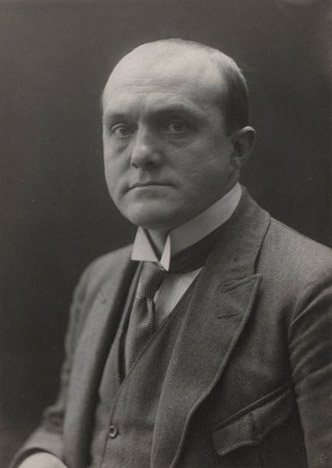
He left his native land for Amsterdam, where he lived for a decade, before heading to St. Louis, Missouri for a temporary teaching position.
He ultimately landed in New York, his third residence in exile.
The painter described the city — then evolving into a major art center — as “a pre-war Berlin multiplied a hundredfold,” and painted the major works “Falling Man” and “The Town (City Night).”
The artist’s oeuvre included self-portraits, interiors, landscapes and triptychs. His rich blocks of color are brought into stark relief by thick, black lines.
New York had already known Beckmann for more than two decades before he arrived, thanks to two Berlin art dealers who sold his art to New York collectors.
The Met exhibition, on display until February 2017, will feature 14 paintings the artist created while living in Manhattan, as well as 25 additional works from New York collections dating from 1920 to 1948.
“New York is really grandiose,” Beckmann once wrote. “But it stinks of burned fat, just like the sacrificial meal of the slain enemies among the savages.”
“But nevertheless — crazy, crazy, crazy!”










The Times of Israel Community.