

Intel chief said to tell MKs war with Hamas, Hezbollah likely not on horizon
Herzl Halevi reportedly tells powerful Knesset panel that terror groups not likely to seek new confrontation; Russia, US may moderate Iran
 Add ToI as a Preferred Source on Google
Judah Ari Gross is The Times of Israel's religions and Diaspora affairs correspondent.
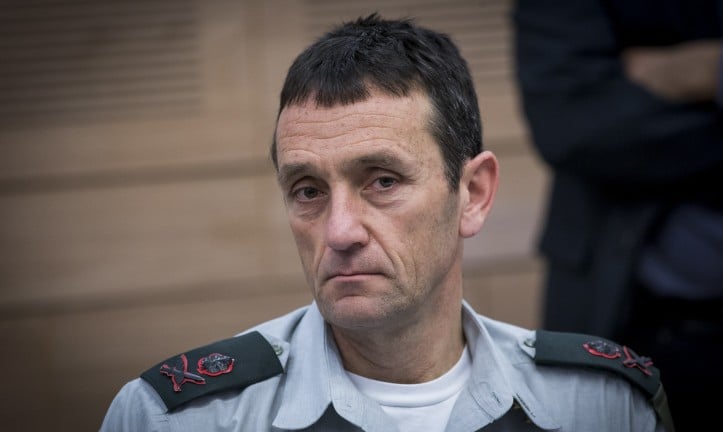
The head of Military Intelligence told a Knesset committee on Wednesday that the Hamas and Hezbollah terrorist groups were not inclined to launch military actions against the State of Israel in the near future, echoing statements made by army chief Gadi Eisenkot last month.
However, intelligence chief Maj. Gen. Herzl Halevi also warned the powerful Foreign Affairs and Defense Committee that Israel should be concerned about cooperation between the Gaza-based Hamas and the Lebanese Hezbollah.
His comments, which were reported by Haaretz, came a day after the release of a biting state comptroller report that criticized, among many other things, the efforts of Military Intelligence going into the 2014 Gaza war.
State Comptroller Yosef Shapira’s office found that there were gaps in the information collected by the army about Hamas’s tunnel network and that military officials were not sufficiently forthright about what they did not know going into the war.
Halevi reportedly told the committee that the army’s Intelligence Directorate had internalized the report’s criticism, but said the threat posed by Hamas tunnels has been exaggerated.
The intelligence commander also said the cooperation between the United States and Russia, which has clout with Iran, might have a moderating effect on the Islamic republic, according to the report.

Halevi was said to note that Russia does not consider its relationship with Iran and Hezbollah as particularly close, but as a marriage of convenience.
Hezbollah, the general reportedly said, has been suffering from manpower issues as it struggles to replace some of its aging members.
The group’s leader, Hassan Nasrallah, made a number of combative statements against Israel, including a threat that the group won’t have any “red lines” in a future war with the Jewish state.
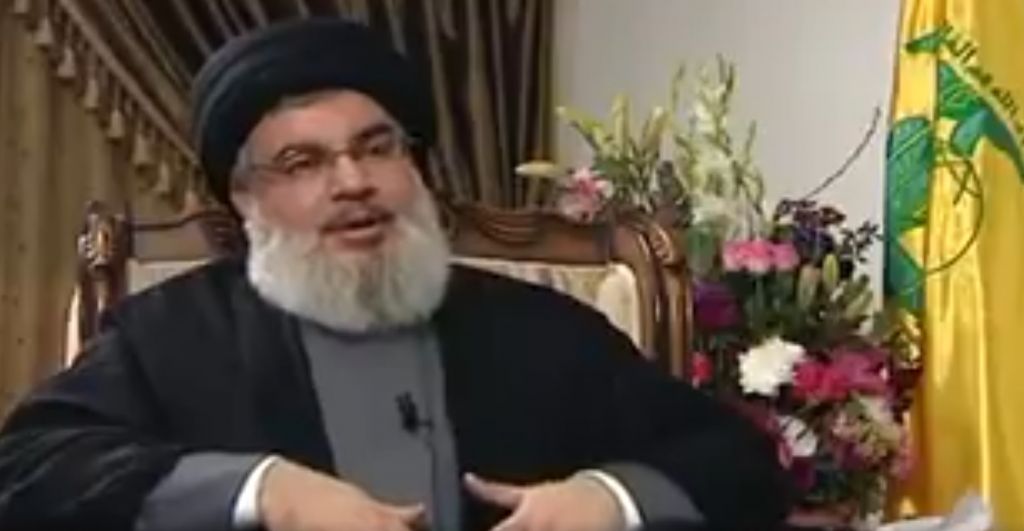
“In the face of Israel’s threats to destroy Lebanon’s infrastructure, we will not abide by red lines, especially regarding Haifa’s ammonia and the nuclear reactor in Dimona. Hezbollah possesses the full courage for this,” he said, according to an English translation of his comments reported by the Naharnet website.
Halevi, however, repeated the prevailing belief that the Iran-backed terrorist group is currently too occupied fighting in Syria to be interested in opening a second front with Israel.
He also reportedly warned that waves of attacks by Palestinians may return, if residents of the West Bank feel they have no hope.
The Haaretz article was based off leaks from those present at the general’s presentation, a fact that drew considerable ire from the head of the Foreign Affairs and Defense Committee, Likud MK Avi Dichter.
“The committee chairman is fuming over the leaks of what was apparently said by the head of Military Intelligence,” Dichter said in a statement on Wednesday night.
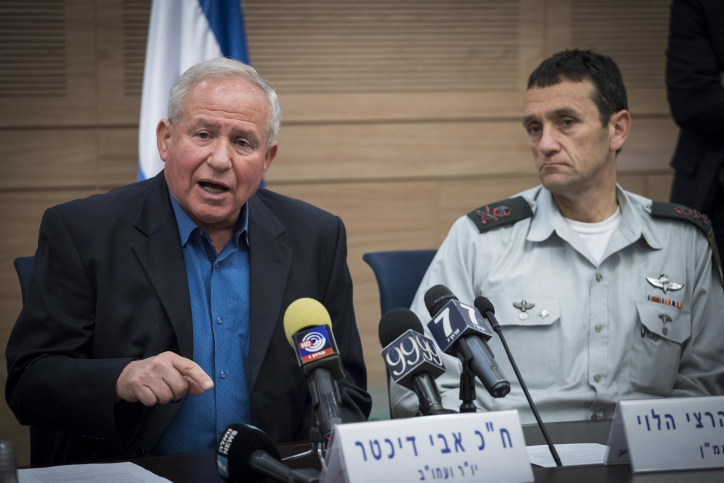
“All the Knesset members knew that this was a classified discussion, and whoever thought it right to leak from the meeting, whether accurately or tendentiously, disrespected the Knesset,” he said.
Dichter added that he was looking into different ways of sniffing out the leaker.
Last month, Eisenkot told the committee that “Hezbollah’s [military] operations in Syria have brought about a morale and financial crisis within its ranks.”
At the February 22 meeting, he also addressed the threat posed by Hamas on Israel’s southern border, saying he does not believe the terror group has any “willingness” to launch an offensive against Israel at the current time.

“The separation of the political and military leadership in Hamas is blurred to the point of being eliminated altogether,” the IDF chief of staff said. “I don’t see a willingness in Gaza to launch a campaign against us.”
Since Yahya Sinwar was selected as Hamas leader in Gaza in secret internal elections earlier this month, there has been speculation that the terror group may become more unrestrained in its approach toward Israel militarily, as even by the standards of the Islamist organization he is considered an extremist.
However, senior Hamas official Mousa Abu Marzouk told the pan-Arab news channel al-Araby that despite the election of Sinwar, the policies of Hamas will not undergo any “radical change.”






The Times of Israel Community.